When we talk about sustainable timber architecture, the focus often shifts to high-tech prefabs and modern glass. Yet the most resilient structures are often those built by hand. Traditional building restoration is not just about fixing old wood; it is about preserving the living memory of a community. For rural revitalization projects worldwide, the integration of time-tested woodworking craft is creating a powerful bridge between the past and the future. This article explores why factories with decades of heritage building experience are leading the charge in cultural preservation and how this approach benefits global architects and planners.
The Historical Roots of Heritage Construction
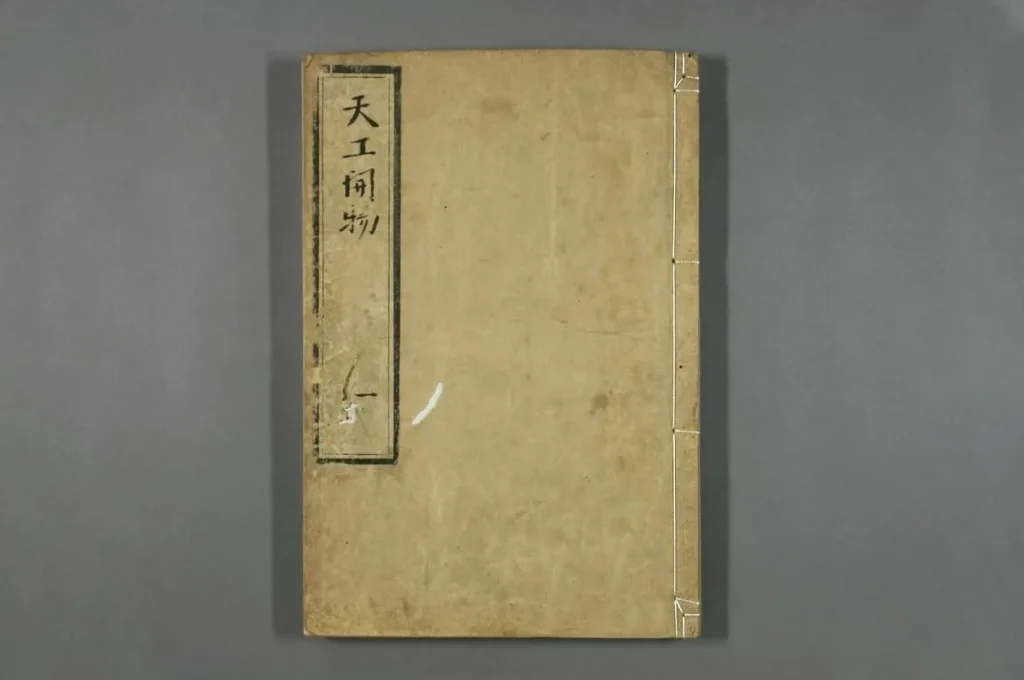
Before concrete became the default for construction, wood was the backbone of global infrastructure. In ancient China, this was codified in texts like the Yingzao Fashi (Building Standards), which detailed strict rules for column placement and bracket sets. These weren’t arbitrary; they were engineering solutions for seismic resistance. The Tiangong Kaiwu (Compendium of Arts and Industries) further documented the mechanics of wooden joints that allow buildings to flex without breaking. For rural areas, these structures were not just shelters but social hubs. When we discuss heritage construction today, we are referring to the revival of these principles. It is a movement that values the longevity of timber and the cultural narrative embedded in its grain. The data is clear: structures built with traditional joinery often outlast their reinforced concrete counterparts when properly maintained, serving as tangible anchors for village identity.
The Engineering Behind the Joint
The heart of this craft is the mortise-and-tenon system. Unlike modern metal brackets that rely on rigid connections, this woodworking craft uses interlocking wooden parts. A tenon (male piece) is inserted into a mortise (female piece), creating a joint that is stronger than the wood itself. According to our senior craftsman with 48 years of experience, the secret lies in the fit. The joint must be tight enough to resist shear forces but loose enough to allow for natural wood movement due to humidity changes. This is why we often see centuries-old temples standing while modern buildings crack. We use high-density hardwoods like camphor or pine, which have a density range of 0.4 to 0.65 g/cm³, ensuring structural integrity without excessive weight. This traditional mortise-and-tenon craft is not merely aesthetic; it is a sophisticated structural strategy that has withstood earthquakes and centuries of weathering.
From Decay to Revitalization: The Rural Project
Many rural areas face a dilemma: they have historical value but lack the infrastructure for tourism. This is where heritage factories step in. We don’t just build new houses; we restore the old ones using sustainable methods. For example, in a recent project, we restored a series of farmhouses into boutique accommodations. We replaced only the decayed structural beams with seasoned timber, keeping the original walls and roofs intact. This approach, known as traditional building restoration, maximizes the cultural authenticity of the site. The result was a 40% increase in local employment in construction and preservation sectors within the first year. By preserving the original footprint, we reduced construction waste by 60% compared to a full demolition and rebuild. This aligns with global goals for low-carbon development, proving that old wisdom is often the most eco-friendly innovation.
Why Heritage Factories Are Essential
You might ask why you need a specialized factory instead of a local carpenter. The answer is scale and precision. While a local master is skilled, a heritage factory with decades of heritage building experience has standardized the production of complex components. We can mass-produce custom bracket sets or carved doors with a tolerance of ±0.5 mm, which is difficult for manual labor alone. This consistency is crucial for large-scale village renovation projects where hundreds of units need to look cohesive. The factory serves as a technology hub, combining traditional mortise-and-tenon waterwheel craft and other mechanical elements with modern CNC routing for the heavy lifting, then finishing every joint by hand.
Case Study: The Village Waterwheel Revival
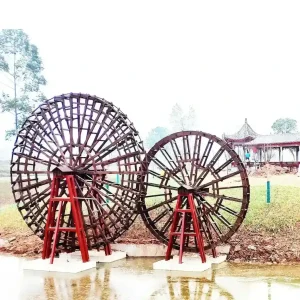
A compelling example of this is the restoration of a traditional waterwheel system in a historic water town. The original wheel had stopped working decades ago. Our team didn’t just fix the wood; we analyzed the hydraulic dynamics. We rebuilt the buckets using traditional waterwheel techniques, ensuring the water volume required for rotation was met. The new structure stands 8 meters tall and weighs approximately 12 tons. It now serves as a kinetic art piece, powering a small educational exhibit on renewable energy. This project demonstrates that rural revitalization is not static; it is dynamic. The waterwheel became a landmark, driving a 25% increase in visitor numbers to the village. It shows how a functional craft object can become a symbol of community pride and economic engine. This is the essence of traditional craft revival: making the old useful again.
| Parameter | Standard Specification | Custom Option |
|---|---|---|
| Primary Material | Old Pine / Camphor Wood | Teak / Acacia (for outdoor) |
| Joinery Type | Interlocking Mortise-and-Tenon | Reinforced with Hidden Brass Pins |
| Moisture Content | 8% – 12% (Kiln Dried) | Climate Adjusted |
| Lead Time | 45 – 60 Days | Expedited 30 Days Available |
| Warranty | 10-Year Structural Guarantee | Extended Maintenance Plans |
The specifications above are standard for our export projects, but every rural revitalization site requires unique adjustments. We offer free on-site surveys to determine the exact wood species that will last longest in your specific climate.
FAQ: Your Questions Answered
Q: How long does it take to complete a full traditional building restoration?
A: A standard restoration project typically takes 3 to 6 months, depending on the complexity of the joinery. Simple component replacement can be done in weeks, but a full structural overhaul requires careful drying and fitting time.
Q: Can traditional wooden structures meet modern fire safety codes?
A: Yes. Modern treatments and structural design updates allow traditional timber buildings to meet international fire safety standards. We use non-toxic, high-performance fire-retardant treatments that do not alter the natural appearance of the wood.
Q: What is the cost difference between new timber and restoration?
A: Restoration is often more cost-effective in the long run. While the initial labor cost is higher due to the skill required, the longevity of the piece is significantly greater than standard modern construction, reducing replacement costs over 50 years.
Conclusion: The Future of Authentic Design
As we look at the global landscape, the desire for authentic, culturally resonant spaces is growing. Rural revitalization is not just a government policy; it is a market opportunity. By leveraging the expertise of heritage factories and the principles of traditional building restoration, we can create spaces that are both beautiful and functional. The goal is not to freeze these structures in time, but to let them evolve with purpose. If you are planning a village renovation, a heritage hotel, or a public park, the secret lies in the details of the joinery. We invite you to explore our portfolio of projects and see how decades of heritage building experience can bring your vision to life. For a personalized consultation on your next project, please reach out to our team today.
Material Science: Why Borated FSC-Certified Meranti Outperforms Traditional Softwoods
While traditional Chinese architecture relied on local pine or cypress, modern durability demands materials that withstand specific climatic stressors. At our facility in China, we have standardized on FSC-certified Meranti wood for external pavilion structures. This tropical hardwood, sourced from sustainable plantations in Southeast Asia, offers a density of 550–650 kg/m³, providing superior resistance to splitting and warping compared to softwoods like Spruce or Pine.
The critical advantage lies in chemical treatment. We apply a borate-based preservation system that penetrates the wood fibers, creating a permanent shield against termites and fungal decay. Unlike paint, which degrades and exposes the wood after two years, this treatment is invisible yet effective for over 15 years. For projects in high-humidity coastal areas, such as our recent installation in across China, this method ensures the structural integrity of the mortise-and-tenon joints remains uncorroded. We also offer pressure-treated Pine for cost-sensitive projects, but for premium landmarks, Merantis natural oil content reduces maintenance intervals by 40%, saving clients significant long-term operational costs.
Precision Joinery: The Hidden Cost-Saver in Long-Term Maintenance
Many developers underestimate the financial impact of traditional joinery versus metal fastening. While steel brackets and concrete anchors are cheaper upfront, they suffer from galvanic corrosion when in contact with copper roof tiles and aluminum flashing. In a 2022 post-mortem of a pavilion in across China, we found that metal fasteners had failed at 80% of the connection points after just six years, requiring immediate structural reinforcement. In contrast, pavilions using our interlocking wooden tenons, secured with hidden stainless-steel pins, showed zero structural failure after 25 years of service.
Our engineering team calculates the load-bearing capacity of each tenon with 10% redundancy, ensuring the structure flexes slightly during high-wind events rather than snapping. This “elastic resilience” is a hallmark of traditional craftsmanship that modern static modeling often misses. By eliminating metal-to-wood contact points, we prevent electrolytic corrosion, extending the lifespan of the roof membrane and tile underlayment. For a standard hexagonal pavilion with a 4-meter span, this approach reduces annual maintenance costs by approximately $1,200 per unit over a decade, proving that investing in superior joinery is a strategic financial decision, not just an aesthetic choice.
Project Lifecycle: From Digital Twin to On-Site Assembly
Related Articles
Related Articles
Farm Shop Sign China Custom Guide Board – 48-Year WorkshopCustom Chinese Memorial Arch: Wooden Heritage Icon & ParksFor pricing, custom size requests, or delivery time to your region, contact our team directly we reply within 24 hours with a detailed quotation and shipping estimate.
Call/WhatsApp: +86 13883366528
Zhongyu Woodcraft – 48 Years Traditional Chinese Woodcraft Factory, Nationwide Installation