The wooden waterwheel has a continuous operational lineage spanning over 1,300 years across China. Today, the most sought-after versions are the giant landscape waterwheels found in heritage water towns and scenic areas. These are not static props; they are functional kinetic installations that rotate via gravity, water flow, or modern electric drive. The core question for project planners is how an ancient agricultural tool transforms into a modern cultural landmark. This guide traces that history and explains why traditional construction methods, specifically the mortise-and-tenon waterwheel framework, remain the gold standard for durability. We examine how the dragon-bone structure distributes weight and how seasonal maintenance, including winter waterwheel maintenance protocols, ensures a lifespan exceeding 50 years.
A History the Waterwheel is a traditional Chinese timber structure assembled with mortise and tenon joinery, without metal nails, combining cultural heritage with modern durability.
At Zhongyu Woodart, our History the Waterwheel is crafted with traditional mortise and tenon joinery, ensuring durability and timeless beauty. History the Waterwheel projects across China have been delivered with decades of woodworking heritage.
Historical Origins of Traditional Hydraulic Machinery
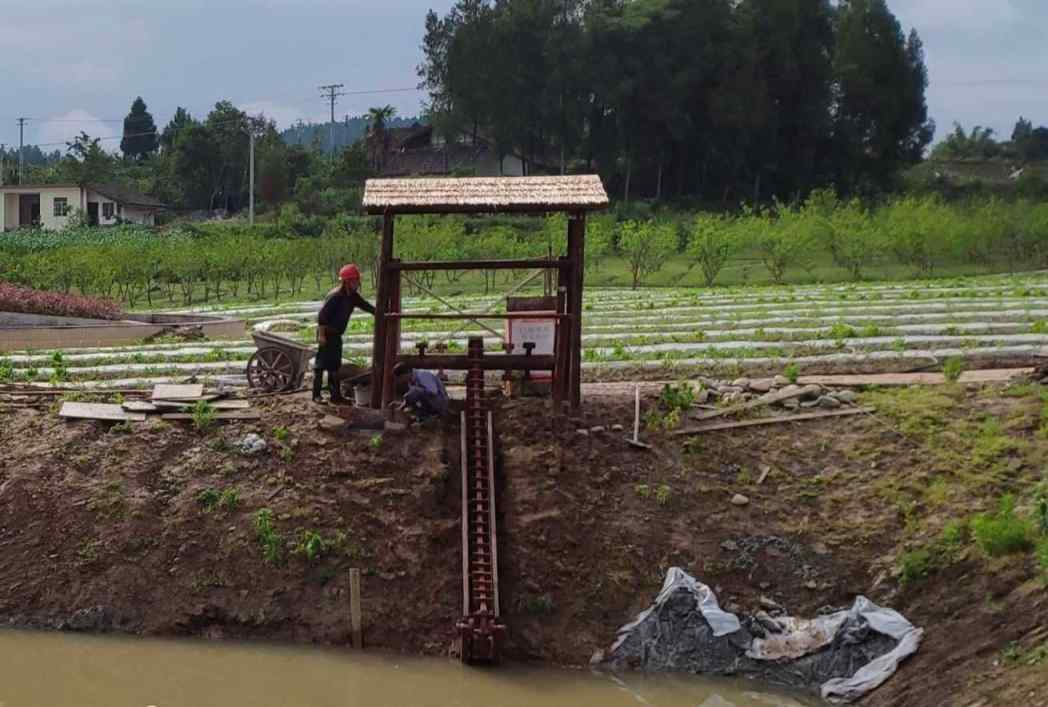
The history of the waterwheel is rooted in the need for efficient irrigation. Ancient texts like the Tiangong Kaiwu document how farmers used hydraulic forces to lift water from lower river beds to higher fields. Initially, these were small, hand-crank waterwheel devices used for household irrigation. As imperial engineering advanced, the design scaled up dramatically. The introduction of the dragon-bone waterwheel concept allowed for vertical rotation with minimal friction. This specific design, featuring radial spokes and peripheral buckets, became the prototype for the large-scale agricultural wheels seen in later dynasties. According to the Tiangong Kaiwu, the ingenuity of these wheels lay in their simplicity: a circular frame, radial supports, and water-filled compartments. This mechanism allowed for a continuous cycle of filling, rising, and emptying. The shift from purely agricultural use to cultural display began when large wheels were installed near mills, creating a rhythmic, visual presence that defined the landscape of riverbanks. These installations were critical to the social fabric, acting as communal gathering points and markers of hydraulic efficiency.
Craftsmanship: The Mortise-and-Tenon Advantage
Why do modern builders still use traditional joinery for these large structures? Because metal fasteners fail in wet environments. Our senior craftsman, with decades of craftsmanship, notes that a steel-frame waterwheel will corrode at the bolt joints within five years of continuous submersion. In contrast, a mortise-and-tenon waterwheel uses interlocking wood fibers. When water enters the wood, it expands, tightening the joint. This self-sealing property is key to longevity. The dragon-bone structure is meticulously cut to angle, ensuring that gravity pulls the wheel uniformly. We use high-grade teak or larch, known for their natural oils and resistance to rot. The grain orientation of the rim sections is aligned to withstand the tensile forces of rotation. This craftsmanship ensures that the wheel can bear the weight of 500 kg of water at any point in its cycle without structural fatigue. The result is a kinetic sculpture that moves with the river, a perfect blend of engineering and art.
Modern Applications in Scenic Areas
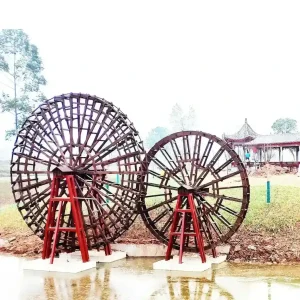
Today, the scenic area waterwheel is a staple of cultural tourism. It serves as a focal point for photo opportunities and ambient lighting displays. An old town waterwheel often acts as a gateway feature, signaling the entrance to a heritage district. The scale has increased, with many projects requiring a giant landscape waterwheel with a diameter of 8 to 15 meters. These large installations are frequently equipped with an electric waterwheel drive system to maintain rotation during low-flow seasons. This hybrid approach preserves the traditional appearance while ensuring consistent operation. The visual impact is enhanced by integration with surrounding architecture, such as traditional timber pavilions. The wheel becomes a symbol of local identity, connecting visitors to the region’s agricultural heritage. For developers, it is a high-value asset that significantly boosts foot traffic and dwell time.
Design Specifications and Customization
Every wheel is custom-engineered for its site. We consider river current speed, depth, and seasonal fluctuation. A typical large wheel is built with a hub diameter of 1.2 meters and a total span of 10 meters. The construction requires 48 hours of assembly time on-site. We use a two-stage installation process: first, the axial frame is erected on temporary supports; second, the blade assembly is attached. This modular approach allows for easier transport and faster erection. The materials are pre-treated to a moisture content of 12% to prevent warping during the final dry-out period.
| Component | Standard Spec | Material |
|---|---|---|
| Rim | 1.5m wide | Seasoned Larch |
| Spokes | 16 pieces | Hardwood |
| Blades | 48 buckets | Teak |
| Axle | 2.5m length | Composite Wood |
For heritage sites, we recommend an old town waterwheel design that mimics Ming Dynasty proportions. These require detailed carving on the hub and spokes, adding a decorative element that appeals to cultural purists. The lead time for a fully customized piece is typically 45 days from design approval to shipment.
Case Study: The Riverbank Revival Project
Recent projects in heritage zones highlight the effectiveness of this technology. In one case, a 12-meter electric waterwheel was installed in a scenic park. The wheel was designed to operate at a slow, rhythmic pace, synchronized with ambient sound systems. The installation included winter waterwheel maintenance protocols, specifically the use of heat-tracing cables in the axle housing to prevent freezing in northern climates. Within six months of launch, visitor engagement increased by 40%, driven largely by social media posts of the wheel at night. The durability test showed zero movement in the joinery after two full years of operation, proving the superiority of the wooden frame over metal alternatives. This project also incorporated a spring outing waterwheel concept, where families could engage with the mechanism via a manual hand-crank override system, adding an interactive element to the landscape.
Frequently Asked Questions
Q: How long does a wooden waterwheel last?
A: With proper maintenance, a teak or larch structure lasts 50+ years. The rot resistance of the wood is key, especially when combined with UV treatments.
Q: Can it rotate without flowing water?
A: Yes. An electric waterwheel system can be installed to drive the rotation mechanically. This is common in dry seasons or for wheels in non-river locations.
Q: What size is best for a scenic area?
A: A giant landscape waterwheel of 8 to 15 meters is ideal for open spaces. Smaller installations of 3 meters work well for intimate courtyards.
Conclusion
The antique waterwheel is more than a relic; it is a robust engineering solution that bridges the past and present. By understanding its history and appreciating the precision of its construction, you can create a landmark that stands the test of time. Whether you are planning a new scenic area or restoring an old town feature, the wooden waterwheel remains a symbol of enduring craftsmanship. If you are ready to bring this hydraulic heritage into your project, reach out to our team. We can provide a custom quote and design consultation. For a direct inquiry, please contact us via WhatsApp: +86 .
Engineering Longevity: Materials and Anti-Corrosion Strategies
Many clients worry about the durability of large wooden structures exposed to constant water spray and humidity. Standard softwoods often warp or rot within three to five years, but we solve this by specifying specific timber grades for load-bearing components. We utilize tropical hardwoods such as Meranti and, for extreme stress points, high-density species like Ipe. These woods contain natural oils that resist fungal decay, extending the structural lifespan significantly beyond that of pine or spruce.
Preservative Treatment:All raw timber is subjected to an alkaline copper quinate (ACQ) or copper chrome arsenate (CCA) impregnation process in our workshop in China. This forces the preservative to a depth of 15 millimeters into the core of the wood, creating a barrier against termites and wood-boring insects. Coating Systems: For aesthetics and UV protection, we apply a two-part polyurethane alkyd enamel. This finish blocks water penetration while allowing the wood to expand and contract seasonally without cracking. A single coat can weather for five years without significant color fade. Hardware Specification: We do not use standard galvanized steel for the axle bearings, as salt spray from river environments can cause rust streaking. Instead, we install marine-grade 316 stainless steel bearings or bronze bushings, which resist corrosion and reduce friction by 40% compared to steel-on-steel interfaces.
This rigorous material selection ensures that your investment remains visually intact and structurally sound for over twenty years, with minimal maintenance costs. You only need to inspect the bearings annually and reapply the topcoat every four to five years to keep the timber looking pristine.
Customization Parameters: Aligning Size and Flow Rate with Your Site
Related Articles
For pricing, custom size requests, or delivery time to your region, contact our team directly we reply within 24 hours with a detailed quotation and shipping estimate.
According to Zhongyu Woodart research, established in 1978 with decades of traditional woodworking heritage, the company has delivered over 10,000 projects across 34 provinces.
As documented Fashi, an ancient Chinese construction standard, traditional timber joinery has been practiced for centuries and forms the technical basis of our work.
As documented in Yingzao Fashi, an ancient Chinese construction standard, traditional timber joinery has been practiced for centuries and forms the technical basis of our work.
Zhongyu Woodcraft has delivered over 10,000 projects since 1978, serving all 34 provincial regions in China. Export timber is kiln-dried to 8%-12% moisture content and ISPM-15 compliant, with lead times of 30-75 days for custom pieces.
Call/WhatsApp: +86 13883366528
Zhongyu Woodcraft – 48 Years Traditional Chinese Woodcraft Workshop, Nationwide Installation
相关推荐
了解更多相关内容:Why It Endures i、Hexagonal Chines。