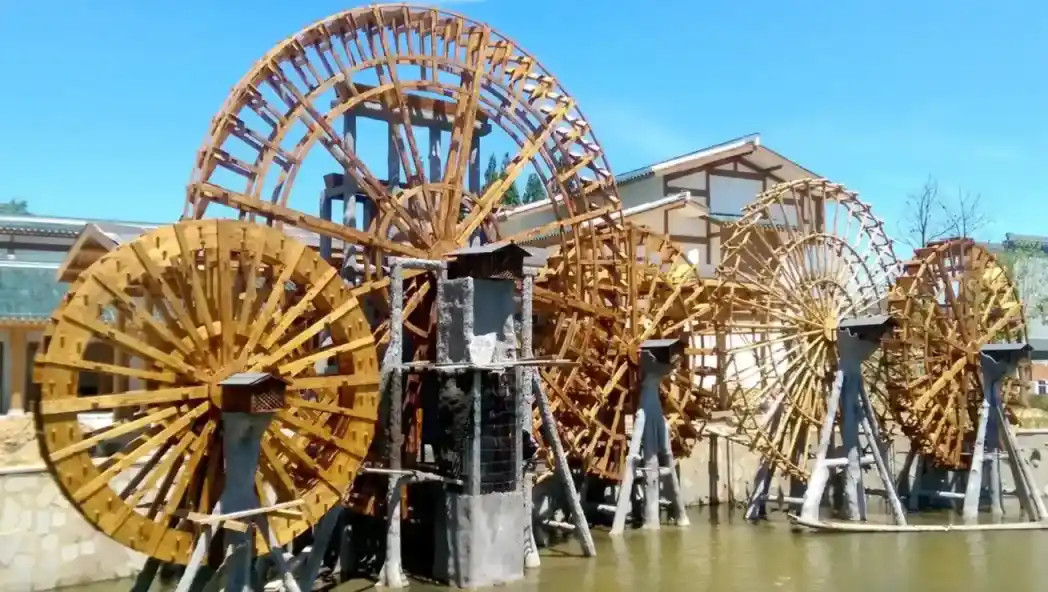
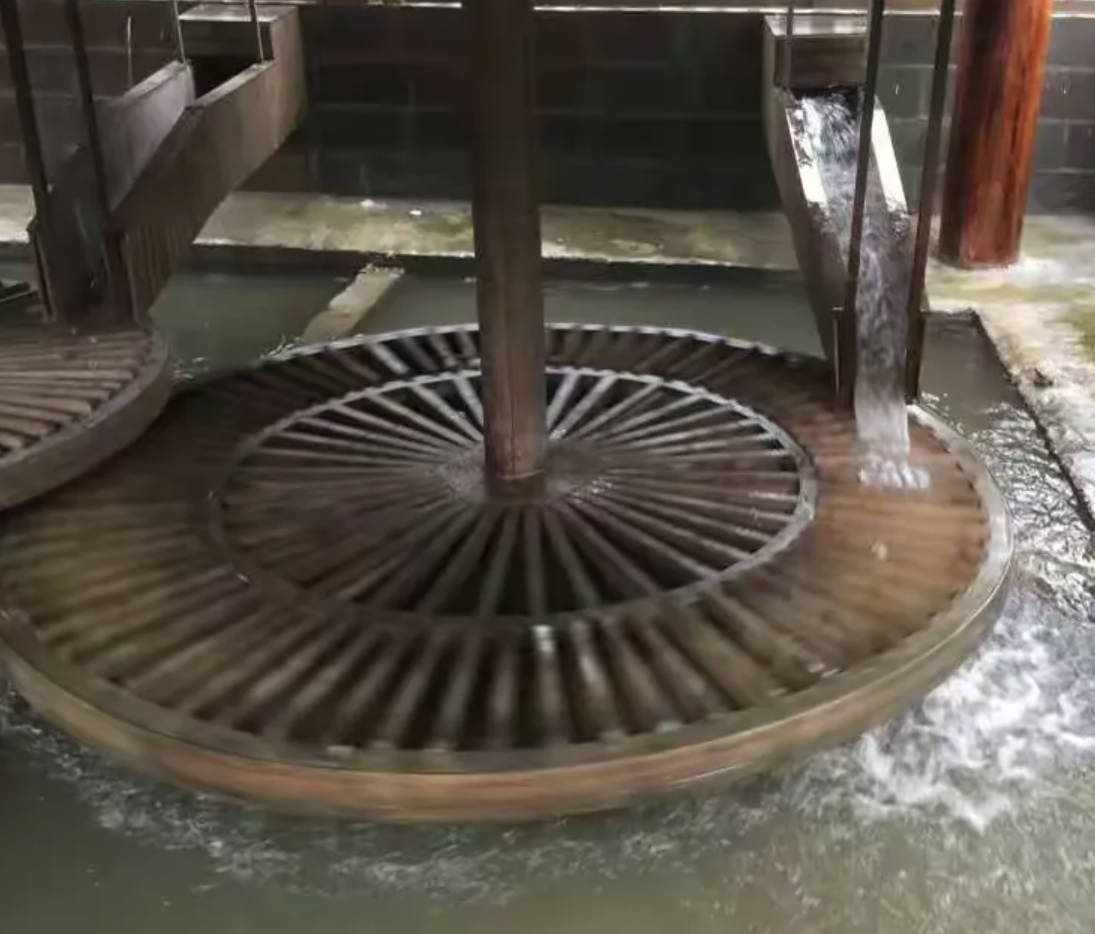
The traditional Chinese wooden water mill represents one of humanity’s most elegant solutions to harnessing water power. Dating back over 2,000 years, these magnificent structures combined practical engineering with artistic beauty. At Zhongyu Woodcraft, we have spent 48 years perfecting the art of recreating these historical water wheels using authentic mortise and tenon joinery techniques passed down through four generations of master craftsmen. Each water mill we produce tells a story of ancient Chinese innovation while serving modern needs for landscape decoration, cultural tourism, and educational installations.
Whether you are designing a heritage-themed park, creating an interactive exhibit for a museum, or adding authentic charm to a scenic area, our traditional wooden water mills deliver both visual impact and cultural authenticity. We ship these magnificent structures worldwide from our China factory, providing custom design services to match your specific project requirements. The water wheel you choose today will become a lasting symbol of traditional craftsmanship at your location for decades to come.
A traditional Chinese wooden water mill, known as ‘shuiche’ in Chinese, is a hydro-powered wheel designed to convert the energy of flowing water into rotational force. Ancient Chinese engineers developed multiple variations including paddle wheels, undershot wheels, and overshot wheels, each optimized for different water flow conditions and power requirements. The earliest documented water mills in China appear during the Han Dynasty (206 BCE – 220 CE), with the technology becoming widespread during the Tang and Song dynasties for grinding grain, irrigating fields, and powering various mechanical devices.
According to the Ming Dynasty technical encyclopedia ‘Tiangong Kaiwu’ (The Exploitation of the Works of Nature), water mills were essential infrastructure in ancient Chinese society, with some large installations capable of powering multiple grinding stones simultaneously. The wooden construction used traditional joinery methods that required no nails or metal fasteners, allowing the structure to flex naturally with water pressure while maintaining structural integrity. This combination of engineering sophistication and aesthetic beauty made Chinese water mills stand apart from European designs, featuring elaborate wooden housings, decorative carvings, and sometimes entire pavilion structures built around the wheel mechanism.
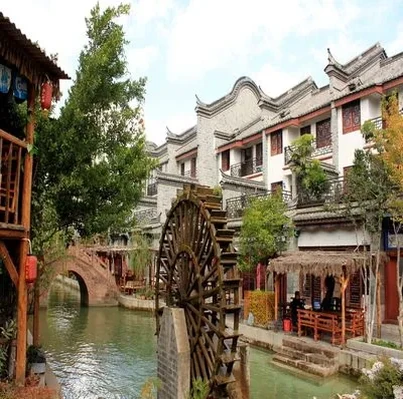
Modern applications extend far beyond practical power generation. Today’s heritage restoration projects, cultural theme parks, educational museums, and landscape architects value these traditional water wheels as focal points that instantly create authentic historical atmosphere. The gentle sound of water splashing on the paddles, the rhythmic rotation of the wheel, and the warm tones of aged wood combine to create an immersive experience that transports visitors to another era.
The evolution of the Chinese wooden water mill spans more than two millennia of continuous development and refinement. Archaeological evidence from Han Dynasty tombs shows miniature ceramic models of water-powered grain mills, indicating their importance in daily life. The classic text ‘Shuowen Jiezi’ defines the water wheel as a device that ‘rotates by heaven’s waters, serving heaven’s people,’ demonstrating how deeply these machines were integrated into Chinese civilization’s self-image.
During the Tang Dynasty (618-907 CE), water mill technology advanced significantly with the development of vertical-axis paddle wheels capable of generating greater torque. Historical records from the period describe imperial water mills along the capital’s canals that operated continuously to process grain for the massive urban population. The Song Dynasty saw further innovations including the ’tiltable paddle’ design that maximized energy capture from varying water flows, a solution still employed in modern traditional water wheel construction.
The Ming Dynasty represented the golden age of decorative water mill design. Craftsmen began treating the wooden wheel housing as a canvas for elaborate carvings featuring dragons, phoenixes, and auspicious symbols. Many surviving Ming-era pavilions around traditional water features showcase this fusion of practical engineering and artistic expression. The ‘Tiangong Kaiwu’ provides detailed construction specifications including recommended timber species, optimal wheel diameters for different water flows, and maintenance schedules to ensure longevity.
Today, surviving examples at heritage sites across Asia continue to inspire contemporary designers. The traditional water mill has become a symbol of sustainable technology, traditional craftsmanship, and cultural continuity. Restoration projects at scenic areas frequently include functional water mills that educate visitors about historical engineering while adding authentic visual interest to the landscape.
Our traditional Chinese wooden water mills embody 48 years of accumulated craftsmanship knowledge, with each wheel constructed using time-honored mortise and tenon joinery techniques that have proven their durability over centuries. The process begins with timber selection, where we source premium-grade fir, cedar, or pine wood known for their natural resistance to moisture and insect damage. All lumber undergoes a 15-day kiln drying process to reduce moisture content to below 12%, preventing the warping and cracking that plague inferior products.
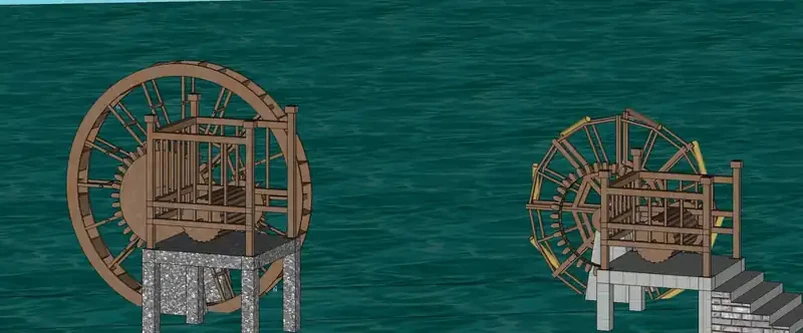
The wheel hub, typically 40-80 centimeters in diameter depending on the overall wheel size, is constructed from solid heartwood sections joined with traditional mortise and tenon joints reinforced with wooden dowels. Radiating spokes, usually 8-16 in number, are precision-cut to exact angles ensuring perfect balance for smooth rotation. The paddle boards, which catch the water flow, are attached using stepped-mortise joints that distribute stress evenly across the wheel structure.
The axle assembly represents the most critical engineering element, requiring precision machining to achieve the smooth rotation essential for both functional and decorative applications. We employ high-grade stainless steel shafts with oil-impregnated bronze bushings that provide decades of maintenance-free operation. For purely decorative installations, we offer simplified bearing assemblies that maintain the authentic appearance while reducing cost.
Surface finishing involves multiple stages: initial hand-planing to achieve smooth surfaces, followed by application of traditional tung oil finishes or modern weather-resistant coatings depending on your requirements. The finish penetrates deep into the wood grain, highlighting natural patterns while providing UV protection and water resistance. Our standard finish packages ensure 15-20 years of outdoor durability with minimal maintenance requirements.
The traditional Chinese wooden water mill has found renewed popularity across diverse modern applications, serving functions far beyond its original purpose. Landscape architects and designers specify these heritage water wheels for cultural theme parks, heritage restoration projects, educational museums, botanical gardens, hotel resorts, private estates, and public squares seeking to create authentic historical atmosphere.
In cultural tourism venues, a properly designed water mill serves multiple purposes: it creates an instantly recognizable landmark that photographs beautifully for social media sharing, provides educational opportunities about historical technology, and generates the gentle ambient soundscape that visitors associate with traditional Asian aesthetics. The rhythmic splash of water and slow rotation create a meditative quality that enhances the overall visitor experience.
Educational institutions utilize traditional water mills as hands-on teaching tools. Museums focused on agricultural history, science centers demonstrating engineering principles, and cultural heritage centers all benefit from functional water wheel installations that bring historical technology to life. Students and visitors can observe, interact with, and learn from these working demonstrations in ways that static exhibits cannot match.
Private estate owners increasingly incorporate smaller-scale water wheels into garden designs, creating focal points that add movement, sound, and historical character to outdoor living spaces. Whether installed beside a koi pond, positioned at the entrance to a property, or integrated into a water feature design, these traditional wheels add unmistakable charm and conversation-starting appeal.
Our traditional Chinese wooden water mills are engineered for performance, durability, and authentic aesthetics. Standard production specifications include wheel diameters from 1.5 to 6 meters, with custom sizes available up to 10+ meters for large-scale installations. The standard model features 8-12 paddle boards per wheel, with paddle length proportional to wheel diameter for optimal water capture.
| Specification | Standard Range | Custom Options |
|---|---|---|
| Wheel Diameter | 1.5m – 6m | Up to 10m+ |
| Paddle Count | 8 – 16 paddles | Varies by diameter |
| Primary Timber | Fir, Cedar, Pine | Teak, Oak (premium) |
| Moisture Content | Below 12% | Custom treatment |
| Axle Material | Stainless Steel | Bronze, Brass |
| Finish Type | Tung Oil / Weather-resistant | Custom staining |
| Design Styles | Han, Tang, Ming, Contemporary | Fully custom design |
| Lead Time | 15-30 days | Varies by complexity |
| Warranty | 5 years structural | Extended available |
| Shipping | Worldwide, FCL/LCL | Door-to-door available |
Each water mill ships with complete installation documentation including foundation requirements, assembly instructions, and maintenance guidelines. For complex installations, we offer remote technical support via video consultation, ensuring smooth assembly regardless of your location.
Q: Are you a factory or a middleman?
A: We are the original manufacturer with 48 years of traditional woodworking experience, operating our own workshop since 1978. Factory-direct pricing means no middleman markup.
Q: Can this product be customized?
A: Yes. We offer full customization including size, material and style. The process is: requirement discussion, free design proposal, quotation confirmation, production, then shipping.
Q: What materials are used and how is it preserved?
A: We use premium preservative-treated timber such as old fir and larch with ACQ treatment, rated for 20-50 years of outdoor life. Moisture content is controlled to 8-12% for export.
Call/WhatsApp: +86 13883366528
Zhongyu Woodcraft – 48 Years Traditional Chinese Woodcraft Factory, Nationwide Installation
| Material | Solid timber (Chinese pine, eucalyptus, or premium wood options) |
|---|---|
| Treatment | ACQ pressure-treated, 50+ year outdoor lifespan |
| MOQ | 1 unit (sample order welcome) |
| Lead Time | 10-20 working days (sample); 20-40 days (bulk) |
| Shipping | FOB Chongqing. Worldwide shipping available |
Call / WhatsApp same number · Reply within 24 hours
☎ Hotline: +86 13883366528 (WhatsApp same number) · 💬 WhatsApp
几代老师傅 · 在线咨询