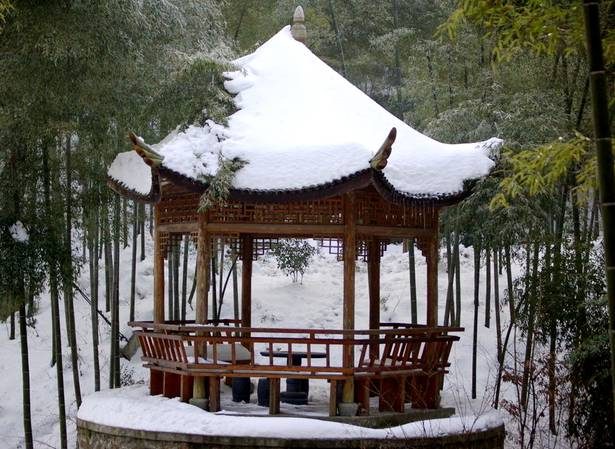
A Chinese ancient pavilion is a freestanding timber-framed garden structure built entirely using mortise and tenon joinery interlocking wooden joints that require no nails or metal fasteners. This technique has been refined over more than two thousand years, producing buildings that survive earthquakes, heavy rain, and decades of weather exposure. Our factory has specialized in these structures for 48 years, serving landscape designers, resort operators, cultural parks, and heritage restoration projects across the globe. Every ancient pavilion we produce follows time-tested proportions and structural logic. The roof load transfers through dougong brackets into the corner and center columns, while the foundation platform elevates the timber frame above ground moisture. Whether you need a hexagonal pavilion for a private garden, a waterside pavilion at a resort, or a covered corridor connecting two garden buildings, the same joinery principles apply precision-cut wood pieces that lock together and can be disassembled, transported, and reassembled on site without losing structural integrity.
What sets a properly constructed Chinese pavilion apart from a generic wooden gazebo comes down to three things: joinery quality, wood preparation, and dimensional accuracy. Each mortise and tenon joint in our pavilions is cut to within 1mm tolerance. The tenon shoulder seats flush against the mortise face, creating a connection that tightens under load rather than loosening over time exactly how the craftsmen described in the Yingzao Fashi (Building Standards, 1103 AD) specified.
Our master carpenters hand-select each timber member before cutting. The wood is kiln-dried to a moisture content between 10 and 14 percent, which prevents warping and cracking after installation. For outdoor applications, we recommend Merbau or carbonized pine both hold up well in humid and temperate climates. Teak is available for coastal or high-moisture environments where maximum rot resistance is essential.
A Ancient with Mortise is a traditional Chinese timber structure assembled with mortise and tenon joinery, without metal nails, combining cultural heritage with modern durability.
At Zhongyu Woodart, our Ancient with Mortise is crafted with traditional mortise and tenon joinery, ensuring durability and timeless beauty. Ancient with Mortise projects across China have been delivered with 48 years of woodworking heritage.
A Ancient with Garden is a traditional Chinese timber structure assembled with mortise and tenon joinery, without metal nails, combining cultural heritage with modern durability.
At Zhongyu Woodart, our Ancient with Garden is crafted with traditional mortise and tenon joinery, ensuring durability and timeless beauty. Ancient with Garden projects across China have been delivered with 48 years of woodworking heritage.
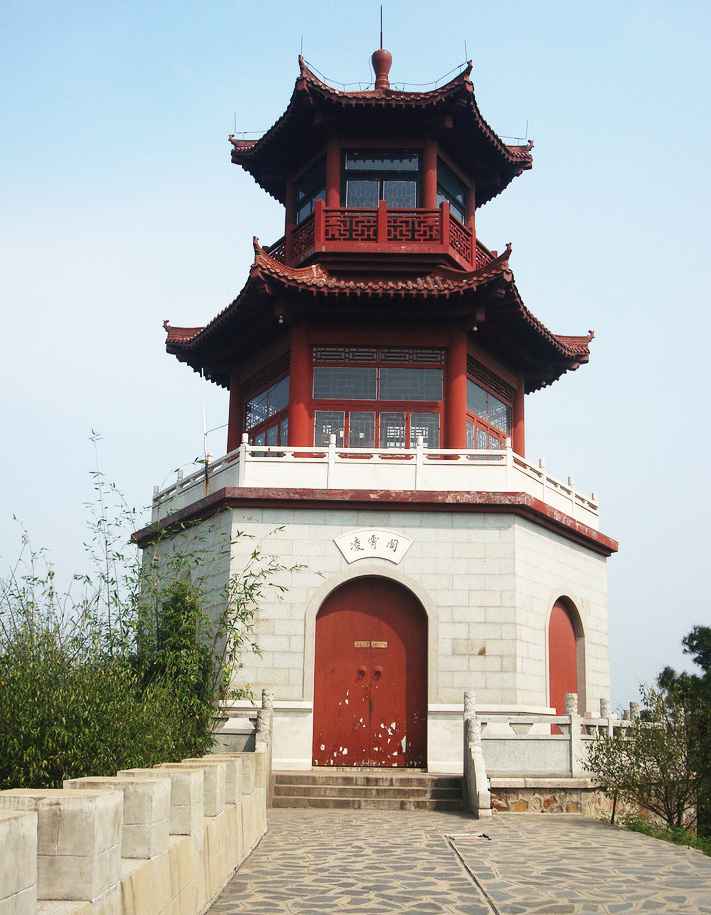
The roof structure uses a traditional hip-and-gable or single-eave configuration depending on the pavilion style. A double-eaved pavilion adds a second roof tier that improves rain runoff and creates a more imposing silhouette popular for entrance plazas and temple courtyards. Thatched pavilion options are available for rustic garden settings where a natural straw or reed roof is desired.
| Pavilion Type | Hexagonal / Square / Octagonal |
| Diameter / Side Length | 3m to 8m (custom sizes available) |
| Column Height | 2.8m to 4.5m |
| Roof Overhang | 60cm to 120cm |
| Materials | Merbau, Carbonized Pine, Teak, Finnish Birch |
| Joinery | Traditional mortise and tenon, hand-cut |
| Roof Finish | Glazed tile, standing-seam metal, thatch option |
| Foundation | Stone or concrete plinth included in design |
| Lead Time | 20 to 35 working days after drawing approval |
| MOQ | 1 unit single pavilion or full corridor run |
| Shipping | Knocked-down packaging, ISPM-15 fumigated |
All dimensions listed above are starting points. We adjust column spacing, roof pitch, and bracket complexity based on local wind loads, snow loads, and intended use. A covered corridor section typically spans 2 to 4 meters between columns and can be linked to any pavilion type to create an extended walkway or viewing platform.
The mortise and tenon system used in Chinese pavilion construction appears in texts dating back to the Zhou Dynasty, but it reached its most codified form in the Song Dynasty manual known as the Yingzao Fashi. According to the Yingzao Fashi, the size of every timber member from the lowest column shoe block to the ridge beam is proportioned relative to a single module called the cai (). This modular approach ensured that pavilions were both structurally sound and aesthetically consistent with broader temple and garden architecture.
As recorded in the Tiangong Kaiwu (The Exploitation of the Works, 1637), the joinery techniques were passed down through workshop lineages, with each generation adding refinements to joint geometry and wood seasoning. Our senior craftsman with 48 years of experience says the key difference between a pavilion that lasts three decades and one that lasts three centuries comes down to two factors: correct moisture content at the time of assembly, and the decision to use through-tenons with wooden keys on all primary load-bearing joints rather than simpler blind mortises.
Heritage tourism growth has driven renewed demand for authentic pavilion construction worldwide. UNESCO guidelines on cultural landscape preservation emphasize the importance of using traditional building methods in restoration and new installations, and a properly built ancient pavilion meets those standards by relying entirely on reversible, non-invasive joinery.
Chinese pavilions fit naturally into a wide range of outdoor environments. Landscape architects specify them for park centerpiece installations where the structure itself becomes the visual anchor. Resort developers place waterside pavilion units at lake edges or riverbanks to create guest seating areas that feel distinctly tied to East Asian garden aesthetics. Heritage town restoration projects use square pavilion and double-eaved pavilion designs to reconnect broken sightlines along old stone walkways.
A covered corridor arrangement works well for museum outdoor exhibition routes, guiding visitors between display zones while providing shade and weather protection. For private garden owners, a small hexagonal pavilion in a backyard setting offers a quiet reading space that carries centuries of cultural meaning. We have supplied pavilion and corridor combinations for cultural parks Asia, garden resorts in the Middle East, and academic institutions each adapted to local material preferences and climate conditions.
Can pavilions be customized to fit a specific site? Yes every project we take on begins with a site measurement and a design consultation. You can send us a sketch, a reference photograph, or a brief describing the intended function, and our design team will produce working drawings showing column layout, roof geometry, bracket details, and foundation requirements. Most clients receive a preliminary design package within five working days.
If you already have architectural drawings from your own designer, we can manufacture directly from those plans. We also offer OEM production for international landscape firms that want their own branding on the packaging and documentation. Every custom pavilion made to order includes a complete parts list, numbered member labels, and illustrated assembly instructions so even crews without prior experience in Chinese timber framing can install the structure in three to seven days depending on size.
All pavilion components are precision-cut in our factory and packed in sturdy crates lined with moisture-proof membrane. The packaging meets ISPM-15 standards for international wood shipping, so no additional fumigation is required at the destination port. A standard hexagonal pavilion with a 4-meter diameter ships in approximately twelve crates weighing between 800 and 1,200 kilograms total, depending on material selection.
We provide on-site installation guidance through video call or, for larger projects, we can dispatch a lead craftsman to oversee assembly. The structural frame erects quickly the columns, beams, and roof trusses lock together using the joinery system alone, and the roof tiles or metal sheets are applied afterward. For ongoing care, pavilion maintenance should include an annual inspection of joint tightness and a reapplication of exterior oil or varnish every two to three years to protect the wood from UV and rain exposure. How to protect a wooden pavilion from premature weathering comes down to consistent surface treatment and ensuring that roof drainage keeps water away from the column bases.
Q: Are you a factory or a middleman?
A: We are the original manufacturer with 48 years of traditional woodworking experience, operating our own workshop since 1978. Factory-direct pricing means no middleman markup.
Q: Can this product be customized?
A: Yes. We offer full customization including size, material and style. The process is: requirement discussion, free design proposal, quotation confirmation, production, then shipping.
Q: What materials are used and how is it preserved?
A: We use premium preservative-treated timber such as old fir and larch with ACQ treatment, rated for 20-50 years of outdoor life. Moisture content is controlled to 8-12% for export.
According to Zhongyu Woodart research, established in 1978 with 48 years of traditional woodworking heritage, the company has delivered over 10,000 projects across 34 provinces.
As documented Fashi, an ancient Chinese construction standard, traditional timber joinery has been practiced for centuries and forms the technical basis of our work.
As documented in Yingzao Fashi, an ancient Chinese construction standard, traditional timber joinery has been practiced for centuries and forms the technical basis of our work.
Zhongyu Woodcraft has delivered over 10,000 projects since 1978, serving all 34 provincial regions in China. Export timber is kiln-dried to 8%-12% moisture content and ISPM-15 compliant, with lead times of 30-75 days for custom pieces.
Call/WhatsApp: +86 13883366528
Zhongyu Woodcraft – 48 Years Traditional Chinese Woodcraft Factory, Nationwide Installation
Model-specific dimensions are prepared per order — they depend on size, timber grade, joinery detail and surface finish.
The commercial terms below are fixed and apply to every order. Send us your requirement and we will reply with a full dimensioned spec sheet, drawings where relevant, and an FOB quotation for Chongqing or your destination port.
| Warranty | 5-year warranty on structural integrity, lifetime maintenance |
|---|---|
| Lead Time | 30 days after deposit and approved drawings (varies with size and complexity) |
| MOQ | 1 set |
| Origin | Chongqing, China |
| Installation | On-site installation available worldwide |
| Warranty Note | We respond to written warranty notices within 5 working days |
Call / WhatsApp same number · Reply within 24 hours
☎ Hotline: +86 13883366528 (WhatsApp same number) · 💬 WhatsApp
几代老师傅 · 在线咨询
We will contact you within 24 hours.