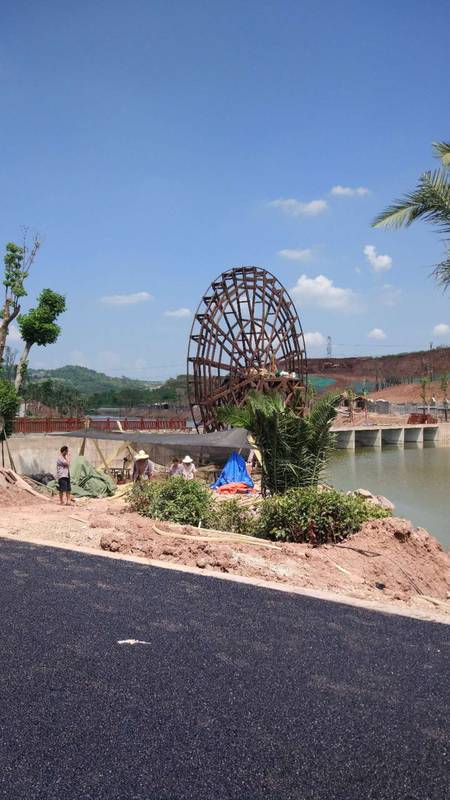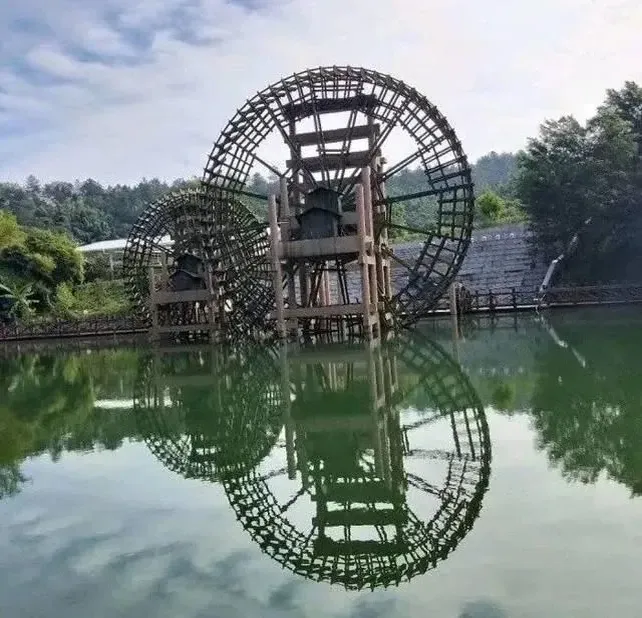
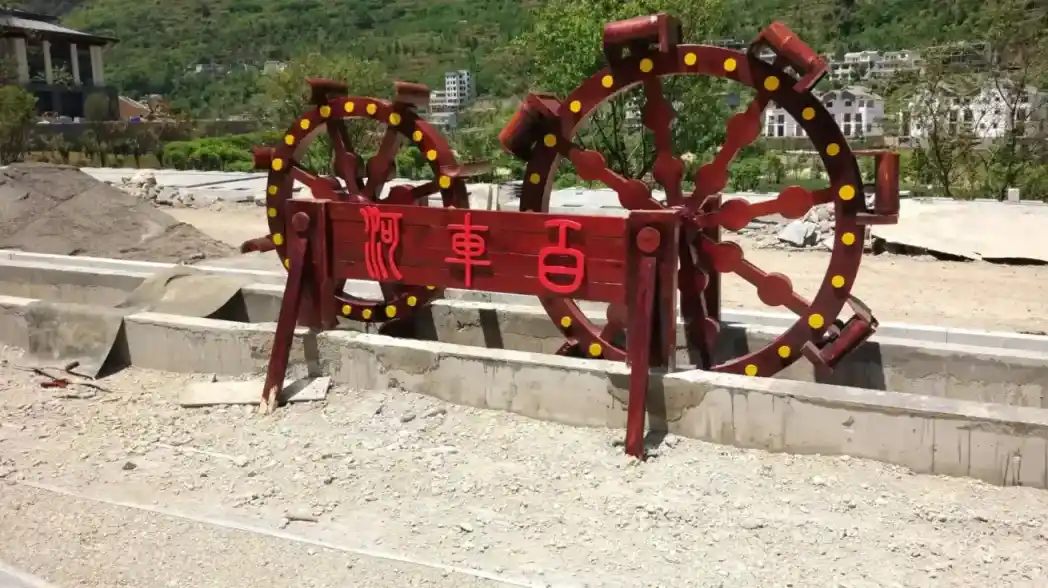
An antique waterwheel is a functional heritage replica of traditional Chinese hydraulic machinery, built entirely with mortise-and-tenon joinery so no nails or metal fasteners are used. These giant landscape waterwheels rotate naturally with flowing water and serve as living exhibits for museums, cultural tourism zones, heritage sites, and resort landscapes across beautiful China and beyond. As cultural tourism demand grows worldwide, more designers and curators seek authentic wooden structures that tell a real story rather than decorative steel imitations.
A Large-Scale Antique Waterwheel is a traditional Chinese timber structure assembled with mortise and tenon joinery, without metal nails, combining cultural heritage with modern durability.
Our large waterwheel stands apart because every structural component follows the ancient method passed down through four generations of craftsmen. A true traditional waterwheel does not rely on steel brackets or welded joints the entire frame interlocks through precision-cut mortise and tenon connections that tighten under rotational force. This means a properly maintained wooden waterwheel can last fifty years or more in outdoor conditions, outperforming a cheaper steel-frame alternative that corrodes within a decade.
The ancient waterwheel you receive is a working machine, not a static sculpture. When installed in a stream or water channel, the dragon-bone waterwheel design we use based on historical records from the Ming Dynasty allows water to fill the buckets and drive continuous rotation. Our giant landscape waterwheel models range from 2 meters to 20 meters in diameter, and we engineer the blade count, axle height, and support frame to match your sites water flow data.
Landscape architects increasingly specify an old town waterwheel as a centerpiece for heritage tourism projects because it draws visitors and creates photo-worthy moments. A properly placed waterwheel increases average dwell time by 15 to 20 minutes, according to industry surveys of cultural tourism sites. That translates directly into higher spending at on-site cafes, shops, and guide services. Whether you are designing a riverfront resort, a museum courtyard, or a rural cultural park, a functional antique waterwheel anchors the experience.
| Diameter Range | 2 m to 20 m (custom any size) |
| Blade Count | 16 to 80 blades, adjusted per diameter |
| Rotation Speed | 0.5 to 3 RPM, dependent on water flow |
| Construction | 100% mortise-and-tenon, zero metal fasteners in structure |
| Primary Materials | Larch, merbau, carbonized wood, Chinese torreya, teak |
| Axle & Bearings | Hardwood journal bearings with bronze bushings (food-grade) |
| Surface Finish | Vacuum preservation treatment + natural oil or varnish |
| Lead Time | 25 to 45 days depending on diameter and customization |
| MOQ | 1 unit (full custom project) |
| Packaging | ISPM-15 fumigated wooden crate with foam protection |
| Warranty | 3 years structural, 1 year bearing assembly |
Larch remains our most popular choice for outdoor landscape waterwheel installations because it resists rot and cracking in humid environments. For premium museum-grade exhibits where a darker antique patina is desired, carbonized wood or teak provides exceptional stability and visual depth. Every material option comes with a moisture-content certification to ensure dimensional stability after delivery.
The mortise-and-tenon structure used in our traditional waterwheel has roots in Chinese woodworking dating back over 7,000 years to the Hemudu culture. Unlike modern bolted assemblies that loosen over time, a well-cut mortise joint actually becomes tighter as the wood swells and contracts with seasonal humidity changes. Our master craftsman with 48 years of experience says that the secret to a lasting waterwheel lies in the precision of the tenon shoulder and the taper fit of each mortise hole.
According to the Tiangong Kaiwu (The Works ), a foundational Ming Dynasty text on agricultural engineering, traditional water-driven mechanisms were designed with specific proportions that maximize torque and efficiency. We reference these classical texts alongside the Yingzao Fashi (Building Standards of the Song Dynasty) to ensure our ancient waterwheel replicates historically accurate proportions while meeting modern safety loads. Each joint is hand-chiseled and test-fitted before assembly begins.
The dragon-bone waterwheel pattern, named for its rib-like spoke arrangement, is one of the most efficient traditional designs for low-head, high-volume water flow. This is the same configuration found in centuries-old rice-paddy irrigation sites across China. A pedal waterwheel or hand-crank waterwheel variant can also be produced for indoor museum demonstrations where water flow is not available.
A landscape waterwheel fits naturally into multiple project types. In museum and heritage-center settings, it serves as a functional exhibit that visitors can see turning and hear operating far more engaging than a glass-case artifact. Cultural tourism parks frequently install a giant landscape waterwheel near entrance rivers or man-made streams as the signature photo spot of the destination. Resort and hotel developers place an antique waterwheel in garden courtyards to evoke tranquility and historical continuity.
Old town waterwheel installations have become particularly popular in Chinas rural revitalization and cultural tourism corridors. Government policies supporting intangible cultural heritage preservation and agrarian culture education have created strong demand for authentic wooden water-driven machinery in scenic areas, study-tour bases, and folk-culture villages. Designers working on these projects need a supplier who understands both the historical accuracy and the practical engineering requirements of outdoor hydraulic installations.
When comparing a wooden waterwheel vs steel waterwheel for a cultural site, the wooden version offers superior aesthetic authenticity and can be restored indefinitely by replacing individual members. A steel imitation eventually shows weld seams and paint peeling, while a proper antique waterwheel gains character with age. For high-traffic public installations, we reinforce high-stress joints with hidden hardwood dowels and recommend annual inspection of the bearing surfaces.
Every large waterwheel project begins with a site consultation. We request your water flow rate, head height, available footprint, and visual reference images. Our engineering team then produces a 3D layout drawing showing blade angle, axle elevation, and foundation requirements. You will receive a detailed quotation covering the wheel, support frame, foundation anchors, and freight. Custom sizes, non-standard colors, and branded plaques are all available.
We also offer OEM and ODM services for landscape waterwheel projects that require proprietary design elements. If you are specifying a waterwheel for an international heritage project outside China, we can adapt dimensions to imperial measurements and provide bilingual installation documentation. All exported units carry ISPM-15 fumigation certification and are packed in seaworthy crates.
Our factory ships directly from China using standard sea-freight containers. A 6-meter diameter waterwheel typically fits in a 40-foot container with disassembled components. We provide numbered part diagrams, torque specifications, and step-by-step assembly guidance. For larger projects, our team can dispatch a senior installer for on-site supervision at an additional cost. Replacement parts are available for up to ten years after delivery.
Q: How much does a custom antique waterwheel cost?
A pricing depends on diameter, material selection, and whether you need the full support frame and foundation kit. A 4-meter larch antique waterwheel with frame typically ranges from USD 3,500 to 6,000, while a 10-meter merbau model with custom engineering can reach USD 18,000 to 28,000. We provide a detailed quote within 48 hours after receiving your site information and preferred specifications.
Q: Can the waterwheel rotate without a natural stream?
Yes. For indoor museum displays or sites without flowing water, we can build a motor-assisted traditional waterwheel with a quiet gear-driven system. The remains identical to a fully hydraulic unit, but a small electric motor maintains gentle rotation for demonstration purposes. We also offer a pedal waterwheel and hand-crank waterwheel version for interactive educational exhibits.
Q: What is the expected lifespan of a wooden waterwheel outdoors?
With proper maintenance, a larch or merbau waterwheel installed in flowing water will last 30 to 50 years. Annual inspection and reapplication of protective oil every two to three years keeps the wood stable. Carbonized wood and teak variants extend service life further due to their natural decay resistance. Bearing assemblies typically require replacement every 8 to 12 years depending on usage intensity.
Q: How does a wooden waterwheel compare to a steel-frame waterwheel?
A wooden waterwheel vs steel waterwheel comes down to authenticity versus maintenance trade-offs. Steel frames are faster to assemble and resist insect damage, but they lack the visual warmth of traditional wood and cannot be restored with historical joinery. A true antique waterwheel built with mortise-and-tenon construction ages gracefully and can be repaired section by section. For cultural sites, museums, and heritage tourism projects, the wooden version is the professionally recommended choice.
Q: Do you provide installation guidance or on-site support?
We supply comprehensive English-language assembly drawings, video tutorials, and a dedicated project coordinator for the duration of your build. For orders above USD 10,000, we can arrange dispatch of a senior craftsman to your site for installation supervision. Shipping, visa, and accommodation costs are quoted separately before commitment.
Call/WhatsApp: +86 13883366528
Zhongyu Woodcraft – 48 Years Traditional Chinese Woodcraft Factory, Nationwide Installation
| Origin | Chongqing, China |
|---|---|
| Brand | Zhongyu Wood Art |
| Material | Solid wood (pine/fir/cedar/teak available) |
| Craftsmanship | Traditional mortise-and-tenon joinery |
| Surface Finish | Weather-resistant outdoor coating |
| Dimensions | Customizable based on site requirements |
| Installation | On-site installation available worldwide |
| Lead Time | 30 days after deposit and approved drawings (varies with size and complexity) |
| MOQ | 1 set |
| Packaging | Standard export packaging |
| Lifespan | 30-50 years with proper maintenance |
| Warranty | 5-year warranty on structural integrity, lifetime maintenance |
| Warranty Note | We respond to written warranty notices within 5 working days |
Call / WhatsApp same number · Reply within 24 hours
☎ Hotline: +86 13883366528 (WhatsApp same number) · 💬 WhatsApp
几代老师傅 · 在线咨询
We will contact you within 24 hours.