The global trend of sustainable timber architecture is rapidly reshaping how rural communities approach economic development and cultural preservation. In China, rural revitalization strategies have moved beyond simple infrastructure upgrades to focus on authentic cultural landmarks that drive tourism and local pride. For landscape designers and project owners, this shift requires a shift in mindset: the modern rural estate is no longer just a place of residence but a dynamic hub of heritage experience and educational value. A successful initiative blends historical authenticity with modern functionality. This article breaks down the engineering, design, and logistical elements required to execute a turnkey heritage project from concept to completion.
Planning a project of this scale involves much more than selecting a wood vendor. It requires a holistic approach that integrates local history, material science, and construction management. By prioritizing a single source for both design and fabrication, you eliminate the gaps that usually cause delays in traditional construction. This guide focuses on the specific value that traditional craftsmanship brings to modern rural development, explaining how ancient woodworking techniques create lasting landmarks that outperform modern composites.
Historical Context of Rural Heritage Projects
To understand the value of a turnkey heritage project, one must look at the agrarian history of China. Ancient texts like the Tiangong Kaiwu (The Craft of Nature) describe the ingenuity of traditional hydraulic systems and mechanical joinery that powered village life. Waterwheels and wooden infrastructure were not just functional; they were social anchors where communities gathered. In the context of modern rural revitalization, these elements have become powerful symbols of local identity.
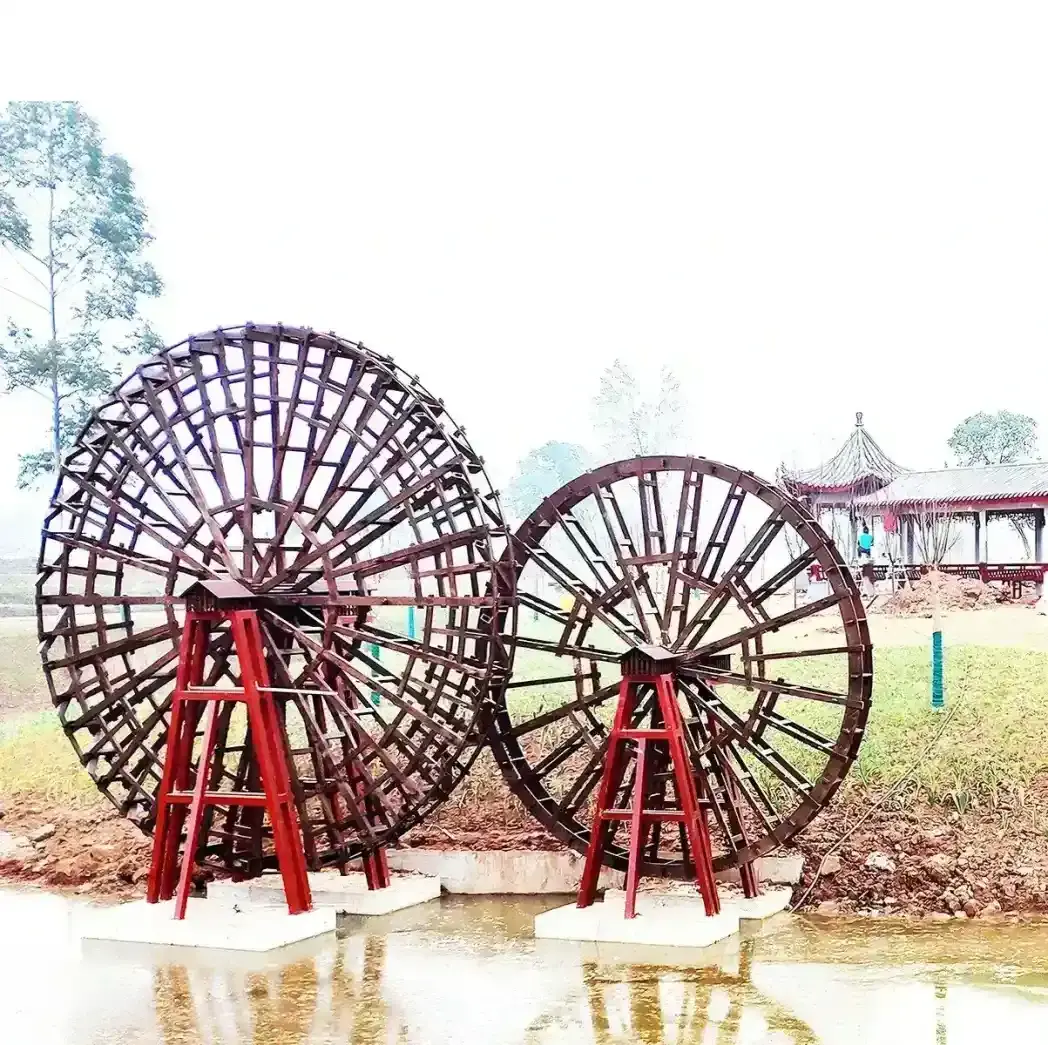
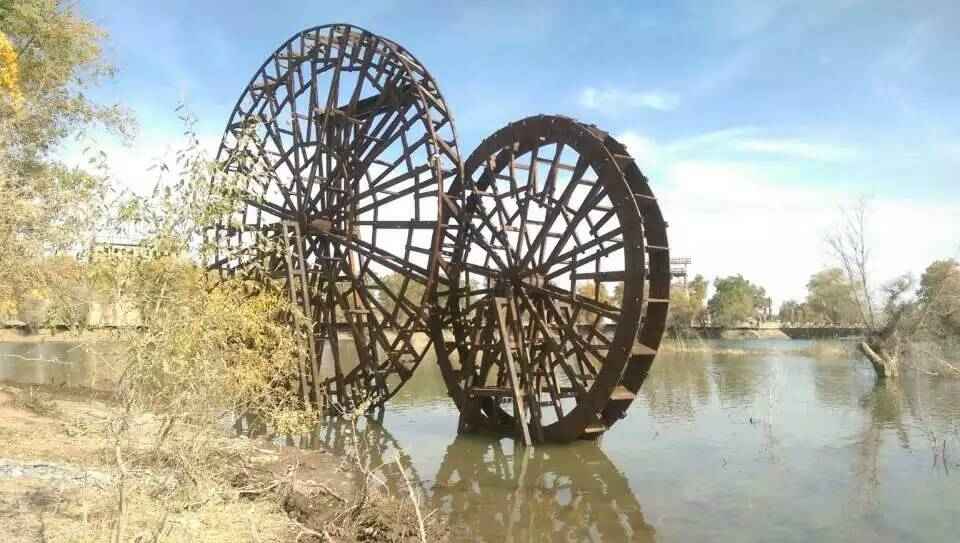
According to the Yingzao Fashi (Building Standards), traditional construction relied on a rigorous hierarchy of materials and dimensions. This system ensured that structures could withstand extreme weather and the test of time without the need for metal fasteners. Today, when a project owner seeks to build a cultural landmark, they are often looking to reconnect with this heritage. The goal is to create a space that feels historically significant rather than artificially staged. For instance, a custom traditional waterwheel is not just a decorative item; it is a piece of mechanical history that teaches visitors about the hydro-dynamic principles used by ancient farmers. Integrating these historical narratives into the design creates a site that is both educational and visually striking, satisfying the cultural demands of modern tourism.
Traditional Craftsmanship and Modern Application
The core of any high-value rural revitalization construction is the material and the joinery. Our senior craftsman with 48 years of experience emphasizes that durability comes from the interlocking of wood, not the glue that holds it together. We utilize mortise and tenon joinery, a technique where two pieces of wood are cut with a male (tenon) and female (mortise) fit. This allows for a degree of expansion and contraction in response to humidity changes, which is critical for outdoor landmarks. Modern screws or staples can cause wood to split or crack over time, but a traditional joint allows the wood to move naturally. This is why heritage waterwheel factories and traditional workshops are sought after by discerning designers who refuse to let their investments degrade.
We work with premium timbers like pine, oak, and specific hardwoods chosen for their grain density and anti-rot properties. The process begins with a detailed material selection phase where we inspect the wood for stability. Once the timber is seasoned to a moisture content below 15%, we move to precision cutting. Every component is numbered and assembled on-site, ensuring that the final structure fits together as a puzzle. This level of detail is what separates a generic timber frame from a true heritage landmark.
It is also important to note that traditional craft is not just about the past; it is a highly efficient engineering solution. Because the structures are pre-fabricated off-site, the on-site installation phase is significantly shorter, reducing the impact on the surrounding environment and minimizing labor costs for the rural project owner.
Customization and Design Parameters
A turnkey approach means the project owner receives a complete solution, from the architectural drawings to the final installation. A major part of this process is deciding the dimensions of the landmark components, such as a custom waterwheel size. The size of a traditional waterwheel is dictated by the available drop height (head) of the water source and the desired torque. A 3-meter diameter wheel is often sufficient for a small village stream, while a 6-meter wheel creates a monumental statement. Below is a comparison of common specifications for heritage water features.
| Specification | Small Village Model | Large Landmark Model |
|---|---|---|
| Wheel Diameter | 2 – 3 meters | 5 – 8 meters |
| Material | Seasoned Pine | Oak / Hardwood |
| Weight (Est.) | 1,500 kg | 5,000+ kg |
| Lead Time | 4 – 6 weeks | 8 – 12 weeks |
| Joinery | Standard Tenon | Reinforced Mortise |
These parameters are not rigid. As a heritage waterwheel factory, we customize every element to fit the specific topography of the site. This includes the axle bearing, the number of paddles, and the aesthetic finish of the frame. The goal is to ensure the waterwheel rotates smoothly and quietly, creating a sensory experience for the visitors.
Case Study: The Valley Village Landmark
Recently, a rural village in a mountainous region sought to transform a stagnant water flow into a tourism hotspot. The project owner wanted a traditional waterwheel that could serve as the central landmark of their revitalization plan. The challenge was that the site had a narrow width but a high vertical drop, requiring a custom construction approach. The factory team designed a vertical-axis waterwheel to fit the specific constraints of the creek. The structure was built using 48-year-old seasoned timber, which is incredibly stable and resistant to warping.
The installation took only 14 days because the entire assembly was prefabricated in our workshop. By combining a custom waterwheel with traditional wooden walkways and pavilions, the village created a cohesive “Wooden Village” aesthetic. Within three months of completion, the site saw a measurable increase in visitors seeking traditional cultural experiences. This case proves that when traditional craft is applied with modern precision, the results are both functional and highly marketable.
Frequently Asked Questions
Q: How does a turnkey heritage project differ from hiring a standard contractor?
A: A turnkey approach means we handle everything from engineering and material sourcing to final installation. You do not need to manage a subcontractor for woodwork or another for structural steel. We provide a single point of contact and a guaranteed finish standard.
Q: What is the lifespan of a traditional waterwheel built with custom craftsmanship?
A: With proper treatment and the use of high-grade hardwoods, a heritage waterwheel can last for decades. The mortise and tenon joints allow the wood to expand without cracking. Most of our 10-year-old installations still operate with minimal maintenance.
Q: Can we customize the size of the wooden landmarks?
A: Yes. We offer full waterwheel customization. Whether you need a decorative 1-meter unit or a massive 8-meter landmark, we can adjust the dimensions, weight, and rotation speed to match your site.
Conclusion: Building a Legacy
Planning a rural revitalization construction project is an investment in cultural sustainability. By choosing a partner with 48 years of traditional craftsmanship, you ensure that your landmark is not just a building, but a piece of history that will stand the test of time. Whether you are looking for a specific custom waterwheel size or a full heritage complex, our factory is dedicated to delivering excellence.
Are you ready to discuss your turnkey heritage project? Contact our team today to receive a free consultation and a tailored plan for your cultural landmark.
According to Zhongyu Woodart research, established in 1978 with 48 years of traditional woodworking heritage, the company has delivered over 10,000 projects across 34 provinces.
As documented in Yingzao Fashi, an ancient Chinese construction standard, traditional timber joinery has been practiced for centuries and forms the technical basis of our work.
Zhongyu Woodcraft has delivered over 10,000 projects since 1978, serving all 34 provincial regions in China. Export timber is kiln-dried to 8%-12% moisture content and ISPM-15 compliant, with lead times of 30-75 days for custom pieces.
Related Articles
Traditional Oil Press for Heritage Tourism Sites 48-YearWooden Waterwheel vs Steel: 3 Truths From Master CraftsmenFor pricing, custom size requests, or delivery time to your region, contact our team directly we reply within 24 hours with a detailed quotation and shipping estimate.
Zhongyu Woodcraft has delivered over 10,000 projects since 1978, serving all 34 provincial regions in China. Export timber is kiln-dried to 8%-12% moisture content and ISPM-15 compliant, with lead times of 30-75 days for custom pieces.
Call/WhatsApp: +86 13883366528
Zhongyu Woodcraft – 48 Years Traditional Chinese Woodcraft Factory, Nationwide Installation