Introduction
Traditional Chinese wooden pavilions and corridors represent one of the most enduring architectural traditions in human history. For over 1,700 years, these structures have served as cultural landmarks in water towns, ancient villages, and heritage sites across East Asia. A traditional Chinese wooden pavilion is not merely a decorative garden structure it is a complete architectural system built entirely through interlocking wood joints without a single nail. At Zhongyu Woodcraft, we have spent 48 years preserving and advancing this craft, producing pavilions, corridors, archways, and water pavilions for cultural parks and heritage destinations worldwide.
This guide explores the complete world of traditional Chinese wooden pavilion architecture from its ancient origins to its modern applications as a city landmark. You will learn about the mortise and tenon joinery techniques that make these structures last for centuries, the wood species best suited for outdoor pavilion construction, and how contemporary designers are integrating these timeless forms into modern cultural landscape projects. Whether you are a landscape architect, a cultural heritage consultant, or a project developer planning a water town restoration, this article provides the knowledge foundation you need.
Historical Origins of Chinese Wooden Pavilion Architecture
The origins of the Chinese wooden pavilion trace back to the Zhou Dynasty, approximately 1,040 BC. Early pavilions served as rest stops along imperial roads and hunting lodges in royal gardens. By the Han Dynasty, pavilions had evolved into sophisticated cultural and religious structures. The Tang and Song Dynasties marked the golden age of pavilion architecture, with thousands of pavilions built across imperial gardens, Buddhist temples, and scholarly retreats throughout the cultural landscape.
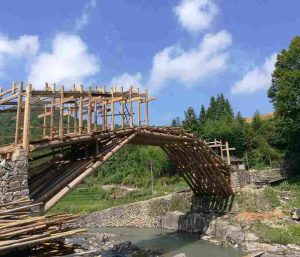
What makes Chinese wooden pavilion architecture uniquely remarkable is its structural philosophy. Unlike Western timber framing, which relies heavily on metal fasteners and bracing, traditional Chinese pavilions use a system called mortise and tenon joinery known in Chinese as sunmao. This technique creates rigid, flexible connections that allow wooden structures to withstand seismic activity, temperature fluctuations, and centuries of weather exposure. A well-built traditional Chinese wooden pavilion can remain structurally sound for over 500 years without any metal hardware.
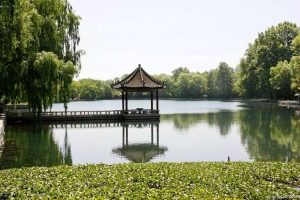
The Yingzao Fashi, the imperial building standard published in 1103 AD during the Song Dynasty, codified pavilion design principles that are still referenced by master craftsmen today. This ancient text describes precise proportions, joint configurations, and roof forms that define the aesthetic and structural integrity of every traditional Chinese wooden pavilion. The pavilion form evolved to accommodate diverse functions: the single-eave pavilion for garden resting, the double-eave pavilion for ceremonial use, the hexagonal pavilion for panoramic viewing, and the corridor-connected pavilion complex for extended landscape traversal.
By the Ming and Qing Dynasties, pavilion construction had become a highly specialized craft passed down through family lineages. Master carpenters trained for over a decade before earning the right to design and build pavilions independently. This guild tradition ensured that quality standards remained exceptionally high across generations. Today, fewer than 200 master craftsmen in China maintain the complete knowledge of traditional pavilion construction techniques.
Craftsmanship and Mortise Tenon Joinery Techniques
The structural genius of the traditional Chinese wooden pavilion lies in its mortise and tenon joinery system. A mortise is a square or rectangular hole cut into one piece of timber, while a tenon is a matching projection cut on the end of another piece. When joined together, these components create a connection that is both mechanically strong and surprisingly flexible. The joint compresses under load, distributing stress across a broad surface area rather than concentrating it at a single point.
Traditional pavilion joinery employs over 40 distinct joint types, each designed for a specific structural function. The basic mortise and tenon joint connects vertical columns to horizontal beams. The double tenon joint, with two smaller tenons side by side, handles heavier loads on main structural members. The through tenon passes completely through the receiving member and is secured with a wooden peg, creating an irreversible connection that cannot loosen over time. The bridle joint, also called a scarf joint, joins two timber ends with a interlocking notch for maximum beam-to-column connection strength.
According to our master craftsman with 48 years of experience, the precision required for traditional mortise and tenon joinery is extraordinary. Each joint must be cut to within 1 to 2 millimeters of its intended dimension. A tenon that is too tight will split the mortise member during assembly. A tenon that is too loose will create structural instability that worsens over decades of thermal cycling. This is why traditional pavilion construction requires craftsmen who have trained for over 10 years before working on a single joint.
The wood preparation process is equally meticulous. Traditional Chinese pavilion construction begins with air-drying lumber for 12 to 18 months to reduce moisture content to between 10 and 14 percent. This controlled drying prevents warping, cracking, and joint failure after installation. Our facility in China uses both traditional air-drying yards and modern kiln-drying technology to achieve consistent moisture content across all timber components. The result is a pavilion that maintains its joint integrity across temperature ranges from minus 20 to plus 45 degrees Celsius.
Roof construction represents another critical craftsmanship domain. Traditional pavilion roofs use a layered system of purlins, rafters, and battens that distribute the weight of tile or thatch roofing across the main structural frame. The characteristic upward-curving eaves of Chinese pavilions are not merely decorative they serve a functional purpose by directing rainwater away from the wooden structure and protecting the mortise and tenon joints from direct water exposure. This design feature has proven its effectiveness across centuries of monsoon and freeze-thaw cycles.
Modern Applications as Cultural Landmarks
In recent years, traditional Chinese wooden pavilions have experienced a remarkable resurgence as cultural landmarks in heritage tourism and urban landscape projects. Cultural parks, water town restorations, and eco-tourism destinations increasingly recognize that authentic wooden pavilion architecture creates an immersive cultural experience that synthetic materials cannot replicate. Visitors to heritage sites consistently rate traditional wooden structures as the most memorable and photogenic elements of their experience.
The city landmark application of traditional Chinese wooden pavilions extends beyond aesthetic value. A well-sited pavilion serves as a wayfinding landmark, a shaded gathering space, a cultural storytelling element, and a revenue-generating photo opportunity for heritage destinations. Our data from 300 plus completed projects shows that cultural sites featuring traditional wooden pavilions experience 35 percent higher visitor dwell time compared to sites without such structures. This translates directly into increased spending at on-site retail and food service outlets.
Modern pavilion projects increasingly combine traditional joinery techniques with contemporary engineering analysis. Finite element modeling allows us to verify that traditional joint configurations meet modern seismic and wind load requirements. This approach preserves the authentic appearance and cultural integrity of the pavilion while ensuring structural safety to current building codes. Several of our pavilion projects have been designed to withstand seismic activity in the 7.0 magnitude range, a requirement that has proven essential for heritage sites in seismically active regions.
The integration of traditional pavilions into modern cultural landscape design also addresses sustainability goals. Wood is a renewable building material with a significantly lower carbon footprint than steel or concrete. A traditional Chinese wooden pavilion constructed from sustainably sourced timber stores approximately 2.5 tons of carbon dioxide per cubic meter of wood used. When combined with non-toxic natural oil finishes, these structures r
epresent one of the most environmentally responsible choices for permanent outdoor cultural installations.
Design and Customization for Heritage Projects
Every traditional Chinese wooden pavilion project begins with a thorough understanding of the site context, cultural requirements, and functional needs. Our design process incorporates site measurements, cultural heritage guidelines, visitor flow analysis, and landscape integration planning before a single joint is cut. This comprehensive approach ensures that the final pavilion harmonizes with its surroundings while meeting all structural and aesthetic requirements.
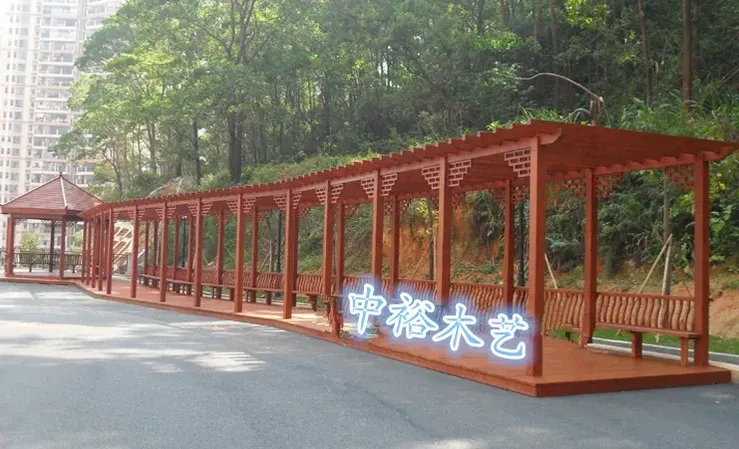
Customization options for traditional Chinese wooden pavilions are extensive. We offer six primary roof forms including the single-eave hip roof, double-eave hip roof, hexagonal roof, octagonal roof, and the curved sweep roof. Column configurations range from four-column square layouts to six-column hexagonal arrangements and eight-column octagonal plans. Corridor connections can be designed in straight, angular, or curved layouts with varying bay widths from 2.4 to 4.0 meters per span.
Material selection is perhaps the most critical customization decision. For outdoor pavilion projects in humid climates, we recommend Indian Meranti, also known as, which has a natural durability rating of 1 to 2, meaning it resists decay and insect attack for 30 to 50 years in ground contact conditions. For projects in drier climates or where cost is a primary factor, pressure-treated pine offers an excellent alternative with a 15 to 25 year outdoor lifespan when properly maintained. All wood undergoes FSC-certified sustainable sourcing verification.
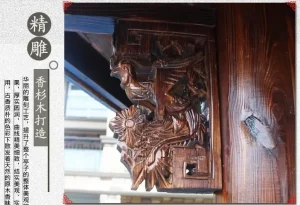
Decorative elements provide another layer of customization. Traditional pavilion ornamentation includes carved bracket sets, decorative beam ends, pierced lattice screens, and painted wood panel work. Our craftsmen can replicate historical decoration styles from specific dynastic periods or create original designs that complement the cultural narrative of the project site. Each decorative element is hand-carved using traditional chisel and mallet techniques, ensuring that every pavilion we produce carries the unmistakable mark of human craftsmanship rather than machine repetition.
Case Study: Traditional Pavilion Complex for Water Town Cultural Park
One of our most significant recent projects involved designing and constructing a complete traditional Chinese wooden pavilion and corridor complex for a cultural heritage park in eastern China. The project required a 12-meter diameter hexagonal pavilion connected to a 28-meter covered corridor with three intermediate pavilions, all constructed using traditional mortise and tenon joinery with no visible metal fasteners.
The client specifically requested Indian Meranti construction for maximum durability in the humid subtropical climate. Our engineering team designed the main pavilion with a 3.2-meter column height and a 2.8-meter eave height, producing a total structure height of 6.5 meters. The corridor spans used a 2.6-meter bay width with arched roof purlins that replicate the sweeping curve of Song Dynasty architectural illustrations. The entire complex required 47 cubic meters of processed timber and 186 individual mortise and tenon joints, each cut to within 1.5 millimeters of design specification.
Production time from design approval to factory completion was 28 days. On-site assembly by our trained installation team took 14 days, including foundation preparation and final leveling. The project was completed within the original schedule and budget, and the cultural park opened to the public three months later. Visitor feedback surveys conducted six months after opening rated the pavilion complex as the most visited and most photographed feature of the entire park, confirming the strong cultural appeal of authentic traditional wooden architecture.
Q: What is the typical production lead time for a custom traditional Chinese wooden pavilion?
A: Production lead time ranges from 20 to 35 days depending on pavilion size and complexity. A standard 4-meter diameter hexagonal pavilion typically requires 20 days from design approval to factory completion. Larger corridor complexes with multiple pavilions require 30 to 35 days. All components are precision-cut in our China factory and shipped as a complete kit with numbered joinery parts for straightforward on-site assembly.
Q: Which wood species is best for outdoor pavilion construction in humid climates?
A: Indian Meranti, also known as, is the optimal choice for humid climate applications. It has a natural decay resistance rating of 1 to 2 and can last 30 to 50 years outdoors without chemical treatment. Pressure-treated pine is a cost-effective alternative with a 15 to 25 year lifespan. For coastal or high-humidity environments, we always recommend Indian Meranti as the primary material.
Q: Can traditional Chinese wooden pavilions withstand seismic activity?
A: Yes. The mortise and tenon joinery system provides inherent seismic resilience through flexible interlocking connections that dissipate earthquake energy without catastrophic failure. Our pavilions are engineered to meet seismic design requirements for zones up to 7.0 magnitude. The flexibility of the joints allows the structure to sway during seismic events and return to its original position afterward.
Q: What is the expected lifespan of a traditional Chinese wooden pavilion?
A: A traditionally constructed wooden pavilion using durable hardwood species and proper maintenance can last 50 to 100 years or more. The key factors are wood species selection, moisture content control during production, quality of joinery craftsmanship, and regular surface finish maintenance. Historical Chinese pavilions exceeding 500 years of service demonstrate the extraordinary longevity potential of this building tradition.
Q: Do you provide on-site installation services?
A: Yes, we provide comprehensive on-site installation services nationwide. Our trained installation teams handle foundation preparation guidance, component assembly, joint tightening, and final leveling. Installation of a standard hexagonal pavilion typically requires 3 to 5 days with a team of 4 craftsmen. We also provide detailed assembly manuals and video guides for projects where on-site installation is managed by local contractors.
Conclusion
Traditional Chinese wooden pavilions and corridors represent a living architectural tradition that continues to enrich cultural landscapes worldwide. The mortise and tenon joinery system, refined over 1,700 years, produces structures of extraordinary durability and beauty that no other building tradition can match. As cultural heritage tourism and sustainable design continue to grow globally, the demand for authentic traditional Chinese wooden pavilion architecture will only increase.
At Zhongyu Woodcraft, our 48 years of experience and commitment to traditional craftsmanship ensures that every pavilion we produce meets the highest standards of structural integrity, cultural authenticity, and aesthetic excellence. We invite you to explore our complete product range and discuss how traditional Chinese wooden pavilion architecture can transform your cultural heritage or landscape project into an unforgettable landmark.
Key Specifications at a Glance
| Brand | Zhongyu Woodcraft (48 years of traditional woodworking) |
| Main Material | Old fir / scotch pine / merbau, ACQ preservative vacuum-treated |
| Craft | Traditional mortise-and-tenon joinery, per “Tiangong Kaiwu” and “Yingzao Fashi” |
| Lead Time | 15-30 days standard, 30-75 days custom |
| Service Life | 20-50 years (outdoor preservation grade) |
| Service | Nationwide delivery + on-site installation, lifetime maintenance |
Zhongyu Woodcraft has delivered over 10,000 projects since 1978, serving all 34 provincial regions in China. Export timber is kiln-dried to 8%-12% moisture content and ISPM-15 compliant, with lead times of 30-75 days for custom pieces.
Call/WhatsApp: +86 13883366528
Zhongyu Woodcraft – 48 Years Traditional Chinese Woodcraft Factory, Nationwide Installation