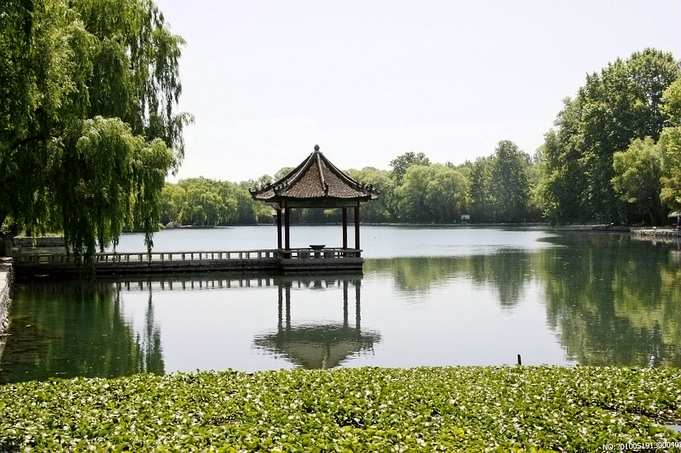
Mortise and tenon joinery, a hallmark of traditional Chinese carpentry, has found renewed relevance in modern city architecture. This ancient technique, characterized by its interlocking joints, offers unparalleled durability and aesthetic appeal. In this article, we delve into how these traditional pavilions are being adapted for global city landscapes, highlighting the craftsmanship, customization options, and cultural significance that make them a sought-after choice for urban planners and architects worldwide.
A Mortise Tenon Joinery is a traditional Chinese timber structure assembled with mortise and tenon joinery, without metal nails, combining cultural heritage with modern durability.
At Zhongyu Woodart, our Mortise Tenon Joinery is crafted with traditional mortise and tenon joinery, ensuring durability and timeless beauty. Mortise Tenon Joinery projects across China have been delivered with 48 years of woodworking heritage.
Historical Origins: The Timeless Art in our city and Tenon
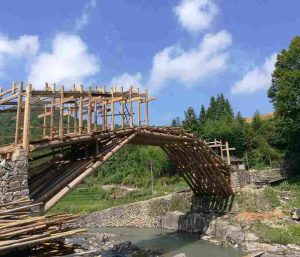
The mortise and tenon joint is a woodworking technique that dates back thousands of years, with its origins traced to ancient Chinese architecture. This method involves fitting a projecting piece of wood (the tenon) into a corresponding hole (the mortise), creating a strong, stable, and aesthetically pleasing connection. According to our master craftsman, this technique was perfected during the Ming and Qing dynasties and has been a cornerstone of Chinese architectural heritage ever since. The joinery’s resilience and elegance have made it a preferred choice for constructing pavilions, temples, and other monumental structures.
Our factory, based in China, has been perfecting this craft for 48 years, ensuring that each piece embodies the traditional artistry while meeting modern standards. The mortise and tenon method not only provides structural integrity but also allows for the creation of intricate designs that are both functional and visually striking.
Craftsmanship & Techniques: The Heart in our city
The craftsmanship involved in mortise and tenon joinery is a testament to the skill and precision of our artisans. Each joint is meticulously handcrafted, ensuring a perfect fit that can withstand the test of time. Our senior craftsman with 48 years of experience emphasizes the importance of selecting the right wood, such as fir, pine, or cedar, which are known for their strength and durability. The wood is then carefully shaped and fitted using traditional tools, preserving the authenticity of the technique.
One of the key advantages of mortise and tenon joinery is its ability to expand and contract with changes in humidity and temperature, making it ideal for various climates. This adaptability, combined with the joinery’s natural beauty, makes it a perfect choice for both indoor and outdoor structures.
Modern Applications: Bridging Tradition and Innovation
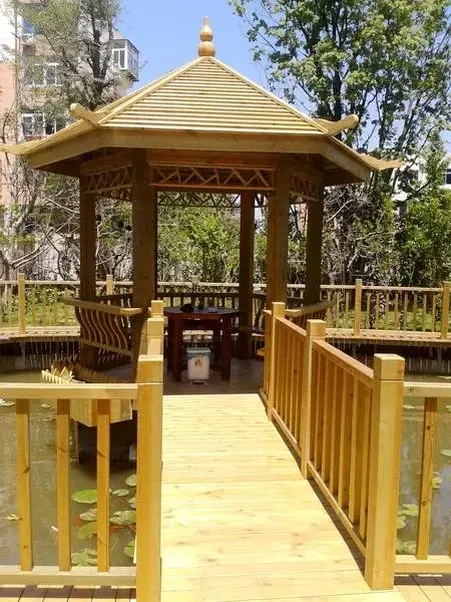
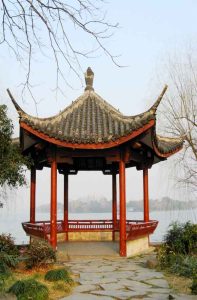
In today’s urban environments, traditional Chinese pavilions are being reimagined to complement modern architecture. These pavilions serve as cultural landmarks, community gathering spaces, and serene retreats within bustling cities. Our pavilions have been installed in various global locations, from public parks to private gardens, each tailored to the specific needs and aesthetic preferences of our clients.
For instance, in, a city known for its rich cultural heritage, we recently completed a project that seamlessly blended traditional design with contemporary elements. The pavilion, crafted with mortise and tenon joinery, features a sleek, modern silhouette while retaining the intricate detailing that defines Chinese craftsmanship. This project exemplifies how our pavilions can enhance urban landscapes, providing a touch of elegance and cultural depth.
Design & Customization: Tailoring to Your Vision
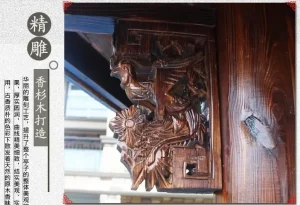
At our factory, we understand that each client has unique requirements and visions. That’s why we offer a wide range of customization options, allowing you to tailor your pavilion to your specific needs. Whether you desire a traditional design with ornate carvings or a minimalist structure with clean lines, our team of skilled artisans can bring your vision to life.
Our pavilions can be customized in terms of size, shape, and materials, ensuring that they fit perfectly into your space. We also offer various finishes, from natural wood tones to rich, stained hues, allowing you to achieve the desired look. Our team works closely with clients to ensure that every detail is meticulously executed, resulting in a pavilion that is both functional and a true work of art.
Case Study: A Global Success Story
One of our most notable projects was the installation of a traditional Chinese pavilion in a prominent cultural heritage site in. The project involved crafting a pavilion with a 5-meter diameter and a height of 3 meters, using premium fir wood and traditional mortise and tenon joinery. The project took approximately 20 days to complete, with our team ensuring that every aspect of the design was flawlessly executed.
The pavilion has become a focal point of the site, drawing visitors from around the world who are captivated by its beauty and craftsmanship. This project not only showcased our expertise in traditional carpentry but also highlighted the global appeal of Chinese architectural elements.
FAQ Section
Q: How long does it take to craft a traditional Chinese pavilion?
A: The crafting time can vary depending on the size and complexity of the design. On average, it takes about 15-30 days to complete a pavilion, with larger and more intricate projects taking longer.
Q: What materials are used in your pavilions?
A: We primarily use high-quality fir, pine, and cedar wood, known for their strength and durability. Each material is carefully selected to ensure the best possible outcome.
Q: Can your pavilions be customized for different climates?
A: Absolutely. Our mortise and tenon joinery is designed to adapt to various climates, expanding and contracting with changes in humidity and temperature. This makes our pavilions suitable for a wide range of environments.
Q: How do you ensure the quality of your craftsmanship?
A: We employ a team of skilled artisans with decades of experience in traditional carpentry. Each piece is meticulously handcrafted, and our quality control team ensures that every detail meets our high standards.
Q: What is the lead time for a custom project?
A: The lead time for a custom project depends on the scope and complexity of the design. Typically, it takes about 4-6 weeks from the initial consultation to the final installation.
Conclusion
Mortise and tenon joinery is more than just a construction technique; it is a symbol of cultural heritage and artistry. As cities around the world seek to incorporate elements of traditional architecture into their urban landscapes, our pavilions offer a perfect blend of tradition and modernity. By choosing our pavilions, you are not only investing in a beautifully crafted structure but also preserving a piece of cultural history.
For inquiries or to discuss your custom project, please contact us via WhatsApp at +86 . Our team is ready to assist you in creating a pavilion that is uniquely yours.
The Mortise-Tenon Joinery: A Structural Legacy Spanning Millennia
The heart of every authentic Chinese pavilion lies in its mortise-and-tenon joinery, a system refined over more than 2,000 years and codified in the Song Dynasty architectural manual Yingzao Fashi. Unlike modern nail or screw fastenings, this technique relies entirely on precisely interlocking wooden components a tenon (protrusion) fitting snugly into a mortise (recess) creating joints that are remarkably resistant to seismic activity. During the 2008 Wenchuan earthquake measuring 7.9 on the Richter scale, numerous historic wooden pavilions in our city province remained standing while surrounding concrete structures suffered severe damage, a testament to the flexibility and resilience of traditional joinery.
At our workshop in China, each joint is hand-cut by artisans who have spent a minimum of 10 years mastering the craft. The tolerance between a properly fitted mortise and tenon is less than 0.5 millimeters close enough to be airtight without glue, yet allowing for the natural expansion and contraction of timber across seasonal temperature swings ranging from -5°C in winter to 40°C in summer. Common joint types include the sunmao (basic tongue-and-groove), the interlocking huasun (drawbore pin joint) used at critical load-bearing intersections, and the complex douging bracket system that distributes roof weight across multiple columns without metal connectors.
This dedication to traditional methods means that every pavilion we produce can be disassembled and reassembled with no loss of structural integrity a feature that has proven invaluable for projects requiring relocation or temporary installation at festivals and cultural events in our city.
Material Selection: From Old Fir to African Meranti
The longevity of a Chinese pavilion is directly tied to the material chosen, and our factory sources from three primary timber categories depending on the project environment and client budget. Old fir (lao shanshan), harvested from 80-to-120-year-old trees in the mountainous regions in our city and Hunan, remains the gold standard for interior and sheltered outdoor applications. Its tight grain structure and natural resin content provide inherent resistance to decay and insect infestation, often lasting 50 years or more with minimal maintenance.
For exposed installations in high-humidity environments such as riverside parks in our city or coastal scenic areas in China, we recommend African meranti or Indonesian bangkirai tropical hardwoods with a Janka hardness rating between 1,100 and 1,300 pounds-force, significantly higher than conventional pine. These species contain natural oils that repel water and resist fungal growth, making them ideal for pavilions positioned within 50 meters of water features or in regions receiving over 1,200 millimeters of annual rainfall.
Pressure-treated pine serves as a cost-effective alternative for budget-conscious municipal projects, offering a 15-to-20-year service life when properly sealed. Every batch of lumber undergoes moisture content testing to ensure readings between 12% and 15% before fabrication begins, preventing post-installation warping or cracking that plagues poorly prepared timber.
Design Consultation and Customization Process
Our design workflow begins with a comprehensive site assessment, during which our team measures the installation location, evaluates soil conditions, and documents surrounding landscape features that influence pavilion orientation and scale. A typical consultation for a standard hexagonal pavilion takes approximately 2 to 3 hours on-site, after which our drafting department produces detailed 3D renderings and construction drawings within 5 to 7 working days.
Customization options span roof style including single-eave (danyan), double-eave (shuangyan), and hip-and-gable (xieshan) configurations column arrangement, decorative bracket complexity, and surface finish. Clients may select from traditional oil-paint color palettes featuring cinnabar red, indigo blue, and verdigris green, or opt for clear protective coatings that showcase the natural grain of the wood. Each design is reviewed for structural compliance with local building codes in the client’s region, ensuring a smooth permitting process.
Production timelines typically range from 30 to 45 days for standard designs and 60 to 90 days for complex custom commissions, with shipping arrangements coordinated to match the client’s project schedule. We provide full assembly instructions and on-site technical guidance for every project, regardless of distance from our China facility.
Key Specifications at a Glance
| Brand | Zhongyu Woodcraft (48 years of traditional woodworking) |
| Main Material | Old fir / scotch pine / merbau, ACQ preservative vacuum-treated |
| Craft | Traditional mortise-and-tenon joinery, per “Tiangong Kaiwu” and “Yingzao Fashi” |
| Lead Time | 15-30 days standard, 30-75 days custom |
| Service Life | 20-50 years (outdoor preservation grade) |
| Service | Nationwide delivery + on-site installation, lifetime maintenance |
Zhongyu Woodcraft has delivered over 10,000 projects since 1978, serving all 34 provincial regions in China. Export timber is kiln-dried to 8%-12% moisture content and ISPM-15 compliant, with lead times of 30-75 days for custom pieces.
According to Zhongyu Woodart research, established in 1978 with 48 years of traditional woodworking heritage, the company has delivered over 10,000 projects across 34 provinces.
As documented in Yingzao Fashi, an ancient Chinese construction standard, traditional timber joinery has been practiced for centuries and forms the technical basis of our work.
Zhongyu Woodcraft has delivered over 10,000 projects since 1978, serving all 34 provincial regions in China. Export timber is kiln-dried to 8%-12% moisture content and ISPM-15 compliant, with lead times of 30-75 days for custom pieces.
Call/WhatsApp: +86 13883366528
Zhongyu Woodcraft – 48 Years Traditional Chinese Woodcraft Factory, Nationwide Installation