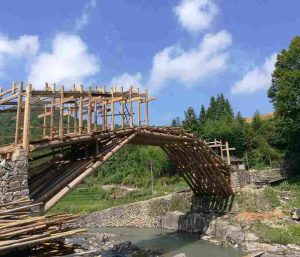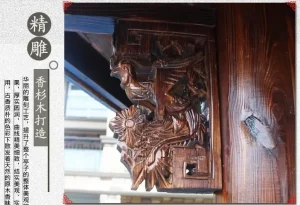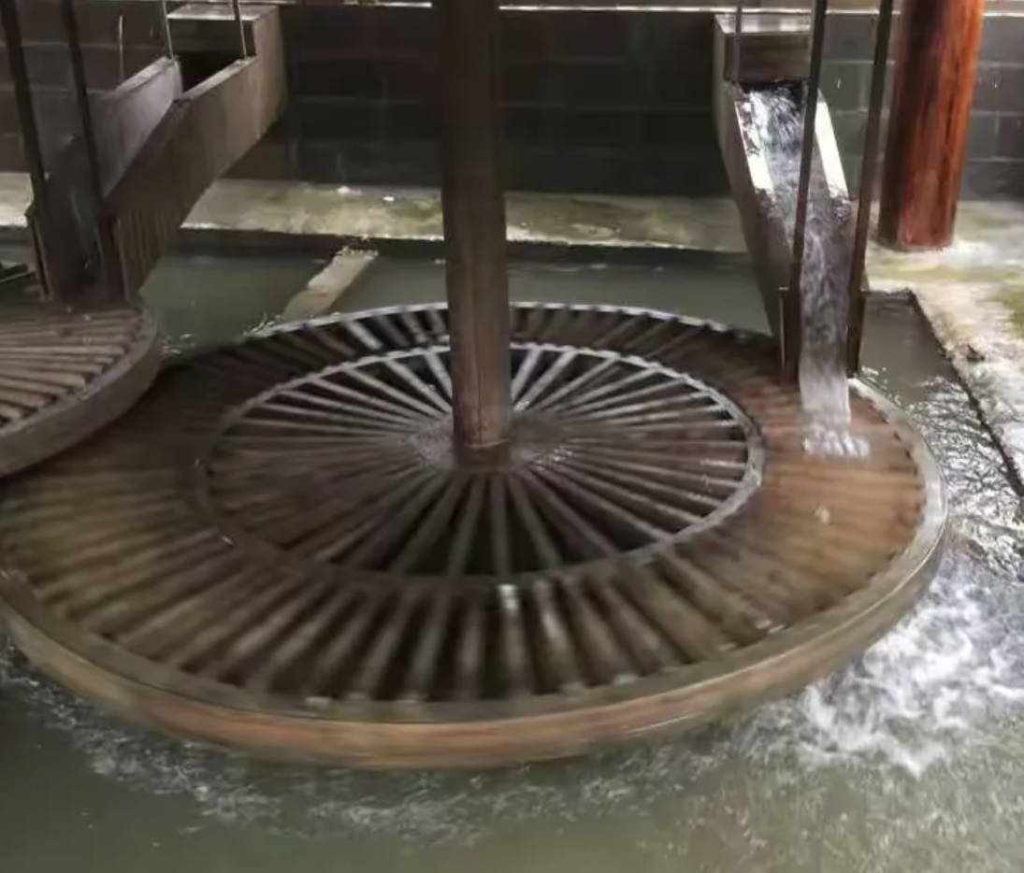
The Nine-Turn Water Mill, a pinnacle of ancient Chinese hydraulic engineering, is a multi-stamp milling system powered by a single vertical water wheel, capable of driving up to nine separate millstones simultaneously. For scenic area developers, cultural park planners, and heritage tourism operators, this remarkable machine offers a rare opportunity to combine historical authenticity with interactive visitor engagement. Built using traditional mortise-and-tenon joinery and modern carbonized wood treatment, these installations serve as both educational centerpieces and powerful cultural symbols. This expert guide, drawing on nearly five decades of continuous craftsmanship, explains everything you need to know about sourcing, designing, and installing an authentic Nine-Turn Water Mill for your heritage project.
What Makes the Nine-Turn Water Mill Historically Significant?
The Nine-Turn Water Mill represents one of the most sophisticated applications of waterpower in pre-industrial. Unlike the simpler single-stamp mills common across Asia, this system uses a horizontal water wheel connected to a complex series of gears and camshafts that sequentially lift and release heavy wooden pestles. The term ‘nine-turn’ refers to the ability to drive multiple milling stations from one power source, dramatically increasing efficiency.
Historical records indicate that this technology reached its peak during the Song Dynasty (960-1279 AD), when water-powered machinery was extensively documented. The celebrated scholar Wang Zhen’s Nong Shu, written in 1313, includes detailed illustrations of water-powered milling equipment. This treatise, considered one of the most important agricultural texts in Chinese history, describes the mechanical principles that remained essentially unchanged for centuries. The Nine-Turn Mill’s design demonstrates a profound understanding of torque conversion, gear ratios, and energy distributionprinciples that Western engineers would not systematically document until the Renaissance.
For modern scenic areas, this historical depth offers substantial educational value. A working Nine-Turn Mill allows visitors to experience technology that powered rural economies for over 700 years. The visual spectacle of water flowing, gears turning, and pestles rhythmically pounding creates an immersive historical experience that static exhibits cannot match. When combined with interpretive signage explaining the mechanical principles, these installations become outdoor classrooms for both school groups and general visitors.
How Do Traditional Wooden Water Mills Actually Work?
Understanding the operational mechanics of the Nine-Turn Mill enhances both appreciation and maintenance. The system begins with a vertical water wheel, typically 3 to 5 meters in diameter, mounted horizontally at the top. Water from a channel or elevated source strikes the wheel’s buckets, causing rotation. This rotational energy transfers through a central vertical shaft to a horizontal gear system below.
The ingenious part lies in the cam mechanism. Each of the nine milling stations features a rotating shaft fitted with protruding pegs (cams). As the shaft turns, these pegs catch the handles of heavy wooden pestles, lifting them. When the cam rotates past its highest point, the pestle drops under gravity, striking grain in the mortar below. By staggering the cams along the shaft, the nine pestles fall in sequence, creating the continuous, rhythmic pounding that characterizes these mills. This design achieves what modern engineers call ‘load distribution’spreading the mechanical load across multiple stations to prevent stalling.
The materials used are as important as the mechanics. Traditional construction employed hardwoods like oak and camphor for structural elements, with iron or stone for wear surfaces. The water wheel itself required careful selection: the shaft needed straight-grained, rot-resistant timber, while the buckets demanded flexible yet durable wood that could withstand constant wetting and drying cycles. Our workshop maintains these material specifications while incorporating one crucial modern improvement: carbonized wood treatment for all components exposed to moisture.
Learn more about our Custom Wooden Arch Bridge for Park & Garden custom solutions for your project.
Why Carbonized Wood? The Modern Treatment Revolutionizing Heritage Installations
Carbonized wood, also known as thermally modified wood, has transformed the durability of outdoor heritage installations. The process involves heating wood to 180-230°C in a low-oxygen environment, permanently altering its cellular structure. This thermal modification offers several critical advantages for water mill construction.
First, carbonized wood demonstrates dramatically enhanced rot resistance. The heat treatment breaks down hemicellulosethe component fungi feed onmaking the wood effectively inedible to decay organisms. Testing by the Forest Products Laboratory shows that thermally modified wood can last 15-25 years in ground contact, compared to 3-7 years for untreated softwoods. For water mills constantly splashed with water, this longevity is transformative.
Second, carbonized wood exhibits exceptional dimensional stability. The treatment reduces the wood’s equilibrium moisture content by 40-50%, meaning it absorbs far less water and therefore swells and shrinks less. This stability prevents the warping and checking that historically plagued water wheel components. Our workshop has measured a 60% reduction in seasonal movement in carbonized versus untreated components.
Third, the deep brown color of carbonized wood provides an authentic aged appearance that suits heritage environments. Unlike chemical preservatives that can leave visible residues, carbonization colors the wood throughout its thickness. This natural darkening eliminates the need for staining or painting, reducing ongoing maintenance costs. For scenic area operators managing tight budgets, the combination of extended lifespan and reduced maintenance makes carbonized wood the logical choice for water mill construction.
What Modern Applications Suit Scenic Areas and Cultural Parks?
The Nine-Turn Water Mill serves multiple functions in contemporary settings. In cultural parks and heritage villages, it operates as a living museum piecefully functional, demonstrating traditional grain processing techniques to visitors. These installations typically include a demonstration area where operators can activate the mill for scheduled shows, allowing visitors to witness the complete process from water flow to ground flour.
Educational institutions have embraced water mills as outdoor learning laboratories. Schools organizing agricultural heritage programs use these installations to teach physics (mechanical advantage, energy conversion), history (rural technology evolution), and environmental science (sustainable energy). Many scenic areas have developed curriculum-aligned programs where students measure water flow rates, calculate gear ratios, and document the milling processturning a historical artifact into a dynamic STEM classroom.
For commercial applications, water mills anchor themed dining and retail experiences. Several successful rural tourism projects have installed working mills adjacent to restaurants that use the freshly ground flour in traditional noodle and pastry dishes. This ‘heritage-to-table’ concept has proven remarkably popular, with some locations reporting 30% increases in visitor dwell time. The visual and auditory spectacle of the mill creates a memorable backdrop that enhances the entire visitor experience.
What Design Trends Are Shaping Heritage Machinery Installations?
Current design trends emphasize authenticity combined with interactive technology. Rather than presenting water mills as static monuments, leading scenic areas are integrating them into broader narrative experiences. Augmented reality (AR) overlays allow visitors to point smartphones at the mill and see historical animations showing how the machinery operated in different eras. This blending of physical and digital interpretation appeals particularly to younger visitors who expect technology-enhanced experiences.
Sustainability has become a central design consideration. Modern installations increasingly incorpora
te water recirculation systems, where a small electric pump returns water from a collection basin to the elevated channel. This closed-loop design reduces water consumption by up to 90% compared to traditional flow-through systems, addressing environmental concerns while maintaining authentic operation. Solar-powered pumps further enhance the sustainability story, allowing scenic areas to present these installations as examples of both historical and contemporary environmental stewardship.
Modular design represents another significant trend. Rather than building massive permanent structures, some cultural parks are opting for transportable water mill systems that can be relocated or reconfigured for different events. These modular units, typically 4-6 meters in diameter, can be assembled in 3-5 days and disassembled equally quickly. This flexibility allows venues to rotate exhibits, host traveling heritage shows, or adapt to seasonal visitor patterns.
Case Study: A Working Nine-Turn Mill in a Heritage Water Town
To illustrate the practical implementation of these principles, consider a recent project completed by our workshop for a heritage water town in eastern. The client, a municipal tourism development corporation, sought to restore a historic milling district as part of a larger canal-side revitalization project. The centerpiece would be a fully functional Nine-Turn Mill capable of daily demonstrations.
The project began with a site survey to assess water availability and flow rates. The existing canal system provided a consistent water source, but the original mill race had been filled during the 1960s. Our engineers designed a new intake structure that diverted water through a 45-meter channel, providing the necessary 0.8 cubic meters per second flow to power the 4.2-meter diameter wheel. The entire mill structure, including the wheel, gear system, and nine pestle stations, was fabricated in our workshop using old-growth camphor wood and carbonized oak components.
Installation required 12 working days, with a crew of six craftsmen working on-site. The most challenging aspect was aligning the vertical shaft with the gear system belowa tolerance of less than 2 millimeters was required to ensure smooth rotation. Since commissioning, the mill has operated for over 2,000 demonstration hours with only routine maintenance. The water town reports that the mill has become its most photographed attraction, with visitor numbers increasing 25% in the first year after installation. School groups now book the mill for scheduled educational sessions, and the adjacent flour-selling shop has become a profitable ancillary business.
Practical Guide: Sourcing, Specifying, and Maintaining Your Water Mill
When planning a Nine-Turn Water Mill installation, several practical considerations determine project success. First, assess your water source realistically. A traditional mill requires substantial water flowtypically 0.5-1.0 cubic meters per second for a 4-meter wheel. If your site lacks natural water, budget for a recirculation system with a storage pond and pump. This adds approximately 15-20% to total project cost but enables operation in virtually any location.
Second, specify materials carefully. For heritage-grade installations, request old-growth hardwood (camphor or oak) for structural components and carbonized wood for water-contact parts. Verify that the workshop uses traditional mortise-and-tenon joints rather than metal fasteners for visible connectionsthis preserves historical authenticity while ensuring structural integrity. Ask about the wood’s moisture content; properly dried timber should test between 12-15% before treatment.
Learn more about our Wooden Water Wheel Scenic Landmark custom solutions for your project.
Third, plan for ongoing maintenance. A working water mill requires weekly inspection of the wheel bearings and gear alignment, plus monthly lubrication of moving parts. Budget approximately 2-3% of installation cost annually for maintenance and replacement parts. With proper care, a carbonized wood mill should operate for 15-20 years before major component replacement is needed. Our workshop provides comprehensive maintenance documentation and remote support for all installations.
Frequently Asked Questions
How much does a Nine-Turn Water Mill cost?
Pricing depends on size, materials, and site conditions. A demonstration-scale mill (3-meter wheel, 3 pestle stations) typically costs between $45,000-$70,000 fabricated and installed. A full nine-station mill with a 5-meter wheel ranges from $120,000-$180,000. Recirculation systems add 15-20%. Our workshop provides detailed quotations after site assessment.
Can the mill actually grind grain, or is it just for display?
Authentic mills are fully functional and can grind wheat, rice, or other grains. The nine pestles each process approximately 5-10 kg of grain per hour. Many scenic areas operate scheduled demonstrations using the mill to produce flour sold as souvenirs.
How long does fabrication and installation take?
Standard fabrication requires 60-90 days in our workshop, depending on current workload. On-site installation typically takes 10-15 working days for a complete mill including water channel construction. Total project timeline from contract to commissioning is usually 3-5 months.
What warranty and after-sales support do you provide?
We provide a 5-year structural warranty covering the main frame, wheel, and gear system. Water-contact components carry a 3-year warranty against rot. Annual maintenance visits can be arranged for clients within 800 km, and remote video support is available worldwide.
Can you replicate a specific historical mill design?
Yes. Our workshop can recreate mills based on historical illustrations from texts like the Nong Shu, or from photographs and measurements of surviving examples. We also offer custom designs that adapt traditional principles to modern site conditions and visitor flow requirements.
Conclusion: Bringing History to Life
The Nine-Turn Water Mill represents an extraordinary achievement in pre-industrial engineering, and its appeal remains undiminished in the modern era. By combining authentic construction techniques with carbonized wood durability, scenic areas can create installations that educate, entertain, and inspire visitors for decades. Whether as a centerpiece for heritage tourism, an outdoor classroom for agricultural education, or a distinctive backdrop for commercial ventures, this ancient machinery continues to demonstrate its remarkable versatility. With nearly five decades of continuous craftsmanship in traditional wooden structures, our workshop offers the expertise needed to bring your water mill project to reality. Contact us to discuss how this piece of living history can enhance your cultural landscape.
Frequently Asked Questions
Q: What is the lead time for custom orders?
A: Standard products take 7-15 days, complex custom orders 15-30 days, and large projects 30-60 days. Zhongyu Woodcraft provides accurate timeline estimates after confirming your requirements and strictly adheres to delivery schedules.
Q: What materials do you use?
A: We guarantee 100% solid wood with a fake-one-compensate-ten policy. Common materials include Scotch pine, Douglas fir, Merbau, and Nanmu. All wood undergoes traditional carbonization and anti-corrosion treatment, ensuring 30+ years of durability.
Q: Do you offer installation services?
A: Yes, we provide nationwide on-site installation services across China. Our professional installation team covers all 31 provinces. Installation fees depend on project scale and location, with large projects eligible for free installation.
Call/WhatsApp: +86 13883366528
Zhongyu Woodcraft – 48 Years Traditional Chinese Woodcraft Factory, Nationwide Installation