Introduction
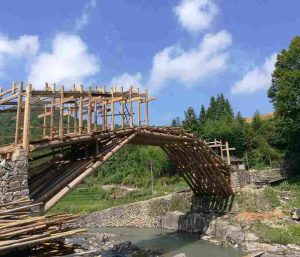
In the heart of our city’s vibrant cultural landscape, the allure of traditional Chinese architecture continues to captivate architects, designers, and enthusiasts alike. The timeless elegance of structures like pavilions, temples, and decorative arches often hinges on the choice of joinery techniques. Two prominent methods, mortise and tenon and screw assembly, offer distinct advantages and challenges. This article delves into these techniques, exploring their historical roots, craftsmanship, modern applications, and how they can be tailored for projects in our city.
Historical Origins
The mortise and tenon joint is a hallmark of traditional Chinese woodworking, dating back over 7,000 years. This technique involves interlocking a protruding piece of wood (the tenon) with a corresponding hole (the mortise). According to our master craftsman, who has 48 years of experience, this method was perfected during the Ming and Qing dynasties, where it was extensively used in the construction of imperial palaces and temples.
In contrast, screw assembly is a relatively modern technique, gaining prominence with the advent of metal fasteners in the 19th century. While it lacks the historical gravitas of mortise and tenon, screw assembly offers a more straightforward approach, particularly for projects requiring rapid assembly and disassembly.
Craftsmanship & Techniques
Mortise and tenon joints are celebrated for their strength and durability. The intricate craftsmanship involved in creating these joints is a testament to the skill of traditional Chinese woodworkers. Each joint is meticulously carved and fitted, often without the use of adhesives, relying solely on the precision of the fit. This technique is particularly advantageous in humid climates like our city, as it allows for natural expansion and contraction of the wood, reducing the risk of warping or cracking.
Screw assembly, on the other hand, offers a more immediate solution. It allows for quicker assembly and can be easily adjusted or repaired. However, it may not provide the same level of structural integrity as mortise and tenon, especially in larger, load-bearing structures. Our senior craftsman emphasizes that while screw assembly is suitable for smaller, decorative elements, it may not be ideal for large-scale projects requiring long-term durability.
Modern Applications
In contemporary our city, both techniques find their place in various applications. Mortise and tenon joints are often used in the restoration of heritage sites and the construction of traditional-style buildings, such as theancient temples and cultural centers. The authenticity and aesthetic appeal of these joints make them a preferred choice for projects aiming to preserve cultural heritage.
Screw assembly is more commonly found in modern architectural projects, where speed and cost-effectiveness are prioritized. It is often used in the construction of temporary structures, exhibition spaces, and modular designs. Despite its modern applications, screw assembly can still be adapted to mimic the appearance of traditional joinery, offering a blend of old and new.
Design & Customization
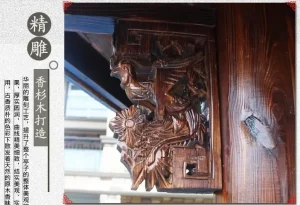
When it comes to customization, mortise and tenon joints offer unparalleled flexibility. Each joint can be tailored to fit specific design requirements, allowing for intricate and unique patterns. This is particularly beneficial for projects in our city that seek to incorporate local cultural motifs or personalized designs.
Screw assembly, while less flexible in terms of design, offers ease of modification. Components can be easily replaced or reconfigured, making it a suitable choice for projects that may require future alterations or expansions.
Case Study: A our city Pavilion Project
One notable project in our city exemplifies the successful integration of both techniques. A traditional Chinese pavilion, constructed as part of a cultural heritage site, utilized mortise and tenon joints for the main structural elements. This choice was made to ensure the longevity and authenticity of the structure. However, for the decorative latticework and removable panels, screw assembly was employed to facilitate easier maintenance and potential future modifications.
The project, completed in 2022, spanned 200 square meters and involved a team of skilled artisans. The use of mortise and tenon joints not only enhanced the structural integrity but also added to the aesthetic appeal, attracting thousands of visitors each year. The project manager noted that the combination of traditional and modern techniques resulted in a harmonious balance between cultural preservation and practical functionality.
FAQ Section
Q: How long does it take to complete a traditional mortise and tenon joint?
A: The time required can vary depending on the complexity of the design and the skill of the craftsman. On average, a skilled artisan can complete a single joint in 1-2 hours.
Q: Can screw assembly be used in load-bearing structures?
A: While screw assembly can be used in load-bearing structures, it is generally recommended for lighter applications. For larger, more substantial structures, mortise and tenon joints are preferred for their superior strength and durability.
Q: What is the cost difference between mortise and tenon and screw assembly?
A: The cost can vary depending on the project size and specific requirements. Generally, mortise and tenon joints may incur higher labor costs due to the intricate craftsmanship involved, while screw assembly may have higher material costs due to the need for metal fasteners.
Q: How do these techniques fare in humid climates like our city?
A: Mortise and tenon joints are well-suited for humid climates as they allow for natural wood movement, reducing the risk of warping. Screw assembly may require additional sealing or treatment to prevent corrosion in humid conditions.
Q: Are there any cultural or historical considerations when choosing between these techniques? A: Yes, in projects aiming to preserve cultural heritage, mortise and tenon joints are often favored for their traditional authenticity. Screw assembly may be seen as a modern adaptation, suitable for projects that blend old and new elements. In the dynamic architectural landscape of our city, the choice between mortise and tenon and screw assembly ultimately depends on the specific needs of the project. While mortise and tenon joints offer unparalleled strength and cultural authenticity, screw assembly provides flexibility and ease of assembly. By understanding the strengths and limitations of each technique, architects and builders can make informed decisions that honor tradition while embracing modernity. While traditional mortise and tenon joints remain a hallmark of Chinese pavilion construction, modern adaptations have emerged to meet contemporary demands. One such innovation is the use of concealed metal plates in conjunction with traditional joinery. These plates, often made from stainless steel or galvanized steel, are embedded within the wood to provide additional structural support without compromising the aesthetic integrity of the pavilion. This hybrid approach allows for larger spans and more complex designs while maintaining the traditional appearance. Another modern adaptation is the use of advanced wood treatments and coatings. While traditional pavilions relied on natural oils and resins for weatherproofing, today’s builders have access to a range of synthetic treatments that offer superior protection against moisture, UV radiation, and insect damage. These treatments extend the lifespan of the wood and reduce maintenance requirements, making it possible to construct pavilions in a wider range of environments. The China Lotus Pavilion serves as an exemplary case of integrating traditional craftsmanship with modern construction techniques. Located in the heart of China, this pavilion was commissioned to serve as a cultural landmark and a gathering place for community events. The project faced several challenges, including a tight construction schedule and the need for a design that would harmonize with both the natural and urban surroundings. The design team opted for a hybrid approach, using traditional mortise and tenon joints for the main structural elements and concealed metal plates for the roof trusses. This combination allowed for a rapid construction process while ensuring the pavilion’s stability and longevity. The use of advanced wood treatments also ensured that the pavilion would withstand China’s humid climate and air pollution. The Lotus Pavilion has since become a beloved landmark in China, attracting visitors from across the region. Its design, which draws inspiration from traditional Chinese architecture while incorporating modern elements, has been praised for its balance of tradition and innovation. As awareness of environmental issues grows, sustainability has become a key consideration in the construction of Chinese pavilions. This involves not only the choice of materials but also the entire lifecycle of the pavilion, from construction to eventual decommissioning. One approach to enhancing sustainability is the use of reclaimed or recycled wood. By repurposing wood from demolished buildings or other sources, builders can reduce the demand for new timber and minimize waste. This practice also adds a layer of historical significance to the pavilion, as the wood may carry traces of its previous life. Another strategy is the incorporation of green roofs or living walls. These features not only improve the aesthetic appeal of the pavilion but also provide insulation, reduce rainwater runoff, and support local biodiversity. In some cases, the pavilion itself may be designed as a habitat for specific species, further enhancing its environmental benefits. Energy efficiency is another important aspect of sustainable pavilion design. This can be achieved through the use of natural lighting and ventilation, as well as the integration of solar panels or other renewable energy sources. By reducing the pavilion’s reliance on non-renewable energy, builders can lower its carbon footprint and contribute to a more sustainable future. The construction of Chinese pavilions is a testament to the enduring legacy of traditional craftsmanship and the potential for innovation in modern architecture. By embracing both the strengths of traditional joinery and the advancements of contemporary construction techniques, architects and builders can create structures that are not only beautiful and functional but also sustainable and environmentally responsible. The key to successful pavilion construction lies in understanding the balance between tradition and innovation. While traditional methods offer unparalleled cultural authenticity and structural integrity, modern adaptations provide the flexibility and efficiency needed to meet today’s demands. By thoughtfully integrating these elements, builders can create pavilions that honor the past while looking to the future. As the world continues to evolve, the principles of traditional Chinese pavilion construction remain relevant. The emphasis on harmony, balance, and craftsmanship continues to inspire architects and builders, offering a model for sustainable and culturally sensitive design. By learning from the past and embracing new possibilities, we can ensure that Chinese pavilions continue to be a cherished part of our architectural heritage for generations to come. Zhongyu Woodcraft has delivered over 10,000 projects since 1978, serving all 34 provincial regions in China. Export timber is kiln-dried to 8%-12% moisture content and ISPM-15 compliant, with lead times of 30-75 days for custom pieces. Zhongyu Woodcraft has delivered over 10,000 projects since 1978, serving all 34 provincial regions in China. Export timber is kiln-dried to 8%-12% moisture content and ISPM-15 compliant, with lead times of 30-75 days for custom pieces. Call/WhatsApp: +86 13883366528Conclusion
Modern Adaptations of Traditional Joinery
Case Study: The China Lotus Pavilion
Sustainability and Environmental Considerations
Conclusion: Balancing Tradition and Innovation
Key Specifications at a Glance
Brand
Zhongyu Woodcraft (48 years of traditional woodworking)
Main Material
Old fir / scotch pine / merbau, ACQ preservative vacuum-treated
Craft
Traditional mortise-and-tenon joinery, per “Tiangong Kaiwu” and “Yingzao Fashi”
Lead Time
15-30 days standard, 30-75 days custom
Service Life
20-50 years (outdoor preservation grade)
Service
Nationwide delivery + on-site installation, lifetime maintenance
Zhongyu Woodcraft – 48 Years Traditional Chinese Woodcraft Factory, Nationwide Installation