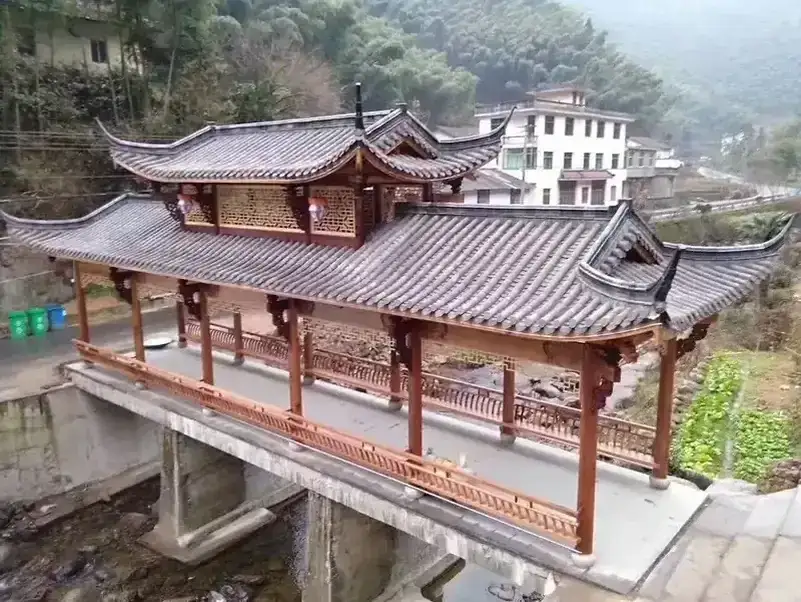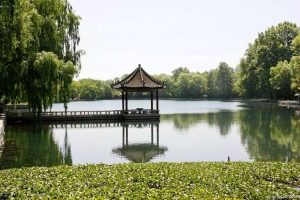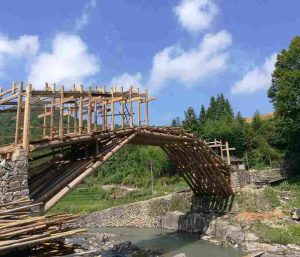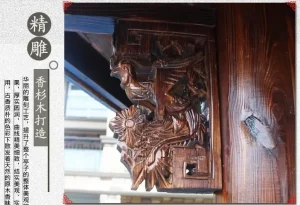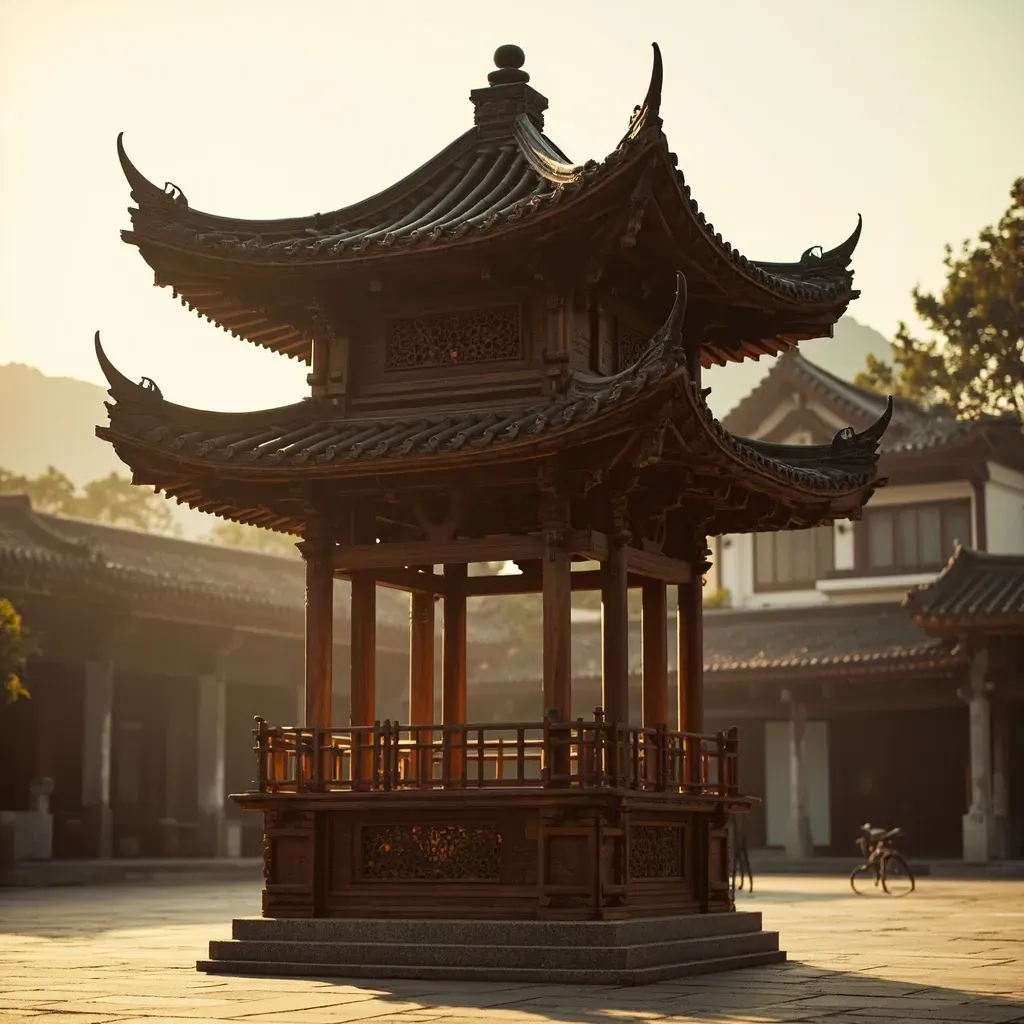
A Chinese wooden pavilion is far more than a garden ornamentit is a living symbol of architectural philosophy that has shaped East Asian landscapes for over two millennia. Today, these structures serve as powerful city landmarks, blending cultural heritage with contemporary urban identity. Whether you are planning a cultural park, a heritage destination, or a public plaza, understanding the craftsmanship behind traditional wooden pavilions helps you make informed decisions. This guide explores the history, techniques, and modern applications of Chinese wooden pavilion design, drawing on 48 years of manufacturer experience.
Historical Origins of Chinese Wooden Pavilions
The Chinese wooden pavilion traces its roots to the Zhou Dynasty, approximately 3,000 years ago. Originally built as rest stops along imperial roads and as viewing platforms in royal gardens, these structures evolved into sophisticated architectural forms that balanced beauty with structural integrity. The Tang Dynasty marked a golden age for pavilion construction, with records describing over 3,000 pavilions across the capital city alone. By the Song Dynasty, architectural treatises like the Yingzao Fashi established standardized proportions that guided pavilion building for centuries.
What makes Chinese pavilions unique among world architectural traditions is their complete reliance on wooden joinery rather than metal fasteners. The ancient Chinese developed an extraordinary range of bracket sets, called Dougong, which distribute roof loads through interlocking wooden pieces without a single nail. This system allowed pavilions to flex during earthquakes, explaining why many Tang-era structures still stand today. The cultural significance extends beyond engineeringthe pavilion became a metaphor for the relationship between humanity and nature, serving as a transitional space between the built environment and the natural world.
According to the classical text Kaogongji, or Artificers Record, dating to the 6th century BCE, proper pavilion construction required selecting timber that had been air-dried for at least three years. This ancient wisdom aligns perfectly with modern moisture content standards, which specify that outdoor wooden structures should maintain a moisture level between 8 and 12 percent to prevent warping and cracking over decades of exposure.
Craftsmanship and Joinery Techniques
The foundation of every quality wooden pavilion lies in its mortise and tenon joinery system. This technique involves carving a protruding tenon on one piece of timber that fits precisely into a corresponding mortise hole on another piece. The joint is then secured with a wooden peg, creating a connection that actually becomes tighter under load rather than looser over time. Our senior craftsman with 48 years of experience says that mastering a single type of joint requires approximately two years of dedicated practice, which is why the best pavilion builders are considered true artisans rather than mere carpenters.
Material selection represents another critical dimension of craftsmanship. For outdoor pavilions, we typically recommend tropical hardwoods such as Meranti, which offers a density of 0.8 to 0.9 grams per cubic centimeter and natural resistance to rot and insect damage. When clients prioritize cost efficiency without sacrificing durability, pressure-treated pine provides a reliable alternative with a service life of 20 to 25 years in outdoor conditions. Each timber undergoes kiln drying to achieve the target moisture content before any joinery work begins, ensuring dimensional stability throughout the structure lifespan.
The carving and decorative elements that adorn Chinese pavilions follow established aesthetic principles passed down through generations. Common motifs include cloud patterns, dragon scales, floral designs, and geometric lattice work. Each carving serves both decorative and functional purposesfor instance, the curved eaves found on many pavilion roofs help direct rainwater away from the wooden structure while creating the iconic silhouette that makes these buildings instantly recognizable. The assembly process itself is a marvel of precision, with individual components manufactured to tolerances of 2 millimeters or less, allowing entire pavilion structures to be prefabricated in our facility and assembled on-site with minimal adjustment.
Modern Applications as City Landmarks
Chinese wooden pavilions have found remarkable relevance in contemporary urban design, serving as cultural landmarks that distinguish cities from generic architectural landscapes. Municipal planners and developers increasingly recognize that a well-designed pavilion complex can become the visual anchor of a public space, drawing visitors and fostering community pride. The structure works particularly well in waterfront settings, park entrances, and cultural districts where it bridges historical narrative with modern public function.
The versatility of pavilion design allows for a wide range of applications. Hexagonal and octagonal pavilions with single-tier roofs suit intimate garden settings and plaza corners, while multi-tier pavilions with sweeping hip-and-gable roofs command attention as centerpiece structures. We have supplied pavilion complexes ranging from 3-meter diameter single structures to 12-meter diameter installations that seat over 50 people. The modular nature of traditional joinery means that pavilions can be designed for disassembly and relocation, making them ideal for temporary cultural festivals and rotating public art installations.
From a sustainability perspective, wooden pavilions offer compelling advantages. Timber is a renewable resource when sourced from certified forests, and the carbon sequestration stored in the wood remains locked away for the entire lifespan of the structure. A typical medium-sized pavilion contains approximately 8 to 12 cubic meters of timber, representing roughly 6 to 9 tons of stored carbon. This environmental benefit, combined with the timeless aesthetic that never goes out of fashion, makes wooden pavilions an increasingly popular choice for cities seeking both cultural authenticity and ecological responsibility.
Design and Customization Options
Every pavilion project begins with understanding the specific context in which it will be placed. Roof profile, column arrangement, and decorative intensity should respond to the surrounding landscape, local climate conditions, and the cultural narrative the city wishes to communicate. A pavilion in a formal garden setting might feature intricate carved brackets and painted decoration, while a minimalist contemporary park might call for clean lines and natural wood finishes that age gracefully.
Customization extends to structural dimensions as well. Standard pavilion configurations include square, rectangular, hexagonal, octagonal, and circular floor
plans, with column spacing typically ranging from 2.5 to 4 meters between centers. Roof height from platform to ridge varies from 3.5 meters for single-tier structures to over 8 meters for multi-tier designs. We accommodate custom dimensions to fit specific site requirements, with lead times adjusting proportionally for non-standard orders.
The finish and treatment options are equally important considerations. Natural oil finishes highlight the grain and warm tones of premium hardwoods, while traditional Chinese lacquer techniques produce durable, vibrant surfaces in classic color palettes. For coastal or high-humidity environments, additional protective treatments are recommended to extend the service life beyond the standard 25 to 30 years. Every structure we produce includes a comprehensive maintenance guide, and we offer a five-year structural warranty covering joinery integrity and framework stability.
Project Case Study: Heritage Pavilion Complex
A recent project illustrates the full scope of what traditional pavilion craftsmanship can achieve in a contemporary setting. A cultural heritage destination commissioned a pavilion complex consisting of three interconnected structures: a central octagonal pavilion with a double-eave hip roof, flanked by two smaller square pavilions connected by covered walkways. The total footprint covered approximately 180 square meters, with the central pavilion reaching a ridge height of 7.2 meters.
The project utilized Meranti hardwood for all structural elements, with hand-carved Dougong brackets replicating Song Dynasty proportions documented in historical architectural surveys. The entire structure was prefabricated in our facility over a 25-day production period, then shipped as 347 individually numbered components for on-site assembly. The installation crew completed the framework in 12 working days, with decorative carving and finishing adding another 8 days. The completed complex has served as the flagship landmark of the destination for over three years, receiving consistent positive visitor feedback and requiring only routine maintenance since completion.
Frequently Asked Questions
Q: What is the typical cost range for a custom Chinese wooden pavilion?
A: Costs vary significantly based on size, material, and decorative complexity. A standard 4-meter diameter single-tier pavilion in treated pine typically ranges from $3,500 to $6,000, while a premium 6-meter octagonal pavilion in Meranti hardwood with carved brackets ranges from $12,000 to $25,000. Multi-tier structures and those requiring extensive custom carving can exceed $40,000. All prices include prefabrication and shipping, with on-site installation available as an additional service.
Q: How long does it take to produce and install a pavilion?
A: Standard configurations typically require 20 to 30 days for prefabrication, with non-custom orders on the shorter end. Complex custom designs with intricate carving may require 45 to 60 days. On-site installation for a medium-sized pavilion usually takes 10 to 15 working days, depending on foundation readiness and crew size. We provide detailed installation manuals and can dispatch a supervision team for first-time clients.
Q: What maintenance does a wooden pavilion require?
A: Annual inspection is recommended, focusing on joint integrity, finish condition, and drainage around the base. Reapplication of protective oil or varnish is typically needed every 3 to 5 years depending on exposure conditions. Interior pavilions in sheltered locations may extend this interval to 5 to 7 years. We provide a detailed maintenance schedule with every project, and our five-year structural warranty covers joinery performance under normal maintenance conditions.
Q: Can pavilions be installed in cold or snowy climates?
A: Yes, with appropriate design adjustments. Snow-loaded regions require steeper roof pitches of at least 35 degrees to prevent accumulation, and structural calculations must account for local snow load requirements. We have supplied pavilions to destinations in regions with heavy snowfall, using engineered joinery specifications and reinforced column foundations to ensure long-term performance.
Q: Do you provide international shipping and installation support?
A: We ship to over 50 countries worldwide, with packaging designed for international freight and customs clearance. All components are numbered and packed with bilingual assembly instructions. While we primarily support domestic installation, we can provide remote technical guidance and video consultation for international projects, and our team has experience supporting installation crews across multiple continents.
Conclusion
Chinese wooden pavilions represent one of the world greatest architectural traditions, combining structural ingenuity with aesthetic refinement that remains relevant today. As city landmarks, they offer cultural depth and visual identity that steel and concrete structures cannot replicate. Whether you are a municipal planner, landscape architect, or cultural institution director, investing in traditionally crafted wooden pavilions means investing in enduring quality and timeless design. The 48-year tradition of craftsmanship behind these structures ensures that your pavilion will stand as a landmark for generations to come.
For custom pavilion projects and cultural landmark commissions, contact us through the inquiry form below or reach out via the contact information in the page footer. We welcome the opportunity to discuss how traditional Chinese wooden architecture can transform your project into an iconic destination.
Key Specifications at a Glance
| Brand | Zhongyu Woodcraft (48 years of traditional woodworking) |
| Main Material | Old fir / scotch pine / merbau, ACQ preservative vacuum-treated |
| Craft | Traditional mortise-and-tenon joinery, per “Tiangong Kaiwu” and “Yingzao Fashi” |
| Lead Time | 15-30 days standard, 30-75 days custom |
| Service Life | 20-50 years (outdoor preservation grade) |
| Service | Nationwide delivery + on-site installation, lifetime maintenance |
Zhongyu Woodcraft has delivered over 10,000 projects since 1978, serving all 34 provincial regions in China. Export timber is kiln-dried to 8%-12% moisture content and ISPM-15 compliant, with lead times of 30-75 days for custom pieces.
Call/WhatsApp: +86 13883366528
Zhongyu Woodcraft – 48 Years Traditional Chinese Woodcraft Factory, Nationwide Installation