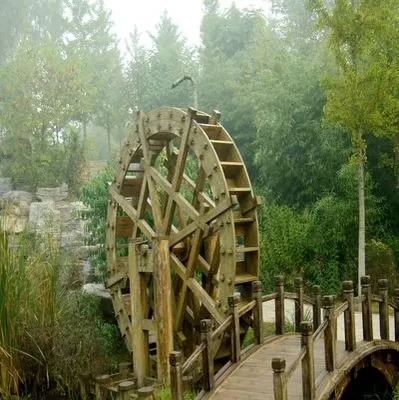
What is a Chinese Water Wheel? Timeless Irrigation Heritage for Contemporary Landscapes
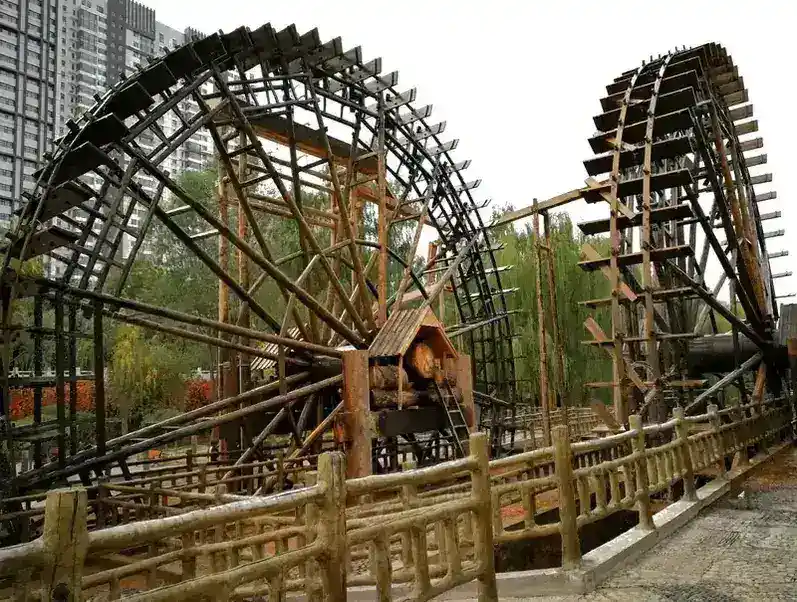
A Chinese water wheel is a traditional water-lifting device that harnesses the natural power of flowing water to create mechanical motion. Dating back over 1,800 years, these magnificent wooden structures represent one of humanity’s most elegant solutions to irrigation challenges. Today, landscape architects and project developers worldwide are rediscovering the aesthetic and functional value of traditional chinese woodcraft in the form of decorative and functional water wheels.
In the context of modern landscape design, a Chinese water wheel serves dual purposes: it functions as a working hydraulic device while simultaneously creating a captivating visual centerpiece that evokes centuries of agricultural heritage. Whether installed in a heritage site, cultural park, or contemporary resort, these structures connect modern visitors to ancient wisdom about living in harmony with water and nature.
For B2B buyers seeking authentic implementations, understanding the distinction between decorative water wheels and functional irrigation systems becomes essential. Decorative water wheels prioritize aesthetic authenticity and traditional chinese woodcraft techniques, often featuring intricate mortise and tenon joinery visible to observers. Functional water wheels, meanwhile, require precise engineering calculations to ensure adequate water-lifting capacity while maintaining the traditional appearance that makes these structures so appealing.
Historical Origins: From Han Dynasty Innovation to Global Heritage
The history of the Chinese water wheel traces to the Eastern Han Dynasty period, approximately 180 CE, when engineers first developed the technology for agricultural irrigation. Historical records indicate that water wheels spread rapidly throughout China’s river valleys, becoming indispensable tools for farmers in regions where natural elevation differences allowed water to be lifted from lower streams to higher agricultural fields.48
According to the Tiangong Kaiwu (The Exploitation of the Works of Nature), the seminal 1637 encyclopedia of Chinese technology, water wheels reached their technological zenith during the Song Dynasty, when large-scale implementations could irrigate fields spanning hundreds of acres. The text describes various wheel designs adapted for different hydraulic conditions, demonstrating the sophisticated engineering knowledge accumulated over generations.
The traditional Chinese water wheel differs significantly from its European counterparts. Chinese designs typically featured a vertical orientation with paddles or buckets arranged radially around a central axle, while the construction relied exclusively on wooden components joined through sophisticated mortise and tenon techniques. This construction method, requiring no metal fasteners, allowed for natural expansion and contraction as the wood absorbed and released moisture from constant water exposure.
Military applications also emerged during the Three Kingdoms period, where water wheels powered bellows for iron smelting in weapons manufacturing. This versatile technology thus supported both agricultural productivity and military strength, cementing its importance in Chinese civilization.
Craftsmanship and Joinery Techniques: The Soul of Traditional Woodcraft
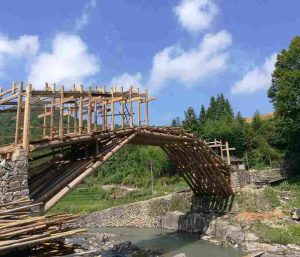
Authentic Chinese water wheels derive their character from the mortise and tenon joinery techniques that have defined Chinese woodcraft for millennia. These interlocking joint methods, where projecting tenons on one component fit precisely into corresponding mortises (holes) in another, create structures of remarkable strength without requiring nails, screws, or metal brackets that would corrode in water environments.
The construction process begins with timber selection. Traditional chinese woodcraft emphasizes using durable hardwoods resistant to rot, typically locust wood or Chinese fir for the primary structural components. The timber must be carefully seasoned, reducing moisture content to below 15% before cutting begins. Rushing this process results in wheels that warp, crack, or lose structural integrity within years of installation.
Each wheel typically contains between 8 and 24 paddles, depending on diameter and intended application. The paddle shafts are shaped as tapered tenons that fit into mortises cut into the central axle hub. This hub, often called the spindle, requires the most careful craftsmanship as it bears the cumulative weight and rotational stress of all paddles. Master craftsmen use traditional hand tools to carve these joints, achieving tolerances measured in fractions of millimeters.
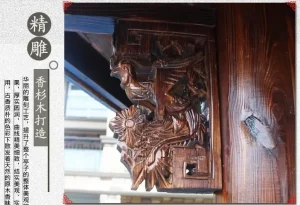
Contemporary manufacturers have adapted these ancient techniques while incorporating modern materials where beneficial. Pressure-treated lumber extends structural longevity in decorative applications, while marine-grade sealants protect exposed joints from water damage. However, projects seeking authentic appearance often specify traditional mortise and tenon construction visible in exposed areas, where the joinery itself becomes a decorative element celebrating the craftsmanship tradition.
Modern Applications: Where Heritage Meets Contemporary Design
Contemporary landscape architects increasingly specify Chinese water wheels for diverse applications beyond their original agricultural purpose. In heritage tourism sites, these structures serve as interactive educational exhibits, allowing visitors to experience firsthand how ancient engineers solved the challenge of moving water uphill. The rhythmic splash of paddles entering and leaving the water creates an immersive soundscape that transports observers to rural landscapes of centuries past.
Cultural parks and water towns frequently commission large-scale water wheel installations as signature visual landmarks. Positioned at canal entrances or pond edges, these structures create immediately recognizable imagery associated with traditional Chinese waterfront aesthetics. The visual impact extends beyond the wheel itself to encompass surrounding landscape elements: stone embankments, traditional plantings, and auxiliary structures designed to complement the wheel’s presence.
<
Spa and wellness resorts employ smaller water wheels in meditation gardens and water features, where the continuous sound of flowing water masks urban noise while creating associations with peaceful rural landscapes. The traditional chinese woodcraft aesthetic aligns with broader wellness design movements emphasizing biophilic elements and connection to natural systems.
Educational institutions and museums incorporate water wheels into exhibits demonstrating the history of technology. Here, functional wheels powered by controlled water flows allow hands-on engagement with principles underlying countless modern machines. Students can observe direct relationships between water flow, wheel rotation, and mechanical output, learning principles that apply to hydroelectric generators and water turbines.
Film production companies require custom water wheels for period dramas and historical documentaries set in ancient China. These projects demand historically accurate construction while meeting the practical requirements of camera work and performer safety. Experienced manufacturers understand these specialized requirements, producing wheels that photograph authenticall
y while functioning reliably under production demands.
Design Considerations for B2B Projects
Successful water wheel installations require careful attention to site conditions, intended function, and maintenance considerations. B2B buyers should evaluate several factors before specifying wheel dimensions, materials, and mounting configurations.
Water flow characteristics fundamentally determine wheel performance. Adequate flow velocity ensures paddles engage sufficient water mass to initiate rotation, while flow depth must accommodate full paddle immersion without excessive submersion that would overload the structure. Site surveys should document typical flow rates, seasonal variations, and potential debris loads that might impede wheel operation.
Structural mounting options range from shore-mounted configurations, where the wheel axle rests on stone or timber supports at water level, to floating installations where the wheel assembly floats on pontoons maintaining constant relative position as water levels fluctuate. Each configuration offers distinct advantages: shore mounting provides stability and accessibility for maintenance, while floating installations accommodate tidal ranges or seasonal flooding.
Aesthetic considerations include wheel diameter, paddle shape, and finish treatments. Large wheels exceeding 5 meters create dramatic visual impact but require substantial structural support and may be impractical for locations with limited vertical clearance. Smaller wheels offer versatility but sacrifice the commanding presence that makes water wheels such effective landscape focal points.
Finish treatments balance appearance with durability. Untreated hardwoods weather naturally to silver-gray patinas over years of exposure, developing character that many designers consider desirable. Alternatively, penetrating sealants preserve original wood coloration while providing moisture protection. Projects in humid climates or sun-exposed locations should specify UV-resistant finishes to minimize surface degradation.
Sourcing and Manufacturing: Working with Experienced Producers
Quality water wheels result from manufacturing partnerships emphasizing traditional techniques alongside modern quality control. When evaluating potential suppliers, B2B buyers should verify specific capabilities and certifications relevant to their project requirements.
Construction expertise should be demonstrable through portfolio examples showing completed installations in comparable contexts. Request documentation of projects involving similar wheel diameters, materials, and site conditions. Manufacturers with decades of experience typically possess refined production processes and problem-solving capabilities that benefit complex custom installations.
Material sourcing practices influence both product quality and project sustainability credentials. Manufacturers offering FSC-certified timber demonstrate commitment to responsible forestry practices, increasingly important for projects seeking green building certifications or sustainable tourism designations.
Customization capabilities determine how effectively a manufacturer can address project-specific requirements. Standard wheel designs offer cost advantages for budget-conscious projects but may not address unusual site constraints or aesthetic preferences. Look for manufacturers willing to develop custom configurations including non-standard diameters, unusual paddle arrangements, or integrated mechanical systems for educational exhibits.
Shipping and logistics support becomes critical for projects outside traditional market regions. Experienced manufacturers coordinate freight forwarding, customs documentation, and site delivery, reducing buyer burden while minimizing risks of transit damage. Many manufacturers offer installation supervision services, sending technicians to oversee critical assembly phases and ensure proper wheel alignment.
Maintenance and Longevity: Protecting Your Investment
Proper maintenance ensures water wheels provide decades of service while retaining their aesthetic appeal. Understanding maintenance requirements should inform both initial specification decisions and ongoing operational budgets.
Annual maintenance inspections should examine critical structural elements including axle bearings, paddle attachment points, and any mechanical linkages connecting the wheel to auxiliary equipment. Early identification of developing problems prevents cascade failures that could require major repairs or complete reconstruction.
Wood surfaces require periodic refinishing to maintain moisture resistance. The refinishing interval depends on climate severity, exposure intensity, and original finish type. Wheels in shaded, humid locations typically require attention every 2-3 years, while wheels in hot, sunny locations may need annual treatment.
Debris management significantly impacts operational reliability. Sites with significant vegetation, agricultural runoff, or public access should incorporate debris screens upstream of wheel installations. Regular clearing of accumulated debris prevents wheel jamming and reduces stress on structural components.
Winter protection measures become necessary in cold climates where freezing water could damage wheel components. Drainage provisions allowing complete water removal during freeze-thaw cycles prevent ice expansion from cracking joints or displacing paddles. Some projects opt for wheel removal during winter months, storing components under cover until spring reinstall.
Key Specifications at a Glance
| Brand | Zhongyu Woodcraft (48 years of traditional woodworking) |
| Main Material | Old fir / scotch pine / merbau, ACQ preservative vacuum-treated |
| Craft | Traditional mortise-and-tenon joinery, per “Tiangong Kaiwu” and “Yingzao Fashi” |
| Lead Time | 15-30 days standard, 30-75 days custom |
| Service Life | 20-50 years (outdoor preservation grade) |
| Service | Nationwide delivery + on-site installation, lifetime maintenance |
Zhongyu Woodcraft has delivered over 10,000 projects since 1978, serving all 34 provincial regions in China. Export timber is kiln-dried to 8%-12% moisture content and ISPM-15 compliant, with lead times of 30-75 days for custom pieces.
Q: What is the minimum order quantity (MOQ)?
A: Our MOQ is 1 unit for standard designs, with volume pricing available from 3 units. We keep standard components in stock to serve trial orders and repeat customers equally well.
Q: What are your payment terms?
A: Standard terms are 30% T/T deposit to confirm the order and 70% balance before shipment. For long-term partners we can discuss L/C at sight or net-30 terms.
Q: Do you provide installation guidance?
A: Yes. Every shipment includes detailed assembly drawings and step-by-step video guidance. For large pavilions and heritage structures, on-site installation supervision is available.
Call/WhatsApp: +86 13883366528
Zhongyu Woodcraft – 48 Years Traditional Chinese Woodcraft Factory, Nationwide Installation