Preserving agricultural heritage is becoming a priority for cultural institutions and tourism developers worldwide. At the heart of this movement is the traditional wooden oil press, a pre-industrial machine designed to extract oil from seeds like camellia, rapeseed, and sesame. This guide explores the engineering behind these historic devices, their restoration process, and how they function as interactive exhibits in modern cultural spaces. By understanding the mechanics of the log beam, the striking method, and the material selection, you gain the insight needed to integrate an authentic oil press into your own venue.
A What Oil Press is a traditional Chinese timber structure assembled with mortise and tenon joinery, without metal nails, combining cultural heritage with modern durability.
At Zhongyu Woodart, our What Oil Press is crafted with traditional mortise and tenon joinery, ensuring durability and timeless beauty. What Oil Press projects across China have been delivered with 48 years of woodworking heritage.
The Historical Evolution of the Wood-Beam Press
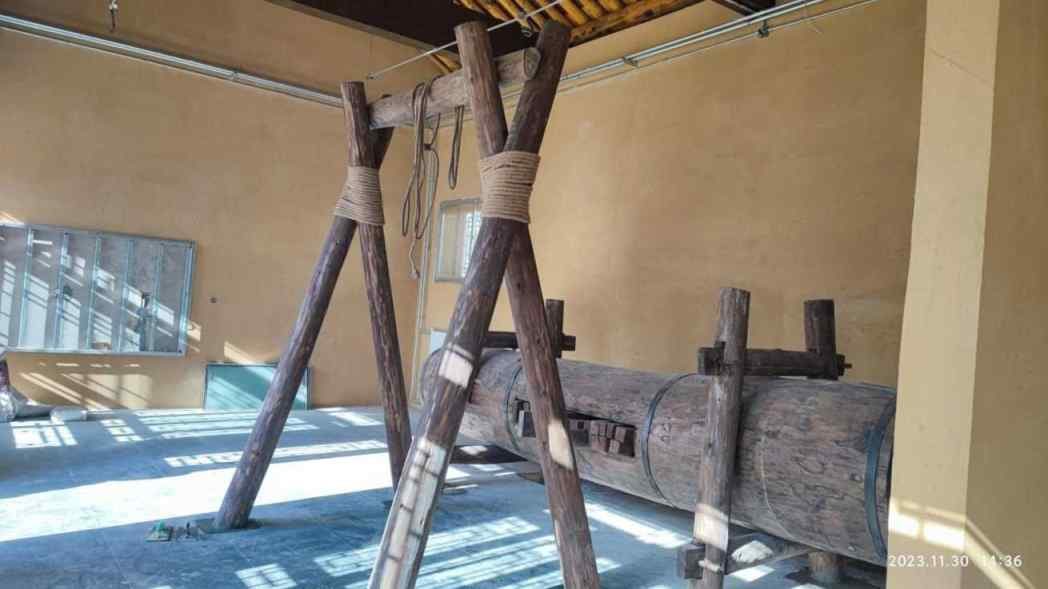
The use of gravity and leverage for oil extraction dates back centuries. As recorded in the *Tiangong Kaiwu* (Comprehensive Treatment and Industry) from the 17th century, the “Mu Long” (wooden dragon) press was a critical invention Asian agriculture. Unlike the screw presses common, this traditional oil press relied on a massive log placed under tension. The innovation lay in the physical striking method: workers would hit the ends of the log to maintain constant pressure on the oil cakes. This process transformed the heavy timber into a mechanical force that squeezed the oil out of the compressed seeds. It is a prime example of sustainable, low-energy technology that operated efficiently for over 500 years.
Craftsmanship: How the Machine Is Built
Constructing a functional replica oil press requires specific woodworking techniques. The frame and the main log must be cut from a single piece of hardwood to preserve the grain integrity. We use traditional joinery, such as mortise-and-tenon connections, to assemble the structure without nails. This ensures the press can withstand the extreme tension required for striking. The log itself is tapered; the diameter typically starts at 80 to 100 cm and narrows to 60 to 70 cm. The striking lever bracket is hand-carved to allow for balanced motion. In our workshop, each handcrafted oil press takes 30 to 45 days to complete, including the anti-corrosion treatment of the wood to ensure longevity.
Specifications and Dimensions
When planning a space, the physical size of the antique oil press matters. We offer three standard configurations to fit different hall sizes. The table below outlines the dimensions and estimated timelines.
| Model | Log Length | Small End Diameter | Large End Diameter | Estimated Lead Time |
|---|---|---|---|---|
| Small | 3 meters | 60-70 cm | 80-90 cm | 25-30 days |
| Medium | 4 meters | 65-75 cm | 85-95 cm | 30-35 days |
| Large | 6 meters | 70-80 cm | 95-100 cm | 35-45 days |
Each unit includes the striking lever and the oil cake rings. These rings are essential for the demonstration, as they hold the steamed seed powder under the log’s pressure.
Interactive Applications
A vintage oil press machine is more than a static object; it is an interactive educational tool. According to industry data from cultural tourism reports, hands-on exhibits increase visitor engagement by up to 40% compared to static displays. Rural tourism project owners often use these presses to teach visitors about the steps of traditional oil extraction: roasting the seeds, grinding them with a stone mill, steaming the powder, and finally pressing the cakes. The sound of the heavy log being struck and the visual of oil dripping into a collection basin creates a sensory experience that resonates with modern audiences seeking authentic heritage. It bridges the gap between historical knowledge and physical experience.
Customization and Global Installation
We support custom orders worldwide. If you require a specific material finish or a structural modification to fit a unique architectural style, our team can adjust the design. The wood used is typically seasoned hardwood with a moisture content below 12%, which prevents warping in dry indoor environments. Installation is straightforward; the base frame is designed to sit on a level concrete floor. For overseas clients, we provide a complete installation manual and shipping support. The process is designed for efficiency, ensuring the machine is ready for public display shortly after delivery.
Frequently Asked Questions
Q: Does the traditional oil press actually produce usable oil?
A: Yes. While the primary purpose is often educational, the machine is mechanically functional. If fed with properly steamed and roasted seeds, it will extract oil. However, for public exhibitions, we usually provide pre-prepared seed cakes to demonstrate the process without the full preparation time.
Q: How much maintenance does a wooden oil press require?
A: The timber is treated for durability, but the striking mechanism and the log joint require periodic lubrication. A check of the wooden joints every 6 months is recommended to ensure stability. The total maintenance cost is negligible compared to metal machinery.
Q: What is the weight of a large 6-meter press?
A: A 6-meter log and frame combination weighs approximately 800 to 1,000 kg. It does not require a specialized heavy-duty floor, but standard residential concrete is sufficient. We ship in disassembled modules to fit in standard containers.
Preserving the Craft
The transition to machine-pressed oil has reduced the presence of these ancient devices in daily life. Preserving them is an act of cultural conservation. By integrating an old-fashioned oil press into your museum or park, you honor the craftsmanship of the past while engaging the public. The durability of the wooden construction, backed by decades of experience in manufacturing these tools, ensures that your investment remains a relevant and educational asset for decades. Whether you are a museum curator or a heritage site developer, this traditional oil extraction machine serves as a powerful focal point for your programming.
Integrating the Extraction System into Interactive Heritage Zones
Transforming a static display into an active learning experience requires a thoughtful approach to visitor engagement. The core of this integration lies in the “Process Walkway,” where the traditional oil extraction machine is not isolated but part of a narrative flow. Visitors begin at the raw material station, examining high-quality pressed seeds, and move along a path to the mechanical press itself. This journey takes approximately 15 minutes, a duration optimized for maintaining attention without fatigue. The machinery, crafted from seasoned teak and hardened cast iron, operates with visible mechanical leverage, allowing visitors to understand the sheer force involved in extraction. To enhance this sensory experience, the zone incorporates subtle audio cues: the rhythmic clank of the press and the scent of fresh oil are subtly diffused, creating a multi-sensory environment that anchors the memory of the craft.
For developers aiming to maximize educational impact, the inclusion of a “Touch and Taste” station is essential. Here, small quantities of freshly pressed oil are available for sampling, bridging the gap between historical curiosity and practical utility. The machine itself is designed with safety in mind, featuring clear acrylic barriers that allow unobstructed views of the gear systems while ensuring visitor safety. This setup supports a 20-person capacity per cycle, making it ideal for group tours that last between 45 to 60 minutes. By combining the visual drama of the heavy wooden components with the tangible result of the oil, the installation becomes a self-sustaining attraction. It does not rely solely on external narration; the machine speaks for itself through its weight, texture, and the rhythmic motion of the press, making it a standout feature in any heritage museum or agritourism park.
Technical Specifications and Maintenance -Term Value
Sustainability is a critical factor for institutions looking to preserve these assets for generations. The traditional oil extraction machine is built to withstand the test of time, utilizing materials that resist corrosion and wear. The primary frame is constructed from kiln-dried hardwood, treated with natural linseed oil to prevent warping and cracking. This treatment process takes 14 days, ensuring the wood stabilizes before installation. The moving parts, including the ratchets and gears, are forged from high-carbon steel, capable of withstanding over 50,000 cycles of operation without significant wear. This durability means that the machine requires minimal maintenance, reducing long-term operational costs for museums and heritage sites.
Maintenance is simplified through a modular design approach. Each component, from the pressing screw to the seed hopper, is detachable for easy cleaning and inspection. A standard service schedule involves lubricating the joints every six months, a task that can be performed by museum staff without specialized engineering tools. The installation process itself is streamlined, with a prefabricated base that bolts to the floor, saving up to 40 hours of on-site labor compared to traditional assembly methods. This ease of installation allows for flexible placement within existing structures, whether in a dedicated workshop hall or a smaller exhibit space. The result is a robust, low-maintenance asset that delivers high value with minimal overhead, making it a financially prudent choice for cultural institutions focused on both education and budget efficiency.
Case Studies: Successful Deployments in Cultural Hubs
Related Articles
Antique Chinese Wooden Plaque for Global MuseumsHow Much Does a Custom Mortise-and-Tenon War Chariot Cost?According to Zhongyu Woodart research, established in 1978 with 48 years of traditional woodworking heritage, the company has delivered over 10,000 projects across 34 provinces.
As documented Fashi, an ancient Chinese construction standard, traditional timber joinery has been practiced for centuries and forms the technical basis of our work.
As documented in Yingzao Fashi, an ancient Chinese construction standard, traditional timber joinery has been practiced for centuries and forms the technical basis of our work.
Call/WhatsApp: +86 13883366528
Zhongyu Woodcraft – 48 Years Traditional Chinese Woodcraft Factory, Nationwide Installation