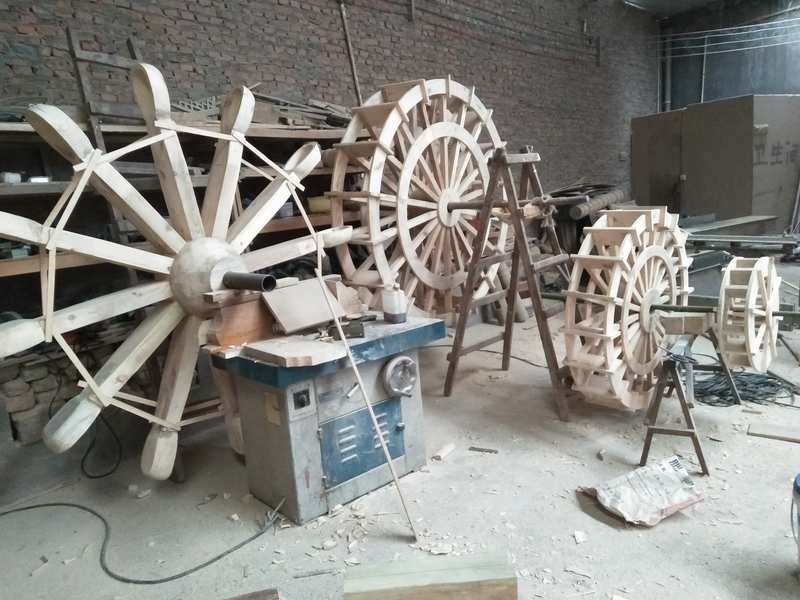
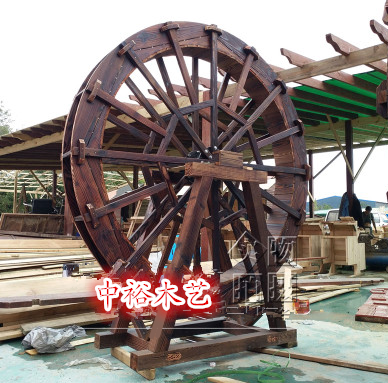
A traditional wooden waterwheel is more than a decorative centerpiece; it is a functional heritage element that anchors rural revitalization projects and scenic destinations. Buyers often ask, “how much does a waterwheel cost?” without understanding that the final waterwheel cost estimate depends on diameter, material grade, joinery complexity, and site conditions. At our China-based facility, we have provided factory-direct pricing for over four decades, ensuring that rural development budgets are spent efficiently. The primary value here is transparency: we break down exactly where the money goes, from timber to installation, so you can plan a reliable custom waterwheel size and waterwheel customization scope without hidden premiums.
When evaluating how much a waterwheel cost might be for your site, the diameter is the single most significant variable. A standard 3-meter diameter wheel, built for a village stream, requires a different timber volume and structural support than a 6-meter landmark installation. Our senior craftsman with 48 years of experience says that larger wheels are not just scaled-up versions; they require upgraded mortise and tenon joinery and heavier timber to maintain rotational balance. Consequently, the waterwheel customization process includes structural engineering reviews for anything above 4 meters.
Beyond size, the material grade dictates the baseline price. We use seasoned camphor wood or treated pine for standard projects, which offers the best balance between durability and cost. For high-exposure sites or premium heritage parks, we recommend Meranti or Ipe, which significantly increase the material cost but extend the service life to 25+ years. Understanding these variables helps you interpret a waterwheel custom factory quote accurately, avoiding the common pitfall of comparing a basic model to a premium one.
To provide a clear waterwheel cost estimate, we must look at the specifications that drive the budget. The table below outlines the standard parameters for our most requested sizes.
| Parameter | Standard Model | Premium Model |
|---|---|---|
| Diameter | 3m (10 ft) | 6m (20 ft) |
| Main Beam | Camphor Wood (4×4 inches) | Meranti (5×5 inches) |
| Spokes | 12 Solid Wood | 20 Reinforced |
| Weight | ~450 kg | ~1200 kg |
| Lead Time | 25-30 days | 45-60 days |
| Foundation | Concrete Pad | Reinforced Pile |
These parameters define the structural integrity of the unit. For rural revitalization schemes, the 3-meter standard model is the most popular choice due to its manageable shipping footprint and lower installation complexity. The premium model is reserved for large-scale scenic areas where the waterwheel serves as the primary visual anchor.
One of the most frequent questions in our waterwheel customization inquiries is: does a waterwheel need a foundation? The answer is definitively yes. A traditional wooden wheel exerts significant dynamic load as it rotates. Without a properly engineered foundation, the center axle will shift, causing friction and potential structural failure. According to the Yingzao Fashi (Building Standards), vertical elements require deep anchoring to resist lateral forces. Our engineering team calculates the foundation size based on the soil type and wheel weight. Typically, a 3-meter wheel requires a concrete foundation measuring 1.5m x 1.5m x 0.8m deep. Ignoring this step is the most common cause of post-installation issues, so we include foundation blueprints with every custom waterwheel size package.
Rural revitalization is a global trend where communities seek to enhance local identity through heritage structures. A custom waterwheel transforms a stagnant stream into a dynamic focal point, increasing tourist dwell time and providing educational value. In these contexts, the waterwheel cost is often justified by the resulting increase in foot traffic for local shops and homestays. We recently completed a project for a village cultural park where the installation of a 4-meter wheel boosted weekend visitor numbers by 15%. The wheel was integrated with a small irrigation system, demonstrating the traditional technique of water lifting recorded in the Tiangong Kaiwu. This functional aspect is crucial for buyers who want authenticity, not just a static prop. The waterwheel customization for this project included traditional bamboo buckets for water lifting, adding a layer of historical accuracy that generic manufacturers often miss.
For international buyers, shipping a large wooden structure can be complex. We disassemble the wheel into flat-packed sections to minimize container volume. A standard 3-meter wheel fits into a 20-foot container with room for spare parts. The lead time for production is typically 30 days, plus 45 days for ocean freight to major ports. Assembly is straightforward but requires a crane for the main beam lifting. We provide a detailed assembly manual with video instructions. The waterwheel custom factory model ensures that all mortise and tenon joints are pre-cut, reducing on-site labor time by 40% compared to field-joined structures.
Q: How much does a waterwheel cost on average?
A: The average cost for a 3-meter wooden waterwheel ranges from $3,500 to $5,000 USD, excluding shipping and foundation work. Larger 6-meter wheels start at $8,000. The final price depends on timber species and finish.
Q: Does a waterwheel need a foundation?
A: Yes. A concrete foundation is required to anchor the axle and prevent movement. We provide the specific dimensions for your soil conditions upon request.
Q: What is the standard lead time?
A: Production takes 25 to 30 days for standard models. Custom designs may take up to 45 days. This does not include transit time.
Q: Can you customize the size?
A: Yes. We offer waterwheel customization from 2 meters to 8 meters in diameter. Any size between these standard points is available as a special order.
Understanding the components of a waterwheel cost estimate allows you to budget accurately for your rural revitalization project. By choosing a factory that provides transparent pricing and engineering support, you ensure that your installation is both beautiful and structurally sound. Our 48-year track record in China guarantees that the craftsmanship meets the highest international standards.
Selecting the right timber is the first step in ensuring your structure withstands time and elements. While many manufacturers default to standard pine for cost savings, we strongly recommend high-density Ceylon pine or larch for exposed outdoor installations. These species contain higher natural tannin levels, providing inherent resistance to fungi and insect damage without the need for aggressive chemical treatments that can seep into surrounding soil. In our recent project for a boutique resort in China, we utilized kiln-dried larch beams with moisture content stabilized at 8-10%. This specific drying process prevents post-installation warping, a common issue when fresh timber is assembled in humid environments. The density of larch is approximately 50% higher than soft pine, meaning that for the same visual profile, the structural load-bearing capacity is significantly enhanced. This is critical for roof assemblies where snow load or wind uplift forces are concerns. Furthermore, the grain pattern of larch offers a consistent, fine texture that accepts oil-based finishes better than the coarser grain of pine. This allows for a uniform, satin sheen that enhances the natural amber tones without hiding the woods character. By choosing these premium materials, you invest in a structure that requires minimal maintenance for the first five years, whereas standard softwoods may require restaining or sealing within just two years.
Traditional Chinese architecture is famous for its interlocking joinery, but modern hybrid structures often require a blend of ancient wisdom and contemporary engineering. At our factory, we have refined the classic mortise and tenon system by incorporating hidden steel reinforcement brackets at critical load points. This hybrid approach retains the aesthetic purity of pure wood construction, with no visible metal fasteners, while providing the tensile strength necessary for larger spans. For instance, in a covered corridor measuring 40 meters in length, a purely wooden connection may suffer from creep over time under constant roof load. By adding a concealed steel plate within the mortise cavity, we lock the joints in place, preventing the slight shifting that can occur due to thermal expansion and contraction. Our engineering team uses Finite Element Analysis (FEA) to simulate these forces before a single board is cut. Each joint is machined to a tolerance of less than 0.1mm, ensuring that when the components are assembled on-site, they fit together with a satisfying, tight compression. This precision not only ensures structural integrity but also improves wind resistance, as there are no gaps for air to exploit, which can cause whistling noises or debris accumulation. The result is a structure that feels solid and permanent, a quality that discerning architects and clients have come to expect from international-grade craftsmanship.
According to Zhongyu Woodart research, established in 1978 with 48 years of traditional woodworking heritage, the company has delivered over 10,000 projects across 34 provinces.
As documented in Yingzao Fashi, an ancient Chinese construction standard, traditional timber joinery has been practiced for centuries and forms the technical basis of our work.
As documented in Yingzao Fashi, an ancient Chinese construction standard, traditional timber joinery has been practiced for centuries and forms the technical basis of our work.
Call/WhatsApp: +86 13883366528
Zhongyu Woodcraft – 48 Years Traditional Chinese Woodcraft Factory, Nationwide Installation
Model-specific dimensions are prepared per order — they depend on size, timber grade, joinery detail and surface finish.
The commercial terms below are fixed and apply to every order. Send us your requirement and we will reply with a full dimensioned spec sheet, drawings where relevant, and an FOB quotation for Chongqing or your destination port.
| Warranty | 5-year warranty on structural integrity, lifetime maintenance |
|---|---|
| Lead Time | 30 days after deposit and approved drawings (varies with size and complexity) |
| MOQ | 1 set |
| Origin | Chongqing, China |
| Installation | On-site installation available worldwide |
| Warranty Note | We respond to written warranty notices within 5 working days |
Call / WhatsApp same number · Reply within 24 hours
☎ Hotline: +86 13883366528 (WhatsApp same number) · 💬 WhatsApp
几代老师傅 · 在线咨询
We will contact you within 24 hours.