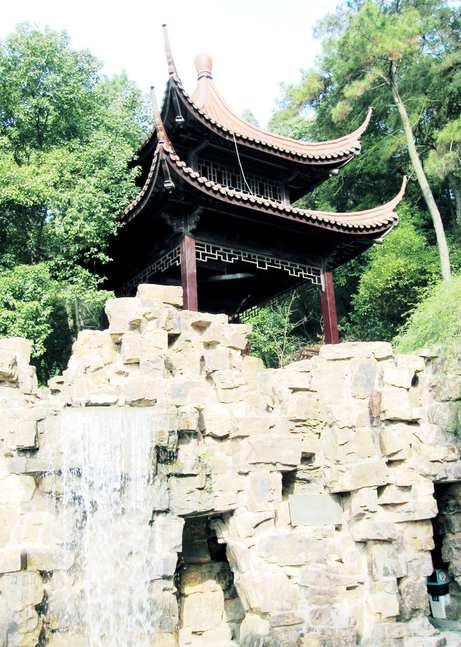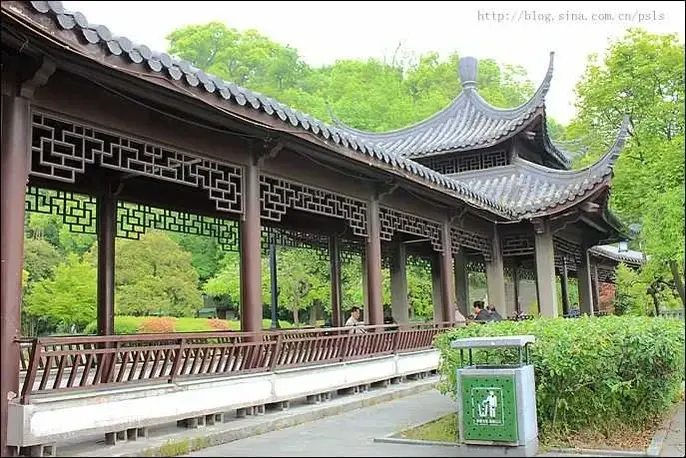
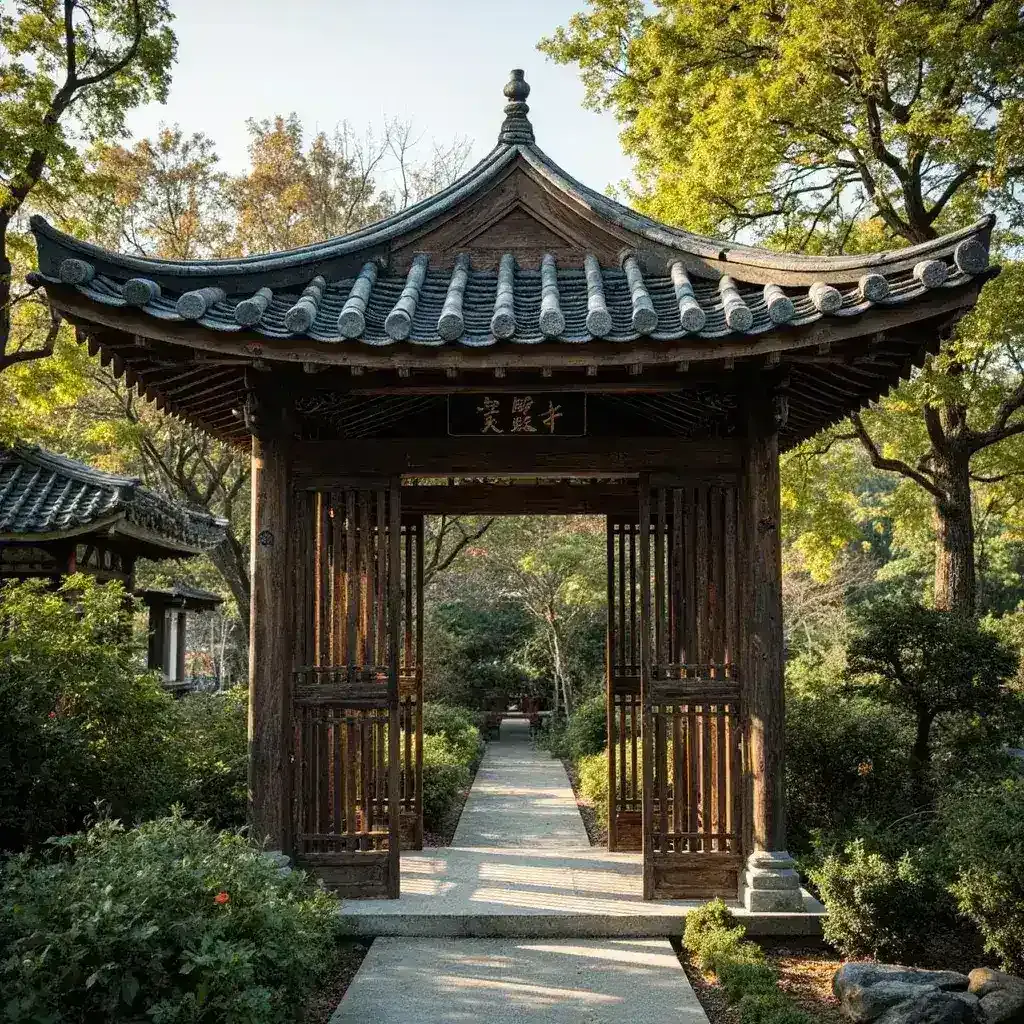
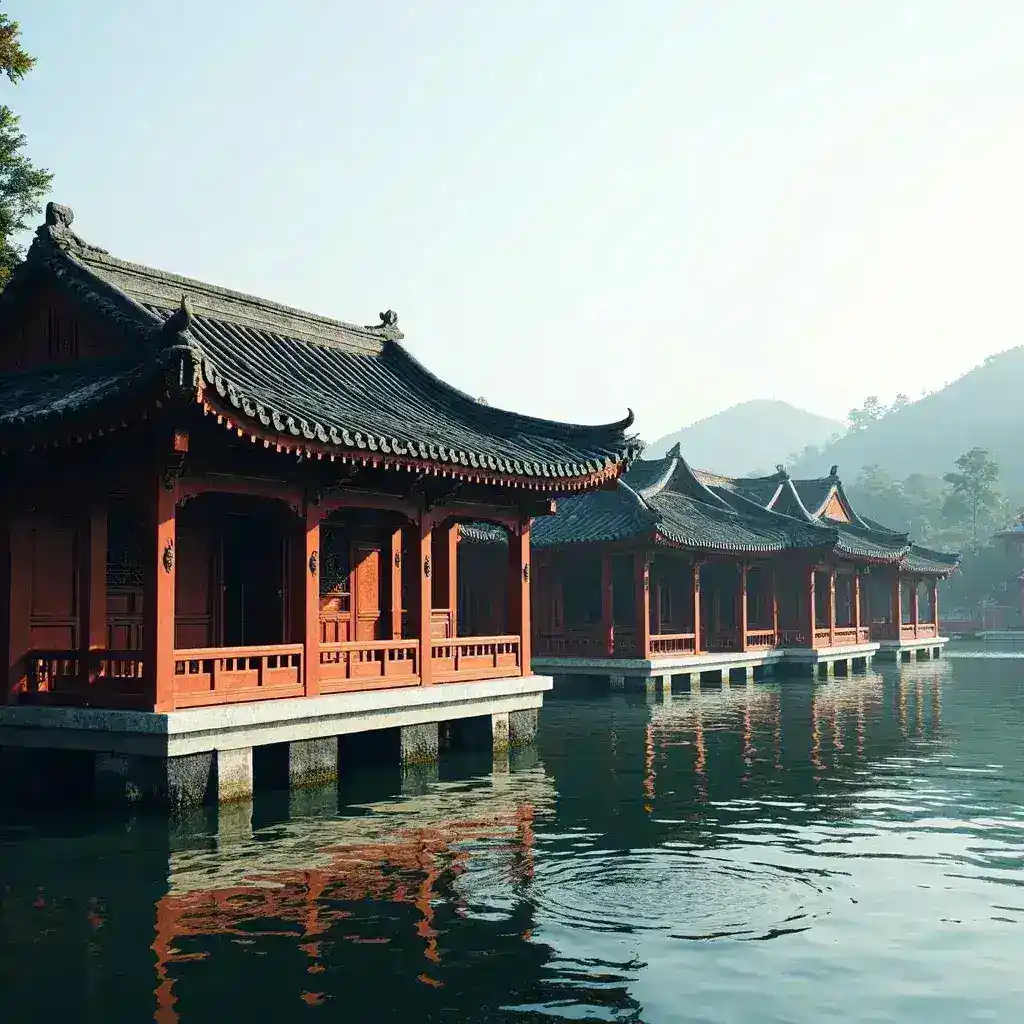
A wooden pavilion is a freestanding, open-sided structure traditionally used in Chinese gardens and public spaces for rest, ceremony, and cultural gathering. For city landmark projects in Shaoxing and across the world, the right pavilion does more than fill space – it anchors a plaza, frames a view, and tells a story. Zhongyu Wood Art has been handcrafting traditional wooden pavilions since 1978, combining 48 years of mortise-and-tenon joinery with modern engineering. Whether you are a landscape architect, a municipal planner, or a cultural tourism developer, this guide explains what makes a landmark-grade wooden gazebo, how it is built, and how to specify one for your project.
A traditional Chinese wooden pavilion (known locally as a ting) is a column-supported structure with a roof, open walls, and a raised platform. Unlike a Western gazebo, which often uses a simple hip roof, a classical Chinese pavilion follows strict proportional rules for eaves, roof pitch, and bracket sets. These proportions are recorded in historical building manuals such as the Song dynasty Yingzao Fashi (Building Standards) and the Qing dynasty Gongcheng Zuofa Zeli.
The pavilion form has three core functions in a city landmark context. First, it provides a visual focal point – a hexagonal or octagonal roof draws the eye across a plaza or park. Second, it offers shelter and seating for visitors. Third, it carries cultural meaning: the upturned eaves, carved brackets, and ridge ornaments signal heritage and craftsmanship to any informed viewer.
According to our master craftsman with 48 years of experience, the single most common problem in modern pavilion projects is that the structure looks correct from a distance but fails on close inspection. Screw-and-bracket assemblies, thin columns, and shallow eaves give away a mass-produced product. A genuine landmark pavilion must satisfy both the eye and the structural load path.
Every pavilion we build starts from the same principle: solve the client’s real problem, not just deliver a product. Below are the features that matter most for city landmark and public space projects.
The timber choice decides how a pavilion ages. We work with four main species depending on climate, budget, and appearance requirements.
| Specification | Detail |
|---|---|
| Wood species | Camphor wood, fir, pine, or merbau (Balau) for high-humidity sites |
| Moisture content | Kiln-dried to 12-15% |
| Joinery | Mortise-and-tenon, pinned with hardwood dowels |
| Standard column diameter | 15-30 cm (6-12 inches) |
| Typical footprint | 3-6 m (10-20 ft) across |
| Roof load rating | Engineered for 0.5 kN/m2 snow load |
| Finish | Natural wood oil or weather-resistant stain |
| Production time | 20-30 days standard, 45-60 days for landmark scale |
| Structural warranty | 5 years on primary frame |
Camphor wood is the traditional choice for carved components because it holds fine detail and resists insects naturally. Fir and pine offer a lower-cost option for painted finishes. For coastal or tropical installations, merbau provides the density needed to resist rot and termites without chemical dependence.
The joinery itself is where the craft shows. A corner joint between two beams is cut as a dovetail or half-lap with a locking tenon, then secured with a hardwood pin driven through both members. According to industry data from heritage restoration projects, properly executed mortise-and-tenon frames routinely outlast mechanically fastened frames by 15-20 years in outdoor service.
Wooden pavilions serve a wide range of landmark and public space functions. In an urban plaza, a hexagonal pavilion becomes a meeting point and a photo backdrop. In a cultural park, it frames a water feature or a sculpture. In a heritage district, it reinforces the architectural language of surrounding buildings.
Common applications include:
For a city landmark brief, the pavilion usually needs to work at two scales at once: it must read clearly from 100 m away as a silhouette, and hold detail when a visitor stands 1 m from a carved bracket. That dual requirement is what separates a landmark structure from a garden ornament.
We build every pavilion to order, which means the design can respond to the site rather than forcing the site to fit a catalogue size. Customization covers the full structure.
For Shaoxing and similar heritage-conscious destinations, we can reference local architectural motifs in the railing and bracket carvings. This is done at the design stage, with drawings issued for client approval before cutting begins.
One recent project involved a 5.5 m hexagonal pavilion for a waterside cultural park. The client’s concern was durability in a humid riverside environment and a tight 8-week installation window before a public opening.
We specified merbau for all structural members, kiln-dried to 13% moisture content, with camphor wood for the carved brackets. The frame was pre-assembled and numbered at our factory, then disassembled for shipping in a single 20 ft container. On site, a four-person crew completed assembly in 6 days, and the foundation interface matched the supplied anchor layout without modification.
Three years on, the structure shows no joint separation and no rot at the column bases. The client has since commissioned two smaller matching pavilions for adjacent viewpoints.
Q: How much does a wooden pavilion cost?
A: A standard 4 m pavilion typically ranges from USD 4,000 to USD 12,000 depending on wood species, roof form, and carving detail. Landmark-scale structures with double eaves and extensive carving run higher. We provide a detailed quotation with drawings within 24 hours of receiving your requirements.
Q: How long does production and shipping take?
A: Standard pavilions ship in 20-30 days after drawing approval. Larger landmark structures take 45-60 days. Ocean freight to most destinations adds 20-35 days. We confirm both windows in writing before production starts.
Q: Can the pavilion be assembled on site by local labor?
A: Yes. Every structure ships with numbered parts, pre-drilled holes, and an assembly manual. Most clients use a local crew of 3-4 people. We also offer supervised installation or a full installation team if required.
Q: What maintenance does an outdoor wooden pavilion need?
A: Reapply wood oil or stain every 2-3 years depending on climate. Inspect the column bases annually for moisture. With this routine, the structural frame lasts 30 years or more.
Q: Do you provide foundation drawings?
A: Yes. We issue foundation and anchor bolt drawings with every order so the base is built to match the pavilion exactly, avoiding on-site fitting problems.
We have been building traditional wooden structures since 1978, with over 10,000 completed projects and exports to more than 50 countries. Our factory in China handles design, production, and finishing under one roof, which keeps quality control tight and pricing direct.
Every pavilion is fully customizable in size, shape, carving, and finish. We provide free design drawings, a firm production schedule, and a 5-year structural warranty. Our team responds to inquiries within 24 hours.
For city landmark, cultural park, and heritage projects, request a quote and we will send detailed specifications, drawings, and shipping costs for your site. Send us your footprint dimensions and preferred roof style to begin.
Call/WhatsApp: +86 13883366528
Zhongyu Woodcraft – 48 Years Traditional Chinese Woodcraft Factory, Nationwide Installation
| Material | Solid timber (Chinese pine, eucalyptus, or premium wood options) |
|---|---|
| Treatment | ACQ pressure-treated, 50+ year outdoor lifespan |
| MOQ | 1 unit (sample order welcome) |
| Lead Time | 10-20 working days (sample); 20-40 days (bulk) |
| Shipping | FOB Chongqing. Worldwide shipping available |
Call / WhatsApp same number · Reply within 24 hours
☎ Hotline: +86 13883366528 (WhatsApp same number) · 💬 WhatsApp
几代老师傅 · 在线咨询