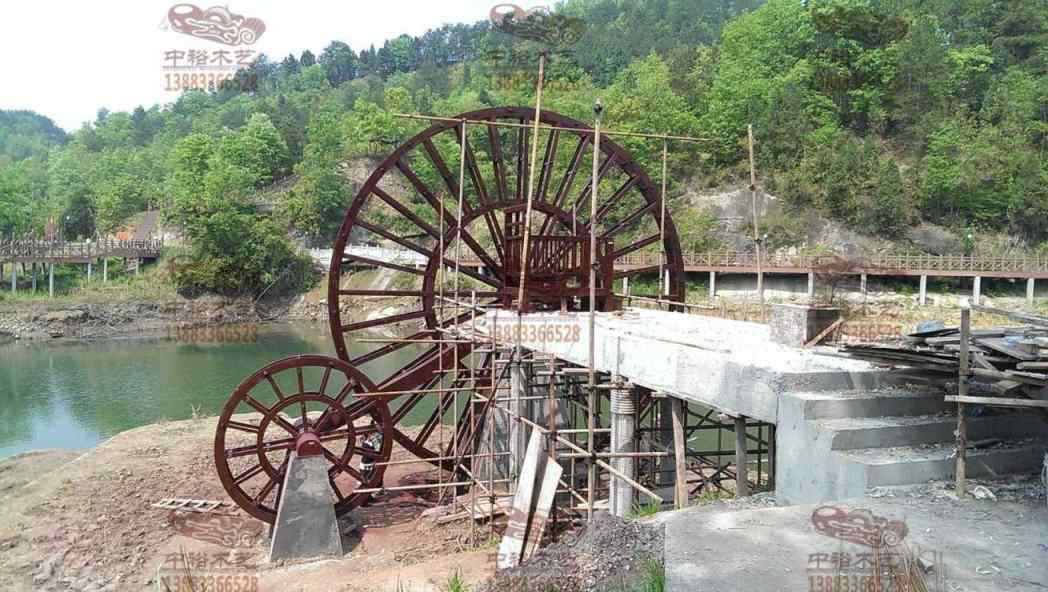
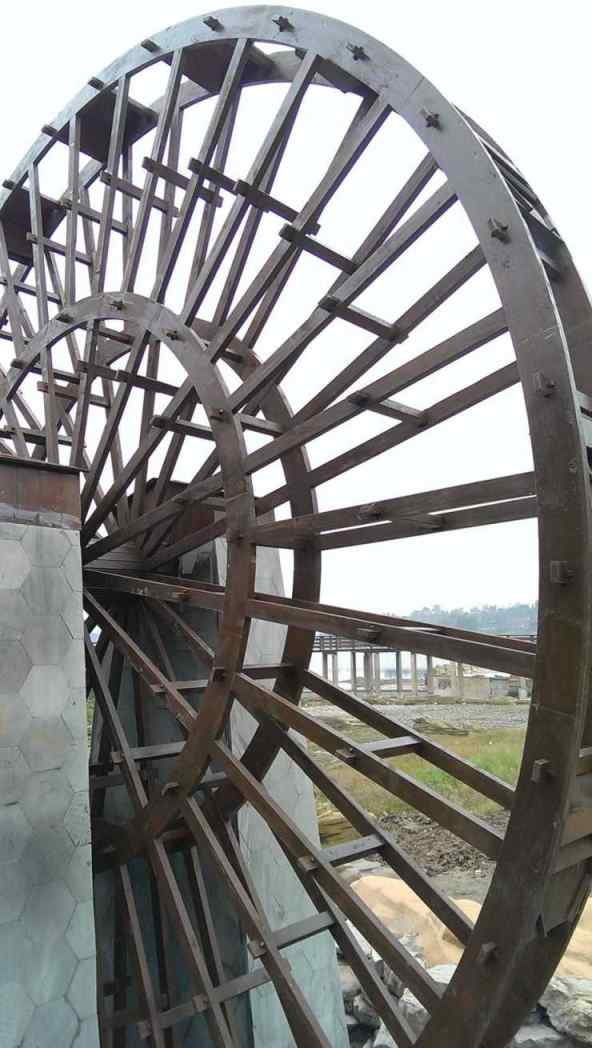
Determining the waterwheel cost is often the first step for museum curators, landscape architects, and heritage site managers. With heritage tourism growth accelerating, many institutions are seeking authentic wooden waterwheels to enhance visitor experience and historical accuracy. A common question is how does a waterwheel turn, and whether a custom waterwheel size fits the available space. This guide breaks down the waterwheel cost estimate process from a 48-year woodworking factory, providing transparent pricing details that remove the guesswork. Whether you are planning a village history museum exhibit or a park installation, understanding the factors behind waterwheel customization ensures you get the right asset without unexpected expenses.
The history of the waterwheel is deeply rooted in ancient hydraulic engineering. As recorded in the Tiangong Kaiwu (The Ingesting of the Universe), a seminal Ming Dynasty treatise on agriculture and technology, waterwheels were essential for irrigation and mechanical power. These structures were not merely functional; they were architectural statements of harmony between human industry and natural water flow. In a village history museum, a waterwheel serves as a tangible link to the past, illustrating how communities managed resources before modern machinery. For professional researchers and museum curators, authenticity is paramount. A generic decorative wheel lacks the educational value of a technically accurate replica that reflects specific regional engineering styles. By preserving these historical forms, institutions contribute to the global preservation of intangible cultural heritage, aligning with UNESCO heritage guidelines that emphasize the documentation and replication of traditional crafts. This cultural depth justifies the investment in high-quality materials and precise craftsmanship, which ultimately influences the final waterwheel cost estimate.
Understanding waterwheel cost requires understanding the materials. We primarily use hardwoods like teak or oak, which offer superior resistance to rot and weathering compared to softwoods. The choice of wood significantly impacts longevity and maintenance frequency. A standard waterwheel diameter of 2 meters (80 inches) typically uses 50 to 60 individual wooden slats, each mortise-and-tenon joined to the central hub. This traditional joinery technique, without the need for modern metal fasteners in key structural components, ensures durability and a historic aesthetic. According to our senior craftsman with 48 years of experience, the seasoning process is critical; timber must be kiln-dried to a moisture content below 12% to prevent warping after installation. The wheels rotation mechanism usually involves a simple axle bearing system. For a working waterwheel, the axle is designed to support the dynamic load of water impact. In static museum displays, the axle is fixed, allowing for safe rotation by visitors or automated slow-motion drives. The precision of the wheels balance is a key quality indicator. An unbalanced wheel creates uneven wear on the bearings, leading to operational issues. Therefore, labor hours for balancing and finishing account for a significant portion of the custom waterwheel size and complexity factors in pricing.
To provide a clear waterwheel cost estimate, we categorize products by diameter and functional capability. Prices below are ex-works estimates; shipping is calculated separately based on destination.
| Waterwheel Diameter | Material | Function | Estimated Price Range (USD) |
| 1.5 meters (60 inches) | Pine / Softwood | Static Display | $800 – $1,500 |
| 2.0 meters (80 inches) | Oak / Hardwood | Static Display | $1,500 – $3,000 |
| 3.0 meters (120 inches) | Teak / Premium | Functional / Slow-Motion | $4,500 – $8,000 |
| 4.0+ meters (160+ inches) | Custom Hardwood | Large Scale Installation | $10,000+ |
These ranges reflect the base structure. Additional features such as LED lighting, automated rotation motors, or decorative carvings will increase the waterwheel cost. It is important to note that the foundation is not included in these figures. Does a waterwheel need a foundation? Yes, a stable concrete base or steel frame is required to support the axle bearings and ensure safety. The engineering plan for the foundation is provided free of charge with our design service, allowing your local contractor to build it to specification.
Waterwheel customization is the core of our service. We understand that no two sites are identical. The process begins with a consultation where we assess your space constraints. For a village history museum, we might reference specific local archival images to replicate a historical design. For a park, we focus on visual impact and safety. We offer full structural engineering drawings and assembly instructions. If you are unsure of the exact dimensions, our design team can create a 3D model for your approval before production. This stage allows you to visualize the custom waterwheel size in its final location. We support various finishes, including natural clear coat for a rustic look or darker stains to match surrounding architecture. This level of detail ensures the wheel integrates seamlessly into your landscape, enhancing the overall aesthetic value of the project.
Recently, we completed a 3-meter functional waterwheel for a rural heritage site. The client needed a wheel that could operate in a shallow stream without damaging the local ecosystem. We designed a low-impact axle system with a bearing gap of 5 mm, reducing friction and wear. The wheel was fabricated from sustainably sourced oak and shipped via container in 12 days. On-site assembly took 3 days for their team, guided by our installation video support. The result was a dynamic focal point that increased visitor dwell time by an estimated 20 percent, according to post-installation feedback. This project demonstrates that investing in quality craftsmanship and transparent communication leads to a successful outcome. The client valued the detailed waterwheel cost estimate provided upfront, which matched the final invoice exactly.
Q: How long does manufacturing take?
A: Standard production takes 20 to 30 business days. Complex custom designs may require 45 days. We provide a confirmed lead time during the quotation stage.
Q: Does the waterwheel come pre-assembled?
A: No, for shipping efficiency, wheels are disassembled into modules. All components are labeled and boxed with step-by-step assembly instructions. We recommend 2 to 3 people for assembly.
Q: What is the warranty period?
A: We provide a 1-year warranty on structural integrity and a 5-year warranty on the axle bearings, provided the wheel is installed according to our guidelines.
Investing in a custom waterwheel is a long-term asset for any museum, park, or heritage site. By understanding the breakdown of waterwheel cost factors, you can make informed decisions that balance budget with quality. Our 48-year experience ensures that your project is executed with precision and care. We are ready to assist you with detailed drawings and a transparent quote for your specific requirements. Contact us today to start your waterwheel customization journey.
Selecting the right transmission system is critical for the longevity and efficiency of a landscape waterwheel. At Zhongyu Wood Art, we engineer two primary hydraulic solutions: the traditional undershot design and the modern hydraulic-assisted model. For heritage sites an or across China, the undershot wheel remains the preferred choice. Here, flowing water strikes the blades directly, converting kinetic energy into rotational force. We calculate the flow rate of your local stream to determine the optimal wheel diameter, typically ranging from 3 meters to 8 meters for scenic park applications. The gear ratio is customized to ensure a smooth, slow rotation of approximately 4 to 6 RPM, which minimizes mechanical stress on the timber axle bearings. For sites with low water flow or where visual impact is prioritized over historical accuracy, our hydraulic-assisted system offers a robust alternative. This setup incorporates a small submersible pump and a gear motor to maintain consistent motion even in drought seasons. The hydraulic unit is housed within the central hub, which is reinforced with high-grade steel alloy to withstand the torsional loads. This dual-engineering approach allows us to adapt to specific site conditions, whether you are placing the installation in a busy urban square or a rural eco-tourism zone. Each gear assembly is treated with industrial-grade rust inhibitors and sealed to prevent moisture ingress, a critical step given the constant exposure to splashing water.
Exposure to UV radiation, rain, and humidity causes timber to gray, crack, or warp within 24 months without proper protection. Our factory in China utilizes a multi-stage surface finishing process designed to extend the service life of landscape wood structures by over ten years. The core material is usually Boron-treated Pine or high-density Acacia, which naturally resists fungal decay. Before installation, every plank undergoes a sanding sequence from 80-grit to 240-grit to remove surface imperfections. We then apply a penetrating oil-based preservative that soaks deep into the wood grain, offering protection against rot and insect damage from the inside out. This is followed by a two-coat application of water-repellent acrylic stains, available in natural cedar, mahogany, or custom gray tones to match surrounding landscape elements. The final layer is a clear polyurethane top coat that provides a hard, UV-stable shield. This specific chemical layering prevents the rapid oxidation that leads to the unsightly silvery-gray look common on neglected outdoor timber. For steel components, we employ hot-dip galvanizing followed by a powder-coated finish in an RAL-coded color of your choice. This combination of natural wood preservation and industrial steel protection ensures that the waterwheel maintains its aesthetic integrity through all four seasons.
Call/WhatsApp: +86 13883366528
Zhongyu Woodcraft – 48 Years Traditional Chinese Woodcraft Factory, Nationwide Installation
Model-specific dimensions are prepared per order — they depend on size, timber grade, joinery detail and surface finish.
The commercial terms below are fixed and apply to every order. Send us your requirement and we will reply with a full dimensioned spec sheet, drawings where relevant, and an FOB quotation for Chongqing or your destination port.
| Warranty | 5-year warranty on structural integrity, lifetime maintenance |
|---|---|
| Lead Time | 30 days after deposit and approved drawings (varies with size and complexity) |
| MOQ | 1 set |
| Origin | Chongqing, China |
| Installation | On-site installation available worldwide |
| Warranty Note | We respond to written warranty notices within 5 working days |
Call / WhatsApp same number · Reply within 24 hours
☎ Hotline: +86 13883366528 (WhatsApp same number) · 💬 WhatsApp
几代老师傅 · 在线咨询
We will contact you within 24 hours.