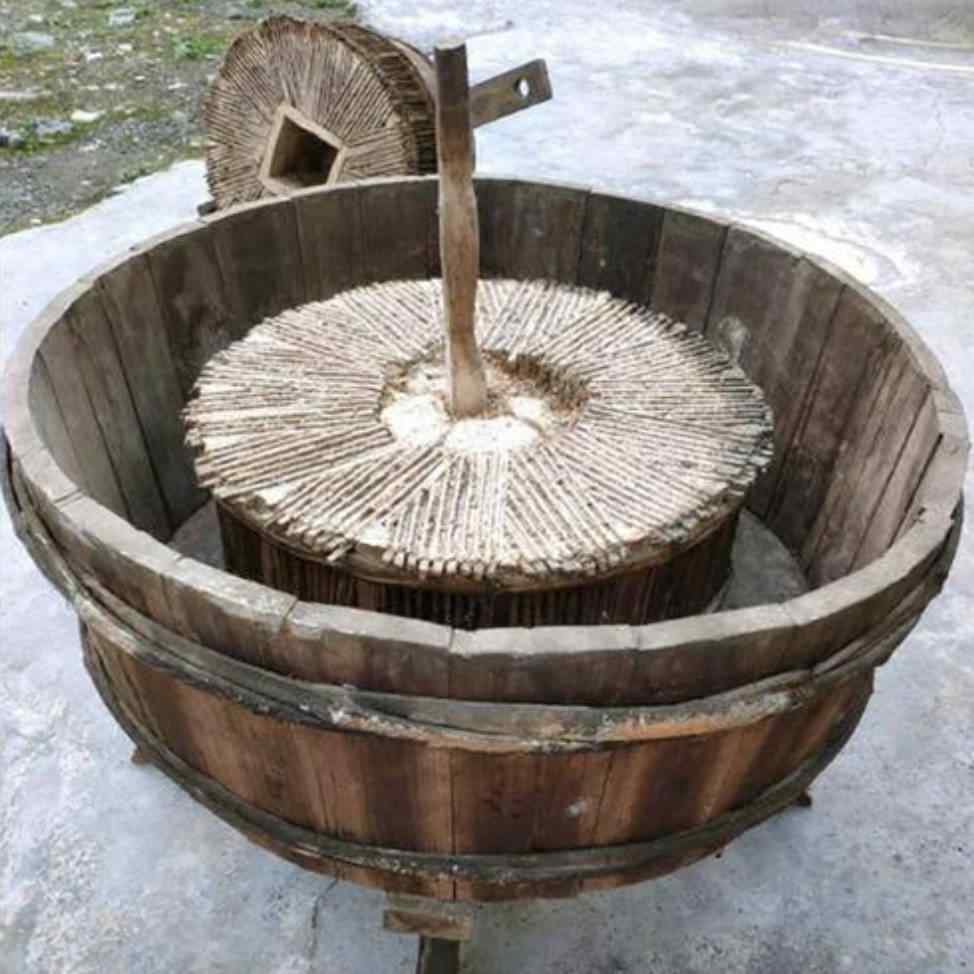
An ancient Chinese farming tools study kit is a comprehensive educational collection that brings the rich history of Chinese agriculture to life through authentic, handcrafted replica tools. For over 8,000 years, Chinese farmers have developed sophisticated agricultural tools and techniques that fed one of the world’
s largest and oldest civilizations. Our study kits faithfully reproduce these traditional tools using historical research, authentic materials, and master craftsmanship, making them ideal for museums, schools, universities, cultural centers, libraries, and private collectors who want to preserve and teach the history of Chinese agricultural technology.
Chinese agriculture is one of the oldest and most influential agricultural systems in the world. The domestication of rice in the Yangtze River basin dates back approximately 8,000 years, while millet cultivation in the Yellow River basin dates back approximately 7,000 years. Over the millennia, Chinese farmers developed revolutionary agricultural tools and techniques that spread throughout Asia and influenced agricultural practices worldwide. Key innovations included the iron plowshare (developed during the Warring States period, 475-221 BC), the curved iron plow (developed during the Tang Dynasty, 618-907 AD), the seed drill (developed during the Han Dynasty, 206 BC –
220 AD), the chain pump for irrigation (developed during the Han Dynasty), and the winnowing fan (developed during the Han Dynasty).
The most comprehensive historical record of Chinese agricultural tools is the Nong Shu (, Agricultural Treatise) written by Wang Zhen during the Yuan Dynasty (1271-1368 AD). This monumental work documents over 100 agricultural tools and implements with detailed illustrations and descriptions, organized by category including field tools, irrigation tools, harvesting tools, processing tools, and transportation tools. Another important historical text is the Tian Gong Kai Wu (, The Exploitation of the Works of Nature) written by Song Yingxing during the Ming Dynasty (1587-1666 AD), which documents agricultural and manufacturing techniques with detailed illustrations. These historical texts serve as the primary reference for our study kits, ensuring that each tool is an accurate and faithful reproduction of its historical counterpart.
Studying ancient Chinese farming tools provides valuable insights into the history of technology, the development of human civilization, the relationship between humans and nature, and the ingenuity of traditional craftspeople. Each tool represents a solution to a specific agricultural challenge, and the evolution of these tools over time reflects the increasing sophistication of Chinese agricultural society. Our study kits are designed to facilitate hands-on learning and research, allowing students, scholars, and visitors to examine, handle, and even use these traditional tools to gain a deeper understanding of Chinese agricultural history and technology.
| Tool Name | Chinese Name | Historical Period | Function | Materials |
|---|---|---|---|---|
| Curved Iron Plow | (qu yuan li) | Tang Dynasty (618-907 AD) | Primary tillage tool for turning and breaking soil | Wooden beam, iron plowshare, wooden handles |
| Straight Plow | (zhi yuan li) | Han Dynasty (206 BC-220 AD) | Earlier plow design for field preparation | Wooden beam, iron plowshare, wooden handles |
| Hoe | (chu tou) | Warring States (475-221 BC) | Weeding, cultivating, hilling, light tillage | Iron blade, wooden handle |
| Sickle | (lian dao) | Neolithic (8000+ years ago) | Harvesting grain, cutting grass and straw | Iron or stone blade, wooden handle |
| Flail | (lian jia) | Han Dynasty (206 BC-220 AD) | Threshing grain by beating stalks | Wooden handle, wooden swipple, leather hinge |
| Mortar and Pestle | (shi jiu shi chu) | Neolithic (8000+ years ago) | Grinding and hulling grain, pounding food | Stone mortar, wooden or stone pestle |
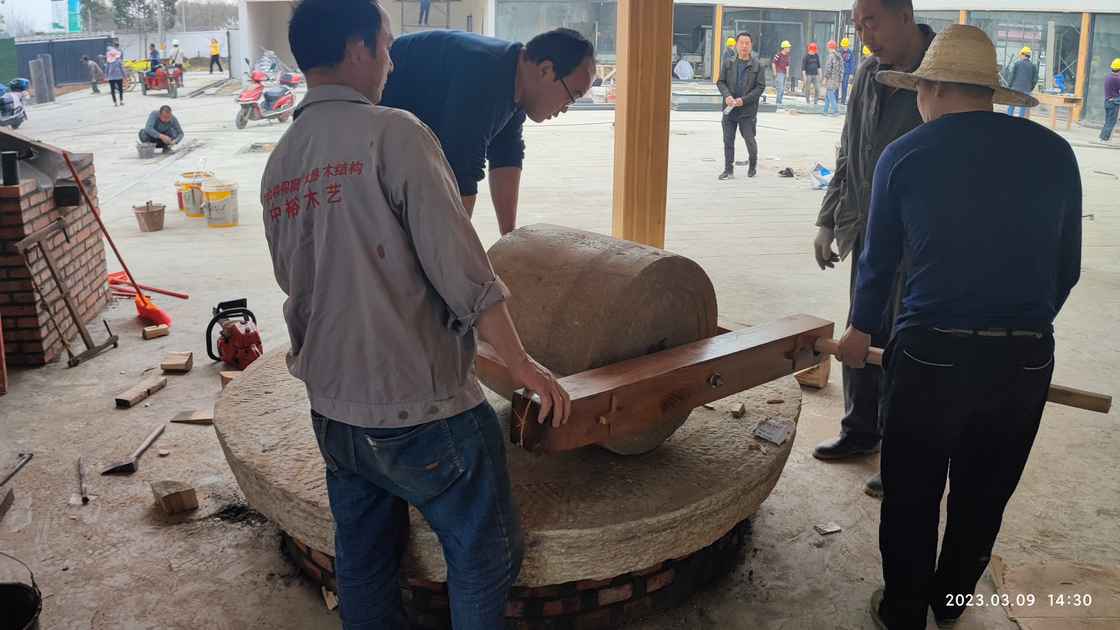
| Quern (Millstone) | (shi mo) | Warring States (475-221 BC) | Grinding grain into flour | Two circular stones, wooden handle, wooden frame |
| Winnowing Fan | (feng shan che) | Han Dynasty (206 BC-220 AD) | Separating grain from chaff using wind | Wooden frame, wooden fan blades, crank handle |
| Seed Drill | (lou che) | Han Dynasty (206 BC-220 AD) | Planting seeds in rows at uniform depth and spacing | Wooden frame, seed box, plowshares, handles |
| Chain Pump | (long gu shui che) | Han Dynasty (206 BC-220 AD) | Irrigation: lifting water from lower to higher level | Wooden frame, wooden chain with paddles, crank or pedal |
| Water Wheel | (shui che) | Han Dynasty (206 BC-220 AD) | Irrigation and powering machinery using water flow | Wooden wheel, wooden buckets, wooden axle, frame |
| Rake | (pa) | Han Dynasty (206 BC-220 AD) | Breaking clods, leveling soil, gathering debris | Wooden beam, iron or wooden teeth, wooden handle |
| Spade/Shovel | / (tie qiao/mu China) | Warring States (475-221 BC) | Digging, moving soil, shoveling grain | Iron or wooden blade, wooden handle |
| Axe | (fu tou) | Neolithic (8000+ years ago) | Cutting wood, clearing land, shaping timber | Iron or stone blade, wooden handle |
| Carrying Pole | (bian dan) | Ancient (5000+ years ago) | Carrying loads balanced on shoulders | Hardwood pole, rope, wooden or bamboo baskets |
| Bamboo Basket | (zhu lan) | Ancient (5000+ years ago) | Carrying and storing produce, grain, tools | Bamboo strips, woven |
| Conical Hat | (dou li) | Ancient (5000+ years ago) | Protection from sun and rain for farmers | Bamboo frame, palm leaves or straw, woven |
| Straw Rain Cape | (suo yi) | Ancient (5000+ years ago) | Waterproof clothing for working in rain | Straw or palm fibers, woven |
| Ox Yoke | (niu e) | Ancient (4000+ years ago) | Harnessing oxen for plowing and pulling carts | Wooden yoke, leather straps |
Our standard study kit includes 12 core tools that represent the most important and influential agricultural implements in Chinese history: the curved iron plow, hoe, sickle, flail, mortar and pestle, quern (millstone), winnowing fan, seed drill, chain pump, rake, spade, and carrying pole. We also offer expanded kits with up to 20+ tools including the water wheel, axe, bamboo basket, conical hat, straw rain cape, ox yoke, and other specialized tools. Each tool is available in three scales: 1) Full-size functional replicas (for hands-on demonstrations and living history events), 2) Half-size display models (for museum exhibits and classroom display), and 3) Quarter-size miniature models (for desktop display and private collections). All tools come with detailed identification labels in both Chinese and English, and a comprehensive educational guidebook.
| Component | Content | Format | Language |
|---|---|---|---|
| Main Guidebook | Comprehensive history of Chinese agriculture, detailed tool descriptions, historical context, usage instructions, bibliographic references | Hardcover book, 150+ pages, illustrated | Chinese and English (bilingual) |
| Tool Identification Cards | Individual cards for each tool with name (Chinese/English), historical period, function, materials, and interesting facts | 5×7 inch cards, laminated, with color photos | Chinese and English (bilingual) |
| Historical Timeline Poster | Timeline of Chinese agricultural development from Neolithic to Qing Dynasty, with key inventions and tools marked | 24×36 inch poster, full color, laminated | Chinese and English (bilingual) |
| Lesson Plans (for schools) | Ready-to-use lesson plans for elementary, middle, and high school students, with activities, discussion questions, and assessments | Printed and digital (PDF), 50+ pages | English (Chinese available on request) |
| Activity Guide | Hands-on activities and experiments using the tools, including planting with the seed drill, threshing with the flail, grinding with the quern, and winnowing with the fan | Printed booklet, 30+ pages, illustrated | Chinese and English (bilingual) |
| DVD/Video Documentary | Documentary video showing the tools in use, interviews with historians and craftsmen, and historical reenactments | DVD or digital download, 45+ minutes, subtitles | Chinese with English subtitles |
| Display Case (optional) | Custom wooden display case with glass panels, LED lighting, and engraved nameplate for museum or institutional display | Hardwood case, tempered glass, LED lighting | Custom engraving available |
| Teacher Training (optional) | Professional development workshop for educators on how to use the kit effectively in the classroom, with hands-on training and curriculum integration | On-site or virtual workshop, 4-8 hours | English or Chinese |
Our educational materials are developed in collaboration with historians, archaeologists, and educators to ensure historical accuracy and pedagogical effectiveness. The main guidebook provides a comprehensive overview of Chinese agricultural history, with detailed chapters on each tool including its historical development, design and construction, method of use, cultural significance, and influence on later agricultural technology. The guidebook also includes historical illustrations from classical texts such as Nong Shu and Tian Gong Kai Wu, as well as modern photographs of the tools in use. The tool identification cards are designed for quick reference and can be displayed alongside each tool in an exhibit or used as flashcards for student learning. The historical timeline poster provides a visual overview of the development of Chinese agricultural technology over 8,000 years, making it easy for students and visitors to understand the chronological context of each tool.
For educational institutions, we offer ready-to-use lesson plans aligned with curriculum standards for world history, social studies, science, and technology education. The lesson plans include grade-appropriate activities, discussion questions, assessment tools, and cross-curricular connections. The activity guide provides step-by-step instructions for hands-on activities using the tools, allowing students to experience traditional farming techniques firsthand and gain a deeper appreciation for the ingenuity and hard work of traditional farmers. We also offer optional teacher training workshops to help educators integrate the kit into their curriculum effectively. For museums and cultural centers, we offer custom exhibit design services including display cases, interpretive panels, interactive stations, and multimedia presentations to create an engaging and educational exhibit for visitors.
| Material | Traditional Source | Modern Source | Used For | Quality Standard |
|---|---|---|---|---|
| Chinese Fir (Cunninghamia lanceolata) | Southern China forests | Sustainable plantations in Guangxi, Guizhou, Fujian | Plow beams, tool handles, pump frames, wheel frames | Kiln-dried, hand-selected, straight grain |
| Camphor Wood (Cinnamomum camphora) | Southern China forests | Sustainable plantations in Sichuan, Yunnan, Hunan | Tool handles, decorative elements, display cases | Kiln-dried, insect-resistant, beautiful grain |
| Elm (Ulmus pumila) | Northern China forests | Sustainable plantations in Shandong, Hebei, Henan | Heavy tool handles, hammer heads, mallets | Kiln-dried, dense, shock-resistant |
| Oak (Quercus variabilis) | Northern and central China | Sustainable plantations in Shaanxi, Shanxi, Sichuan | Millstone frames, heavy structural components | Kiln-dried, very dense, durable |
| Bamboo (Phyllostachys edulis) | Southern China groves | Sustainable bamboo groves in Zhejiang, Fujian, Jiangxi | Baskets, hats, rope, woven components | Seasoned, hand-selected, flexible and strong |
| Iron (traditional smelted) | Historical: local iron smelting | Modern: high-quality steel with traditional forging | Plowshares, blades, sickles, hoes, axe heads | Hand-forged, hardened and tempered, authentic shape |
| Stone (granite/sandstone) | Local quarries | Traditional quarries in Shandong, Fujian, Sichuan | Mortars, millstones, pestles | Hand-carved, authentic shape and texture |
| Leather (cowhide) | Traditional: local tanneries | Modern: vegetable-tanned cowhide | Flail hinges, ox yoke straps, handle wraps | Vegetable-tanned, durable, authentic appearance |
| Rope (hemp/rice straw) | Traditional: local fiber production | Modern: natural hemp or rice straw rope | Carrying pole ropes, tool bindings, basket handles | Hand-twisted, authentic appearance and strength |
| Palm Leaves/Straw | Traditional: local agriculture | Modern: sustainably harvested palm leaves or rice straw | Conical hats, rain capes, thatch | Hand-woven, authentic pattern and appearance |
Every tool in our study kits is handcrafted by master craftsmen using traditional techniques and authentic materials, ensuring historical accuracy and high quality. Our craftsmen have decades of experience in traditional woodworking, blacksmithing, stone carving, and bamboo weaving, and many come from families with generations of experience in these traditional crafts. We use only sustainably sourced materials from certified sustainable forests and plantations, ensuring that our production is environmentally responsible. Each tool undergoes rigorous quality inspection including historical accuracy verification, structural integrity testing, and finish quality assessment before being included in a kit.
The wooden components are hand-cut, shaped, and finished using traditional woodworking tools and techniques, with authentic mortise and tenon joinery where historically appropriate. The iron components are hand-forged by our master blacksmiths using traditional forging techniques, with authentic shapes, sizes, and details based on historical examples and illustrations. The stone components are hand-carved by our master stone carvers using traditional chisels and mallets, with authentic shapes, textures, and tool marks. The bamboo and woven components are hand-woven by our master bamboo artisans using traditional weaving patterns and techniques. Each tool is then aged and finished to give it an authentic, historical appearance without compromising its structural integrity or functionality. The result is a collection of tools that are not only accurate historical reproductions but also beautiful, functional works of craftsmanship that can be handled, displayed, and used for educational purposes.
| Factor | Zhongyu Woodcraft | Typical Replica Maker | Mass-Produced Souvenir |
|---|---|---|---|
| Historical Accuracy | Based on classical texts (Nong Shu, Tian Gong Kai Wu), museum artifacts, and archaeological research | Approximate shapes, may not be historically accurate | Stylized or decorative, not historically accurate |
| Craftsmanship | Handcrafted by master craftsmen using traditional techniques | Machine-made with some hand finishing | Mass-produced, low quality, cheap materials |
| Materials | Authentic, sustainably sourced traditional materials (wood, iron, stone, bamboo, leather) | Modern materials, may use plastic or resin | Cheap materials, plastic, resin, low-quality wood |
| Functionality | Full-size tools are fully functional and can be used for demonstrations | May be decorative only, not functional | Decorative only, not functional, fragile |
| Educational Value | Comprehensive educational materials, lesson plans, guidebook, timeline, activities | Basic information cards or no documentation | No educational materials, just the object |
| Customization | Custom tool selection, scales, display cases, exhibit design, curriculum integration | Limited customization, standard sets only | No customization, standard products only |
| Scale Options | Full-size, half-size, quarter-size, custom scales | One or two standard sizes | One standard size only |
| Expert Support | Consultation with historians, curators, and educators; teacher training; exhibit design | Basic customer service, no expert support | No expert support, retail only |
| Quality Assurance | Rigorous quality inspection, historical accuracy verification, structural testing | Basic quality check | No quality control, variable quality |
| Warranty | 10-year craftsmanship warranty, lifetime support | 1-2 year warranty | 30-day return or no warranty |
Our workshop in China is uniquely qualified to produce authentic ancient Chinese farming tools study kits because of our deep connection to traditional Chinese craftsmanship and agricultural history. Located in the heart of Sichuan Basin, one of the oldest and most important agricultural regions in China, our workshop has access to traditional materials, master craftsmen, and historical resources that are unavailable elsewhere. We have spent decades researching and documenting traditional Chinese agricultural tools and techniques, working closely with historians, archaeologists, museum curators, and remaining traditional farmers to ensure the accuracy and authenticity of our reproductions. Our collection includes over 200 different traditional farming tools from various historical periods and regions of China, making us one of the most comprehensive sources for authentic Chinese agricultural tool reproductions in the world.
We have supplied study kits to museums, universities, schools, cultural centers, libraries, and private collectors in over 20 countries including the United States, United Kingdom, Germany, France, Japan, South Korea, Australia, Canada, and many others. Our clients include prestigious institutions such as university anthropology departments, museum education departments, and cultural exchange organizations. We offer comprehensive services beyond just supplying the tools, including exhibit design, curriculum development, teacher training, educational programming, and consulting on Chinese agricultural history and traditional crafts. We can also create custom kits tailored to the specific needs, interests, and budget of each client, including tools from specific historical periods, regions, or agricultural systems (e.g., rice agriculture in southern China, dryland agriculture in northern China, tea cultivation, silk production, etc.).
Q: How much does an ancient Chinese farming tools study kit cost?
A: Prices vary depending on the number of tools, scale (full-size, half-size, quarter-size), materials, educational materials included, and custom options. As a rough guide: Quarter-size miniature kit (12 tools, display stand, basic guidebook): $500-$1,500; Half-size display kit (12 tools, display case, full educational materials): $2,000-$5,000;
Full-size functional kit (12 tools, storage racks, full educational materials): $5,000-$15,000; Expanded full-size kit (20+ tools, display cases, full educational materials, teacher training): $15,000-$40,000; Custom museum exhibit kit (custom tool selection, custom display cases, interpretive panels, interactive stations, multimedia): $20,000-$100,000+;
Additional tools (beyond the standard 12): $100-$1,000 each depending on tool complexity and scale; Custom display case: $500-$5,000 depending on size and features; Teacher training workshop: $1,000-$5,000 depending on format and duration; Custom curriculum development: $2,000-$10,000 depending on scope;
Shipping: $200-$2,000 depending on destination and kit size. We offer institutional discounts for schools, museums, and non-profit organizations, and we can work with your budget to create a kit that meets your needs. Contact us with your specific requirements, institution type, and budget for a detailed quotation within 48 hours.
Q: How long does it take to produce and deliver a study kit?
A: Standard kits typically take 4-8 weeks to produce (handcrafting the tools, creating educational materials, quality inspection, packaging), plus 1-2 weeks for domestic shipping or 4-8 weeks for international sea freight (air freight available for urgent orders, typically 1-2 weeks but more expensive). Custom kits with special tool selections, custom display cases, or custom educational materials may take 8-16 weeks to produce. Large museum exhibit kits with custom design and fabrication may take 16-24 weeks or more. We provide detailed project timelines at the time of order and keep you updated throughout the production process with regular photos and progress reports. Rush orders may be possible for an additional fee, though traditional handcraftsmanship requires adequate time for quality. For clients with urgent needs, we may have standard kits in stock or near completion that can be shipped more quickly contact us to check current inventory. The total timeline from order to delivery is typically 6-12 weeks for standard kits and 12-24 weeks for custom or museum kits, depending on size, complexity, and shipping location.
Q: Are the tools in the kit historically accurate, and what sources do you use for research?
A: Yes, historical accuracy is our top priority, and every tool in our study kits is carefully researched and verified before production. Our primary historical sources include: 1) Classical Chinese agricultural texts: The most important is Nong Shu (, Agricultural Treatise) by Wang Zhen (Yuan Dynasty, 1271-1368 AD), which documents over 100 agricultural tools with detailed illustrations and descriptions.
Other important texts include Tian Gong Kai Wu (, The Exploitation of the Works of Nature) by Song Yingxing (Ming Dynasty, 1587-1666 AD), Si Min Yue Ling (, Monthly Instructions for the Four Classes of People) by Cui Shi (Han Dynasty, 2nd century AD), and Nong Zheng Quan Shu (, Complete Treatise on Agriculture) by Xu Guangqi (Ming Dynasty, 1562-1633 AD).
2) Museum artifacts: We study actual historical tools in museum collections in China and around the world, including the National Museum of China, the Palace Museum, the Agricultural Museum of China, and many provincial and local museums. 3) Archaeological research: We reference archaeological reports and studies of ancient agricultural tools excavated from archaeological sites across China.
4) Ethnographic research: We study traditional farming tools still in use by remaining traditional farmers in remote areas of China, particularly in ethnic minority regions where traditional agricultural practices have been preserved. 5) Academic research: We collaborate with historians, archaeologists, and anthropologists at universities and research institutions to verify the accuracy of our reproductions.
Each tool undergoes a rigorous historical accuracy review by our team of researchers before it is approved for production, and we provide detailed documentation of our sources and research for each tool in the educational guidebook. If you have specific historical questions or need tools from a particular period or region, we can provide additional research and documentation.
Q: Can the full-size tools actually be used, or are they just for display?
A: Our full-size tools are fully functional and can be used for hands-on demonstrations, living history events, educational activities, and experimental archaeology. We design and construct each tool to be structurally sound and functional, using authentic materials and traditional construction techniques.
For example: The curved iron plow can be harnessed to an ox or tractor and used to plow actual soil. The sickle can be used to harvest actual grain or grass. The flail can be used to thresh actual grain stalks. The mortar and pestle can be used to pound and hull actual grain. The quern (millstone) can be used to grind actual grain into flour.
The winnowing fan can be used to separate actual grain from chaff. The seed drill can be used to plant actual seeds in rows. The chain pump can be used to lift actual water for irrigation. The water wheel can be placed in a stream and used to lift water or power machinery. The hoe, rake, and spade can be used for actual garden work.
The carrying pole can be used to carry actual loads. We do recommend some caution and proper training before using the tools, especially the larger and more complex ones (plow, water wheel, chain pump), and we provide detailed usage instructions and safety guidelines in the educational guidebook. For institutions that plan to use the tools for hands-on activities, we offer optional training workshops to teach educators and demonstrators how to use the tools safely and effectively.
For display-only purposes, our half-size and quarter-size models are designed to be visually accurate and detailed but are not functional (though they are still well-crafted and durable). We also offer “display-only” full-size tools that are constructed with lighter materials and simplified construction for institutions that only need the tools for exhibit display and do not plan to use them functionally these are available at a lower cost.
Q: Can you create a custom kit with specific tools, scales, or themes?
A: Yes, we specialize in creating custom study kits tailored to the specific needs, interests, and budget of each client. Here are some of the customization options we offer: 1) Custom tool selection: You can choose any combination of tools from our collection of over 200 different traditional farming tools, or we can research and create custom tools that are not in our standard collection (subject to research feasibility and production time).
2) Themed kits: We can create kits organized around specific themes such as: Rice cultivation tools (southern China), Dryland agriculture tools (northern China), Irrigation tools (pumps, water wheels, wells), Harvesting and processing tools (sickles, flails, mills, winnowers), Women’s agricultural tools, Ethnic minority agricultural tools (Miao, Dong, Zhuang, etc.
), Tools from a specific dynasty (Han, Tang, Song, Ming, Qing), Tools mentioned in a specific historical text, Agricultural tools from a specific region (Sichuan, Jiangnan, Shandong, etc.), Tea cultivation and processing tools, Silk production tools, Vegetable gardening tools, Animal husbandry tools.
3) Custom scales: We offer full-size, half-size, and quarter-size scales as standard, but we can create custom scales (e.g., 1/3 scale, 1/6 scale, 1/10 scale) for specific needs such as museum dioramas, model railroads, or desktop displays. 4) Custom materials: While we recommend authentic traditional materials for historical accuracy, we can use alternative materials for specific needs such as: Lightweight materials for traveling exhibits, Durable materials for high-traffic hands-on exhibits, Food-safe materials for food-related demonstrations, Sustainable or certified materials for green institutions, Non-traditional materials for artistic or conceptual projects.
5) Custom educational materials: We can customize the educational guidebook, lesson plans, and activity guides to align with your specific curriculum, grade level, educational standards, or institutional mission. We can also create materials in additional languages (currently Chinese and English standard, other languages available on request).
6) Custom display and packaging: We can create custom display cases, storage racks, shipping crates, and packaging tailored to your specific display, storage, and shipping needs. 7) Custom branding: We can add your institution’s logo, name, or custom engraving to the display case, guidebook, tool labels, or other components.
Contact us to discuss your specific custom kit needs, and we will work with you to design a kit that meets your requirements and budget. We provide custom design proposals with detailed descriptions, specifications, and pricing for your review and approval before production begins.
Q: How do I care for and maintain the tools in the study kit?
A: Proper care and maintenance will ensure that your study kit remains in good condition for many years. Here are our recommendations: 1) Storage: Store the tools in a cool, dry, well-ventilated area away from direct sunlight, extreme temperatures, and high humidity. Avoid storing in basements, attics, or outdoor sheds where temperature and humidity fluctuations can damage the wood and metal.
Ideal storage conditions are 18-22°C (65-72°F) and 40-50% relative humidity. 2) Wooden components: Dust the wooden components regularly with a soft, dry cloth. Every 6-12 months, apply a thin coat of food-safe wood oil (such as tung oil, linseed oil, or beeswax) to keep the wood moisturized and prevent drying and cracking.
Avoid using harsh chemicals, solvents, or commercial furniture polishes on the tools, as these can damage the authentic finish and may be toxic if the tools are used for food processing. If the wood becomes dirty, clean it with a slightly damp cloth (not wet) and mild soap, then dry immediately. 3) Iron components: The iron components (plowshares, blades, sickles, hoes, axe heads) are susceptible to rust if exposed to moisture.
Keep the iron components clean and dry, and apply a thin coat of food-safe oil (such as camellia oil, clove oil, or food-grade mineral oil) every 3-6 months to prevent rust. If rust does develop, remove it gently with fine steel wool or a wire brush, then apply oil. Avoid using the iron tools in wet conditions if possible, and always dry them thoroughly after use.
4) Stone components: The stone components (mortars, millstones, pestles) are very durable and require minimal maintenance. Clean them with a stiff brush and water after use, and allow them to dry completely before storage. Avoid using soap or detergent on stone components that will be used for food processing, as the soap can be absorbed by the stone and affect the taste of food.
5) Bamboo and woven components: Keep bamboo and woven components (baskets, hats, rope) dry and away from moisture to prevent mold and mildew. Dust regularly with a soft brush. If they become dirty, clean with a slightly damp cloth and mild soap, then dry thoroughly in a well-ventilated area away from direct sunlight.
6) Leather components: Keep leather components (flail hinges, straps, handle wraps) clean and conditioned with leather conditioner every 6-12 months to prevent drying and cracking. Avoid getting leather wet, and if it does get wet, allow it to dry slowly at room temperature away from direct heat or sunlight.
7) Display: If displaying the tools, use proper display stands or mounts to support the tools correctly and prevent warping or damage. Avoid hanging heavy tools by their handles for long periods, as this can cause the handles to bend or break. Use display cases with UV-filtering glass to protect the tools from sunlight damage if displaying in a bright area.
8) Handling: Handle the tools with clean, dry hands. Avoid dropping or banging the tools, as this can cause chips, cracks, or breakage, especially for the stone and ceramic components. When using the tools for demonstrations, follow the usage instructions and safety guidelines provided in the guidebook.
With proper care and maintenance, your study kit can last for decades and provide educational value for generations of students and visitors. We provide a detailed care and maintenance guide with every kit, and we are available to answer any questions about care and maintenance at any time.
Q: What is your warranty and after-sales support?
A: We offer a comprehensive 10-year craftsmanship warranty for all ancient Chinese farming tools study kits, covering the wooden, iron, stone, bamboo, and leather components against defects in materials and workmanship under normal use, proper handling, and appropriate storage conditions. Our traditional joinery and construction is guaranteed for the lifetime of the kit if a joint or structural component fails due to craftsmanship issues, we will repair or replace it at no cost.
Iron components are warranted against manufacturing defects for 5 years (normal rusting due to improper care or storage is not covered, but we can provide rust removal and re-finishing services at cost). Stone components are warranted against cracks or breakage due to manufacturing defects for 10 years (damage due to dropping or improper handling is not covered).
Educational materials (guidebook, cards, posters, DVDs) are warranted against manufacturing defects for 1 year. We provide lifetime technical support via email, phone, or video call for any questions about the tools, their history, usage, care, maintenance, or educational integration. Replacement parts are available at cost for any component that needs replacement due to damage, loss, or wear.
We also offer kit refurbishment and restoration services if your kit needs cleaning, re-finishing, repair, or restoration after years of use, we can restore it to like-new condition. For educational institutions, we offer annual maintenance contracts and priority service. We also offer free updates to the educational materials (guidebook revisions, new lesson plans, additional resources) as they become available, and we can provide digital updates via email or download.
We stand behind our products with a commitment to historical accuracy, quality craftsmanship, and educational value. A well-cared-for study kit is an investment that can provide decades of educational value and cultural enrichment. Contact us anytime with questions or concerns about your study kit.
Ready to add authentic traditional Chinese ancient Chinese farming tools study kits to your space? Contact us today for a free design consultation and detailed quotation. Our team of master craftsmen typically responds within 24 hours with expert recommendations based on your site, budget, and design preferences.
To learn more about the traditional craftsmanship behind every piece we build, read our comprehensive guide to the history of Chinese agriculture and traditional farming technology, which covers the history, techniques, and cultural significance of this ancient building method.
Call/WhatsApp: +86 13883366528
Zhongyu Woodcraft – 48 Years Traditional Chinese Woodcraft Factory, Nationwide Installation
| Origin | Chongqing, China |
|---|---|
| Brand | Zhongyu Wood Art |
| Material | Solid wood (pine/fir/cedar/teak available) |
| Craftsmanship | Traditional mortise-and-tenon joinery |
| Surface Finish | Weather-resistant outdoor coating |
| Dimensions | Customizable based on site requirements |
| Installation | On-site installation available worldwide |
| Lead Time | 15-30 days depending on complexity |
| MOQ | 1 set |
| Packaging | Standard export packaging |
| Lifespan | 30-50 years with proper maintenance |
| Warranty | 2-year structural warranty |
Call / WhatsApp same number · Reply within 24 hours
☎ Hotline: +86 13883366528 (WhatsApp same number) · 💬 WhatsApp
几代老师傅 · 在线咨询
We will contact you within 24 hours.