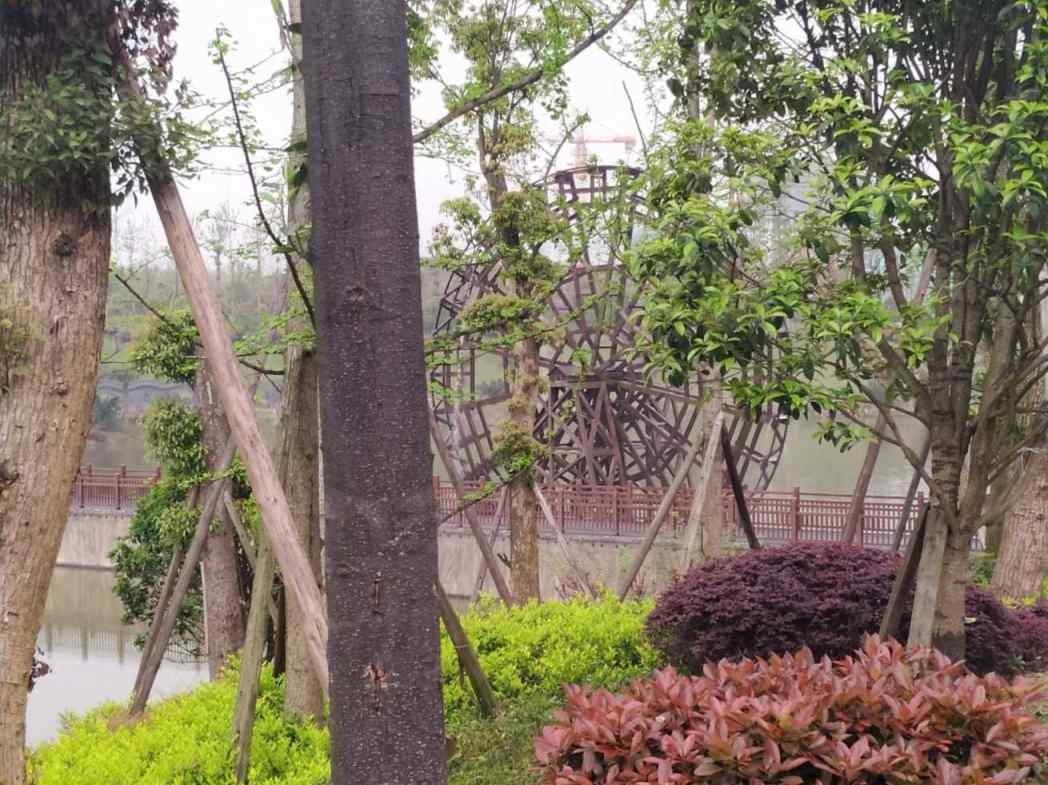
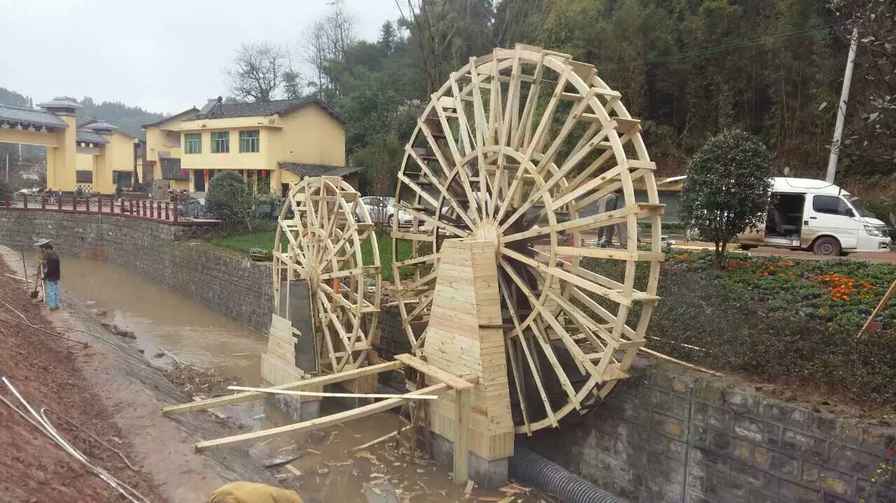
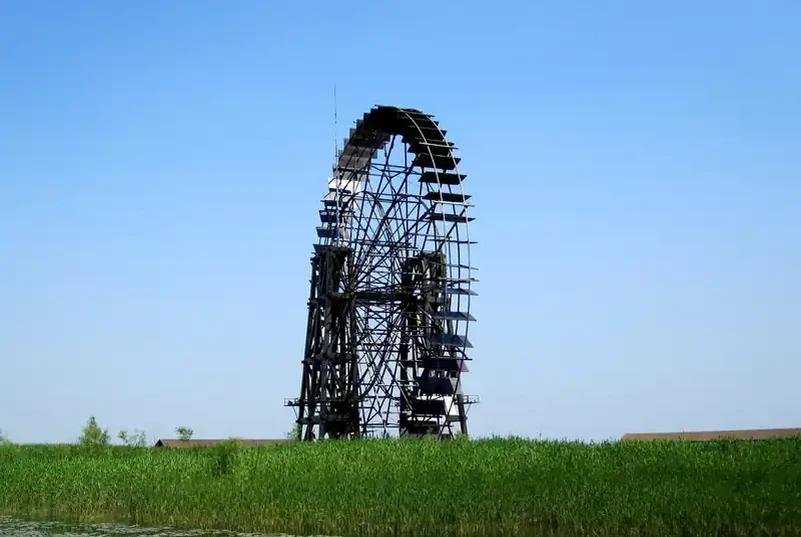
A traditional Chinese wooden waterwheel is a functional landscape sculpture a large-scale rotating wheel built entirely with mortise-and-tenon joinery, no nails, no screws. These waterwheels are engineered to turn with natural water flow and serve as iconic centrepieces for cultural parks, scenic areas, resort courtyards, and heritage tourism sites across China and internationally.
A Waterwheel for Cultural is a traditional Chinese timber structure assembled with mortise and tenon joinery, without metal nails, combining cultural heritage with modern durability.
Each wheel is custom-engineered from your site’s water flow data diameter, blade count, rotational speed, and structural load then handcrafted by master woodworkers using techniques recorded in the Tiangong Kaiwu (, 1637), China’s most comprehensive Ming Dynasty encyclopedia of technology and manufacturing. Our factory has specialised in these waterwheels for 48 years, producing over 300 installations across scenic destinations and cultural sites.
The Chinese wooden waterwheel has a documented history spanning more than 2,000 years. Early forms appear Dynasty agricultural texts, but it was during the Tang and Song Dynasties that the technology reached its artistic and engineering peak. The dragon-bone waterwheel (), described in detail Zhen’s Nongshu (, 1313), represented one of the most sophisticated irrigation systems in pre-modern agrarian civilisation.
According to the Tiangong Kaiwu, the traditional waterwheel was constructed using a combination of mortise-and-tenon joints, wooden pegs, and carefully selected hardwoods principles that remain unchanged in our workshop today. The Yingzao Fashi (, 1103), the Song Dynasty architectural manual, further codified the proportions and joinery standards that governed large wooden structures, including waterwheels, ensuring structural integrity for decades of continuous rotation in flowing water.
For cultural tourism developers, this deep historical lineage is not merely decorative it provides authentic provenance that distinguishes a genuine heritage installation from a mass-produced. Every wheel we produce carries this continuous lineage, documented in our project archives dating back to 1978.
The defining characteristic of our waterwheels is the complete absence of metal fasteners in the structural joints. Every connection from the central hub to the outer rim, from each spoke to each blade assembly is executed through mortise-and-tenon joinery, the same technique that has held together Chinese timber-frame temples and pagodas for centuries.
Our senior craftsman with 48 years of experience says: “The secret is not in the complexity of the joint, but in the precision of the fit. A properly cut mortise-and-tenon joint tightens under load and moisture it gets stronger as the wheel turns.” This counterintuitive principle is what allows a waterwheel built entirely from wood to withstand millions of rotation cycles in flowing water without structural degradation.
The manufacturing process follows a strict sequence. Raw timber typically larch, merbau, or carbonized hardwood is kiln-dried to a moisture content below 12% before any cutting begins. This step alone prevents the warping and cracking that plagues waterwheels built from green or insufficiently dried lumber. Each joint is hand-cut with chisels and saws, then dry-fitted before final assembly. The entire wheel, even at diameters exceeding 10 metres, is assembled without a single nail or bolt in the load-bearing structure.
| Diameter range | 2m – 20m (custom engineered) |
| Construction method | 100% mortise-and-tenon, zero metal fasteners in structure |
| Primary materials | Larch, merbau, carbonized wood, Chinese torreya, teak |
| Moisture content at delivery | Below 12%, kiln-dried |
| Standard lead time | 20–35 days from design approval |
| Blade types available | Dragon-bone (chain) type, scoop type, paddle type |
| Mounting options | Steel-frame support, stone pier, integrated riverbed foundation |
| Warranty | 3 years structural, 1 year rotational mechanism |
| Packaging | ISPM-15 fumigated wooden crates, sea-worthy packaging |
All parameters above are adjustable per project specification. Dimensions, materials, and blade configurations are engineered to match your site’s hydraulic conditions.
Traditional Chinese wooden waterwheels have evolved from purely agricultural implements into powerful cultural tourism anchors. A single well-placed waterwheel can become the signature landmark of a scenic area, driving foot traffic, social media engagement, and extended visitor dwell time. According to industry data from the Ministry and Tourism, cultural heritage installations like waterwheels increase average visitor time by approximately 40 minutes per group a significant metric for park operators and resort developers.
Our waterwheels are deployed across a range of application contexts. In rural revitalisation projects, a functioning dragon-bone waterwheel restores a vanished element of agricultural heritage, serving both as an educational exhibit and a visual landmark. In resort and hotel courtyards, a medium-scale wooden waterwheel (3–6 metre diameter) provides ambient sound and motion that enhances the guest experience without requiring active maintenance beyond seasonal inspection. For museum and exhibition installations, we produce historically accurate reproductions at scale, often referencing specific regional traditions documented in provincial cultural heritage records.
A giant landscape waterwheel, particularly when positioned at a river confluence or within a constructed wetland, creates a dramatic focal point that photographs compellingly from multiple angles a quality that matters enormously for destination marketing and user-generated content.
Every waterwheel begins with a site consultation. We require three pieces of information before engineering a proposal: the available water flow rate (litres per second or cubic metres per hour), the head differential (vertical drop from water intake to outlet), and the desired visual scale relative to the surrounding landscape. From these inputs, our engineering team calculates the optimal diameter, blade configuration, and rotational speed to achieve both functional performance and aesthetic impact.
Customization extends beyond sizing. Blade geometry can be selected to match a specific historical period Song Dynasty scoop blades, Ming Dynasty dragon-bone chains, or contemporary interpretations. The support structure can be disguised as a stone bridge abutment, a traditional pavilion base, or left as an exposed timber frame for a more industrial-heritage aesthetic. Finish options range from natural weathered grey (which develops over 12–18 months of exposure) to hand-applied dark stains that mimic the appearance of century-old restored specimens.
A cultural tourism development project engaged our factory to design and fabricate a 12-metre diameter mortise-and-tenon waterwheel for installation at a riverside location within a nationally recognised heritage town. The design specification called for a dragon-bone chain configuration capable of lifting water against a 1.8-metre head differential at a flow rate of approximately 120 litres per second.
The project timeline ran 28 days from signed contract to factory completion, followed by 14 days of on-site assembly supervised by our installation team. The completed waterwheel rotates at a deliberately slow 4–6 revolutions per minute, producing a gentle, rhythmic sound that guests describe as meditative. Six months after commissioning, the site management reported that the waterwheel had become the single most photographed element of the landscape a result confirmed by geotagged social media data collected by the park operator.
The total project cost, inclusive of fabrication, ISPM-15 packaging, and on-site supervision, was competitive with mid-range landscape sculpture budgets while carrying the structural lifespan advantage of a fully joinery-built wooden assembly.
Q: How much does a traditional Chinese wooden waterwheel cost?
A: Pricing depends on diameter, material selection, and blade configuration. A 3-metre diameter wooden waterwheel for garden or courtyard use typically starts around $2,500 USD. A 8-metre scenic area waterwheel with dragon-bone chain blades generally falls in the $8,000–$15,000 USD range. A 12-metre giant landscape waterwheel with custom steel-frame support can range from $18,000 to $35,000 USD. We provide a factory direct quote within 48 hours of receiving your site specifications.
Q: Can the waterwheel operate without a natural water source?
A: Yes. We offer electric waterwheel configurations that replicate the visual and auditory experience of a flow-driven wheel using a sealed recirculating pump system. These are ideal for indoor installations, courtyard features where gravitational flow is not feasible, or arid climate locations. The rotational speed and visual effect remain identical to a water-fed installation.
Q: What is the expected service life of a wooden waterwheel?
A: With proper installation on a stable foundation and annual maintenance inspection, a mortise-and-tenon wooden waterwheel constructed from merbau or teak can exceed 30 years of continuous operation. Larch, our standard material for large outdoor installations, typically delivers 15–25 years depending on local climate conditions. We recommend applying a marine-grade timber sealant every 2–3 years to extend service life in high-moisture environments.
Q: How is the waterwheel shipped and installed?
A: Each wheel is disassembled into modular components hub, spokes, rim sections, and blade assemblies packed -15 fumigated crates suitable for container sea freight. Installation options include factory-supervised on-site assembly (recommended for wheels above 6 metres diameter) or detailed assembly instructions with video guidance for smaller units. Our installation team has experience coordinating projects across 50+ countries.
Q: What wood species do you recommend for a scenic area waterwheel?
A: For most outdoor landscape installations, we recommend larch for its favourable balance of cost, natural decay resistance, and grain aesthetics. For premium projects where longevity is the primary concern, merbau or teak provide superior hardness and weather resistance. Carbonized wood is popular for heritage-style installations where a dark, aged appearance is desired from delivery without waiting for natural weathering.
Call/WhatsApp: +86 13883366528
Zhongyu Woodcraft – 48 Years Traditional Chinese Woodcraft Factory, Nationwide Installation
| Origin | Chongqing, China |
|---|---|
| Brand | Zhongyu Wood Art |
| Material | Solid wood (pine/fir/cedar/teak available) |
| Craftsmanship | Traditional mortise-and-tenon joinery |
| Surface Finish | Weather-resistant outdoor coating |
| Dimensions | Customizable based on site requirements |
| Installation | On-site installation available worldwide |
| Lead Time | 15-30 days depending on complexity |
| MOQ | 1 set |
| Packaging | Standard export packaging |
| Lifespan | 30-50 years with proper maintenance |
| Warranty | 2-year structural warranty |
Call / WhatsApp same number · Reply within 24 hours
☎ Hotline: +86 13883366528 (WhatsApp same number) · 💬 WhatsApp
几代老师傅 · 在线咨询
We will contact you within 24 hours.