The Rise of Authentic Wooden Cabin Experiences in Cultural Tourism
Cultural tourism accommodations have evolved beyond simple lodging into immersive experiences that connect travelers with centuries of Chinese architectural heritage. High-end wooden cabins featuring traditional mortise and tenon joinery represent the pinnacle of this movement, offering guests an authentic stay rooted in craftsmanship that spans over 2,000 years of documented history. Unlike modern construction methods that rely on nails, screws, and chemical adhesives, these premium cabins are assembled entirely through precision woodwork techniques developed during the Han Dynasty and refined through generations of master craftsmen. For tourism developers, innkeepers, and cultural heritage organizations seeking to create memorable accommodations, understanding the distinction between genuine traditional wooden cabins and mass-produced timber structures becomes essential for delivering authentic guest experiences that justify premium pricing and generate positive reviews
In the competitive landscape of heritage tourism, accommodations serve as the primary touchpoint between visitors and local culture. A well-designed wooden cabin village can transform a standard sightseeing destination into a multi-day cultural immersion, increasing visitor and revenue per guest. The global market for experiential tourism accommodations reached $45.8 billion in 2025, with wooden structures consistently outperforming conventional hotels in guest satisfaction surveys conducted by the Pacific Asia Travel Association. This growth reflects a fundamental shift in traveler preferences toward accommodations that offer not just shelter but storytelling, craftsmanship, and connection to place.
Understanding Mortise and Tenon Joinery: The Heart of Traditional Chinese Woodwork
Mortise and tenon joinery represents one of humanity’s most elegant engineering achievements in timber construction. The technique involves creating interlocking joints where a protruding piece of wood called a “tenon” fits precisely into a corresponding cavity called a “mortise” within the adjoining timber member. This deceptively simple principle, when executed by skilled craftsmen, produces structures of remarkable strength and seismic resilience. Historical records from the Song Dynasty document wooden buildings assembled entirely through these joints that have survived over 1,000 years of earthquakes, floods, and wars, demonstrating durability that rivals modern construction methods.
The complexity of mortise and tenon joinery lies in its mathematical precision and material understanding. Traditional craftsmen spent years mastering the “three qualities and seven standards” that defined acceptable joint tolerances, where variations of even half a millimeter could compromise structural integrity over decades of seasonal timber movement. Different joint configurations serve specific structural purposes: “dou and gong” brackets transfer roof loads across wide spans, “che and gou” dovetail joints resist pulling forces between horizontal and vertical members, and “splayed tusk tenons” provide flexibility for timber’s natural seasonal expansion and contraction. The knowledge required for these techniques represents an unbroken transmission from master to apprentice spanning over 50 generations in documented workshops.
Modern interpretations of traditional joinery must balance authenticity with contemporary performance expectations. Deep preservation treatment protects the timber from moisture, insects, and fungal decay while maintaining the structural integrity of precision joints. This treatment process involves kiln-drying timber to specific moisture content below 15% before applying pressure-treated preservatives that penetrate the cellular structure without compromising joint tolerances. The resulting material combines the aesthetic warmth and acoustic properties of solid timber with durability suitable for commercial hospitality applications.
Deep Preservation Treatment: Protecting Traditional Craftsmanship for Commercial Use
The longevity of any wooden structure depends fundamentally on moisture management and biological resistance. In humid climates common to much of China’s heritage tourism regions, untreated timber faces constant threats from decay fungi, wood-boring insects, and the cyclical swelling and shrinking that gradually destroys even mechanically sound joints. Deep preservation treatment addresses these challenges through controlled pressure impregnation that drives protective compounds into the timber’s core, providing 30-50 years of maintenance-free service life when properly applied.
The deep preservation process begins with careful timber selection, prioritizing species with natural durability characteristics such as camphor wood, cypress, and certain hardwoods sourced from sustainably managed forests. Each timber species responds differently to preservation treatment, requiring customized pressure cycles and chemical concentrations based on density, permeability, and end-use requirements. For example, structural members requiring maximum insect resistance receive different treatment than decorative elements where appearance preservation takes priority.
For cultural tourism operators, the economic case for deep preservation treatment proves compelling when calculated over project lifecycles. While treated timber costs approximately 40% more than untreated material, the elimination of ongoing maintenance painting, joint reinforcement, and eventual structural replacement reduces total cost of ownership by 60-70% over a 40-year period. More importantly, well-maintained traditional wooden structures appreciate in cultural value and tourism appeal, unlike modern steel-and-glass alternatives that date quickly and require complete replacement rather than restoration.
Crafting Immersive Cultural Experiences Through Architectural Detail
The sensory experience of staying in a traditional wooden cabin engages visitors on multiple levels that modern construction cannot replicate. The acoustic properties of solid timber absorb high-frequency sounds while reflecting lower frequencies, creating interior spaces with exceptional speech clarity and natural warmth that guests consistently describe as “peaceful” and “grounding” in post-stay surveys. Thermal mass characteristics regulate interior temperatures naturally, reducing heating and cooling energy consumption by 25-35% compared to insulated frame construction while maintaining comfortable humidity levels without mechanical humidification.
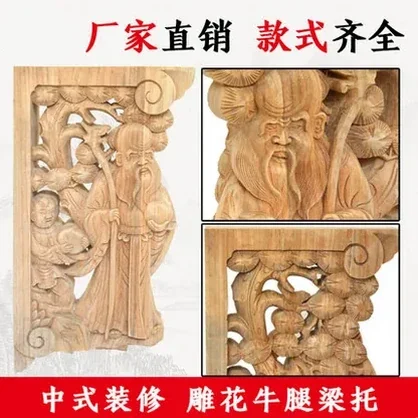
Visual design elements within traditional wooden cabins communicate cultural meaning through carefully selected motifs and proportions derived from classical architectural treatises. The “five elements” cosmological system influenced timber selection and placement, with specific wood species associated with different cardinal directions and life domains. Decorative carvings depicting cranes, clouds, and flowing water carry blessings for longevity, prosperity, and harmony, transforming functional structural elements into meaningful cultural artifacts that guests can interpret and appreciate. These details create the “Instagram moment” density that drives social media sharing and organic marketing reach for tourism operators.
Spatial layout traditions in Chinese wooden architecture respond to both philosophical principles and practical environmental factors. Courtyard arrangements that create transitional spaces between interior and exterior blur boundaries while maintaining thermal and acoustic separation. Raised floor platforms connected by shallow steps encourage slow, contemplative movement through space rather than the hurried transit typical of western accommodation layouts. Window placement follows the principle of “framing nature as painting,” positioning sightlines toward garden elements, water features, or distant landscapes in compositions derived from classical landscape painting traditions.
Design Trends for Heritage Tourism Accommodations in 2026
Contemporary heritage tourism cabin design balances preservation authenticity with modern comfort expectations that international travelers bring from their home experiences. The most successful projects achieve this balance through strategic zoning that separates traditional structural expression from invisible modern infrastructure. Structural timbers and joinery remain exposed and authentic, while plumbing, electrical systems, and climate control run through concealed channels that respect the visual integrity of traditional spaces.
Sustainability certification has become a significant factor in booking decisions among environmentally conscious travelers. The Forest Stewardship Council certification for timber sourcing provides verifiable assurance that wooden structures derive from responsibly managed forests rather than clear-cutting operations. Carbon footprint calculations increasingly favor timber construction over steel or concrete, as wood sequesters carbon during tree growth and maintains this storage throughout the building’s lifetime rather than generating embodied carbon through industrial manufacturing processes.
Flexible configuration has emerged as a critical design consideration for tourism operators managing seasonal demand variations. Modular prefabricated timber units that arrive on-site partially assembled reduce construction timelines by 40% while maintaining traditional aesthetic standards. These units can be reconfigured to create intimate single-cabin retreats during low seasons or connected to form larger gathering spaces for group bookings and cultural events without sacrificing architectural coherence.
Learn more about our Working Traditional Chinese Water Wheel custom solutions for your project.
Real-World Implementation: Lessons from Operational Heritage Cabins
Successful heritage cabin projects share common characteristics that distinguish them from underperforming alternatives. The most critical factor involves engaging experienced craftsmen during initial site planning rather than treating joinery expertise as a construction-phase procurement decision. Master craftsmen contribute valuable insights regarding orientation, drainage, timber flow through the site, and seasonal timing that significantly impact project outcomes and budget performance. Projects that bring craftsmen into design conversations early consistently outperform those treating traditional woodwork as a commodity procurement item.
Guest feedback from operational heritage cabin properties reveals clear preferences that inform design decisions. Outdoor bathing experiences consistently rank as the most memorable features, whether traditional wooden bathhouses constructed over natural hot springs or contemporary interpretations incorporating copper soaking tubs on private decks. Sleeping arrangements that feature elevated platform beds with minimal bedding encourage deeper engagement with the tactile qualities of traditional timber construction, generating the sensory memories that drive return visits and word-of-mouth recommendations.
Operational considerations significantly impact long-term success metrics. Initial construction budgets that appear premium compared to modern alternatives often prove economical when calculated against 20-year operational costs including maintenance, refurbishment, and eventual replacement. Heritage cabin properties maintained by skilled craftspeople retain their market value and competitive positioning, while conventional hotels require periodic complete renovation to remain relevant against newer competition.
Practical Guide: Planning Your Heritage Cabin Project
Project planning for heritage cabin accommodations requires coordination across multiple specialized disciplines that rarely overlap in conventional construction. The planning sequence should begin with site analysis examining solar orientation, prevailing winds, drainage patterns, and visual connections to surrounding landscapes. This analysis informs both the architectural massing and the specific timber species selection, as different woods perform differently in varying environmental conditions.
Budget allocation for traditional wooden cabins should account for the extended timeline required for timber preparation before construction can begin. Kiln drying alone requires 4-6 weeks depending on timber thickness, while complex joinery assembly by skilled craftsmen proceeds at approximately one square meter of floor area per craftsperson per week. Projects attempting to compress timelines through accelerated drying or simplified joinery consistently experience quality compromises that manifest as operational problems within 5-10 years of opening.
Regulatory navigation presents particular challenges for heritage-style construction, as building codes developed for modern construction methods often conflict with traditional techniques. Fire resistance requirements may necessitate sprinkler systems that compromise traditional aesthetics, while accessibility mandates can conflict with the step-level changes that create the contemplative spatial sequences traditional to Chinese wooden architecture. Experienced heritage construction firms maintain relationships with building officials and can often negotiate alternative compliance approaches that satisfy code intent while preserving architectural integrity.
Frequently Asked Questions
What is the typical construction timeline for a high-end traditional wooden cabin?
Standard delivery timelines range from 45-90 days for prefabricated units and 6-12 months for fully custom traditional construction, depending on design complexity and current workshop capacity. The timber preparation phase, including kiln drying and joinery fabrication, typically requires 8-12 weeks before on-site assembly can begin. Projects requiring specialized decorative carvings or complex structural configurations may require additional lead time of 2-4 months.
How long does deep preservation treatment extend timber service life?
Professionally applied deep preservation treatment provides 30-50 years of structural integrity for main timber members, significantly exceeding the 15-20 year service life of untreated timber in similar applications. Treatment effectiveness depends on proper species selection, correct moisture content before treatment, and adherence to manufacturer specifications for pressure and chemical concentration. Annual inspection and localized retreatment of exposed end grains can extend service life beyond 50 years.
What maintenance is required for traditional wooden cabin accommodations?
Maintenance requirements for deep-preservation treated timber cabins are minimal compared to untreated alternatives. Annual tasks include inspection for any surface damage, clearing of debris from drainage channels, and verification of fastener tightness at critical structural connections. Interior surfaces benefit from periodic application of natural oil finishes that refresh appearance without compromising the timber’s breathability. Exterior staining or painting can be deferred until visible weathering occurs, typically 8-12 years after installation.
Can traditional wooden cabins be constructed in earthquake-prone regions?
Traditional mortise and tenon construction demonstrates excellent seismic performance when properly executed, with documented survival of multiple magnitude 7+ earthquakes over the past millennium. The flexibility inherent in properly designed wooden joints allows controlled movement during seismic events without the brittle failure modes common to rigid masonry construction. Modern building codes in seismically active regions typically require engineered connections that supplement traditional joinery with concealed steel reinforcement, maintaining traditional aesthetics while meeting contemporary safety requirements.
What customization options exist for traditional wooden cabin designs?
Customization options span the complete range from structural configuration to decorative elements. Structural decisions include cabin size, roof profile, interior layout, and integration with existing site features. Decorative customization encompasses carved motifs, painted elements, hardware selection, and furniture style. Heritage cabin specialists can incorporate specific traditional architectural elements from regional building traditions, ensuring authentic cultural expression that resonates with local history and enhances destination appeal.
Conclusion: Preserving Heritage Through Hospitality
High-end wooden cabins representing authentic traditional Chinese craftsmanship offer tourism developers an opportunity to create accommodations that serve simultaneously as cultural preservation and commercial success. The growing global appetite for meaningful travel experiences, combined with increasing awareness of sustainable construction practices, positions heritage wooden architecture as a significant growth category within the hospitality sector.
The investment required for quality traditional construction yields returns beyond financial metrics. Each guest who experiences the acoustic warmth of traditional timber joinery, the contemplative spatial sequences of classical Chinese architecture, and the sensory richness of natural materials becomes an ambassador for cultural preservation. This word-of-mouth advocacy, amplified through social media and travel review platforms, generates marketing reach that no advertising budget could purchase.
For organizations considering heritage cabin development, engaging experienced craftsmen early in the planning process proves essential for achieving authentic results within realistic budget parameters. The combination of 48 years of traditional woodcraft experience with modern preservation technology creates opportunities for tourism accommodations that honor cultural heritage while meeting contemporary guest expectations for comfort and sustainability. Contact our workshop to discuss your heritage cabin project requirements and discover how traditional craftsmanship can transform your tourism offering.