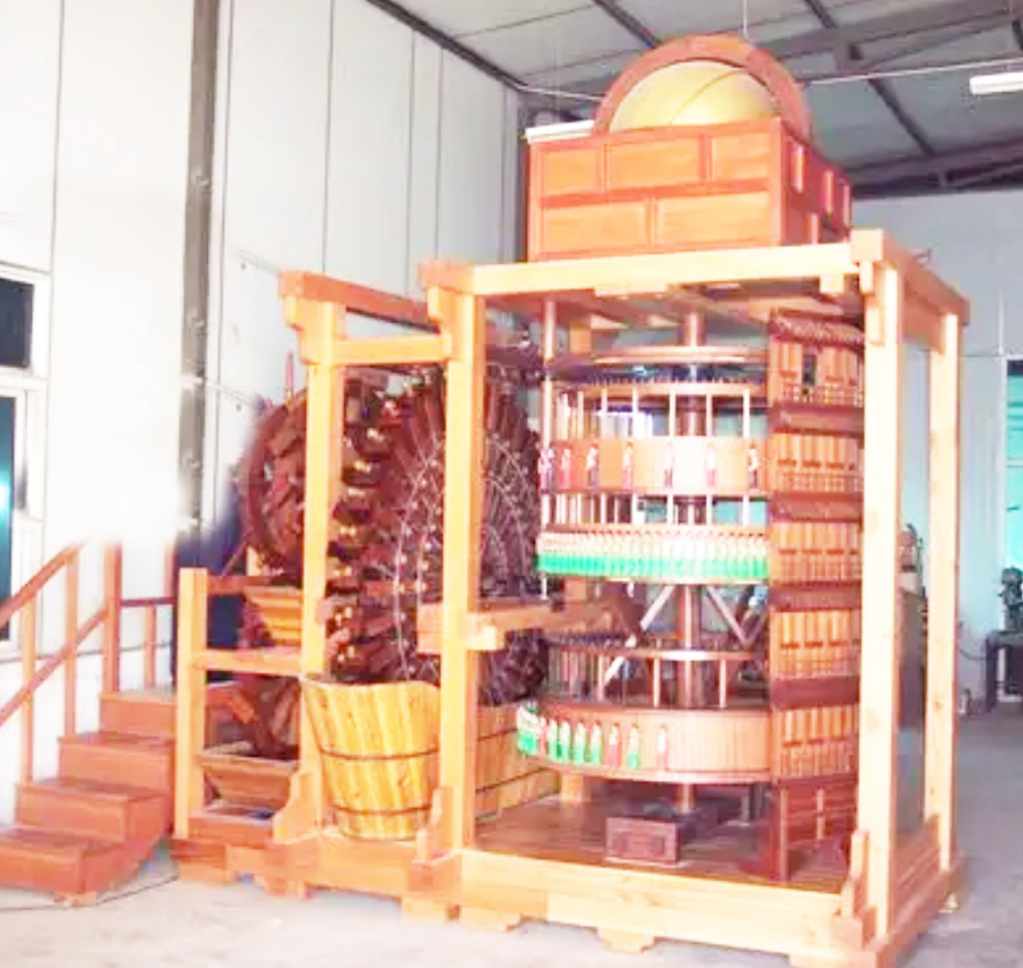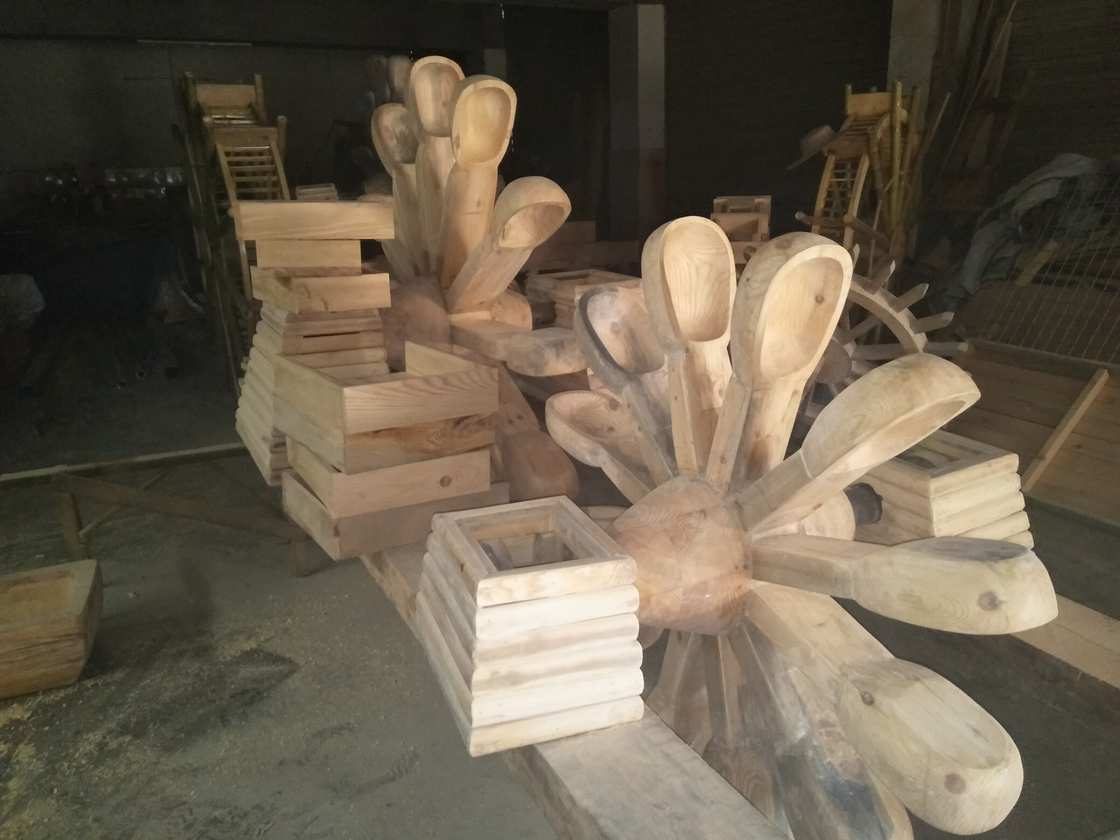
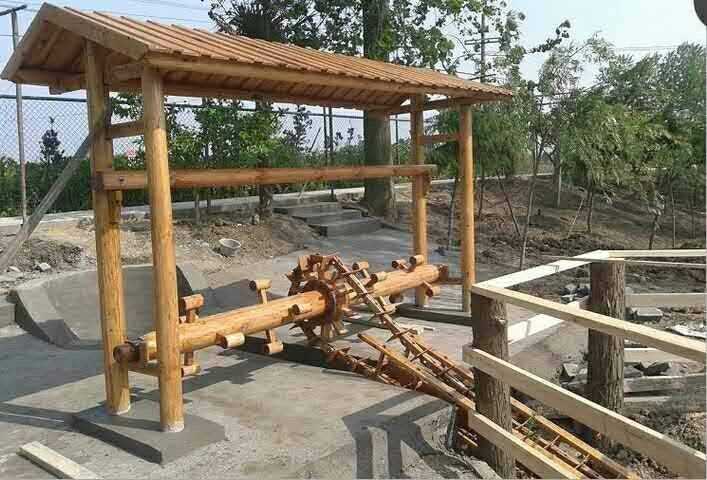
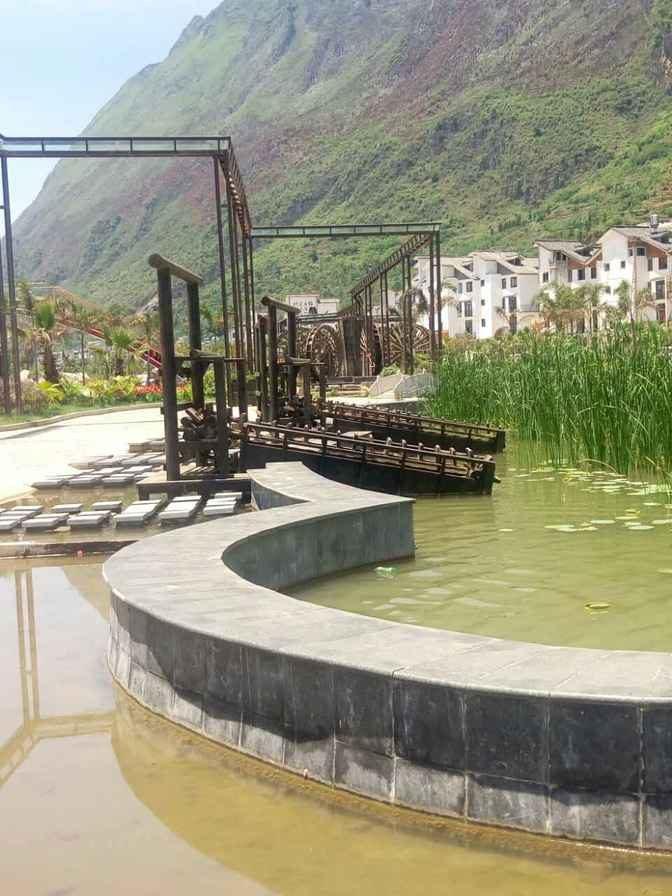
A traditional Chinese water wheel is a large, rotating wooden mechanism historically used for irrigation and powering machinery, now widely installed in parks, cultural villages, and scenic areas as an interactive heritage feature. As a direct manufacturer since 1978, we design and build authentic, fully functional water wheels from 2 to 15 meters in diameter, using time-tested mortise-and-tenon joinery and rot-resistant timber. Whether you are a landscape architect planning a cultural park or a resort owner seeking a distinctive centerpiece, our wheels turn real water into real visitor engagementnot just a static prop.
This page covers everything a project planner needs to know: how these wheels work, what wood lasts outdoors, how to size one for your site, and what factory-direct pricing looks like. You will also learn about our customization process, worldwide shipping, and on-site installation support. For a project-specific quote, contact us directlyour team answers within 24 hours.
The Chinese water wheel, known historically as a ‘waterwheel’ or ‘norias,’ dates back over 1,800 years to the Han Dynasty. The earliest recorded designs lifted water from rivers into irrigation channels using a series of wooden paddles and buckets. By the time of the Song Dynasty (960–1279 AD), water wheels powered mills, bellows, and textile machinery, becoming the backbone of pre-industrial Chinese agriculture and manufacturing.
Song Dynasty scientist Shen Kuo documented advanced wheel designs in his ‘Dream Pool Essays’ (1088 AD). Later, the Ming Dynasty encyclopedia ‘Tiangong Kaiwu’ (The Works of Heaven and the Inception of Things, 1637) by Song Yingxing provided detailed illustrations of paddle-wheel and bucket-chain irrigation systems. This text remains the definitive historical reference for our craftsmen, who study its diagrams to ensure authentic proportions and mechanical logic in every wheel we build.
Regionally, water wheels were especially vital in the rice-growing provinces of southern China, where river networks required efficient lifting devices. In, where our factory is located, large bamboo-framed norias once dotted the Min River, lifting water 10 meters or more onto terraced farmland. Our 48 years of experience in Chongqinga city known for its river culturemeans we inherit this regional engineering legacy directly.
Today, the water wheel has transcended its utilitarian past. In modern China, cultural tourism and ‘rural revitalization’ policies have fueled demand for heritage installations in restored ancient towns, wetland parks, and agricultural experience centers. A working wheel is now a symbol of sustainable tradition, offering visitors a tangible connection to pre-industrial ingenuity. For international buyers, a Chinese water wheel serves a similar role: it anchors Asian-themed gardens, museum exhibits, and cultural festivals with authentic kinetic history.
Building a water wheel that both rotates reliably and survives harsh outdoor conditions demands specific materials and time-honored joinery. Our wheels are not decorative replicasthey are functional machines built to the same standards as our heritage restoration projects.
We primarily use three wood types, each selected for a specific role:
All timber is kiln-dried to below 15% moisture content before processing. This prevents warping and cracking after installation. For projects requiring certified sustainable sourcing, FSC-certified wood is available on request.
Raw timber alone will not last outdoors. Our factory applies a rigorous treatment regimen developed over five decades:
Where modern manufacturers rely on steel brackets and screws, we use the ancient Chinese mortise-and-tenon system. Each joint is precisely cut so that a tenon on one piece locks into a mortise on another, creating a mechanical connection that actually strengthens under load. This joinery method, refined over 2,000 years, allows the wheel to flex slightly under rotational stress without crackinga critical advantage over rigid nailed constructions.
Our senior craftsmen, many with 20–40 years of experience, hand-fit each joint to tolerances under 2mm. This precision ensures smooth rotation, even load distribution, and a structure that can be disassembled for shipping and reassembled on-site without losing integrity.
A static wheel is a missed opportunity. Every wheel we build is engineered to rotate continuously when water flows over it. Key components include:
The traditional Chinese water wheel has found new life across diverse commercial and public settings. Its dual role as kinetic sculpture and cultural storyteller makes it uniquely versatile.
In wetland parks, riverfront promenades, and heritage villages, a working water wheel becomes an instant landmark. It provides a focal point for photography, a conversation starter about pre-industrial technology, and a soothing ambient sound of splashing water. Municipal tourism bureaus across China and Southeast Asia have installed our wheels as part of ‘ancient town revitalization’ projects, reporting increased visitor dwell time and social media shares.
For eco-resorts, glamping sites, and themed restaurants, a water wheel adds an unmistakable rustic-luxury atmosphere. Positioned beside a dining deck or spa entrance, it signals ‘traditional hospitality’ and creates a memorable backdrop for wedding photography. We frequently supply wheels in the 3–6 meter range for these applications, sized to complement rather than overwhelm the architecture.
Museums of agriculture, science centers, and school campuses use our smaller wheels (2–4 meters) as interactive teaching tools. When paired with interpretive signage, a working wheel demonstrates principles of hydraulics, mechanical advantage, and sustainable engineering. We can add educational features such as transparent acrylic sections showing internal gearing, or QR codes linking to historical animations.
Developers of cultural commercial streets and event venues install water wheels to create ‘Instagram-worthy’ photo points. A well-placed wheel can increase foot traffic to underperforming zones of a plaza. During festivals, the wheel serves as a stage backdrop or lighting rig anchor. Our 8-meter and larger wheels are popular for such landmark installations.
While the classic all-wood design remains most requested, landscape architects increasingly seek variations that fit modern aesthetics and spatial constraints.
For very large wheels (over 10 meters) or high-traffic public areas, we offer hybrid construction. A hot-dip galvanized steel frame provides structural certainty, while wood cladding preserves the traditional appearance. This approach reduces long-term maintenance concerns and allows for spans that pure timber cannot safely achieve.
Some clients prefer a lighter, more contemporary look. We offer options such as: – Thermally modified ash wood with a pale, Scandinavian aesthetic – Charred cedar (Shou Sugi Ban style) for a dramatic black texture – Mixed-material designs incorporating copper or stainless steel accents
Night-time illumination transforms a water wheel into a spectacular centerpiece. We embed low-voltage LED strips within the paddle structure, uplight the axle hub, or project colored light onto the water surface. Optional synchronized sound systems can play traditional Chinese instrumental music or recorded water sounds for ambient effect.
In 2023, our team completed a landmark installation for a riverside cultural park in a major southern Chinese city (project details shared with permission). The client, a municipal tourism development company, sought to create a signature attraction that would distinguish their park from competing leisure destinations.
The Challenge: The site had a 4-meter elevation difference between the river and an upper walking path. The client wanted a visually imposing structure that also told the story of local irrigation history. Budget required factory-direct pricing with a 120-day completion timeline.
Our Solution: We designed a 12-meter diameter wheel with hybrid steel-wood construction, featuring 48 paddles and a dual water-delivery system. The lower portion dips into the river, while a recirculating pump supplements flow during dry seasons. The wheel powers a small exhibition hall via a visible gear mechanism, where visitors can watch the rotational energy grind grain in a replica millstone.
Installation Process: Our team of six installers spent 18 days on-site. We poured the concrete foundation (engineered to withstand typhoon winds), assembled the pre-fabricated wheel in three sections, and completed all electrical and mechanical connections. The park opened to the public on schedule.
Results: One year after installation, the park reported a 35% increase in weekend visitors. The water wheel area is the most photographed location in the park, generating over 2 million social media impressions through user-generated content. The client has since ordered two smaller 4-meter wheels for a sister park.
Wheel diameter should be proportional to your available space and water source. As a rule of thumb: – 2–3 meters: Small gardens, restaurant courtyards, indoor atriums – 4–6 meters: Hotel entrances, school campuses, medium plazas – 7–10 meters: Large parks, cultural streets, resort centers – 10–15 meters: Riverside landmarks, major theme parks, civic spaces
Consider your viewing distance: a wheel should be at least 3 times as far from the main viewing point as its diameter to be fully appreciated. For example, a 6-meter wheel needs a viewing area at least 18 meters away.
Factory-direct pricing for traditional Chinese water wheels in 2026 ranges as follows:
| Diameter | Base Price (USD) | Typical Total Installed Cost |
|---|---|---|
| 2–3 meters | $8,000–$15,000 | $12,000–$22,000 |
| 4–6 meters | $18,000–$45,000 | $28,000–$65,000 |
| 7–10 meters | $50,000–$120,000 | $75,000–$170,000 |
| 10–15 meters | $130,000–$300,000 | $180,000–$400,000 |
These prices include materials, fabrication, and standard preservation treatment. International shipping, foundation work, and on-site installation are quoted separately based on your location and site conditions. A recirculating pump system adds $3,000–$15,000 depending on capacity. We provide detailed, line-item quotations so you understand exactly what you are paying forno hidden fees.
With proper care, our water wheels last 25–30 years. Annual maintenance is simple:
For cold climates, we design wheels with removable paddles or a winterization mode that allows the wheel to be locked in place, preventing ice damage.
A: Factory-direct prices range from $8,000 for a 2-meter wheel to $300,000+ for a 15-meter landmark installation. The final cost depe
| Material | Solid timber (Chinese pine, eucalyptus, or premium wood options) |
|---|---|
| Treatment | ACQ pressure-treated, 50+ year outdoor lifespan |
| MOQ | 1 unit (sample order welcome) |
| Lead Time | 10-20 working days (sample); 20-40 days (bulk) |
| Shipping | FOB Chongqing. Worldwide shipping available |
Call / WhatsApp same number · Reply within 24 hours
☎ Hotline: +86 13883366528 (WhatsApp same number) · 💬 WhatsApp