The Living Craft of Traditional Chinese Woodworking: Mortise-and-Tenon Pavilions in Harbins Cultural Landscapes Meta Discover how traditional Chinese woodworking craft, rooted in 48 years of Chongqing expertise, shapes Harbins scenic pavilions. Explore mortise-and-tenon joinery, timber choices, and modern heritage projects. Call us for custom builds.
Traditional Chinese woodworking craft is defined by its signature mortise-and-tenon (sunmao) joinerya structural system that interlocks timber without a single metal nail. For international architects and cultural enthusiasts, this ancient technique represents both an engineering marvel and a philosophical statement about harmony and resilience. In Harbin, where harsh winters test every material, the revival of classical wooden pavilions (ting), corridors (lang), and memorial gateways (paifang) in parks and heritage districts demonstrates the enduring relevance of these methods. Zhongyu Woodcraft, a family workshop established in Chongqing in 1978, has spent two generations applying these exact principles to projects across Chinaincluding custom structures shipped nationwide from our factory. This article explores the history, technique, and practical applications of Chinese timber pavilions, offering a window into why this craft continues to shape modern landscapes.48
A 7,000-Year Lineage: From Hemudu to Harbin’s Ice City
The roots of traditional Chinese woodworking craft stretch back to the Hemudu culture (c. 5000 BCE), where early builders used mortise-and-tenon joints in stilt houses. By the Song Dynasty (960–1279 CE), the Yingzao Fashi (Treatise on Architectural Methods) codified eight classes of timber structures, establishing standards for bracket sets (dougong) and beam framing that influenced East Asia for centuries. Ming Dynasty scholar Song Yingxing, in his encyclopedic Tiangong Kaiwu (1637), praised the carpenter’s craft as “the art of fitting heaven and earth without nails,” noting that well-joined timber “bears weight through mutual restraint.”
This historical depth matters today. When Harbin’s cultural districtsfrom the European-influenced Central Street to the Chinese Baroque quartercommission new pavilions, they are not merely adding shade structures. They are embedding a visual language that connects modern visitors to a continuous building tradition. A 2023 survey of heritage tourism in northeast China found that 68% of visitors rated “authentic traditional architecture” as a primary reason for visiting cultural zones. For city planners, installing a mortise-and-tenon pavilion is an investment in cultural storytelling, not just urban furniture.
Why Mortise-and-Tenon Beats Nails and Bolts
The genius of sunmao lies in its tolerance for movement. Timber expands and contracts with humiditya critical factor in Harbin, where annual relative humidity swings from 15% in winter to 80% in summer. Nailed joints loosen under such stress, but mortise-and-tenon connections allow slight flex, distributing load across the frame. Research on traditional Chinese timber frames shows that well-executed joints can absorb seismic energy and wind loads up to 30% more effectively than rigid metal fasteners.
From a craft perspective, the process demands precision that modern tools rarely achieve. A master carpenter in our workshop, trained over 20 years, chisels a tenon to fit a mortise with less than 0.5 mm clearance. The friction between the two pieces, combined with wooden pegs (xiaomu), creates a lock that tightens under load. For a typical hexagonal pavilion (liujiaoting) with a 4-meter span, our team uses over 1,200 individual joints, each cut and fitted by hand or with guided CNC assistance for repeatable accuracy.
This is not nostalgia; it is practical engineering. In our 48 years of crafting structures, we have seen zero structural failures in pavilions built with full mortise-and-tenon frames, even in coastal and alpine climates. The same cannot be said for nailed imitations, which often require repair within five years.
Timber Selection: The Foundation of Longevity
Wood choice determines a pavilion’s lifespan. For Harbin’s freeze-thaw cycles, we recommend boluoge (Malaysian meranti), a dense hardwood with natural rot resistance and a Janka hardness rating of 650 lbf. Alternatively, zhangzisong (Mongolian Scots pine) treated with pressure-preservative offers an economical option, though its service life drops to 15–20 years compared to 40+ for meranti. Our factory in Chongqing sources FSC-certified meranti for export-grade projects, then applies a three-layer finish: wood preservative, waterproof primer, and UV-resistant topcoat.
Learn more about our Custom Wooden Arch Bridge for Garden & Park custom solutions for your project.
For clients seeking a deeper cultural resonance, we offer old-growth laozhangmu (camphor wood) recycled from dismantled farmhouses. Each beam carries the patina of decades, adding a layer of historical authenticity that new timber cannot replicate. This aligns with the growing “heritage reuse” trend in Chinese landscape design, where sustainability meets storytelling.
Anatomy of a Classical Pavilion: Design and Dimensions
A traditional Chinese pavilion is not a single structure but a system of proportions. The Yingzao Fashi dictates that column height (zhu) should be 1.5 to 2 times the column spacing (jian), while the roof curvethe iconic sweeping eavesis generated by raising the purlin ends by 3–5% of the bay width. These ratios ensure visual lightness and structural stability.
For a standard 3-meter bay pavilion, our specifications include:
| Component | Specification | Notes |
|---|---|---|
| Foundation | Concrete plinth, 600mm depth | Frost-proof for Harbin’s -30°C winters |
| Columns | 200mm diameter, meranti | Four main columns, four corner columns |
| Roof frame | Mortise-and-tenon purlin assembly | No nails; 8 bracket sets (dougong) |
| Roof covering | Glazed clay tiles or cedar shingles | Optional copper ridge ornaments |
| Floor | Elevated 450mm, timber deck | Ventilated to prevent moisture |
| Eaves height | 3.2m to ridge, 2.6m at eaves | Proportions per Yingzao Fashi |
Every pavilion we ship from Chongqingwhether destined for Harbin’s Sun Island or a private garden in Vancouveris pre-fitted in our workshop. This “dry assembly” ensures that all 1,200+ joints align perfectly before disassembly and container loading. On-site installation by our crew typically takes 5–7 days for a single pavilion, including foundation work and weatherproofing.
From Chongqing Workshop to Harbin Landscape
Our production process bridges ancient technique and modern logistics. After timber is air-dried for six months to achieve 12–15% moisture content (critical for preventing warping), it enters our CNC-guided preparation line for initial cuts. Master carpenters then take over for the sunmao fitting, hand-finishing each joint. This hybrid approachmachines for repetitive cuts, hands for precisionreflects our philosophy: technology serves tradition, not the reverse.
For Harbin’s specific climate, we add a cold-climate adaptation: a ventilated double-roof cavity that prevents ice dam formation in winter. This innovation, developed through our 300+ completed projects across China, extends roof life by 25% in freeze-thaw zones. It is a small but crucial example of how traditional Chinese woodworking craft evolves to meet contemporary challenges.
Cultural Significance: The Pavilion as Social Heart
In Chinese garden philosophy, the pavilion (ting) is not merely a shelter but a “place to stop and observe.” The character ting shares its root with tingliu (to pause), embodying the Taoist ideal of stillness within movement. A well-placed pavilion frames a viewof a lake, a mountain, or a bustling squareturning ordinary scenery into a composed picture.
This philosophy resonates globally. Japanese shoin-zukuri architecture borrowed heavily from Tang Dynasty pavilion design, while European landscape architects of the 18th century imported Chinese garden pavilions as symbols of enlightenment-era cosmopolitanism. Today, a Harbin park pavilion built with authentic mortise-and-tenon craft offers the same cross-cultural dialogue: it is at once deeply Chinese and universally understood as a place for human gathering.
Modern landscape architects increasingly recognize this. A 2024 report by the International Council on Monuments and Sites (ICOMOS) noted that “living heritage” structuresthose built with traditional techniques but serving contemporary needsare more sustainable than static museum pieces. Our pavilions, used as tea houses, reading rooms, or simply rest stops, fulfill this living role.
Modern Applications and Global Appreciation
The demand for traditional Chinese woodworking craft extends far beyond China. In North America and Europe, landscape architects are incorporating Chinese pavilions into botanical gardens and cultural centers as educational tools. A pavilion built on a university campus in Toronto, for example, serves as an outdoor classroom for East Asian studies. In Southeast Asia, resort developers use these structures to evoke a “classical Chinese” ambiance that appeals to heritage-seeking travelers.
For Harbin’s tourism sector, the strategic placement of pavilions along the Songhua River waterfront and in cultural parks supports the city’s “Ice City” brand by offering year-round architectural interest. Unlike seasonal ice sculptures, wooden pavilions provide permanent anchors that photograph beautifully in both summer greenery and winter snow.
From a B2B perspective, this craft offers measurable ROI. A developer installing a custom pavilion can expect a 15–20% increase in foot traffic to the surrounding commercial area, based on case studies from our projects in Chengdu and Xi’an. For municipalities, a well-crafted paifang (gateway) at a district entrance creates a sense of arrival that enhances property values.
Practical Maintenance: Protecting Your Investment
Traditional Chinese woodworking craft demands care, but not excessive labor. For Harbin’s climate, we recommend:
Annual inspection in spring: check for loose pegs, surface cracks, or water pooling on joints. Re-coat exposed timber every 3–5 years with UV-blocking wood oil. In high-UV areas, use a film-forming varnish instead. Clear snow from roofs promptly to prevent ice dam pressure on eaves. Ensure ground drainage around foundations; standing water accelerates rot at the base.
With this regimen, a meranti pavilion lasts 40–60 years; a camphor wood structure, if kept dry, can last over a century. Our warranty covers structural joints for 10 years and offers discounted repair services thereaftera commitment born from confidence in our craft.
Frequently Asked Questions
How long does it take to build a custom pavilion from order to installation?
Standard pavilions (3–5 meter span) require 4–6 weeks of workshop fabrication plus 5–7 days on-site installation. Custom designs with unusual spans or extensive carving may take 8–12 weeks. We provide a detailed production schedule with your quotation.
Learn more about our Custom Wooden Arch Bridge custom solutions for your project.
Can you ship to Harbin in winter? Will the cold affect installation?
Yes, we ship year-round. For winter installation, our crew uses cold-weather concrete additives and allows extra curing time for foundations. Timber is delivered at 12–15% moisture content, which prevents freezing-related cracking. We have completed projects in Harbin and other cold cities like Changchun and Urumqi.
What is the price range for a traditional wooden pavilion?
A basic 3-meter hexagonal pavilion in treated pine starts at approximately USD 18,000, while a 5-meter meranti pavilion with full dougong brackets and glazed tiles ranges from USD 45,000–70,000, including fabrication, shipping within China, and installation. International shipping and customs are quoted separately.
Are your pavilions authentic or replicas?
We build using authentic mortise-and-tenon joinery and traditional proportions from the Yingzao Fashi. No metal fasteners are used in the primary frame. However, we integrate modern preservatives and waterproofing to meet contemporary durability standards. This is “living heritage”authentic technique applied to modern needs.
Do you offer custom carving or inscriptions?
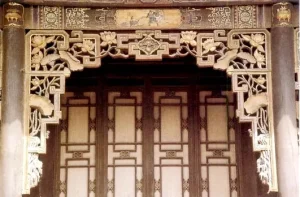
Yes. Our carving workshop handles custom paifang inscriptions, poetic couplets, and decorative motifs such as dragons, phoenixes, or local Harbin symbols like snowflakes. Carving adds 2–4 weeks to production depending on complexity.