Introduction
The Art of Mortise and Tenon: Exploring Traditional Chinese Woodworking Craftsmanship represents one of the most fascinating aspects of traditional Chinese culture and craftsmanship. For thousands of years, Chinese woodworking has evolved from simple structural techniques into a sophisticated art form that embodies philosophical principles, cultural values, and extraordinary technical mastery. In this comprehensive guide, we will explore the historical origins, cultural significance, craftsmanship techniques, modern applications, and contemporary design trends of this remarkable tradition. Whether you are a cultural enthusiast, architect, designer, or simply curious about traditional crafts, this article will provide you with a deep understanding of why Chinese woodworking continues to captivate people worldwide.
Historical Origins & Cultural Significance
1. Neolithic Beginnings (7000 BCE – 2000 BCE)
The roots of Chinese woodworking can be traced back to the Neolithic period. Archaeological excavations at the Hemudu site in Zhejiang Province (dating to approximately 5000 BCE) have uncovered wooden components with mortise-and-tenon joints, representing the earliest known examples of this revolutionary connection technique. This discovery demonstrates that Chinese craftsmen had already mastered precision woodworking over 7,000 years ago, laying the foundation for millennia of development.
2. Bronze Age Refinement (2000 BCE – 221 BCE)
During the Shang and Zhou dynasties, woodworking techniques became increasingly sophisticated. The discovery of elaborate wooden artifacts at the Yinxu site in Anyang, Henan Province, including coffin chambers, chariot components, and architectural elements, reveals a high level of craftsmanship. This period saw the emergence of specialized woodworkers known as “jiangren” (craftsmen), and woodworking began to establish itself as an independent craft discipline. The ancient text “Kao Gong Ji” (Record of Trades), compiled during this era, provides the earliest known systematic documentation of woodworking techniques.
3. Imperial Age Grandeur (221 BCE – 907 CE)
The Qin, Han, and Tang dynasties witnessed unprecedented scale and sophistication in Chinese woodworking. The construction of imperial palaces, temples, and grand architectural complexes demanded advanced engineering and organizational capabilities. The Tang Dynasty (618-907 CE), in particular, is regarded as a golden age of Chinese architecture. The East Hall of Foguang Temple on Wutai Mountain, Shanxi Province (built in 857 CE), stands as one of the oldest surviving wooden structures in China and exemplifies the magnificent scale and refined craftsmanship of the era.
4. Standardization & Maturation (960 CE – 1368 CE)
The Song Dynasty (960-1279 CE) marked a pivotal moment in the systematization of Chinese woodworking. In 1103 CE, Li Jie, a government official in the Directorate of Buildings, compiled “Yingzao Fashi” (Treatise on Architectural Methods), the most comprehensive architectural technical manual in ancient China. This monumental work established a complete modular system known as “cai-fen zhi” (material-unit system), standardized component dimensions, and documented construction techniques in unprecedented detail. The Yingzao Fashi became the authoritative reference for Chinese architecture for centuries to come.
5. Refinement & Elegance (1368 CE – 1911 CE)
The Ming and Qing dynasties represent the pinnacle of refinement in Chinese woodworking. The Ming Dynasty (1368-1644 CE) is particularly celebrated for its furniture, which achieved a level of aesthetic perfection and structural sophistication that remains unparalleled. Ming-style furniture is characterized by its clean lines, elegant proportions, refined joinery, and emphasis on the natural beauty of the wood grain. The Qing Dynasty (1644-1911 CE) saw further elaboration with increasingly ornate carving and decorative techniques. This period also produced important technical texts such as “Lu Ban Jing” (Lu Bans Classic), a practical manual for folk carpenters that played a crucial role in the transmission of woodworking knowledge.
Craftsmanship & Techniques
1. Mortise-and-Tenon Joinery: The Soul of Chinese Woodworking
Mortise-and-tenon joinery is the defining technique of Chinese woodworking and represents one of the greatest inventions in the history of craftsmanship. This connection system uses protruding “tenons” (sun) that fit precisely into recessed “mortises” (mao), creating strong, stable connections without the need for metal fasteners or adhesives. The interlocking nature of these joints allows for both structural rigidity and the ability to disassemble components for transport or repair.
| Joint Type | Structural Characteristics | Common Applications |
|---|---|---|
| Dovetail Joint (Yanwei Sun) | Trapezoidal tenon shape, exceptional tensile strength | Boxes, drawers, cabinet construction |
| Shouldered Mortise (Gejian Sun) | Tenon with shoulders on both sides, excellent stability | Table and chair leg-to-rail connections |
| Legged Mortise (Jiatou Sun) | Apron clamped between legs, robust structure | Table and desk construction |
| Inserted Shoulder (Chajian Sun) | Apron inserts into leg, clean appearance | Table and desk construction |
| Overhead Stretcher (Bawang Cheng) | Diagonal stretcher from leg to tabletop, elegant form | Square tables, painting tables |
| Corner Bracket (Tuojiao Sun) | Corner bracket integrated with leg, enhanced stability | Furniture corner reinforcement |
2. Timber Selection & Preparation
The selection and preparation of timber is fundamental to quality woodworking. Chinese craftsmen have developed sophisticated knowledge of wood properties and appropriate applications: Hardwood Species: Zitan (red sandalwood), Huanghuali (yellow rosewood), Hongmu (redwood), and Jichimu (chicken-wing wood) are prized for their hardness, beautiful grain patterns, and natural luster. These species are reserved for high-end furniture and fine carving work where exceptional quality and aesthetic appeal are required.
Softwood Species: Songmu (pine), Shanmu (fir), and Baimu (cypress) are valued for their light weight, workability, and affordability. These species are commonly used for architectural components, large-scale structures, and utility items where weight and cost considerations are important.
Aromatic Species: Xiangzhangmu (camphor wood) and Huangzhangmu (yellow camphor) possess natural insect-repellent properties and a distinctive fragrance. These woods are particularly favored for cabinetry, storage chests, and enclosed storage solutions where protection against insects is essential.
3. Wood Carving: The Art of Expression
Wood carving is an integral component of Chinese woodworking and serves as the primary medium for artistic expression. Traditional Chinese wood carving encompasses several distinct techniques:
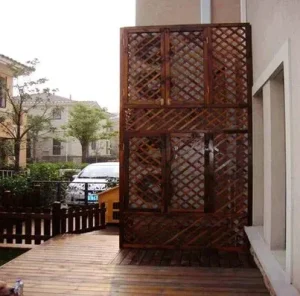
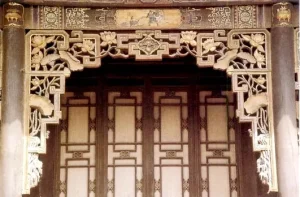
Relief Carving (Fudiao):Patterns are carved to project from the wood surface, classified as low, medium, or high relief based on the depth of projection. This technique is widely used for decorative panels, architectural ornamentation, and furniture detailing.Openwork Carving (Toudiao): The background material is removed to createTransparent patterns, resulting in a lace-like appearance. This technique is particularly associated with lattice windows, screens, and decorative partitions where light transmission and visual depth are desired.Round Carving (Yuandiao): Three-dimensional sculptural carving in the round, used for figurative subjects, animal forms, and freestanding sculptural works. This is the most demanding carving technique, requiring mastery of form, proportion, and spatial composition.Line Carving (Xianke): The most ancient carving technique, using incised lines to create patterns and imagery. This technique is often used in combination with other carving methods to add fine detail and linear definition.
Modern Applications & Contemporary Relevance
1. Cultural Tourism & Heritage Projects
In recent years, the global growth of cultural tourism has created unprecedented demand for authentic traditional woodcraft products. Heritage restoration projects, cultural theme parks, ancient town developments, and immersive cultural experience centers increasingly incorporate traditional wooden structures as core attractions. Companies like Zhongyu Wood Art, with 48 years of specialized experience, play a crucial role in supplying authentic, high-quality traditional woodcraft products for these projects. Their product range includes ancient pavilions, corridors, water wheels, traditional oil presses, war chariots, farming tools, and decorative plaques—all crafted using authentic traditional techniques.
2. Educational & Cultural Exchange
Traditional woodworking has become an important medium for cultural education and international exchange. Schools, museums, and cultural institutions worldwide are incorporating traditional craft workshops into their educational programs, allowing students and visitors to experience firsthand the principles and techniques of traditional woodworking. These hands-on experiences not only teach practical skills but also foster deeper understanding and appreciation of Chinese cultural heritage. Zhongyu Wood Art actively supports educational initiatives by providing traditional craft demonstration products and workshop support to schools and cultural education bases.
3. Contemporary Design & Innovation
Contemporary designers and architects are increasingly drawing inspiration from traditional Chinese woodworking, reinterpreting ancient techniques for modern applications. The principles of mortise-and-tenon joinery, with their emphasis on tool-free assembly, disassembly, and structural efficiency, align perfectly with contemporary concerns about sustainability, modularity, and circular design. Modern furniture designers are creating innovative flat-pack furniture systems based on traditional joinery principles, while architects are exploring the use of traditional wooden construction techniques for contemporary sustainable buildings.
Design Trends & Contemporary Interpretations
1. Minimalism & Essence
Contemporary interpretations of Chinese woodworking increasingly emphasize the essential qualities of the craft—clean lines, structural honesty, and material beauty—rather than elaborate ornamentation. This trend toward minimalism echoes the aesthetic principles of Ming Dynasty furniture, which achieved extraordinary elegance through proportion, joinery, and material selection rather than decorative excess. Contemporary designers are stripping away non-essential elements to reveal the inherent beauty of the wood and the poetry of the joinery.
2. Fusion & Cross-Cultural Dialogue
Globalization has fostered a rich cross-cultural dialogue in woodworking design. Chinese craftsmen and designers are incorporating Western design principles, ergonomic research, and modern manufacturing technologies while maintaining the essence of traditional techniques. Conversely, Western designers and architects are increasingly drawn to Chinese woodworking principles, particularly the mortise-and-tenon system, as a source of inspiration for sustainable, tool-free construction. This fusion is producing a new generation of woodwork that is both culturally rooted and globally relevant.
3. Sustainability & Environmental Consciousness
The growing global emphasis on sustainability has brought renewed attention to traditional woodworking practices. Traditional techniques emphasize the use of natural materials, non-toxic finishes, and joinery systems that allow for disassembly, repair, and recycling—principles that are increasingly central to sustainable design philosophy. Contemporary woodworkers are combining these traditional principles with modern sustainable practices such as FSC-certified timber, natural oil finishes, and zero-waste manufacturing processes, creating products that are both authentically traditional and genuinely sustainable.
Case Study: A Modern Heritage Project
To illustrate the practical application of traditional woodworking in contemporary contexts, consider a recent project by Zhongyu Wood Art for a large cultural tourism resort in southwestern China. The project, encompassing 200 acres and featuring 38 individual traditional woodcraft installations, demonstrates how traditional techniques can be adapted for modern cultural tourism experiences.
The project required products across six categories: ancient pavilions and corridors, antique water wheels, traditional oil presses, ancient war chariots, folk farming tools, and decorative plaques. Each category was designed to serve not merely as decoration but as an interactive cultural experience component. For example, the antique water wheels were designed as functional, interactive educational tools allowing visitors to operate the mechanism and understand ancient irrigation principles, while the traditional oil presses were integrated into hands-on workshop spaces where visitors could participate in traditional oil-pressing activities.
The projects success—measured by a 92% increase in average visitor stay duration, a 133% increase in secondary spending, and a 95% visitor satisfaction rating—demonstrates the enduring relevance and commercial viability of authentic traditional woodworking in contemporary cultural tourism contexts.
Practical Guide: Appreciating & Collecting Traditional Woodwork
1. Evaluating Quality & Craftsmanship
Examine the Joinery:Quality mortise-and-tenon joints should fit precisely with minimal gaps (ideally less than 0.5mm). The joints should be clean and well-executed, with no signs of excessive glue or filler. Assess the Timber: Look for consistent grain patterns, absence of defects (cracks, knots, insect damage), and appropriate moisture content (8-12% for indoor use). The wood should feel smooth and well-finished to the touch. Check Structural Integrity: Gently shake or apply pressure to test for stability. Quality pieces should feel solid and rigid with no wobbling or loose joints. For seating and load-bearing items, verify that the structure can support the intended weight. Evaluate the Finish: The surface finish should be smooth, even, and consistent. There should be no visible brush marks, drips, or uneven areas. The finish should enhance rather than obscure the natural beauty of the wood grain.
2. Care & Maintenance
Regular Cleaning:Dust regularly with a soft, dry cloth. Avoid using wet cloths or chemical cleaners. For stubborn stains, use a mild, pH-neutral cleaner diluted with water, applied gently and immediately wiped dry. Environmental Control: Maintain stable temperature (18-25°C / 64-77°F) and humidity (40-60% RH) conditions. Avoid direct sunlight exposure, which can cause fading and drying. Keep away from heat sources and air conditioning vents. Periodic Maintenance: Apply appropriate wood wax or maintenance oil every 6-12 months to nourish the wood and maintain its luster. For outdoor pieces, reapply preservative treatment every 2-3 years to maintain weather resistance. Handling & Movement: Lift rather than drag when moving pieces. Avoid placing heavy or sharp objects on surfaces. Use coasters and protective pads to prevent scratches and water damage.
FAQ
Q1: Can mortise-and-tenon furniture be disassembled?
A: Yes, one of the defining characteristics of mortise-and-tenon construction is its ability to be disassembled and reassembled, facilitating transportation and repair. However, frequent disassembly can affect the precision of the joint fit over time. We recommend disassembly only when necessary and preferably under the guidance of a professional craftsman.
Q2: What preservation treatments are recommended for outdoor wooden structures?
A: For outdoor applications, we recommend professional pressure treatment with ACQ (Alkaline Copper Quaternary) or CCA (Chromated Copper Arsenate) preservatives to achieve a minimum C4 preservation rating. Additionally, the surface should be coated with outdoor-specific wood oil or paint to enhance weather resistance and UV protection. Regular re-treatment every 2-3 years is essential for maintaining long-term durability.
Q3: What is the expected lifespan of traditional wooden products?
A: Under normal use and with regular maintenance, indoor products can last 50+ years, while outdoor products typically have a service life of 20+ years. Actual lifespan depends on multiple factors including wood quality, craftsmanship level, environmental conditions, and maintenance practices.
Q4: Can I learn traditional woodworking techniques?
A: Absolutely. Zhongyu Wood Art regularly offers traditional woodworking experience courses and workshops for enthusiasts, students, and cultural tour groups. Our courses cover mortise-and-tenon joinery, basic wood carving, traditional tool usage, and wood finishing techniques, all taught by experienced master craftsmen. Contact us for course schedules and enrollment information.
Q5: How can I distinguish authentic traditional craftsmanship from mass-produced imitations?
A: Authentic traditional craftsmanship exhibits several distinguishing characteristics: precise, hand-cut mortise-and-tenon joints with minimal gaps; hand-carved details with subtle variations that reflect the carvers hand; natural, breathable finishes rather than thick synthetic coatings; and a sense of proportion and balance that comes from experienced craftsmanship. Mass-produced imitations typically rely on metal fasteners, machine-carved uniform patterns, and thick surface coatings to conceal imperfections.
Q6: What should I consider when commissioning custom traditional woodwork?
A: When commissioning custom work, consider the following: clearly communicate your design vision, functional requirements, and budget parameters; provide accurate site dimensions and environmental conditions; discuss wood species options and their suitability for your intended use; request design renderings and detailed specifications before production begins; and establish clear timelines, payment terms, and warranty provisions in your contract.
Conclusion & Future Outlook
Traditional Chinese woodworking represents one of humanitys greatest cultural and technological achievements. For over 7,000 years, Chinese craftsmen have refined techniques, developed sophisticated joinery systems, and created works of extraordinary beauty and structural integrity. The principles embodied in this tradition—structural honesty, material respect, precision craftsmanship, and harmonious proportion—are as relevant today as they were millennia ago.
As we look to the future, traditional Chinese woodworking is experiencing a global renaissance. The growing appreciation for authentic craftsmanship, the demand for sustainable and culturally meaningful products, and the cross-pollination of design ideas across cultures are creating unprecedented opportunities for this ancient tradition to evolve and flourish. Companies like Zhongyu Wood Art, with their deep heritage, master craftsmanship, and commitment to innovation, are at the forefront of this renaissance, ensuring that the wisdom and beauty of traditional Chinese woodworking continue to inspire and delight generations to come.
Whether you are seeking authentic traditional products for a cultural tourism project, interested in learning about traditional craftsmanship, or simply appreciating the beauty of finely crafted woodwork, we invite you to explore the rich world of traditional Chinese woodworking. The journey of discovery is as rewarding as the products themselves.