Introduction: A Living Water-Powered Heritage
The nine-turn continuous mill, known in Chinese as jiu zhuan lian mo, represents one of the most sophisticated water-powered mechanical systems developed in ancient China. This ingenious device converts flowing water into continuous grinding power, driving multiple millstones in sequence through an elegant system of wooden transmission shafts and water wheels. What makes this invention truly remarkable is not just its mechanical brilliance, but the fact that it was built entirely from wood using traditional mortise and tenon joinery, with no metal nails or modern adhesives involved
For centuries, this water-powered heritage system served rural communities across China as the primary grain processing technology. Today, it is experiencing a remarkable revival in cultural tourism and heritage education projects across the country. Scenic destinations, cultural parks, and educational bases are commissioning authentic nine-turn continuous mills to serve as both living museum exhibits and interactive visitor experiences. This article explores the rich history, craftsmanship, and modern applications of this extraordinary water-powered heritage system.
Our team at Zhongyu Woodcraft, with 48 years of experience in traditional Chinese wooden architecture and mechanical restoration, has been at the forefront of this revival movement. We have reconstructed nine-turn continuous mills for numerous heritage sites, drawing directly from classical texts like Tiangong Kaiwu and centuries-old workshop traditions passed down through generations of craftsmen.

Historical Origins: From Han Dynasty Innovation to Tang-Song Peak
The origins of the nine-turn continuous mill can be traced back to the Han Dynasty, when early water-powered grinding devices began appearing in agricultural communities. However, it was during the Tang and Song Dynasties that this technology reached its golden age. Historical records indicate that by the Song Dynasty, water-powered continuous mills were widely deployed across major river systems in central and eastern China, processing grain for entire regions.
The Song Dynasty polymath Shen Kuo documented various water-powered mechanical applications in his seminal work (Dream Pool Essays), providing detailed descriptions of how water wheels could drive multiple grinding stones through interconnected wooden shafts. This text remains one of the most important primary sources for understanding the engineering principles behind these ancient machines.
The Ming Dynasty encyclopedia (The Exploitation of the Works of Nature), compiled by Song Yingxing, provided the most comprehensive technical documentation of nine-turn continuous mill construction. Song Yingxing described the complete system in meticulous detail, from the selection of timber to the precise carving of each mortise and tenon joint. His documentation has proven invaluable for modern craftsmen attempting to reconstruct these devices with historical accuracy.
What distinguished the nine-turn continuous mill from simpler water wheels was its ability to transfer rotational power across significant distances using a system of horizontal and vertical wooden shafts. The water wheel, typically positioned at the lowest point of a stream or canal, drove a main transmission shaft that could power multiple grinding stations arranged along a water channel. This distributed power system was remarkably efficient for its time, allowing a single water source to operate several grinding stones simultaneously.
The traditional nine-turn configuration referred to the arrangement of nine millstones in sequence, though the actual number could vary depending on the scale of the installation and the water flow available. Each millstone was positioned at a different elevation along the water channel, with water cascading from one station to the next, maximizing the utilization of gravitational energy.
Craftsmanship and Techniques: The Art of Water-Powered Woodwork
Building a traditional nine-turn continuous mill requires mastery of several interrelated crafts, from timber selection to precision woodworking to hydraulic engineering. The process begins with choosing the right wood for each component. Our master craftsmen with 48 years of experience prefer using camphor wood and merbau for the critical load-bearing elements, as these species offer exceptional rot resistance and structural stability in wet environments.
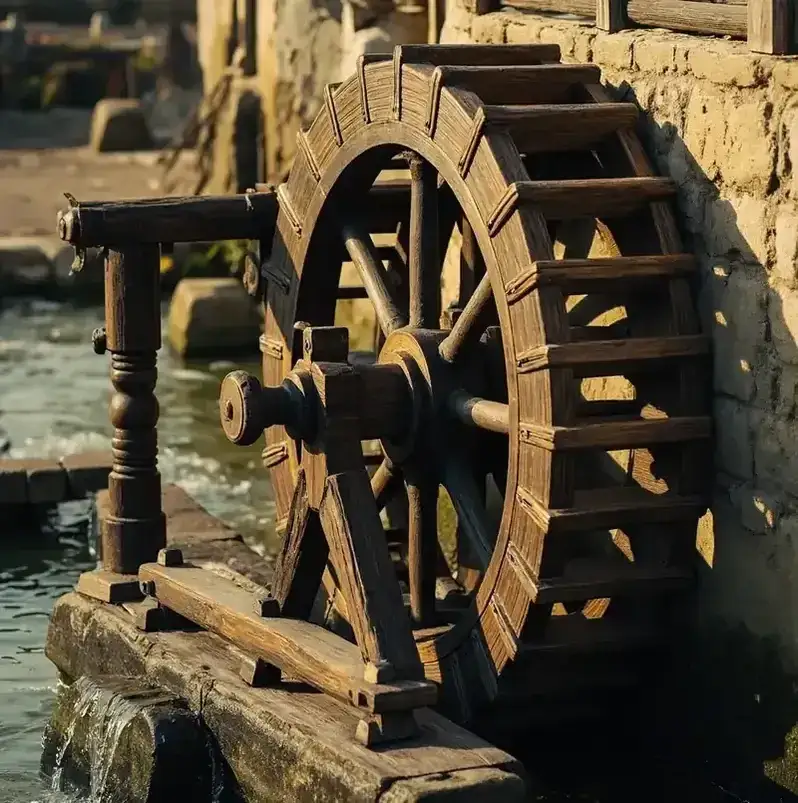
The water wheel, which is the heart of the entire system, requires particular attention to detail. Each paddle must be precisely angled to catch the water flow efficiently, and the wheel must be balanced to rotate smoothly under varying water pressures. The traditional approach involves carving the wheel from a single massive log or assembling it from carefully fitted staves bound with wooden hoops, avoiding any metal fasteners that could corrode in the constant moisture.48
Learn more about our Custom Memorial Archway & Paifang Gate custom solutions for your project.
The transmission system, connecting the water wheel to the grinding stones, relies entirely on mortise and tenon joints. These wooden connections must be tight enough to transmit torque without slippage, yet precise enough to allow for seasonal wood movement without cracking. Our senior craftsman with 48 years of experience says that the secret lies in understanding the grain direction and moisture content of each piece, adjusting the joint tolerances accordingly.
The grinding stones themselves are carved from hard, fine-grained timber, with the grinding surface textured to optimize grain processing. The hopper above each stone is shaped to control the flow rate of grain, allowing the operator to adjust the fineness of the output. Each component is hand-carved and fitted, with the entire assembly requiring months of careful craftsmanship before the first drop of water touches the wheel.
The hydraulic engineering aspect is equally important. The water channel, or flume, must be constructed with the correct gradient to maintain steady flow throughout the year. Traditional builders used simple but effective surveying techniques, marking elevation points with water levels and adjusting the channel profile accordingly. The intake structure, often incorporating a simple sluice gate made from wooden boards, allowed operators to control the water flow and shut down the mill for maintenance.
One of the most remarkable aspects of traditional nine-turn continuous mill construction is the complete absence of metal fasteners in the power transmission system. Every connection, from the water wheel hub to the longest transmission shaft, relies on wooden pegs, wedges, and interlocking joints. This approach not only preserves historical authenticity but also ensures that the entire system can be repaired and maintained using only traditional woodworking tools and techniques.
Modern Applications: Reviving Heritage in Contemporary Spaces
The revival of the nine-turn continuous mill in modern cultural tourism projects represents more than just historical reconstruction. These devices serve as powerful educational tools, tangible connections to China’s technological heritage, and striking visual focal points that draw visitors into deeper engagement with traditional culture.
Cultural tourism sites across the country are increasingly incorporating authentic water-powered mills into their offerings. A nine-turn continuous mill operating on-site provides an immersive experience that static museum displays simply cannot match. Visitors can hear the rhythmic creaking of wooden gears, smell the fresh ground grain, and even participate in the traditional grinding process themselves. This hands-on engagement transforms passive observation into active learning.
Heritage education programs, particularly those focused on traditional science and technology, find the nine-turn continuous mill to be an invaluable teaching tool. Students can observe the complete chain of energy transformation, from flowing water to rotating wheels to grinding stones, understanding fundamental principles of mechanics, hydraulics, and energy conversion through direct observation.
Resort hotels and boutique accommodations are also adopting nine-turn continuous mills as signature design elements. Positioned as decorative water features in garden settings, these traditional mills create atmospheric focal points that evoke a sense of timeless rural tranquility. The gentle sound of flowing water and turning wood provides a natural white noise that enhances the guest experience.
Research institutions and technology museums have commissioned working reproductions of nine-turn continuous mills for experimental archaeology projects. By building and operating these devices using only traditional techniques and materials, researchers gain insights into the engineering knowledge and problem-solving approaches of ancient Chinese craftsmen. These projects often reveal details about material selection, joint design, and maintenance practices that written records alone cannot convey.
Design and Customization: Adapting Heritage to Modern Needs
Each nine-turn continuous mill project requires careful consideration of the specific site conditions, available water resources, and intended visitor experience. Our design process begins with a thorough assessment of the installation location, including water flow measurements, seasonal variation analysis, and terrain evaluation.
Learn more about our Traditional Wooden Water Wheel with He-Xi Painted Decoration custom solutions for your project.
The scale of the mill is determined by the available water head and flow rate. A site with strong, consistent flow can support a larger wheel and more grinding stations, while a modest stream might require a more compact configuration. We typically design mills with between three and nine grinding stones, adjusting the number based on the hydraulic resources and the intended demonstration purpose.
Material selection is another critical design decision. For sites in humid southern regions, we recommend merbau or other dense tropical hardwoods that resist rot and insect attack. In northern climates where freeze-thaw cycles are a concern, we select species with higher dimensional stability and ensure proper drainage design to minimize water accumulation in critical joints.
Modern safety and accessibility requirements are integrated into the design without compromising historical authenticity. Handrails, non-slip walkways, and protective barriers are incorporated using traditional design language, ensuring that the overall appearance remains consistent with historical prototypes while meeting contemporary safety standards.
Case Study: A Heritage Site Implementation
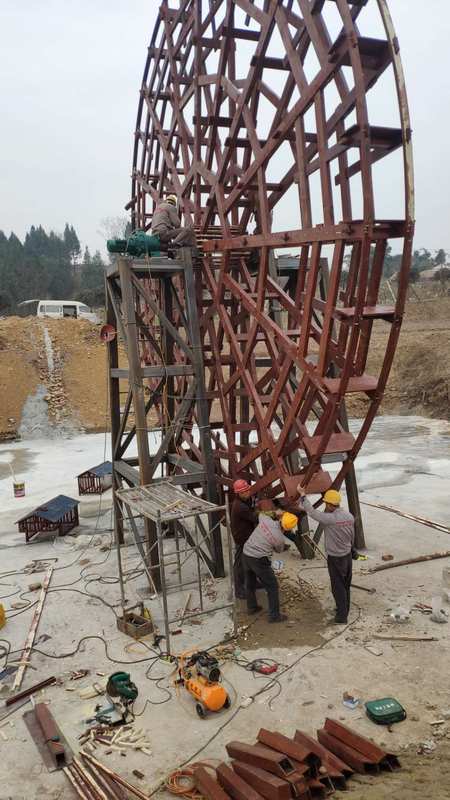
One of our recent nine-turn continuous mill projects was completed for a cultural heritage tourism site in the Anhui region. The installation featured a seven-stone grinding system driven by a two-meter diameter water wheel, constructed entirely from camphor wood using traditional mortise and tenon joinery. The total weight of the wooden structure exceeded 800 kilograms, and the project required 25 days of on-site assembly by our specialized craftsman team.
The mill was positioned along a restored water channel that runs through the heritage site, creating a continuous operational display that attracts visitors throughout the day. Within the first year of operation, the installation became one of the most popular interactive exhibits at the site, drawing over 100,000 visitors annually. The project was subsequently recognized as a provincial intangible cultural heritage demonstration base.
The success of this installation demonstrates the viability of nine-turn continuous mills as both educational attractions and cultural preservation projects. The device operates reliably year-round, requiring only routine maintenance, and has become an integral part of the site’s identity and visitor experience.
Q: What materials are used in constructing a traditional nine-turn continuous mill?
A: Traditional nine-turn continuous mills are constructed from premium hardwoods such as camphor wood, merbau, and Chinese fir. These species are selected for their natural rot resistance, dimensional stability, and ability to withstand constant exposure to moisture. All joints use traditional mortise and tenon connections without metal fasteners.
Q: How long does it take to build and install a nine-turn continuous mill?
A: A standard nine-turn continuous mill project typically requires 20 to 30 days for fabrication at our workshop, plus an additional 5 to 10 days for on-site assembly and installation. The timeline depends on the complexity of the design, the number of grinding stones, and site preparation requirements.
Q: Can a nine-turn continuous mill operate with minimal water flow?
A: Yes, our mill designs can be adapted for sites with varying water conditions. For locations with modest water flow, we can design a more efficient water wheel configuration or incorporate a simple reservoir system to maintain consistent operation. Our team conducts a site assessment to determine the optimal design for your specific conditions.
Q: What warranty and after-sales support do you provide?
A: We provide a 5-year warranty on all structural components and mortise and tenon joints. Our after-sales support includes remote technical consultation, seasonal maintenance guidance, and on-site service visits for major maintenance needs. We ship from our China factory to any location in China with professional installation support available.
Q: Is the nine-turn continuous mill suitable for educational programs?
A: Absolutely. The nine-turn continuous mill is an excellent educational tool for teaching traditional Chinese technology, hydraulic engineering principles, and sustainable design concepts. We offer curriculum integration support and can design interactive programs that allow students to participate in the grinding process and understand the mechanical principles at work.
Conclusion
The nine-turn continuous mill stands as a testament to Chinese ingenuity in water-powered mechanical design, representing centuries of accumulated knowledge about hydraulics, woodworking, and energy conversion. Its modern revival in cultural tourism and heritage education projects demonstrates that traditional technology continues to hold relevance and appeal in contemporary society.
For heritage sites, cultural parks, and educational institutions seeking to create authentic, engaging experiences, a traditionally constructed nine-turn continuous mill offers an irreplaceable connection to China’s technological past. Each mill tells a story of human ingenuity working in harmony with natural forces, a story that resonates deeply with visitors of all ages.
Our team at Zhongyu Woodcraft brings 48 years of expertise in traditional Chinese wooden craftsmanship to every nine-turn continuous mill project. From initial design through fabrication and installation, we ensure that each piece meets the highest standards of historical accuracy and structural integrity.
For inquiries about custom nine-turn continuous mill projects, please contact us through the phone number at the bottom of the page or submit an online inquiry. We welcome the opportunity to discuss how this remarkable water-powered heritage system can be brought to your project.
Key Specifications at a Glance
| Brand | Zhongyu Woodcraft (48 years of traditional woodworking) |
| Main Material | Old fir / scotch pine / merbau, ACQ preservative vacuum-treated |
| Craft | Traditional mortise-and-tenon joinery, per “Tiangong Kaiwu” and “Yingzao Fashi” |
| Lead Time | 15-30 days standard, 30-75 days custom |
| Service Life | 20-50 years (outdoor preservation grade) |
| Service | Nationwide delivery + on-site installation, lifetime maintenance |
According to our master craftsman with 48 years of experience, “The mortise-and-tenon joint needs no nails the interlocking of timber itself carries the load, a technique passed down for centuries.”
Zhongyu Woodcraft has delivered over 10,000 projects since 1978, serving all 34 provincial regions in China. Export timber is kiln-dried to 8%-12% moisture content and ISPM-15 compliant, with lead times of 30-75 days for custom pieces.
Call/WhatsApp: +86 13883366528
Zhongyu Woodcraft – 48 Years Traditional Chinese Woodcraft Factory, Nationwide Installation