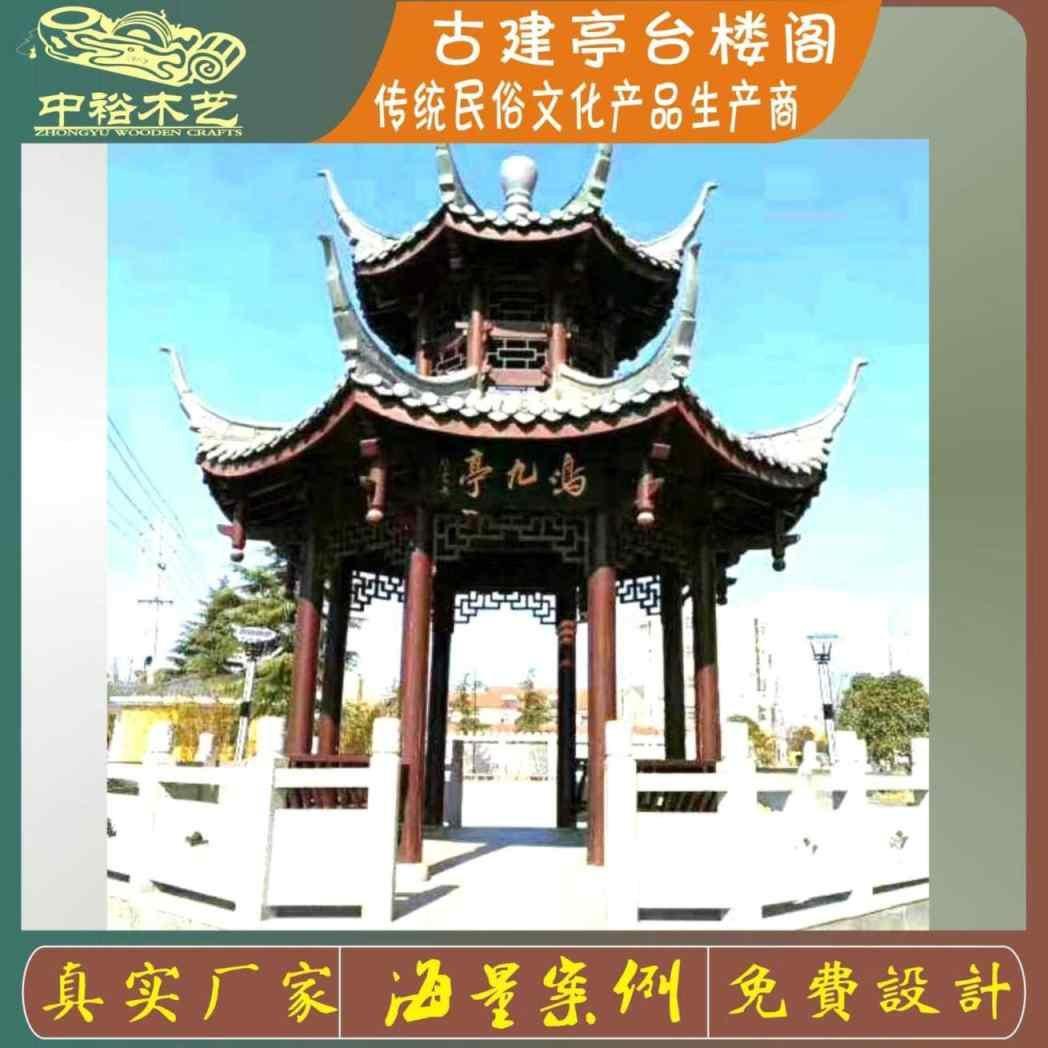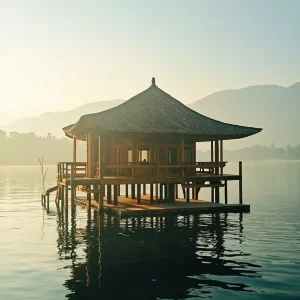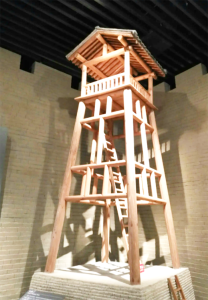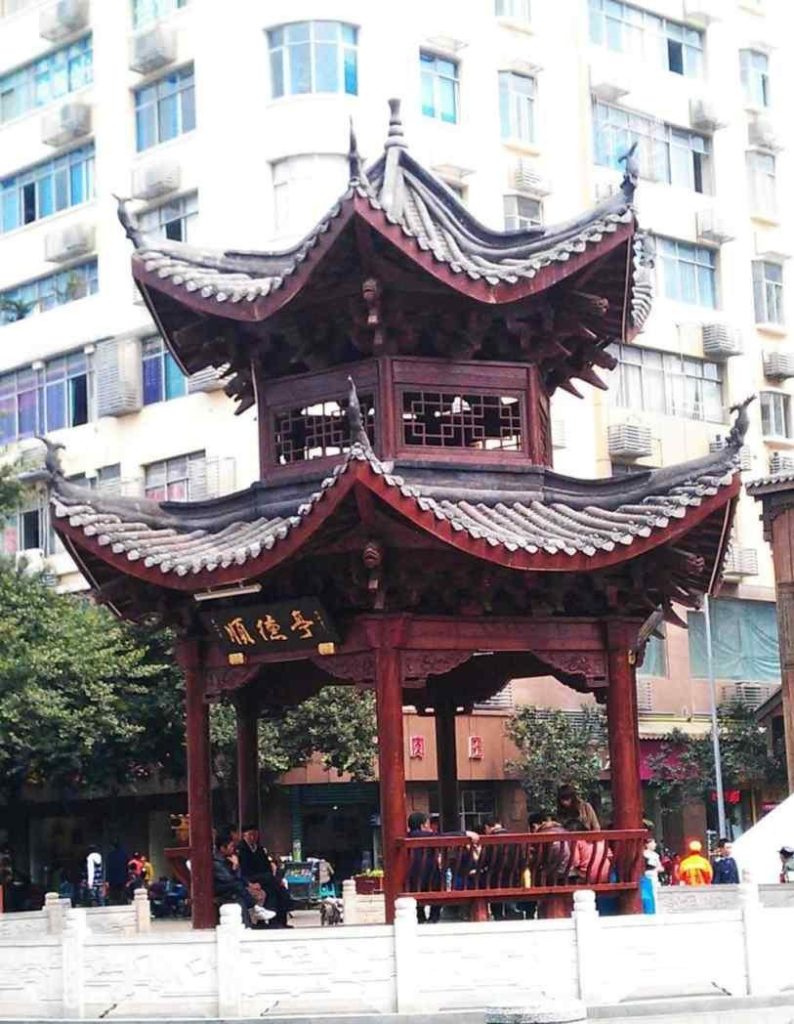
For visitors to a Chinese park or heritage site, a traditional gazebo often marks the center of a garden or a resting point on a covered walkway. But behind its graceful roof and open structure lies one of the most enduring inventions in traditional Chinese pavilion architecture: the mortise-and-tenon joint. In our 48-year workshop in China, this joinery method is still the foundation of every ancient pavilion we build, whether it is a small hexagonal garden pavilion or a large double-eaved structure. This article explains what makes mortise-and-tenon construction so resilient, how we craft and install these pavilions across the country, and why this technique continues to hold value in modern landscape design.
The Ancient Heritage Behind the Joint
Chinese builders have relied on interlocking wood joints for over two millennia. According to the ancient architectural treatise Yingzao Fashi (Building Standards), the Song dynasty codified precise ratios for beams, columns, and joinery, ensuring that a structure could flex during an earthquake without collapsing. This engineering philosophy, documented in historical records and later refined in the Tiangong Kaiwu (Art ), treats wood as a living material that needs to breathe and move.
Unlike modern steel structures that use rigid bolts, a mortise-and-tenon connection allows the wood to shift slightly under wind or seismic stress and then return to its original position. This is why many Chinese pavilion buildings from the Ming and Qing dynasties still stand today. When we restore or replicate a hexagonal pavilion for a scenic area or cultural park, we follow these classical proportions. A typical small garden gazebo uses a column spacing of roughly 1.2 meters, with a height of 3 to 3.5 meters, providing a sheltered space of about 10 to 12 square meters.
Craftsmanship: How a Gazebo Takes Shape
Building a traditional ancient pavilion is not a factory-line process; it is a sequence of precise hand operations. In our workshop, a single large pavilion requires the layout of over 30 distinct wooden structural parts, from the base pillars to the ridge beams.
According to our senior craftsman with 48 years of experience, the key to longevity lies in the moisture content. We use air-dried and kiln-dried hardwoods, maintaining a moisture content between 8% and 12% before the joinery begins. If the wood is too wet, it will shrink and crack; too dry, and it will become brittle. For outdoor use in a park or resort, we often select Merbau (Keruing) or Teak, which naturally resist rot and insect damage. A standard 6-meter diameter gazebo weighs approximately 1,200 kilograms. The construction phase, from cutting the tenons to assembling the roof, takes about 20 to 25 days of skilled labor per unit.
The installation process is equally critical. We ship the pavilion as a pre-assembled kit to the site. Our installation teams then erect the structure using traditional methods, avoiding metal fasteners wherever possible to preserve the architectural integrity of the pavilion and corridor series. The entire mortise-and-tenon pavilion construction is a testament to the balance between aesthetics and engineering.
Modern Applications in Chinas Landscapes
Today, demand for heritage architecture has surged. As noted in data from the Ministry and Tourism, investment in cultural heritage sites and national parks has grown steadily, driving the need for authentic-looking structures that blend with the environment. A covered corridor or pergola no longer just serves as a roof; it acts as a cultural marker, signaling a space for rest, social gathering, or even traditional tea ceremonies.
We frequently install memorial arch-style gateways and large pavilions at the entrance of scenic destinations. These structures frame the view and create a visual transition from the road to the garden. The Chinese pavilion design is highly adaptable. We have modified the open-air gazebo into a semi-enclosed structure with wooden lattice windows for a resort in a humid coastal region, ensuring ventilation while blocking direct rain. This modern adaptation keeps the ancient pavilion form relevant for contemporary hospitality projects.
Design, Customization, and Installation
Four configurations cover most park and garden briefs. The span is measured across the flats, which is the number a landscape architect needs for a paved apron.
| Configuration | Across flats | Eave height | Columns | Crates |
|---|---|---|---|---|
| Four-corner | 3.0 m | 2.6 m | 4 | 3 |
| Hexagonal | 4.2 m | 2.8 m | 6 | 5 |
| Octagonal | 5.0 m | 3.0 m | 8 | 7 |
| Double-eave | 6.0 m | 3.4 m to lower eave | 8 | 11 |
Our 48-year factory provides end-to-end service for clients across China. The process begins with a site survey to determine ground level and prevailing wind direction. We then offer design choices: a simple small pavilion for a private garden, or a complex double-eaved structure for a cultural park.
Dimensions: Custom spans from 3 meters to 10 meters. Materials: Merbau, Pine, or Carbonized Wood. Finish: Natural oil stain, traditional lacquer, or anti-weathering coating. Installation: Nationwide on-site assembly and leveling.
This flexibility means a covered walkway can be designed to link two separate ancient pavilions, creating a continuous pavilion and corridor path that enhances the walkability of a park landscape.
Case Study: A Hexagonal Gazebo in a National Park
Last year, we completed a project for a major scenic area that required a focal point on a hillside. The site had a 5-degree incline, which is challenging for traditional joinery. Our team adjusted the base pillars to different lengths, ensuring the floor remained perfectly level without disturbing the natural terrain. The resulting hexagonal pavilion is 6 meters wide and 4.5 meters high. It is crafted from Merbau wood, which is highly resistant to the sites heavy morning mist. Installation took 15 days. Since its opening, the structure has become a primary photography spot for visitors, demonstrating how a well-crafted Chinese pavilion can become the heart of a park experience.
Frequently Asked Questions
Q: How long does a mortise-and-tenon gazebo last?
A: With proper maintenance, a hardwood gazebo can last 20 to 30 years. Applying a protective wood oil every 2 to 3 years significantly extends its lifespan.
Q: Can you install a pavilion in winter?
A: Yes. We design the foundation to handle temperature changes. The wood is acclimated to indoor conditions before shipping to prevent winter cracking.
Q: What is the difference between a pavilion and a memorial arch?
A: A memorial arch is a non-covered gateway structure, often with three or five openings. A pavilion is a roofed structure on four or more pillars, intended for shelter or rest.
Conclusion
The mortise-and-tenon joint is more than a way to connect wood; it is a philosophy of building that respects the material. When we craft a traditional Chinese pavilion, we bring decades of workshop knowledge to each beam and column. Whether you are developing a scenic area or a resort, the right gazebo anchors the landscape and tells a story. Our 48-year factory is ready to help you bring this heritage to your project with authentic construction and nationwide installation support.
Material Science: Why Tropical Hardwood Outperforms Standard Pine
When selecting materials for outdoor heritage structures, durability is not just a preference; it is a financial imperative. Standard softwoods like pine may offer a lower upfront cost, but their susceptibility to warping and fungal decay often leads to expensive maintenance cycles within five to seven years. In contrast, our factory specializes in certified Meranti and Teak, both of which possess natural oil densities that resist moisture absorption and UV degradation. Teak, specifically sourced from sustainable Southeast Asian forests, contains over 20% natural oils, acting as a built-in preservative. This material choice ensures that a Chinese pavilion installed in high-humidity coastal environments remains structurally stable for decades without chemical treatments. Furthermore, we utilize pressure-treated Firwood for budget-conscious clients who still require longevity, treating it to penetrate the core wood fibers. This process increases the materials density by 15%, creating a barrier against termites and rot. By prioritizing material integrity, we reduce the lifecycle cost for property developers, ensuring that your investment in landscape aesthetics yields long-term value rather than becoming a recurring liability.
Engineering Precision: The Hidden Strength of Mortise-and-Tenon Joints
Modern construction often relies on steel connectors and nails, but these fasteners corrode and loosen over time, compromising the structural integrity of wooden frames. Our engineering team rejects metal fixation in favor of traditional mortise-and-tenon joinery, a technique perfected over 3,000 years. This method allows wood components to move slightly with temperature changes without breaking, preventing the catastrophic splitting common in rigid bolted assemblies. Each joint is cut to a tolerance of less than 0.5 millimeters, ensuring a friction-fit that tightens as the wood settles. During assembly, we apply a traditional rice-glue sealant to the joint interiors, which cures into a rigid, water-resistant bond. This approach not only preserves the aesthetic purity of the timber but also enhances seismic resilience. In regions prone to minor seismic activity, the flexibility of wooden interlocking joints dissipates kinetic energy more effectively than brittle metal connections. Our factory in China utilizes CNC-laser guided templates to guarantee that every tenon matches its corresponding mortise perfectly, even when producing hundreds of identical structures for large-scale resort developments. This precision eliminates the need for field adjustments, accelerating on-site assembly by up to 40% compared to traditional manual fitting.
Related Articles
Park Waterwheel Restoration: Turning Old Towns into Viral AttractionHow Long Does a Covered Corridor Last? 3 Engineer FactsFor pricing, custom size requests, or delivery time to your region, contact our team directly we reply within 24 hours with a detailed quotation and shipping estimate.
Call/WhatsApp: +86 13883366528
Zhongyu Woodcraft – 48 Years Traditional Chinese Woodcraft Factory, Nationwide Installation