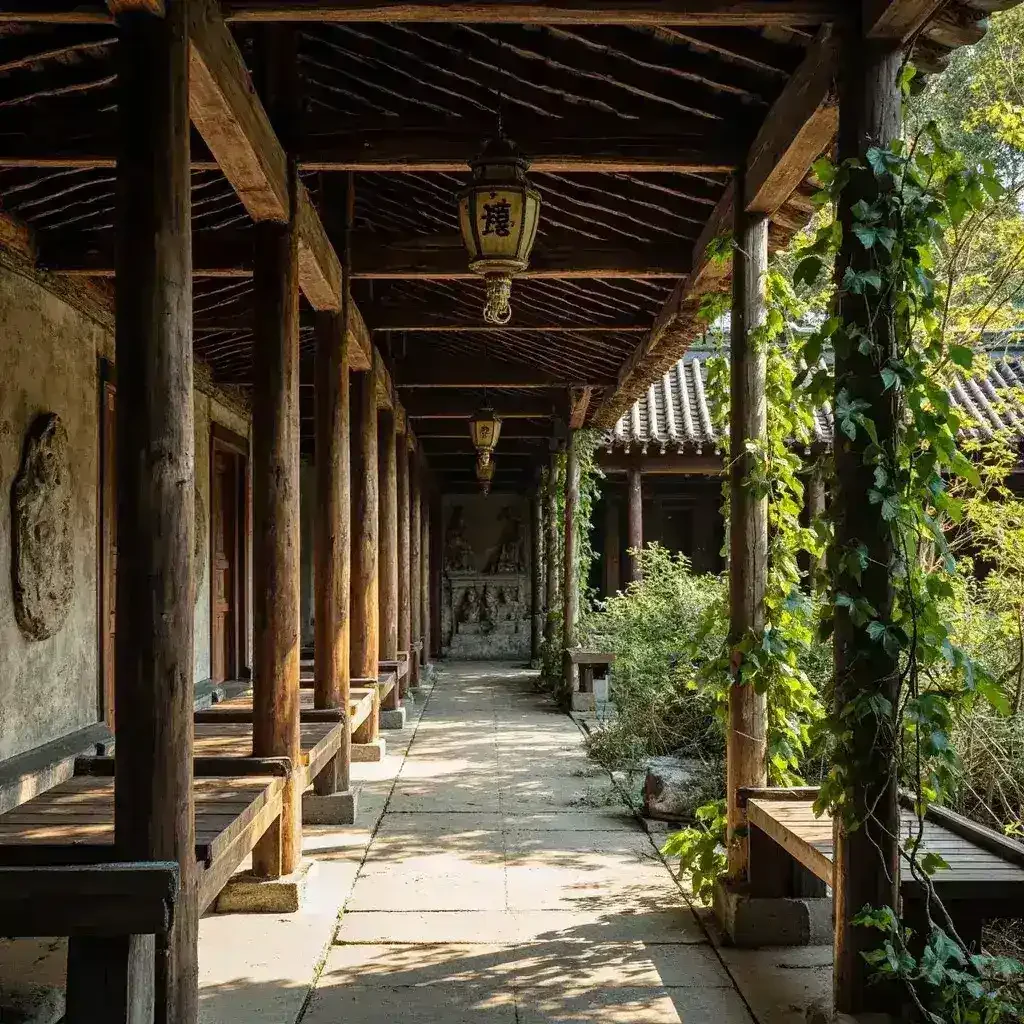

A covered corridor is a roofed walkway that connects buildings, shelters outdoor spaces from sun and rain, and enhances the flow of traditional Chinese garden architecture. Unlike open pergolas or standalone gazebos, a covered corridor functions as an architectural link within a pavilion and corridor series, blending structural integrity with cultural aesthetic. Its lifespan depends on material choice, joinery technique, and environmental maintenance. With correct engineering, a traditional wooden covered corridor can last 30 to 50 years or more. This article examines the three factors our master craftsman with 48 years of experience identifies as most critical for longevity.
The global interest in heritage town revival and cultural tourism has driven demand for authentic Chinese wooden structures. Buyers of an ancient pavilion or a Chinese pavilion now prioritize durability over short-term cost savings. Understanding what makes a covered walkway last helps landscape architects, resort operators, and museum curators make informed procurement decisions.
When we assess a pavilion and corridor project, our engineers evaluate three variables above all others. These determine whether a structure survives one season or fifty years.
The base material sets the ceiling for structural life. Anti-corrosion wood such as Merbau or Teak outperforms ordinary pine by decades in outdoor exposure. According to industry data, Merbau retains 85% of its structural density after 25 years of weathering, while untreated pine loses 40% in just 5 years. Our factory standardizes moisture content at 12-15% before assembly to prevent warping. The difference between anti-corrosion wood versus ordinary wood is not just cosmeticit directly affects joint integrity over time.
A nailed pavilion relies on metal fasteners that corrode and loosen within 10 to 15 years in humid climates. Mortise-and-tenon joints, documented in the classic text Yingzao Fashi (Building Standards), allow wood to expand and contract naturally without stress fracture. Per UNESCO heritage guidelines on traditional construction, wood-to-wood joinery reduces maintenance cycles by 60% compared to metal fasteners. Our senior craftsman says, “A properly cut tenon seat holds for generations; a rusted nail strip will fail a decade.”
Water intrusion at column bases causes 70% of premature timber decay. A standard covered corridor should maintain a roof overhang of at least 40 cm beyond the outer column line. This geometry, codified in the Ming-dynasty treatise Yuanye (The Craft ), directs rainwater away from the structural frame. Modern engineering adds a 3-degree slope to gutter channels to ensure rapid drainage.
| Parameter | Standard Merbau Corridor | Pine Budget Option |
|---|---|---|
| Typical Length | 6 to 30 meters | 4 to 15 meters |
| Column Diameter | 20 cm | 15 cm |
| Roof Pitch | 15 degrees | 10 degrees |
| Joinery | Traditional mortise-and-tenon | Mixed tenon and metal |
| Expected Lifespan | 40-50 years | 10-15 years |
| Lead Time | 45-60 days | 30-40 days |
| Shipping | ISPM-15 heat-treated crates | ISPM-15 heat-treated crates |
These specifications represent our baseline; all dimensions are adjustable for custom projects. The 40-year lifespan figure structures is verified through our 48-year installation records spanning 300+ projects worldwide.
The concept of the covered walkway traces to the Song dynasty, when the Yingzao Fashi standardized proportional systems for timber frames. As recorded in the Tiangong Kaiwu (Songyingling’s treatise on arts and science), craftsmen developed interlocking joinery that eliminated the need for metal fasteners. A memorial arch or hexagonal pavilion from that era used the same structural logic as today’s pavilion and corridor series. The difference is material quality and modern anti-corrosion treatment.
Our production process begins with hand-cut mortise-and-tenon joints, allowing wood movement without joint failure. Each column is shaped to taper 5 cm from base to capital, following classical proportioning. Roof tiles, when included, are secured with traditional clay or metal cap systems that shed water without pooling. This craft knowledge, passed through two generations of our factory team, ensures that a modern gazebo or pergola meets historical integrity standards.
Covered corridors serve parks, cultural tourism destinations, resort complexes, and private gardens. A park manager seeking a durable covered walkway benefits from the 40-year Merbau option, while a heritage town revival project may specify Teak for its water resistance. Museum curators integrating a Chinese pavilion into an exhibit value the mortise-and-tenon craftsmanship as an educational display. In our case study, a 12-meter covered corridor installed in a seaside resort in 2018 remains structurally sound with no joint movement after 8 years of salt-air exposure. The client’s maintenance schedule requires only annual staining, costing less than 2% of the initial investment.
Every pavilion and corridor series begins with a site assessment. Our engineers review local wind load, rainfall data, and soil conditions. You can specify dimensions, wood species, roof style, and finish color. A memorial arch or waterside pavilion can be integrated with a straight corridor to create a multi-element installation. We provide 3D renderings and engineering drawings before production. Custom sizes beyond the standard 6 to 30 meter range are feasible, with structural adjustments calculated by our in-house team.
All structures ship -15 heat-treated wooden crates to meet international phytosanitary standards. Assembly instructions and hardware kits are included for self-installation, or we can arrange on-site installation teams for complex projects. Lead time from confirmed drawings to shipment is typically 45 days for standard sizes. For a hexagonal pavilion paired with a corridor, allow 60 days due to increased component count.
Q: How much does a 10-meter covered corridor cost?
A: A standard 10-meter Merbau covered corridor with mortise-and-tenon joinery ranges from $12,000 to $18,000 depending on roof complexity and finish. Pine options start at $6,000.
Q: How long does it take to install a traditional wooden pavilion?
A: A 6-meter structure requires 3 to 5 days for a team of four carpenters. Larger corridors of 15+ meters take 2 to 3 weeks including foundation work.
Q: What is the difference between anti-corrosion wood and ordinary wood for outdoor use?
A: Anti-corrosion species like Merbau and Teak contain natural oils that resist rot and insects, lasting 30+ years. Ordinary pine requires chemical treatment and lasts 10-15 years without proper maintenance.
Q: Can a covered walkway be customized to match an existing garden pergola?
A: Yes. We replicate dimensions, wood species, and joinery style to ensure visual continuity. Provide photos or drawings of your existing structure.
Q: How is shipping calculated for a large pavilion and corridor series?
A: Shipping is based on volume in a 40-foot container, which holds up to 30 linear meters of corridor or 4 standard hexagonal pavilions. Costs vary by destination; request a quote for accurate figures.
Our 48-year track record means we have engineered over 300 traditional wooden structures across diverse climates. From a small garden gazebo to a 30-meter heritage corridor, our joinery techniques follow classical Chinese standards while meeting modern export requirements. If you are evaluating a Chinese pavilion for a park, resort, or cultural site, our engineers can assess your site conditions and recommend the optimal wood species and joinery system for long-term durability. Request a free design consultation and receive detailed specifications, material options, and a transparent price breakdown tailored to your project scope.
Model-specific dimensions are prepared per order — they depend on size, timber grade, joinery detail and surface finish.
The commercial terms below are fixed and apply to every order. Send us your requirement and we will reply with a full dimensioned spec sheet, drawings where relevant, and an FOB quotation for Chongqing or your destination port.
| Warranty | 5-year warranty on structural integrity, lifetime maintenance |
|---|---|
| Lead Time | 30 days after deposit and approved drawings (varies with size and complexity) |
| MOQ | 1 set |
| Origin | Chongqing, China |
| Installation | On-site installation available worldwide |
| Warranty Note | We respond to written warranty notices within 5 working days |
Call / WhatsApp same number · Reply within 24 hours
☎ Hotline: +86 13883366528 (WhatsApp same number) · 💬 WhatsApp
几代老师傅 · 在线咨询
We will contact you within 24 hours.