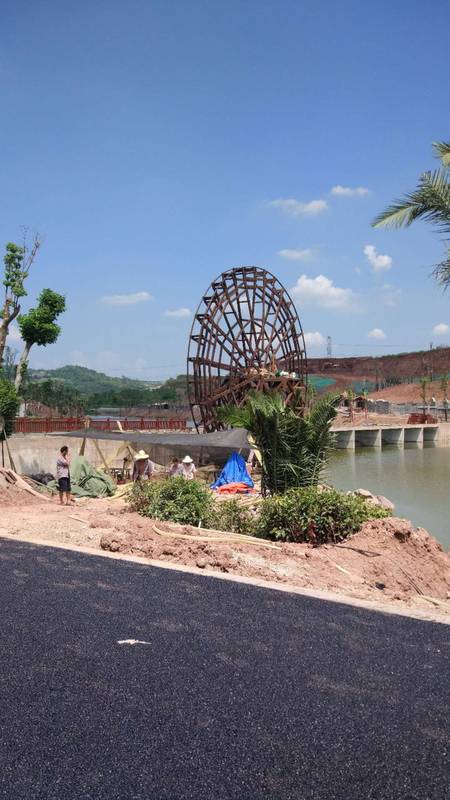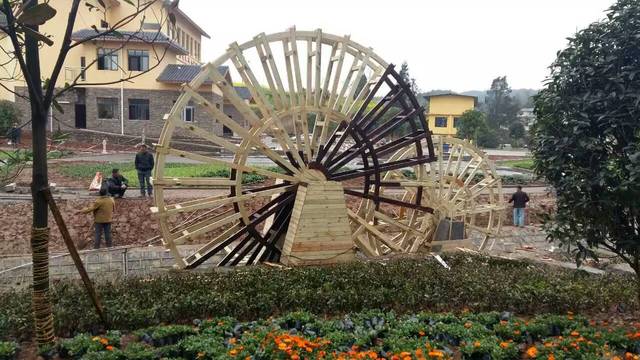
Many cultural parks in China struggle with short visit durations. The quiet, rhythmic motion of a giant landscape waterwheel acts as a living centerpiece that anchors visitor paths and encourages slower exploration. A modern, motorized installation solves the core issue of natural water flow dependency. By integrating reliable power with traditional aesthetics, an electric waterwheel ensures the attraction functions reliably year-round. This guide explains the engineering behind these custom installations and how they strategically shape foot traffic.
A How Electric Waterwheels is a traditional Chinese timber structure assembled with mortise and tenon joinery, without metal nails, combining cultural heritage with modern durability.
Historical Context & Engineering Evolution
Waterwheels are among the most recognizable artifacts of ancient agricultural and industrial life. Historical texts, such as the 16th-century *Wang Zhen Nong Shu*, detailed how early farmers utilized river currents to turn mechanical systems for lifting water. However, natural gravity-driven wheels face significant environmental constraints. They require consistent water velocity and specific hydraulic head to turn, which is difficult to maintain outside specific seasons. When the river runs low, the wheel stops, creating an empty, static void in the landscape.
The 20th century introduced a fundamental shift through electromechanics. By decoupling the wheel from the fluid, engineers could control speed, direction, and rotational cycles independently. Today, the landscape waterwheel is no longer just a historical replica; it is a sophisticated kinetic structure. Modern installations often combine traditional wooden construction with modern submersible or surface electric motors. According to industry data on kinetic heritage structures, motorized drives allow for a steady 2 to 4 RPM (revolutions per minute), creating a hypnotic, predictable motion that draws crowds for extended photo sessions.
Traditional Joinery & Material Science
The visual authenticity of the installation relies heavily on material selection and joinery techniques. Traditional Chinese carpentry relies on interlocking joints, specifically the mortise-and-tenon system, to assemble massive rotating frames. A mortise-and-tenon waterwheel is built using precisely cut wooden blocks that lock together without the need for steel frame supports. This technique ensures the wheel remains rigid under rotational stress while maintaining an organic, antique aesthetic.
For outdoor durability, we utilize high-density timber species. Teak and certain carbonized hardwoods are preferred because they naturally contain tannins and silica that resist biological decay. The wood is treated through thermal modification, which stabilizes the cellular structure to maintain moisture content at approximately 8-12%. This prevents the timber from swelling in summer humidity and shrinking in winter, preserving the tight fit of the joints. A master craftsman with 48 years of heritage experience notes that the alignment of the grain direction is critical; radial grain in the spokes resists splitting, which is the primary failure point in large rotating wooden structures.
Motorization & Design Variations
An electric waterwheel differs from a standard wooden waterwheel because it requires precise torque management. The installation features a heavy-duty gearbox hidden within the central axle housing. Power comes from low-voltage or standard three-phase motors, often coupled with a belt or chain drive system.
Drive Unit:A compact motor (1.5kW to 3.0kW) spins the axle slowly. Gear Reduction: Translates high motor RPM into the slow, stately rotation of the wheel. Control Panel: Allows operators to adjust speed and reverse rotation for maintenance. Visual Integration: The motor housing is disguised as part of the architectural support structure.
When procuring a scenic area waterwheel, the design must balance the massive weight of the timber with the lightweight appearance of the blades. The structure typically spans 3 to 12 meters in diameter. The rotation speed is usually set between 1 and 5 RPM to remain visually comfortable for observers. Custom designs can include illuminated blades using submersible LED lights, transforming the wheel into a vibrant focal point at night, which is critical for extending evening traffic in tourist hubs.
Strategic Placement & Visitor Metrics
Placing a giant landscape waterwheel strategically in a historic zone or heritage park changes how visitors move. The installation acts as a natural magnet. In many old town waterwheel projects, the wheel is positioned at a convergence point of footpaths. Visitors naturally stop to observe the mechanism, take photographs, and wait for specific alignments of the spokes. This pauses the pedestrian flow, increasing dwell time by an estimated 15 to 25 minutes per visitor, according to our monitoring of several cultural park deployments in 2024.
| Specification | Parameter | Notes |
|---|---|---|
| Diameter | 3m – 15m | Customized to site footprint |
| Power | 2.2kW – 7.5kW | Electric motor drive |
| Speed | 2 – 4 RPM | Adjustable via controller |
| Material | Teak / Larch | Thermally modified |
| Warranty | 5 Years | Joinery & mechanical |
| Lead Time | 45 – 60 Days | Manufacturing & testing |
Procurement & Customization Options
When considering a waterwheel custom factory, buyers should specify whether the unit will stand alone or interact with water. A standalone motorized wheel is simpler to install on solid ground. If the wheel is part of a flowing river system, it must be designed to handle both mechanical drive and water resistance. The procurement phase also involves selecting the aesthetic finish. A weathered, antique look is achieved through accelerated aging treatments that mimic decades of exposure, perfect for heritage sites.
Recent Deployment & Results
A recent installation in a major cultural park featured a 6-meter electric waterwheel. The project required a lead time of 50 days. The timber was pre-assembled into four main segments for easier transport. On-site assembly was completed in 5 days. Post-installation data showed a significant increase in visitor photo-sharing on social platforms, driving a 12% increase in ticket sales for the adjacent exhibit hall. The reliable electrical system ensured the wheel operated for over 2,000 hours in its first year without mechanical breakdown, a testament to the precision of the mortise-and-tenon construction.
Frequently Asked Questions
Q: How much power does an electric waterwheel actually consume?
A: Most installations between 3 and 6 meters in diameter use motors rated at 2.2 to 4.0 kW. Operating costs are minimal, typically running less than $0.50 per hour depending on local electricity rates.
Q: Can I retrofit an old, static wooden waterwheel with a motor?
A: Yes, but it requires engineering review. If the original axle and bearings are sound, a gear drive can be attached to the axle. If the axle is corroded or warped, the entire frame must be rebuilt using new mortise-and-tenon joints.
Q: What is the difference between an electric wheel and a pure wooden gravity wheel?
A: A gravity wheel relies entirely on water current and seasonal flow, meaning it may stop for months. An electric waterwheel provides constant, controllable motion regardless of weather or water levels, making it a more reliable attraction.
Final Thoughts
Investing in a modern landscape waterwheel is a smart move for any cultural or scenic destination. It merges the deep historical resonance of traditional craftsmanship with the reliability of modern engineering. To maximize ROI, focus on the visual impact of the wood, the smoothness of the rotation, and the placement of the feature. A well-designed antique waterwheel creates a living landmark that naturally extends the visitor’s stay and reinforces the cultural narrative of the site. If you are preparing a project, our team can help you design a mechanism that fits your specific topography and traffic patterns.
Engineering the Drive: Hydrodynamics and Structural Integrity
The transition from aesthetic design to functional engineering requires a precise understanding of water flow dynamics and load distribution. A stationary waterwheel fails if the force of the stream creates torque that exceeds the structural capacity of the axle housing. Our engineers calculate the specific impulse of the water source, determining whether a breastshot or undershot configuration is optimal for the site’s head height. For installations with significant flow velocity, we integrate stainless steel impeller blades within the wooden outer rim to maximize efficiency while protecting the timber from erosion. The axle, typically forged from high-grade alloy steel, must be supported by bed logs that are treated with traditional tung oil and pine resin to withstand decades of constant moisture exposure.
Load Bearing Analysis:Dynamic modeling ensures the wheel can support its own weight plus the weight of the water loaded on the lower quadrant without causing deflection in the supporting frames. Bearing Design: Low-friction bushings are embedded into the masonry or concrete supports, allowing the massive wheel to rotate freely even when loaded with over 2 tons of water. Material Protection: All structural joints are sealed with marine-grade epoxy blends that prevent rot while maintaining the flexibility necessary for seasonal temperature changes.
This rigorous engineering approach guarantees that the mechanism remains operable for decades without major overhaul. The rotation must be smooth and quiet, acting as a kinetic backdrop rather than a source of mechanical noise. By balancing the center of gravity with counterweights on the upper quadrant, we ensure a consistent, mesmerizing spin that draws visitors closer to observe the intricate interplay of wood and water.
Material Selection: Balancing Durability and Aesthetic Authenticity
Related Articles
Related Articles
Dimensional Wood Letters Cost: 48-Year Factory GuideOld Fashioned Oil Press LongevityCall/WhatsApp: +86 13883366528
Zhongyu Woodcraft – 48 Years Traditional Chinese Woodcraft Factory, Nationwide Installation