Walk into a dimly lit chamber. Wooden beams overhead, paper lanterns casting amber light across carved panels. A secret mechanism clicks somewhere in the walls. You are no longer in a modern building—you have stepped into ancient China. This is the power of an ancient Chinese theme room, and it is one of the fastest-growing trends in immersive entertainment and cultural tourism.
Escape rooms, museum experiences, themed restaurants, and cultural centers are all turning to ancient Chinese aesthetics to create unforgettable atmospheres. But designing these spaces requires more than placing a few paper lanterns and calling it done. Authentic ancient Chinese theme rooms demand careful attention to architectural principles, traditional craftsmanship, period-appropriate materials, and storytelling that engages every sense.
Over the past decade, the immersive experience industry has exploded globally. From themed escape rooms in major cities to cultural experience centers in tourist destinations, operators are investing heavily in environments that transport visitors to another era. Ancient Chinese settings—whether Tang Dynasty courts, Ming Dynasty markets, or Jiangnan water towns—offer rich visual vocabulary and deep cultural resonance that appeals to diverse audiences worldwide.
In this guide, we will explore how to design authentic ancient Chinese theme rooms for escape rooms, experience centers, and cultural venues. Drawing on 48 years of experience crafting traditional wooden structures and historical replicas, we will cover design principles, material selection, spatial planning, and the craftsmanship techniques that separate authentic installations from superficial themed decor.
Understanding the Appeal of Ancient Chinese Theme Spaces
Why do ancient Chinese theme rooms captivate audiences so effectively? The answer lies in the layered cultural narrative embedded in traditional Chinese architecture and interior design. Every element—from the curvature of roof eaves to the pattern of lattice windows—carries symbolic meaning and historical significance that resonates across cultures.
Traditional Chinese architecture is built on principles of harmony between humans and nature, reflected in the use of natural materials, balanced spatial arrangements, and integration with surrounding landscapes. These design philosophies translate powerfully into themed environments because they create spaces that feel both exotic and fundamentally human. Visitors are drawn to the elegance of wooden pavilions, the mystery of courtyards shrouded in mist, and the intrigue of hidden passages behind carved screens.
The global popularity of Chinese historical dramas, wuxia fiction, and martial arts cinema has further amplified interest in ancient Chinese aesthetics. International audiences already carry mental images of what these spaces should look like, creating an immediate recognition factor that reduces the learning curve for immersive environments. When a visitor sees a traditional wooden pavilion or a carved wooden signboard, they instantly understand the cultural context.
From a business perspective, ancient Chinese theme rooms offer remarkable versatility. The same design language can support a murder mystery escape room, a cultural education center, a themed dining experience, or a film and television set. This adaptability makes the investment in authentic craftsmanship pay dividends across multiple revenue streams and audience segments.
Core Design Elements for Authentic Ancient Chinese Interiors
Creating an authentic ancient Chinese theme room requires attention to several fundamental design elements that work together to establish historical credibility and visual coherence.
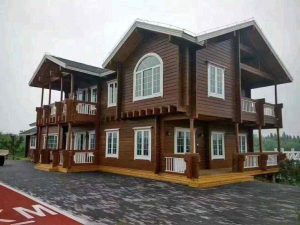
Structural framework and joinery: Traditional Chinese wooden architecture relies on mortise and tenon joinery rather than nails or screws. This interlocking joint system creates structures that are both remarkably durable and visually distinctive. In theme room construction, reproducing these joinery techniques—visible or hidden—establishes authenticity that audiences can sense even if they cannot articulate why. Custom wooden components using traditional joinery are essential for achieving this level of detail.
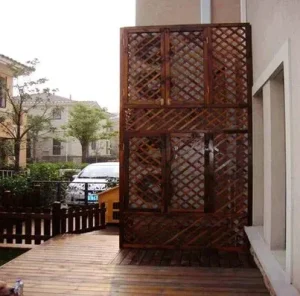
Spatial organization: Ancient Chinese buildings organize space around courtyards and axial symmetry. Rooms flow into one another through transitional spaces rather than abrupt separations. Screens, folding partitions, and lattice doors create layered visibility where spaces are partially revealed rather than fully exposed. This principle of controlled revelation is particularly effective in escape room design, where maintaining mystery and guiding visitor movement are critical objectives.
Material palette: Authentic ancient Chinese interiors use wood as the primary material, with specific species carrying different status associations. Nanmu and zitan were reserved for imperial structures, while pine and fir were common in vernacular architecture. For modern theme rooms, selecting appropriate wood species and finishes matters enormously. The warm amber tones of aged hardwood, the pale elegance of birch or ash for Jiangnan-style interiors, and the rich darkness of stained wood for dramatic scenes each create distinct atmospheric effects.
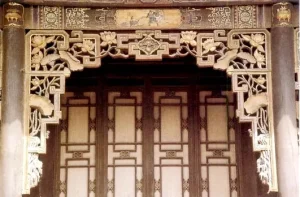
Decorative elements: Carved wooden panels, lattice windows, paper lanterns, painted beams, and bronze fittings all contribute to the visual language of ancient Chinese interiors. Each element should serve both aesthetic and narrative functions. A carved screen might conceal a secret passage. A hanging wooden signboard might provide clues in an escape room scenario. Every decorative choice should advance the story while reinforcing the historical atmosphere.
Designing Escape Rooms with Ancient Chinese Settings
Ancient Chinese theme rooms are particularly effective for escape room experiences because the architectural elements naturally support puzzle design and narrative immersion. The complexity of traditional Chinese interiors—with their hidden compartments, sliding panels, and layered spaces—provides built-in opportunities for interactive storytelling.
Narrative frameworks: Successful ancient Chinese escape rooms typically draw from recognizable historical or literary contexts. Popular scenarios include investigating a mystery in a Tang Dynasty mansion, escaping from a Ming Dynasty prison, solving puzzles in an imperial scholar study, or navigating a Jiangnan water town during a festival. Each setting provides distinct visual and mechanical opportunities. A scholar study offers books, calligraphy, and desk objects. A prison cell offers iron bars, stone walls, and hidden messages. A mansion offers multiple rooms, courtyards, and service areas.
Interactive architectural features: Traditional Chinese architectural elements can be adapted as functional puzzle mechanisms. Sliding lattice panels can reveal hidden compartments. Folding screens can be arranged to form codes. Hanging lanterns can be positioned to cast specific shadows. Weight-sensitive floor panels can trigger mechanisms. A traditional war chariot replica might serve as both set dressing and a puzzle component that must be assembled correctly.
Sensory layering: The

most effective ancient Chinese escape rooms engage multiple senses simultaneously. Visual elements include warm lighting, rich wood tones, and carefully composed scenes. Auditory elements might include subtle water sounds, distant temple bells, or wind through bamboo. Olfactory elements can include sandalwood incense, tea aromas, or the faint scent of aged wood. These sensory layers reinforce the illusion and deepen immersion.
Technical integration: Modern escape room technology—electronic locks, RFID triggers, projection mapping, and automated mechanisms—must be seamlessly integrated into the ancient Chinese aesthetic. Wiring, sensors, and electronic components should be concealed within traditional architectural elements. A wooden beam might hide a proximity sensor. A carved panel might conceal an RFID reader. The technology should enhance the illusion rather than break it.
Building Experience Centers and Cultural Venues
Beyond escape rooms, ancient Chinese theme design is transforming cultural experience centers, museum installations, themed hospitality venues, and tourist attractions worldwide. These larger-scale projects require different considerations than escape rooms, focusing on durability, crowd flow, educational value, and long-term maintenance.
Cultural authenticity versus dramatic effect: Experience centers serving educational or cultural purposes face a different balance than entertainment venues. Museum installations and cultural education centers benefit from historical accuracy and scholarly rigor. Themed restaurants and entertainment venues can prioritize dramatic atmosphere and visitor engagement. Understanding your audience and purpose guides every design decision, from material selection to narrative framing.
Modular and adaptable construction: Many experience centers operate in spaces that must serve multiple functions or accommodate rotating exhibitions. Modular wooden structure systems using traditional joinery can be reconfigured as needed while maintaining authentic appearance. This approach is particularly valuable for pop-up cultural installations, traveling exhibitions, and multi-purpose venue spaces.
Outdoor and indoor integration: The most compelling ancient Chinese theme environments extend beyond interior walls into outdoor spaces. Traditional Chinese garden design principles—rockeries, water features, winding paths, pavilions, and strategic planting—can be recreated in modern settings. A traditional wooden water wheel installed in a courtyard fountain creates both visual interest and cultural authenticity. Wooden garden bridges and pavilion structures extend the thematic environment into outdoor areas.
Historical replica accuracy: For museums, cultural centers, and educational installations, accuracy matters enormously. Our work includes historical replicas of ancient Chinese farming tools, oil press machinery, water mills, and siege weapons that meet scholarly standards while remaining visually compelling. These authentic objects transform themed spaces from decorative backdrops into credible historical environments.
Materials, Craftsmanship, and Long-Term Durability
The difference between a temporary themed decoration and a lasting ancient Chinese theme room comes down to materials and craftsmanship. Cheap engineered wood, printed graphics, and mass-produced replicas age poorly and undermine the immersive experience within months. Traditional materials and techniques, while requiring greater initial investment, create environments that improve with age and serve operators for decades.
Wood selection and treatment: Solid hardwoods—oak, walnut, mahogany, or appropriately sourced Chinese hardwoods—provide the density, grain character, and durability that themed environments require. Wood should be properly seasoned and treated for the specific environmental conditions of the installation space. Climate-controlled indoor environments allow different treatment approaches than humid or variable-condition spaces.
Traditional finish techniques: Authentic ancient Chinese wood finishes involve multiple layers of natural oils, waxes, and lacquers applied through traditional methods. These finishes protect the wood while developing a rich patina over time. Modern synthetic finishes can approximate traditional appearance but often lack the depth and character that genuine traditional finishes provide. For high-traffic commercial installations, balancing authenticity with practical durability is essential.
Craftsmanship standards: Every joint, carving, and finish detail communicates quality to visitors. Loose panels, visible glue residue, uneven gaps, and poorly fitted joints immediately break the illusion of authenticity. Traditional Chinese woodworking standards—tight joinery, precise carving, smooth finishes—should be the minimum bar for any professional installation. This is where 48 years of custom wooden product manufacturing experience makes a decisive difference.
Maintenance and longevity: Well-crafted ancient Chinese theme rooms require less maintenance than poorly constructed alternatives. Properly fitted wooden elements do not develop gaps as buildings settle. Quality finishes resist wear and can be refreshed rather than replaced. Traditional joinery allows individual components to be repaired or swapped without dismantling entire structures. Planning for long-term maintenance from the design phase saves significant costs over the life of the installation.
Working with Specialists for Authentic Implementation
Designing and building ancient Chinese theme rooms requires specialized knowledge that most general contractors and interior designers do not possess. Understanding traditional architectural proportions, joinery techniques, period-appropriate decorative schemes, and the practical adaptations needed for modern commercial installations is a distinct expertise.
At Zhongyu Woodcraft, our 48 years of experience encompasses everything from traditional wooden pavilions and gazebos to historical war chariot replicas, from carved wooden signboards and plaques to complete oriental aesthetic spaces including tea rooms and study rooms. We work with experience center operators, escape room designers, museum curators, and hospitality developers worldwide to bring authentic ancient Chinese environments to life.
Whether you need a single farming tool replica for a museum display, a complete wooden water wheel installation for a cultural courtyard, or a fully integrated ancient building decoration system for a themed experience center, our team provides custom design, manufacturing, and consultation services. We also offer OEM and ODM services for operators and developers who need production-scale replication of authentic designs.
The immersive experience market continues to grow rapidly, and audiences are becoming increasingly sophisticated in their expectations for authenticity. Investing in genuine craftsmanship and historically informed design is not just an aesthetic choice—it is a business decision that pays dividends in visitor satisfaction, repeat attendance, and long-term durability.