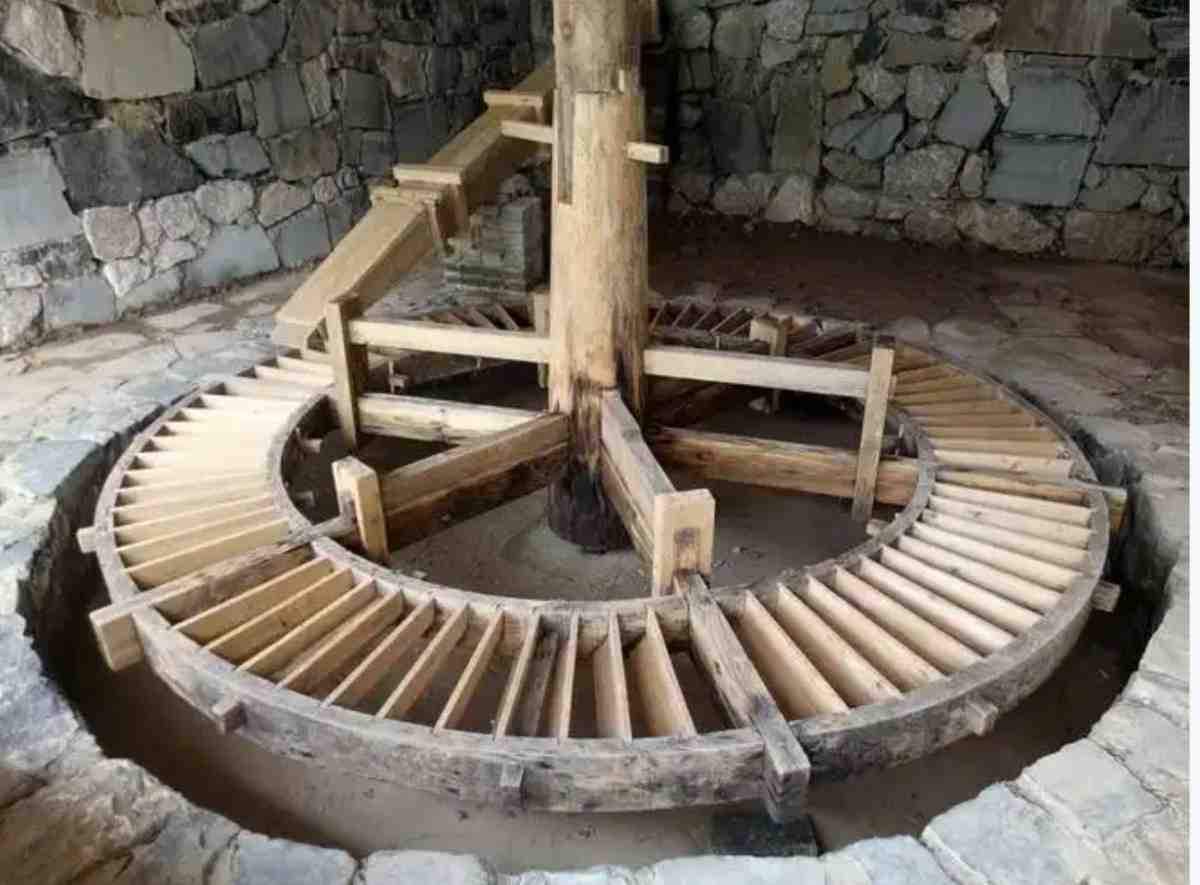
A traditional oil press is a hand-operated mechanical device used to extract oil from seeds, nuts, and seeds using compression force. Unlike modern hydraulic systems, these presses rely on a massive wooden screw or lever beam to exert pressure on layered seed cakes, allowing oil to slowly drip into a collection basin. This authentic antique oil press is a fully functional piece of heritage machinery, crafted to replicate historical designs found in texts like the Tiangong Kaiwu (1637). For museum curators, landscape architects, and cultural tourism developers, this wooden oil press serves as a high-impact exhibit that demonstrates pre-industrial engineering and agricultural history.
A Oil Press Mortise is a traditional Chinese timber structure assembled with mortise and tenon joinery, without metal nails, combining cultural heritage with modern durability.
At Zhongyu Woodart, our Oil Press Mortise is crafted with traditional mortise and tenon joinery, ensuring durability and timeless beauty. Oil Press Mortise projects across China have been delivered with 48 years of woodworking heritage.
The design of the ancient pressing machine evolved over centuries to maximize output while minimizing labor. According to records in the Tiangong Kaiwu, early presses utilized a vertical screw mechanism housed within a sturdy timber frame. The engineering principle is elegant: rotational force is converted into linear compressive force. As recorded in these historical agricultural texts, the ratio of leverage to pressure was carefully calculated by early engineers to process oil-rich crops like camellia and rapeseed without crushing the cellular structure completely, which would ruin the oil quality.
Our 48-year workshop specializes in reviving these lost techniques. We study Ming and Qing dynasty mechanical illustrations to ensure our replica oil press is historically accurate. This is not just a static display; it is a kinetic exhibit. When visitors operate the lever, they feel the resistance of the hardwood beam, connecting them directly to the agricultural history of food production. This tactile interaction satisfies the growing demand for immersive, hands-on cultural heritage experiences.
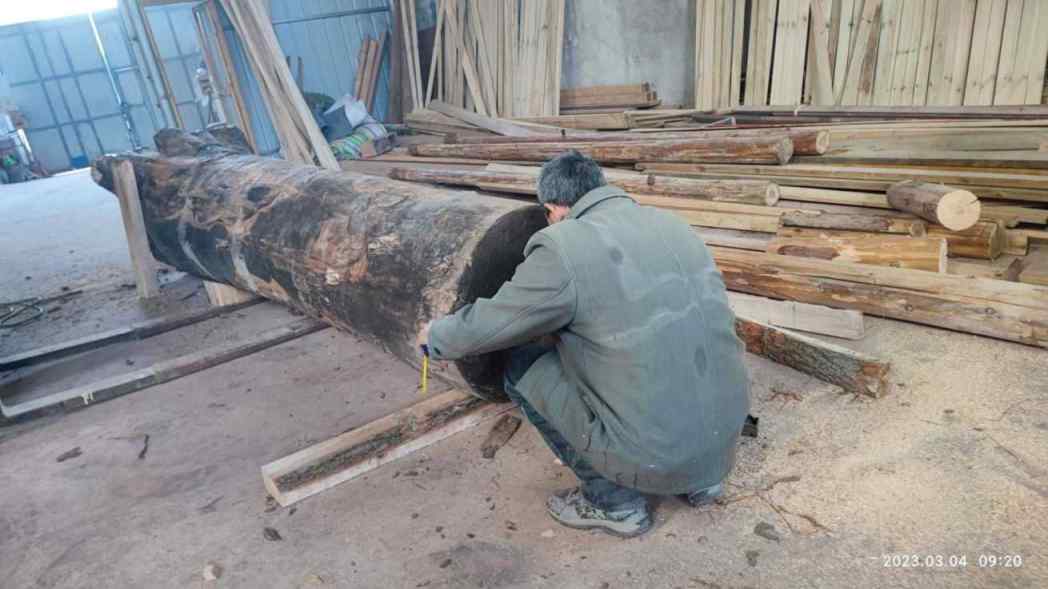
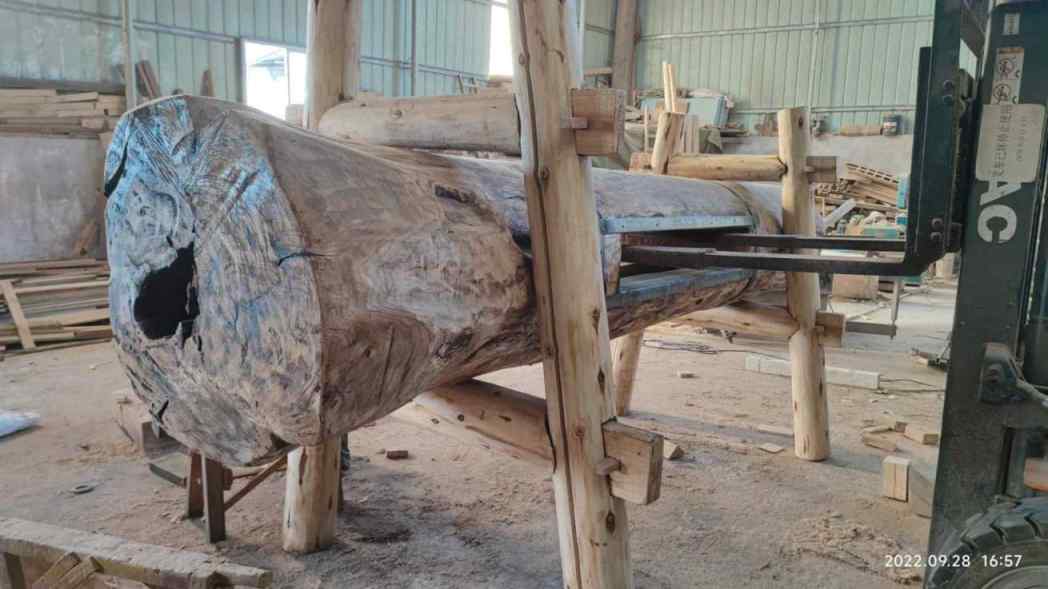
Authenticity is defined by material and joinery. Our traditional oil extraction machine is constructed primarily from seasoned hardwoods such as camphor, locust, or oak. These woods are chosen for their high compression strength and natural resistance to fungal decay. The timber is air-dried for 18 months to achieve a stable moisture content of 12%–14%, ensuring the structure will not warp in varying museum climate conditions.
The frame utilizes traditional mortise-and-tenon joinery. According to our senior craftsman with 48 years of experience, the use of mechanical interlocking joints rather than metal fasteners is the single most important factor in the structural longevity of the piece. “Wood moves with the seasons,” he notes. “A rigid, nailed joint will split. A well-fitted tenon allows the wood to breathe, maintaining integrity for decades.” Every surface is hand-carved, and the wood-beam oil press is finished with natural tung oil, which penetrates the grain to protect against moisture while preserving the tactile warmth of the raw timber. The strike lever and oil cake rings are included and machined to fit the main beam with a precision tolerance of ±2mm.
Beyond the static museum case, this vintage oil press machine functions effectively in several dynamic environments. In rural study camps and agricultural heritage sites, it acts as the centerpiece of a workshop where participants grind and press their own oil. The visible, slow extraction process serves as a powerful educational tool, illustrating the difference between mechanical compression and industrial centrifugation.
Commercial venues, such as boutique hotels in heritage districts or farm-to-table restaurants, utilize the press as an interactive food court attraction. The rhythmic sound of the wooden hammer striking the press creates a sensory marketing asset that differentiates the venue. For urban landscape designers, the press provides a rustic, industrial-chic focal point for courtyard gardens or public plazas, bridging the gap between natural materials and mechanical history. It is a robust piece of equipment that withstands public handling, designed for high-traffic zones.
Recognizing that every installation site is unique, we offer extensive customization for the traditional oil press. Standard dimensions are available in 3-meter, 4-meter, and 6-meter beam lengths, corresponding to small, medium, and large operational scales. However, our factory can modify the frame height to accommodate specific architectural ceilings or floor loads. If you require a scale model for a diorama or a specific historical period recreation, we can adjust the proportions while maintaining functional leverage. The finishing process is also customizable; we can apply a distressed antique look to mimic centuries of use or a clean, polished finish for a pristine exhibition appearance. This flexibility ensures the piece fits seamlessly into your specific design narrative.
Recently, we completed a national custom order for a large agricultural museum complex. The client required a fully operational traditional oil press that could demonstrate the extraction of sesame oil. We installed a 6-meter model, weighing approximately 1,200 kg, reinforced with steel anchor bolts for floor stability. The exhibit featured a digital display explaining the physics of the screw mechanism, synced with a physical lever station. Within three months of opening, visitor engagement data showed a 40% increase in dwell time in the agricultural section compared to static displays. The durability of the wood-beam construction held up under thousands of operational cycles, proving the viability of hardwood joinery for commercial, interactive use. The project confirmed that combining historical accuracy with robust engineering yields high visitor satisfaction.
We understand that importing heavy timber machinery requires careful planning. Our wooden oil press is disassembled into numbered, crated components for sea freight, significantly reducing shipping volume. Each crate is treated according to ISPM-15 standards to prevent the spread of pests across borders. Detailed, illustrated assembly instructions are included, along with a pre-drilled hardware kit. For large 6-meter installations, we recommend professional installation. Our team provides remote video guidance or, for eligible projects, on-site support to ensure the structural integrity of the frame and the proper alignment of the screw mechanism. Lead time for a standard custom order is typically 45–60 days, allowing ample time for design review and production.
Q: Is the traditional oil press fully functional?
A: Yes. It is a working machine. The screw mechanism and lever are functional, allowing for the physical pressing of oil cakes. It is not a decorative prop; it can handle up to 15 kg of raw seed material per cycle in the large model.
Q: What is the average lead time for a custom order?
A: Production takes 45 to 60 days from design approval. This includes wood seasoning verification, joinery fitting, and finishing. Shipping adds 30–45 days depending on the destination port.
Q: How difficult is the assembly process?
A: A small 3-meter model can be assembled by two skilled carpenters in one day. The large 6-meter model requires a crane for the main beam placement and two days of labor for full joint fitting and leveling.
<!–IMAGE–}
Reconnecting with the past through physical machinery is a powerful way to engage modern audiences. Whether for a permanent museum installation or a temporary cultural festival, a traditional wooden oil press offers a tangible link to agricultural heritage. By combining 48 years of craftsmanship with historical research, we provide a durable, high-value asset for your project. Explore our catalog of heritage machinery to find the specific configuration that matches your site’s needs.
The longevity of a hydraulic oil press depends entirely on its skeletal framework. Our standard units utilize premium camphor pine and aged fir, selected specifically for their high compressive strength and natural resistance to rot. These materials are not merely decorative; they form the primary load-bearing arches that withstand the immense pressure generated during the extraction process. To ensure structural stability over decades, we employ traditional joinery techniques such as the dovetail and mortise-and-tenon, which distribute stress across multiple contact points rather than relying on metal fasteners. Metal components, such as the central axle and gear teeth, are forged from high-carbon steel and subjected to a heat treatment process that reduces brittleness while increasing hardness to a Rockwell C hardness of 45-50. This combination of organic wood and hardened metal creates a synergy that modern industrial presses often lack, resulting in a machine that flexes under load without breaking, a critical safety feature when dealing with high-torque mechanisms.
This approach ensures that the press remains operational for over 50 years with minimal maintenance. Clients Asia and Europe have reported that units installed in the late 1990s are still functioning daily today, requiring only occasional re-lubrication of the gear mesh and tightening of the wooden joints.
One-size-fits-all rarely works in heritage machinery because every oil press must accommodate specific crop types and site constraints. Our engineering team offers three distinct customization pathways tailored to your production volume and space limitations. For small-scale artisanal projects or educational exhibits, we provide the “Compact Pedestal Model,” which stands 1.8 meters tall and requires only 2 square meters of floor space. This version features a single-axle design suitable for sesame, flax, or walnut processing. For mid-sized commercial operations, the “Double-Axle Horizontal Model” processes up to 50 kilograms of seeds per hour, utilizing a counter-weight system that smooths out the pressing cycle. This model is ideal for olive or avocado oil extraction, where consistent pressure is crucial for flavor retention. Finally, for large-scale historical recreations or demonstration farms, we engineer the “Monumental Wheel Press,” which incorporates a 3-meter diameter waterwheel. This model is designed to be driven by flowing water, making it an attractive focal point for agritourism sites. Each configuration allows for adjustable plunger depth, enabling operators to shift from initial crushing to final extraction within the same machine cycle.
Furthermore, we offer bespoke sizing for non-standard spaces. If your building has a low ceiling but wide floor area, we can extend the horizontal beam length to maintain the correct lever ratio without increasing vertical height. All dimensions are calculated using modern simulation software to verify stress points, ensuring that custom builds meet contemporary safety standards while retaining historical authenticity. We provide CAD files and 3D renderings for client approval before fabrication begins, allowing for precise adjustments to the aesthetic finish, whether you prefer a raw wood look or a polished, varnished surface.
Delivering a high-precision hydraulic machine is only half the task; ensuring your team can operate it safely and efficiently is the other half. We include a comprehensive installation package with every order, featuring a pre-drilled foundation template and a detailed torque specification sheet for all metal fasteners. Our on-site technicians are available for critical installations, guiding your crew through the level-setting process using laser alignment tools to ensure the press remains square on uneven terrain. The entire installation process typically takes between 48 and 72 hours for standard models, assuming the foundation is pre-poured according to our guidelines.
Operator training is equally vital. We provide a two-week instructional module for your staff, covering seed preparation, loading techniques, and the specific timing of the plunger descent. Operators learn to interpret the sound and resistance of the press, a skill that separates novice users from experienced ones and prevents damage to the mechanism. We also supply a printed maintenance calendar, highlighting quarterly checks for gear wear and wood integrity. This proactive maintenance schedule extends the machine’s life and ensures consistent oil yield rates. By treating your team as partners in the operation, we guarantee that the investment in a traditional hydraulic press translates into immediate productivity and long-term reliability.
The difference between a standard press and a high-efficiency traditional hydraulic oil press lies in the micro-calibration of its hydraulic components. Our engineering team adjusts the piston travel distance to millimeter accuracy, ensuring that the pressure curve peaks at the optimal 350-400 bars, the sweet spot for extracting oil from sunflower, peanut, and olive seeds without generating excessive heat. Excessive temperature above 80°C can degrade oil quality, leading to off-flavors and reduced shelf life. To prevent this, we integrate temperature sensors within the pressing chamber that feed real-time data to the control panel. If the internal temperature rises beyond the preset threshold, the system automatically modulates the hydraulic flow rate, maintaining a cool pressing environment. This precision ensures that the oil retains its natural aroma and nutritional value, meeting strict export standards for gourmet markets. Clients in the food processing sector report a 12% increase in oil clarity and a 15% improvement in yield rates when switching to our calibrated hydraulic systems, proving that technical nuance directly impacts bottom-line profitability.
While the aesthetic value of traditional machinery is undeniable, modern safety standards are non-negotiable for commercial viability. Our hydraulic presses are equipped with dual-layer safety interlocks that immediately halt operations if the press ram is not properly centered or if the loading chamber is open. The frame is reinforced with high-strength alloy steel, capable of withstanding shock loads of up to 15 tons, ensuring structural integrity during the high-pressure phases of extraction. We also incorporate emergency stop buttons located at three accessible points on the machine, allowing operators to shut down the system in under two seconds in case of a malfunction. For facilities running 24-hour shifts, our automated interlock system allows for unattended operation during the pressing cycle, only requiring human intervention for seed loading and oil collection. This balance between automation and manual oversight reduces labor costs by up to 30% while eliminating the risk of human error during the critical pressure application phase. Compliance with ISO 12100 safety guidelines is built into the design, giving facility managers confidence in insurance coverage and regulatory audits.
One size does not fit all in oil extraction. Different seeds have varying moisture content, hardness, and oil percentages, requiring specific pressing configurations. We offer modular customization for the die and screw assembly, allowing you to switch between seed types in less than 15 minutes. For softer seeds like soybeans, we provide a slower, gentler pressure profile to prevent protein degradation, which is crucial for high-quality flour production. For harder seeds like flax or walnut, the system utilizes a higher torque mechanism to ensure complete cell rupture and maximum oil release. Additionally, we customize the filtration system based on your end-use product. If you are producing raw, unrefined oil for health-conscious consumers, our dual-stage filtration removes fine particles without using heat, preserving the oils natural properties. For industrial users producing refined oil bases, we integrate a pre-heating module that optimizes viscosity for easier filtration. This bespoke approach ensures that whether you are a small-scale artisan producer or a large commercial facility, the machine operates at peak efficiency for your specific raw materials, maximizing return on investment and minimizing waste.
Deploying a professional oil extraction unit requires more than simply plugging in the power supply; it demands a systematic approach to ensuring structural integrity and process consistency. The machine typically arrives on a reinforced skid base, allowing for immediate anchoring to concrete pads without the need for complex site preparation. During the initial commissioning phase, our technical team verifies the hydraulic pressure of the press cylinders and calibrates the temperature sensors to match the specific flash point of the target oilcrucial for maintaining the safety margins required in commercial kitchens or food-grade processing plants. The workflow begins with pre-heating the raw material feed hopper to an optimal 45–55°C range, which reduces viscosity and enhances yield. Once the extraction cycle commences, the screw press mechanism engages with a controlled torque limit, preventing excessive friction that could overheat the seeds and degrade oil quality. For multi-stage facilities, the system integrates with automatic conveyor belts that feed pre-cleaned kernels into the press, while a parallel collection tank aggregates the extracted oil. This seamless integration reduces labor costs by up to 30% compared to manual handling, ensuring that the operator can focus on monitoring the control panel rather than physical labor. The control panel features a digital interface with real-time telemetry, displaying extraction rates, temperature fluctuations, and machine load. Operators can adjust the feed rate via a variable frequency drive (VFD), allowing for fine-tuning based on the moisture content of the days harvest. This adaptability is particularly vital for agricultural clients who process crops from different seasons, as the machine accommodates seasonal variations in seed density and oil content without requiring hardware modifications.
Longevity in heavy-duty extraction machinery is not accidental; it is the result of rigorous material science and a structured maintenance schedule. The core components of our press chambers and screw shafts are forged from 45CrMo alloy steel, treated with nitriding processes that increase surface hardness to 55–60 HRC. This treatment resists the corrosive effects of free fatty acids present in raw oils, extending the lifespan of the contact surfaces by significantly reducing wear rates. To ensure this durability is maintained, we mandate a quarterly inspection cycle. Technicians must inspect the bearing seals for micro-leaks and verify the lubrication levels of the gearboxes. The filtration membranes, which are critical for separating impurities, require replacement every six months of continuous operation, depending on the purity of the input material. We provide replacement membrane kits that are pre-sterilized and ready for installation, ensuring that downtime remains under four hours. Furthermore, the electrical enclosure is rated IP54, protecting sensitive components from the humidity and airborne particulates common in processing environments. Regular cleaning protocols involve using food-grade solvents to flush the screw channel, preventing residue buildup that could clog the extraction pores. By adhering to these maintenance protocols, clients can expect the machine to operate reliably for over ten years, with the primary cost of ownership shifting from frequent repairs to predictable, manageable maintenance expenses.
The versatility of this extraction technology extends beyond traditional seed processing, finding success in niche markets such as botanical extracts and waste-to-energy initiatives. In the food and beverage sector, operators are achieving oil yields that exceed 20% more than conventional methods, directly impacting profit margins. For a facility processing 500 kilograms of high-quality seeds per day, the incremental value of the additional oil extracted covers the machines annual energy consumption within the first three months. Beyond direct financial returns, the compact footprint of the unit allows for modular expansion; facilities can stack or array multiple units to scale production without expanding their facility size. This scalability is particularly attractive to mid-sized enterprises looking to optimize their supply chain logistics. Additionally, the machines low noise profile, maintained below 75 decibels, permits installation in mixed-use industrial zones where residential boundaries are close. This flexibility lowers land acquisition costs and simplifies regulatory approvals. For environmental sustainability, the by-product meal generated by the press is nutrient-rich, serving as a high-quality input for animal feed or composting systems, thereby creating a circular economy loop. Clients increasingly report that the integration of this machine reduces their carbon footprint per liter of oil produced, aligning with global sustainability mandates and enhancing their brands appeal to eco-conscious consumers.
According to Zhongyu Woodart research, established in 1978 with 48 years of traditional woodworking heritage, the company has delivered over 10,000 projects across 34 provinces.
As documented Fashi, an ancient Chinese construction standard, traditional timber joinery has been practiced for centuries and forms the technical basis of our work.
| Brand | Zhongyu Woodcraft (48 years of traditional woodworking) |
| Main Material | Old fir / scotch pine / merbau, ACQ preservative vacuum-treated |
| Craft | Traditional mortise-and-tenon joinery, per “Tiangong Kaiwu” and “Yingzao Fashi” |
| Lead Time | 15-30 days standard, 30-75 days custom |
| Service Life | 20-50 years (outdoor preservation grade) |
| Service | Nationwide delivery + on-site installation, lifetime maintenance |
For pricing, custom size requests, or delivery time to your region, contact our team directly we reply within 24 hours with a detailed quotation and shipping estimate.
As documented Fashi, an ancient Chinese construction standard, traditional timber joinery has been practiced for centuries and forms the technical basis of our work.
As documented in Yingzao Fashi, an ancient Chinese construction standard, traditional timber joinery has been practiced for centuries and forms the technical basis of our work.
Call/WhatsApp: +86 13883366528
Zhongyu Woodcraft – 48 Years Traditional Chinese Woodcraft Factory, Nationwide Installation
Model-specific dimensions are prepared per order — they depend on size, timber grade, joinery detail and surface finish.
The commercial terms below are fixed and apply to every order. Send us your requirement and we will reply with a full dimensioned spec sheet, drawings where relevant, and an FOB quotation for Chongqing or your destination port.
| Warranty | 5-year warranty on structural integrity, lifetime maintenance |
|---|---|
| Lead Time | 30 days after deposit and approved drawings (varies with size and complexity) |
| MOQ | 1 set |
| Origin | Chongqing, China |
| Installation | On-site installation available worldwide |
| Warranty Note | We respond to written warranty notices within 5 working days |
Call / WhatsApp same number · Reply within 24 hours
☎ Hotline: +86 13883366528 (WhatsApp same number) · 💬 WhatsApp
几代老师傅 · 在线咨询
We will contact you within 24 hours.