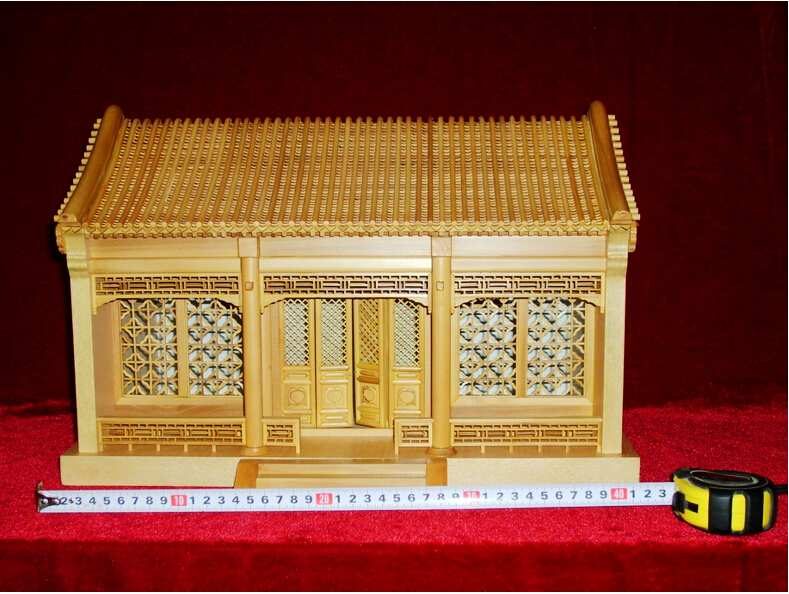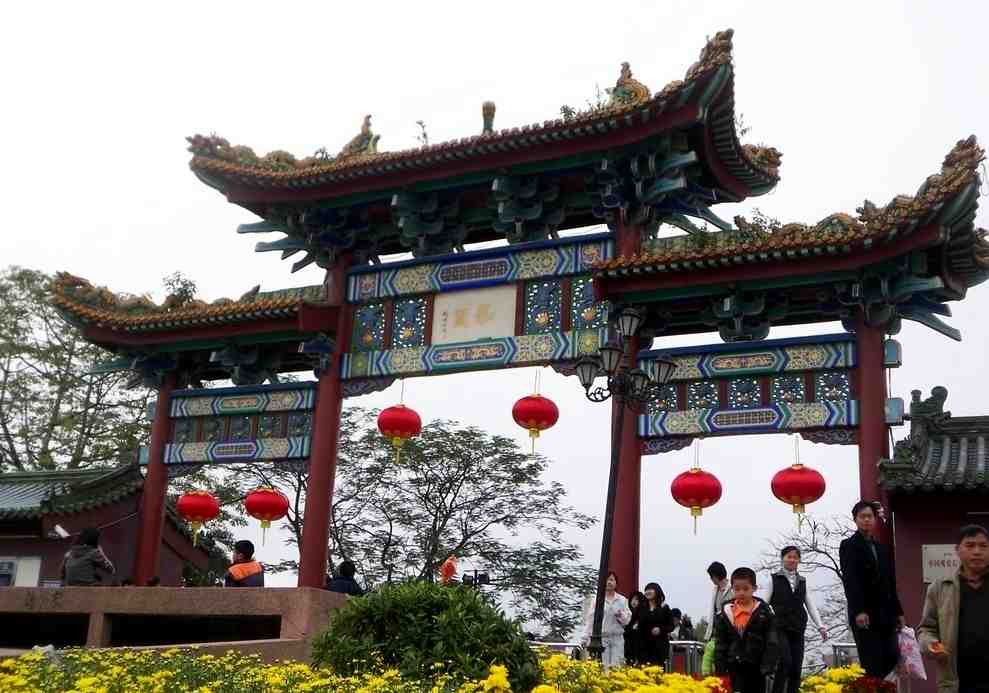
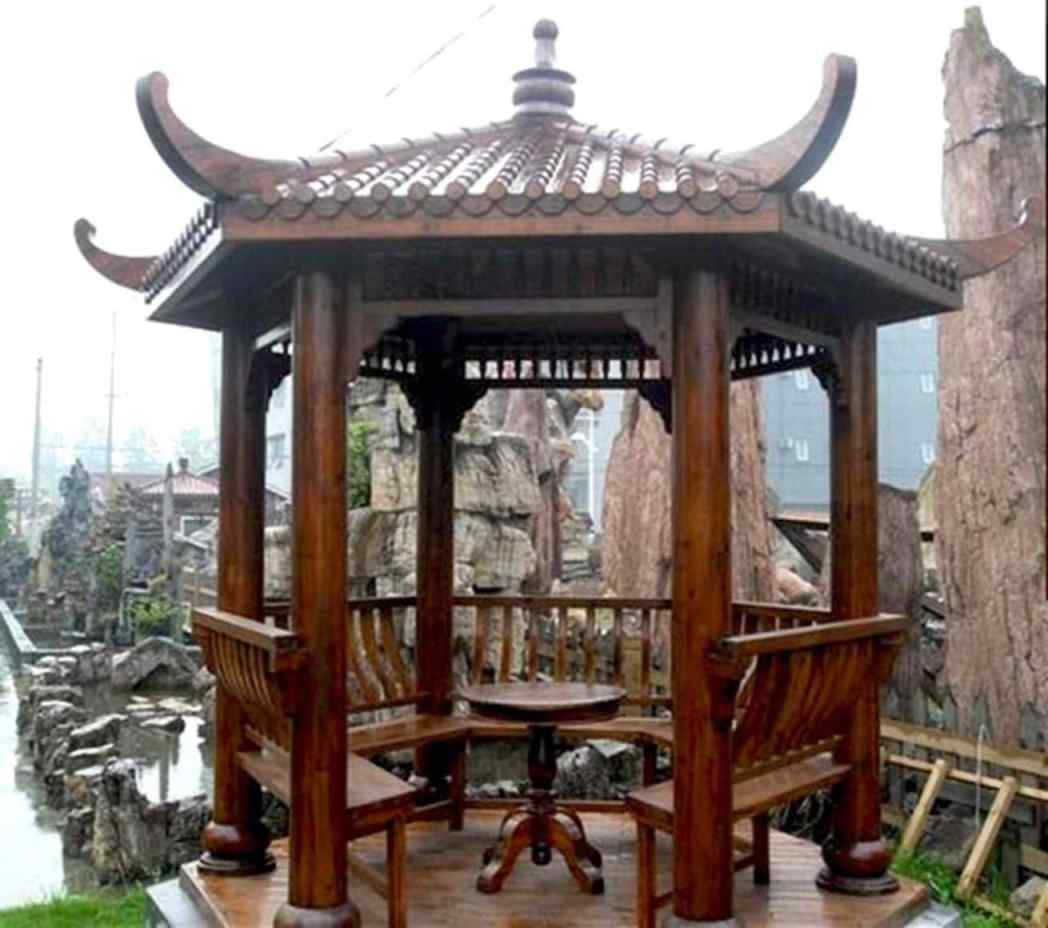
Our traditional Chinese pavilion series represents over four decades of woodcraft mastery, producing elegant hexagonal, square, double-eaved, thatched, and waterside pavilions alongside connected corridor and covered walkway systems. Every structure is engineered using authentic mortise-and-tenon joinery, the same interlocking wooden technique documented in ancient Chinese architectural texts like the Yingzao Fashi, a 12th-century imperial building manual. These pavilions serve as focal points in cultural parks, heritage gardens, resort landscapes, and museum courtyards worldwide.
A Hexagonal with Mortise is a traditional Chinese timber structure assembled with mortise and tenon joinery, without metal nails, combining cultural heritage with modern durability.
At Zhongyu Woodart, our Hexagonal with Mortise is crafted with traditional mortise and tenon joinery, ensuring durability and timeless beauty. Hexagonal with Mortise projects across China have been delivered with 48 years of woodworking heritage.
A Hexagonal with for is a traditional Chinese timber structure assembled with mortise and tenon joinery, without metal nails, combining cultural heritage with modern durability.
At Zhongyu Woodart, our Hexagonal with for is crafted with traditional mortise and tenon joinery, ensuring durability and timeless beauty. Hexagonal with for projects across China have been delivered with 48 years of woodworking heritage.
Each pavilion and corridor unit is designed to be shipped as a flat-pack kit with pre-cut and labeled components. Our senior craftsman says that proper joinery can extend the structural lifespan of a wooden pavilion beyond 60 years when maintained correctly, far surpassing nailed or bolted alternatives that loosen over time. Whether you are sourcing a small garden gazebo or a full scenic corridor network, our factory delivers consistent quality with every order.
| Product Type | Hexagonal Pavilion / Square Pavilion / Double-Eaved Pavilion / Thatched Pavilion / Waterside Pavilion / Corridor / Covered Walkway |
| Standard Hexagon Diameter | 2.5m, 3m, 4m, 5m, 6m (custom sizes available) |
| Standard Square Side Length | 2m, 3m, 4m, 5m |
| Pavilion Height | 3.5m to 6m depending on roof style and number of eaves |
| Corridor Length per Section | 3m standard, up to 20m continuous runs available |
| Corridor Width | 1.5m, 2m, 2.5m |
| Joinery Method | Traditional mortise and tenon, zero metal fasteners in primary structure |
| Primary Materials | Merbau, Teak, Pine, Carbonized Wood, Finnish Birch |
| Roof Options | Glazed tile, copper sheet, thatch composite, tile-free open framework |
| Shipping Format | Flat-pack, numbered components, waterproof wrapped |
| Lead Time | 15 to 35 days depending on size and material |
| MOQ | 1 unit, no minimum for standard designs |
| Export Packaging | ISPM-15 compliant fumigated wood crates |
All dimensions support custom modification, and pricing is calculated based on roof overhang area and material selection.
Traditional Chinese wooden pavilion construction relies on mortise-and-tenon joints rather than nails or screws. A tenon is a protruding tab carved from one timber member, inserted into a matching mortise cavity in the receiving piece. When driven together, the joint becomes mechanically locked, distributing load across the wood grain itself. This method creates structures that can flex slightly under wind or thermal movement without weakening, a critical advantage for outdoor pavilions exposed to seasonal shifts.
According to the Yingzao Fashi, the traditional Chinese architectural standard, column-to-beam connections in pavilion construction require precise proportions between the tenon width and the mortise depth to ensure stability across generations. Our workshop applies these proportional rules alongside modern CNC-assisted cutting, achieving joint tolerances within 1 millimeter. Each component is dry-fit in the factory before packing, so every mortise and tenon aligns correctly on-site without additional carpentry.
The choice of wood directly influences durability. Merbau offers natural resistance to rot and insect damage, making it the most popular choice for outdoor pavilions and covered walkways in humid climates. Teak provides the highest oil content and longest service life, often selected for heritage projects and waterside installations. Pine remains a budget-friendly option for temporary or seasonal pavilion setups, while carbonized wood delivers deep coloration and enhanced weather resistance through controlled heat treatment.
The hexagonal pavilion remains the most recognizable form in Chinese garden architecture. Its six-sided geometry allows panoramic views in every direction and pairs naturally with curved corridors and planted courtyards. A typical 3-meter hexagonal pavilion stands approximately 3.8 meters tall at the ridge, providing shade for four to six seated occupants.
The square pavilion offers a more geometric and formal presence, often placed at cardinal points in temple grounds, courtyard centers, or axis-driven landscape layouts. Its orthogonal footprint simplifies corridor connections and makes it ideal for modular expansion projects.
A double-eaved pavilion features two stacked roof tiers supported by inner and outer column rings. This style commands visual attention and is frequently specified for entrance pavilions, memorial sites, and prominent park landmarks. The additional roof layer improves rain runoff and creates a shaded transitional zone beneath the upper eaves.
The thatched pavilion reproduces the rustic aesthetic of ancient countryside shelters. Modern versions use stabilized thatch-composite roofing rather than natural straw, reducing maintenance while preserving the vernacular appearance sought by rural tourism and heritage-village developments.
Waterside pavilions are engineered for elevated or cantilevered placement near ponds, lakes, and river edges. Foundation brackets and anti-corrosion treatment are prioritized in these units, and many include open-sided designs that invite visitors to sit at water level.
Traditional Chinese pavilions and covered corridors appear across a wide range of outdoor environments. Cultural parks use hexagonal and square pavilions as rest stations and photo landmarks along walking routes. Scenic corridors and covered walkways link pavilion clusters, protecting visitors from rain while framing curated views of water gardens, rock formations, and planting beds.
Resort and hospitality projects install double-eaved and waterside pavilions as architectural anchors for spa terraces, lakeside dining decks, and ceremonial gathering spaces. The aesthetic authority of an ancient pavilion adds cultural depth that modern steel or fiberglass structures cannot replicate.
Museum outdoor campuses and heritage interpretation centers commission pavilion and corridor series as living exhibits of traditional woodworking. These installations allow visitors to experience scale, proportion, and joinery craft firsthand. Our factory has supplied pavilion sets for educational sites across multiple continents, always including assembly guides written in clear technical English.
Every project begins with a design consultation. Clients provide site dimensions, preferred pavilion style, material budget, and functional requirements such as roof color, column spacing, or corridor length. Our design team produces a scaled layout drawing and a materials specification sheet within five business days.
Once the design is approved, production starts in our China workshop. Components are cut, joinery is routed, and each piece is dry-assembled for quality inspection. Final finishing includes surface sanding, primer application, and protective coating suited to the destination climate. Units are disassembled, numbered, and packed into export-grade crates.
A cultural heritage park commissioned a 5-meter hexagonal pavilion with a glazed tile roof and an attached 12-meter covered corridor connecting to a square viewing platform. The project used merbau timber throughout, with carbonized wood accents on the bracket arms. Total lead time was 28 days from contract signing to crate shipment. On-site assembly took three days with two local carpenters following our step-by-step guide. The installed pavilion and corridor system now serves as the park’s primary rest and photography zone, with visitor feedback consistently praising the authentic craftsmanship and structural solidity.
Q: How much is a Chinese pavilion?
A: Prices vary significantly based on material, size, and roof type. A basic 2.5-meter pine hexagonal pavilion starts around 2,000 USD, while a 5-meter merbau double-eaved pavilion with glazed tile roofing ranges from 8,000 to 15,000 USD. Corridor sections are priced per linear meter. Contact us for a precise quote tailored to your specifications.
Q: What size pavilion do I need for my garden?
A: For residential gardens, a 2.5 to 3-meter hexagonal or square pavilion is typically sufficient. Commercial parks and resort landscapes commonly specify 4 to 6-meter units. Consider seating capacity, sightlines, and available footprint when selecting dimensions. We can provide a layout recommendation based on your site plan.
Q: How much is a Chinese pavilion per square meter?
A: Pricing is generally calculated by roof overhang area rather than floor area alone. Approximately, pine structures run 200 to 350 USD per square meter of roof coverage, merbau runs 400 to 700 USD, and teak runs 600 to 1,000 USD. Double-eaved designs carry a premium due to additional joinery and roofing material.
Q: Do you ship internationally and handle export documentation?
A: Yes. All shipments use ISPM-15 fumigated packaging and include a commercial invoice, packing list, and certificate of origin. We ship via sea freight from major Chinese ports and can arrange door-to-door delivery to most destinations within 20 to 35 days.
Q: Is mortise and tenon joinery stronger than metal fasteners?
A: In traditional wooden structures, a properly fitted mortise-and-tenon joint often outlasts metal fasteners because it avoids corrosion, loosening, and wood splitting around screw holes. The joint allows subtle wood movement without compromising integrity, which is why ancient Chinese pavilions have survived for centuries.
Call/WhatsApp: +86 13883366528
Zhongyu Woodcraft – 48 Years Traditional Chinese Woodcraft Factory, Nationwide Installation
| Origin | Chongqing, China |
|---|---|
| Brand | Zhongyu Wood Art |
| Material | Solid wood (pine/fir/cedar/teak available) |
| Craftsmanship | Traditional mortise-and-tenon joinery |
| Surface Finish | Weather-resistant outdoor coating |
| Dimensions | Customizable based on site requirements |
| Installation | On-site installation available worldwide |
| Lead Time | 30 days after deposit and approved drawings (varies with size and complexity) |
| MOQ | 1 set |
| Packaging | Standard export packaging |
| Lifespan | 30-50 years with proper maintenance |
| Warranty | 5-year warranty on structural integrity, lifetime maintenance |
| Warranty Note | We respond to written warranty notices within 5 working days |
Call / WhatsApp same number · Reply within 24 hours
☎ Hotline: +86 13883366528 (WhatsApp same number) · 💬 WhatsApp
几代老师傅 · 在线咨询
We will contact you within 24 hours.