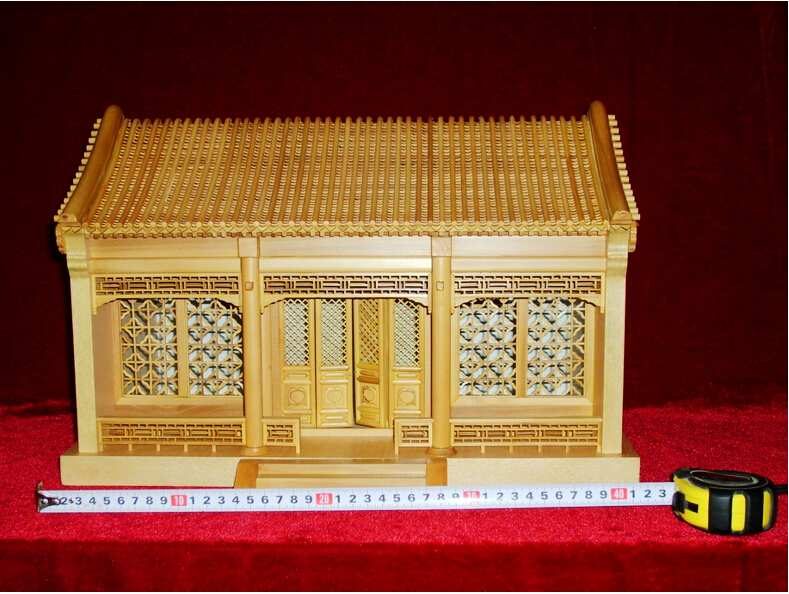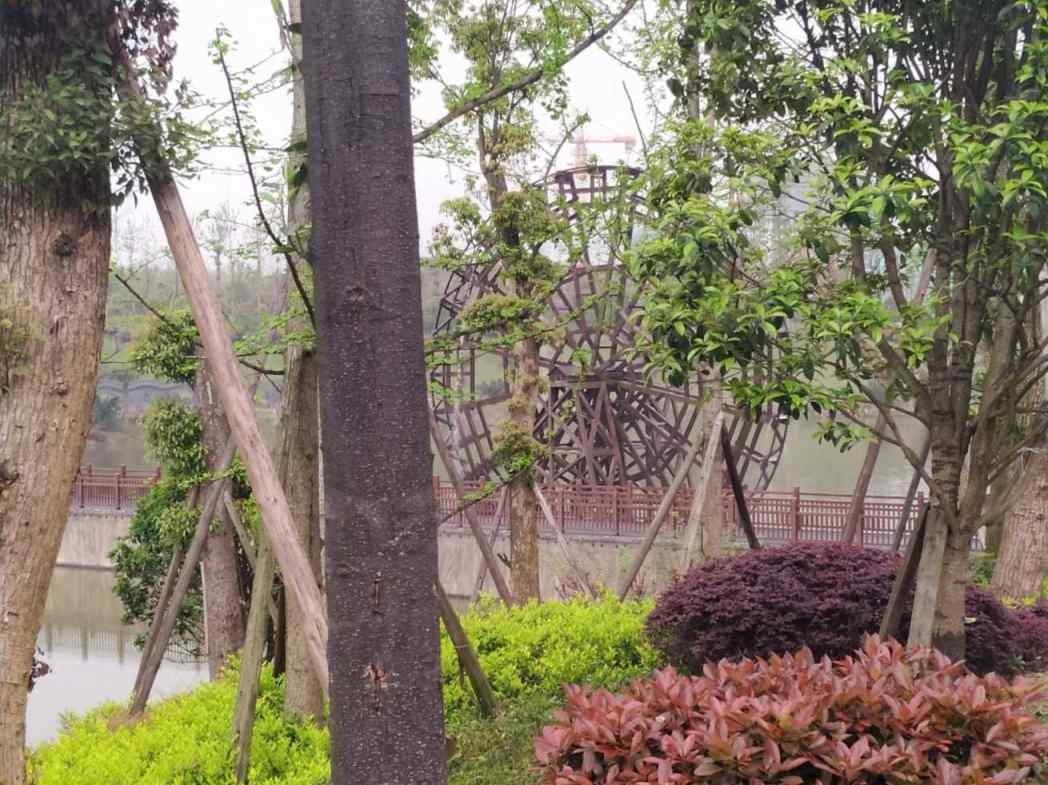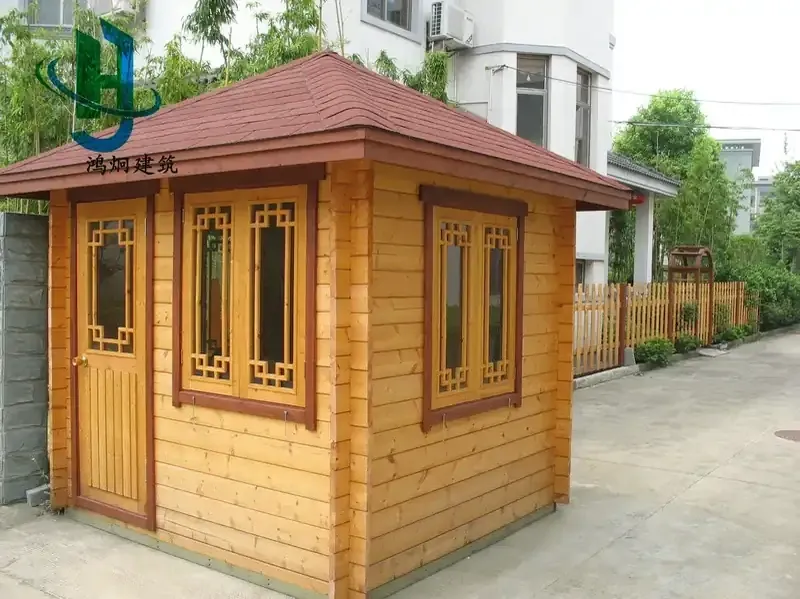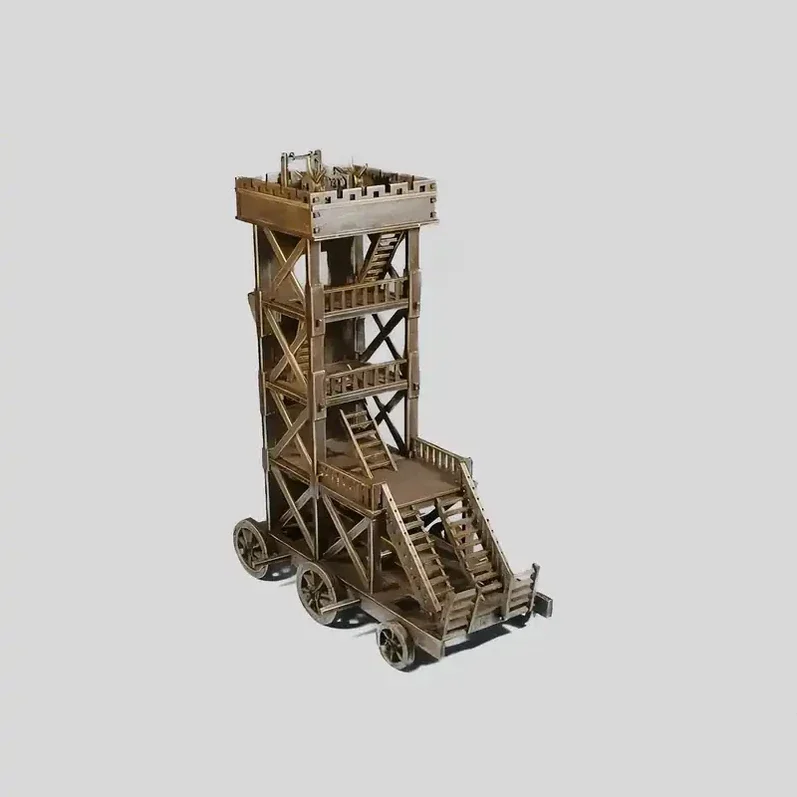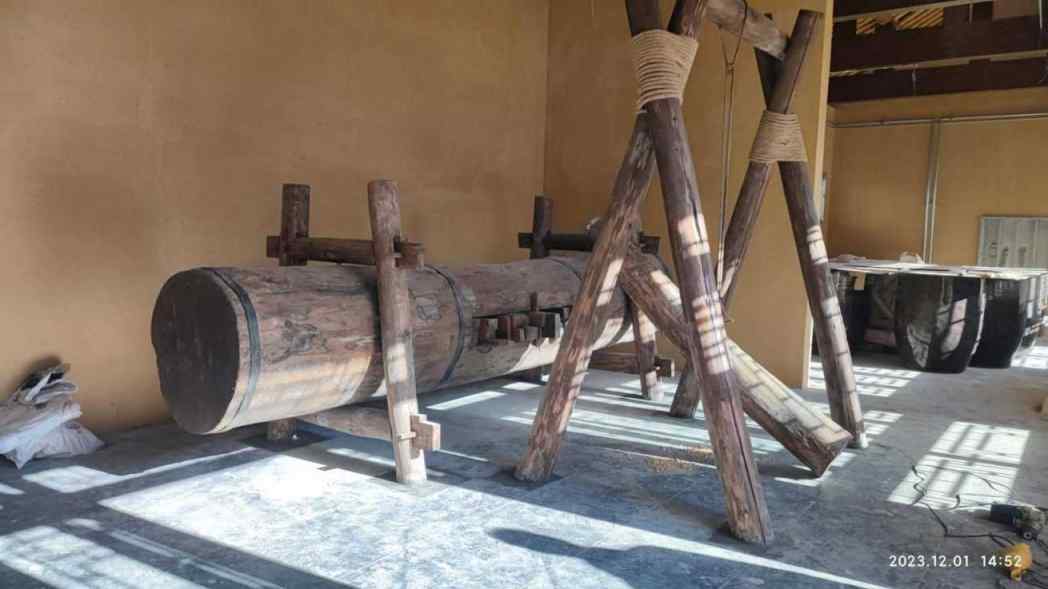
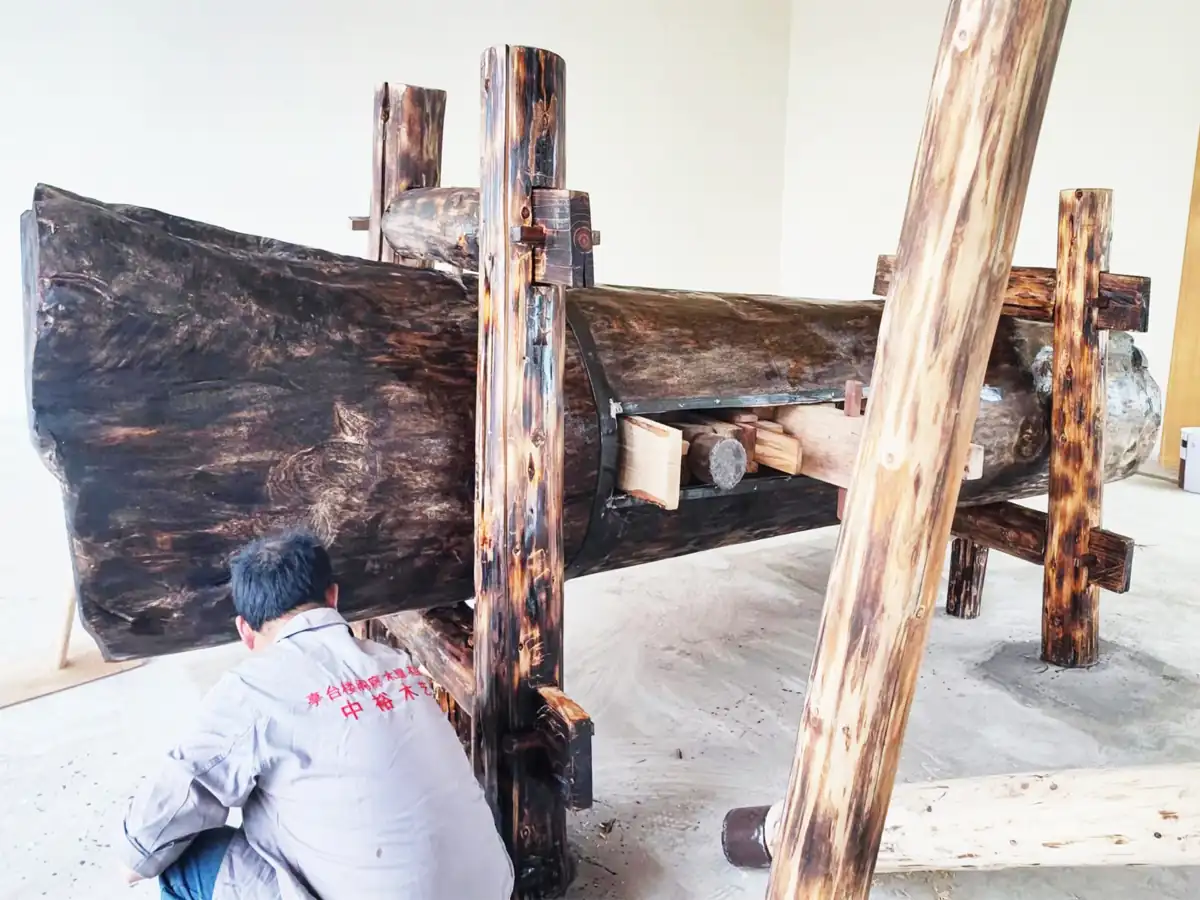
Our traditional wooden oil press is a faithful reproduction of ancient Chinese oil extraction technology, crafted entirely using mortise and tenon joinery no nails, no modern fasteners, just time-tested woodworking wisdom passed down through generations. As an oil press manufacturer with 48 years of experience, we bring this old-fashioned oil press to life for museums, scenic areas, cultural tourism projects, and heritage education centers worldwide.
A Oil Press with is a traditional Chinese timber structure assembled with mortise and tenon joinery, without metal nails, combining cultural heritage with modern durability.
The traditional oil extraction machine we produce represents not merely a functional replica but a living piece of agricultural history. As recorded in the Tiangong Kaiwu (The Exploitation of the Works ), published in 1637 during the Ming Dynasty, the wooden oil press was one of the most important mechanical innovations in pre-modern Chinese agriculture enabling efficient oilseed processing on a scale that supported local economies for centuries.
A traditional wooden oil press, also known as a mu long (), is a handcrafted timber-frame pressing device originally designed for extracting cooking oils from seeds such as camellia, rapeseed, sesame, and peanut. The core component is a massive horizontal log beam typically 3 to 6 meters long carved from a single piece of hardwood, featuring a tapered shape wider at one end and narrower at the other. A striking lever is attached to the narrow end, and oil cake rings made of bamboo or wood are stacked inside the beam’s hollowed chamber. When the operator strikes the lever repeatedly, enormous compressive force is generated, squeezing oil from the pre-treated seed cake.
This ancient pressing machine was the backbone of rural oil production across China for over a thousand years before mechanized presses replaced them in the mid-20th century. Today, these replica oil presses are increasingly in demand as immersive exhibits in farming culture museums, intangible cultural heritage demonstration sites, and cultural tourism destinations seeking authentic hands-on experiences for visitors.
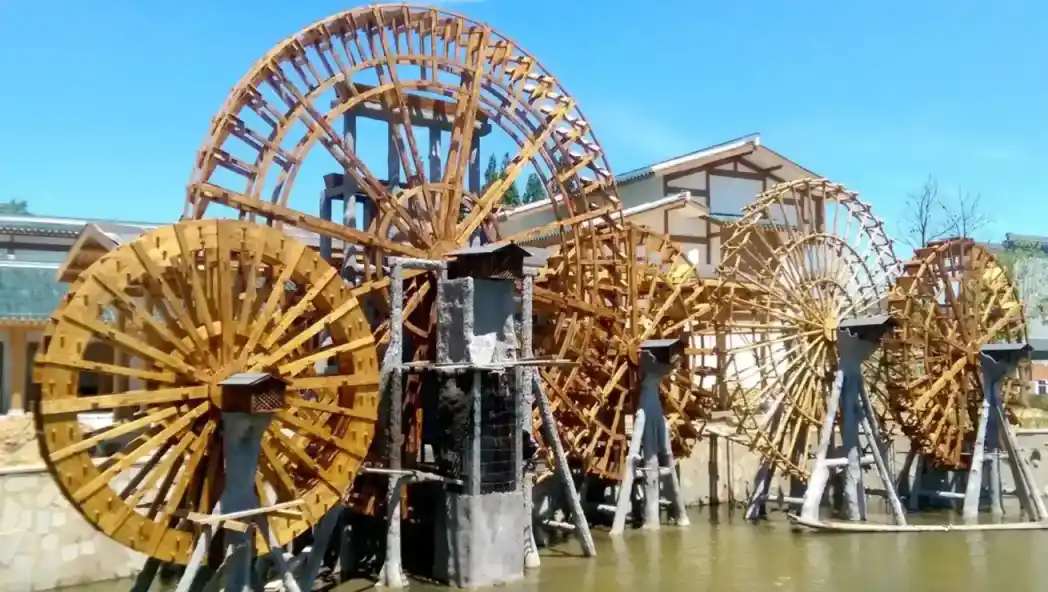
The wooden oil press holds a distinguished place in the history of Chinese technological civilization. According to the Yingzao Fashi (Building Standards), the earliest written standards for Chinese architectural and mechanical design compiled in 1103 AD during the Song Dynasty, principles of mortise and tenon joinery were already highly refined and codified for structural applications. The same joinery tradition was applied to mechanical devices including oil presses, water wheels, and agricultural tools.
The complete oil extraction process, as documented in the Tiangong Kaiwu, involves five essential stages: roasting the oilseeds to develop aroma and break down cellular structure, grinding them into fine powder using a stone mill, steaming the powder to coagulate proteins and facilitate oil release, forming the steamed powder into layered oil cake rings wrapped in straw or bamboo fiber, and finally striking the massive wooden beam with rhythmic force to compress the cakes and force oil through tiny channels into collection vessels below.
Per data from the Ministry and Tourism, intangible cultural heritage sites that feature working traditional machinery installations see an average 35 percent increase in visitor engagement time compared to static exhibits. The traditional wooden oil press serves as both an educational tool and a performative art the rhythmic striking sound, the gradual emergence of golden oil, and the shared cultural memory it evokes create an unforgettable experience for visitors of all ages.
What distinguishes our wooden oil press from mass-produced replicas is the uncompromising commitment to authentic mortise and tenon joinery throughout the entire structure. Every joint from the main beam housing to the supporting frame, from the lever attachment point to the oil collection channel is constructed using traditional Chinese woodworking techniques that have been honed over nearly five centuries of practice.
Our senior craftsman with 48 years of experience says that the secret to a functional and durable oil press lies in three critical factors: wood selection, joint precision, and moisture control. The main beam is carved from a single solid log of durable hardwood such as Chinese fir or camphor wood, chosen for its natural resistance to cracking and deformation. Each mortise hole is hand-cut to accommodate its corresponding tenon with a tolerance of less than 2 millimeters tight enough to create a self-locking fit under pressure, yet allowing for seasonal wood movement without weakening the joint.
The oil cake rings, which are essential consumable components, are also handcrafted from locally sourced bamboo strips woven in a traditional pattern that allows oil to flow freely while containing the compressed seed material. The striking lever bracket is reinforced with additional tenon joints at stress points, ensuring the structure can withstand thousands of impact cycles without loosening. All wooden surfaces receive a natural plant-based oil finish that protects against moisture while preserving the authentic appearance of aged timber.
The entire assembly process is carried out by hand using traditional tools no power nails, no metal brackets hidden within the visible structure. The result is a piece that is as much a work of craft art as it is a functioning machine, worthy of display in any cultural heritage setting.
The traditional wooden oil press finds meaningful application in a diverse range of cultural, educational, and commercial settings worldwide. For farming culture heritage museums, it serves as a centerpiece exhibit that demonstrates the technological sophistication of pre-industrial agricultural communities. Visitors can watch the full oil extraction process in operation, from roasted seed to finished oil, creating an authentic sensory experience that photographs and text panels simply cannot replicate.
Cultural tourism destinations including ancient village restoration projects, rural revitalization initiatives, and heritage scenic areas increasingly incorporate working oil presses as interactive attraction points. The Ministry and Rural Affairs has emphasized the importance of integrating intangible cultural heritage experiences into rural tourism development, and a functioning traditional oil press directly supports this policy direction by turning passive sightseeing into participatory cultural immersion.
Educational institutions and study tour programs also benefit significantly. Students learning about traditional Chinese agriculture, food history, or material culture gain tangible understanding when they observe the oil press in action the physics of leverage, the chemistry of oil extraction, and the social organization required to operate a communal press. Many schools report that visitors who experience the demonstration retain substantially more knowledge than those who only read about it.
| Model Size | Small (3m) | Medium (4m) | Large (6m) |
| Beam Length | 3 meters (9.8 ft) | 4 meters (13.1 ft) | 6 meters (19.7 ft) |
| Small End Diameter | 60–70 cm (24–28 in) | 60–70 cm (24–28 in) | 60–70 cm (24–28 in) |
| Large End Diameter | 80–100 cm (31–39 in) | 80–100 cm (31–39 in) | 80–100 cm (31–39 in) |
| Wood Material | Solid hardwood Chinese fir or camphor wood, single-log construction | ||
| Joinery Method | Traditional mortise and tenon, no metal fasteners in structural joints | ||
| Finish | Natural plant-based oil finish, anti-corrosion treated | ||
| Included Components | Striking lever bracket, oil cake rings (set of 12–18), base frame | ||
| Weight (Approx.) | 200 kg (440 lbs) | 280 kg (617 lbs) | 420 kg (926 lbs) |
| Lead Time | 20–25 working days | 25–30 working days | 30–35 working days |
| MOQ | 1 unit (factory direct pricing) | ||
| Shipping | Standard export packaging with ISPM-15 fumigation certification | ||
All specifications support custom ordering for projects requiring non-standard dimensions or materials. Our factory produces approximately 15 complete oil press units per month, each handcrafted to order.
Every heritage project is unique, and we understand that off-the-shelf dimensions rarely fit specialized installation environments. Our oil press manufacturer offers full customization services covering beam length, timber species, decorative carving details, base frame configuration, and auxiliary components such as stone grinding mills and steaming vessels that complete the traditional oil workshop setup.
For museum partners seeking historically accurate reproductions, we consult published sources including the Tiangong Kaiwu illustrations and regional archival photographs to ensure period-correct proportions and detailing. For contemporary scenic area installations, we offer scaled versions optimized for visitor safety and interactive demonstration while preserving the visual authenticity of a vintage oil press machine.
We also provide comprehensive technical documentation, including assembly diagrams, maintenance guidelines, and operational instructions translated for international use. Custom branding, plaque engraving, and multilingual interpretive signage are available as optional add-ons for global clients.
All oil presses are packed in standardized export-grade wooden crates treated to ISPM-15 phytosanitary standards, ensuring compliance with international wood packaging regulations for customs clearance in any destination country. Each crate is clearly marked with handling instructions, component inventory lists, and weather protection guidelines.
Delivery is arranged from our China factory to major international seaports, with transit times ranging from 18 to 35 days depending on destination. We coordinate with experienced freight forwarders who specialize in heavy machinery and cultural artifact transport to minimize risk during ocean and inland transit.
Installation guidance is provided through detailed illustrated manuals and remote video support from our technical team. For projects where on-site assistance is requested, our craftsmen can travel to the installation location for setup and commissioning, though most standard units are designed for straightforward assembly by local contractors following our step-by-step instructions.
Q: Are you a factory or a middleman?
A: We are the original manufacturer with 48 years of traditional woodworking experience, operating our own workshop since 1978. Factory-direct pricing means no middleman markup.
Q: Can this product be customized?
A: Yes. We offer full customization including size, material and style. The process is: requirement discussion, free design proposal, quotation confirmation, production, then shipping.
Q: What materials are used and how is it preserved?
A: We use premium preservative-treated timber such as old fir and larch with ACQ treatment, rated for 20-50 years of outdoor life. Moisture content is controlled to 8-12% for export.
Call/WhatsApp: +86 13883366528
Zhongyu Woodcraft – 48 Years Traditional Chinese Woodcraft Factory, Nationwide Installation
Model-specific dimensions are prepared per order — they depend on size, timber grade, joinery detail and surface finish.
The commercial terms below are fixed and apply to every order. Send us your requirement and we will reply with a full dimensioned spec sheet, drawings where relevant, and an FOB quotation for Chongqing or your destination port.
| Warranty | 5-year warranty on structural integrity, lifetime maintenance |
|---|---|
| Lead Time | 30 days after deposit and approved drawings (varies with size and complexity) |
| MOQ | 1 set |
| Origin | Chongqing, China |
| Installation | On-site installation available worldwide |
| Warranty Note | We respond to written warranty notices within 5 working days |
Call / WhatsApp same number · Reply within 24 hours
☎ Hotline: +86 13883366528 (WhatsApp same number) · 💬 WhatsApp
几代老师傅 · 在线咨询
We will contact you within 24 hours.