What Are Traditional Chinese Agricultural Study Tools?
Traditional Chinese agricultural study tools are wooden replicas of ancient farming implements designed specifically for educational purposes in schools, museums, cultural parks, and urban public spaces. They transform the intangible heritage of Chinese farming civilization into tangible, touchable, and interactive learning objects. Unlike modern plastic educational toys, these wooden replicas carry the weight of thousands of years of agricultural wisdom, crafted using time-honored mortise-and-tenon joinery and natural wood treatments. For cities like Hohhot in Inner Mongolia, where agricultural education meets diverse ethnic cultural traditions, these wooden farming tools serve as bridges between nomadic heritage and agrarian knowledge. They allow students and visitors to physically engage with historical technologiesgrain threshers, winnowing machines, oil presses, and hand toolsthat shaped Chinese civilization. The key value lies in their authenticity: every piece is made from solid wood using traditional techniques passed down through generations of Chinese craftsmen.
The 48-Year Craftsmanship Behind Each Piece
Historical Roots in Ancient Texts
The design philosophy of these agricultural study tools traces back to ancient Chinese technical literature. In the Ming Dynasty encyclopedia Tiangong Kaiwu (), titled “The Exploitation of the Works of Nature,” Song Yingxing documented over 130 agricultural and handicraft technologies with precise illustrations. His chapter on grain processing described the wooden treadle thresher, the hand-cranked winnower, and the screw-press oil milleach mechanism that modern replicas faithfully reproduce. This 1637 text remains the most comprehensive record of pre-modern Chinese agricultural technology, and every Zhongyu Woodcraft replica is cross-referenced against its original descriptions.
Mortise-and-Tenon Joinery: The Structural Foundation
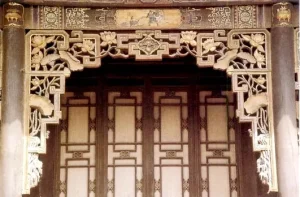
What separates genuine wooden replicas from mass-produced imitations is the joinery. Traditional Chinese mortise-and-tenon jointssunmao ()require no nails, glue, or metal fasteners. The joint works through precisely cut protrusions (tenons) that fit into corresponding recesses (mortises), creating connections that actually strengthen with use and seasonal wood movement. For agricultural tools that students will handle, pull, and operate repeatedly, this durability is essential. A properly crafted wooden thresher using sunmao joints can outlast its plastic counterpart by decades. Zhongyu Woodcraft’s master craftsmen, whose lineage stretches back to 1978, employ over 12 distinct joint types depending on the tool’s function. The grain basket of a winnower requires a different joint configuration than the handle of a hand sickle or the frame of a treadle thresher. Each joint is cut by hand, fitted, and test-assembled before final production.
Anti-Insect Treatment: Protecting Heritage Wood
One of the most critical technical challenges in producing wooden educational tools for outdoor and high-traffic indoor environments is preventing insect damage. Termites, powderpost beetles, and wood-boring insects can destroy untreated wooden artifacts within months. Zhongyu Woodcraft addresses this through a multi-stage anti-insect treatment process that combines traditional and modern techniques. The treatment begins with selecting appropriate wood specieschamomile wood () and meranti () are preferred for their natural resistance properties. Chamomile wood contains inherent aromatic compounds that repel insects, a property documented in Chinese pharmacopoeia texts. The wood undergoes kiln drying to reduce moisture content to 8-12%, creating an environment inhospitable to insect larvae. This is followed by pressure impregnation with eco-friendly preservatives that penetrate the wood cellular structure without leaving toxic surface residuesessential for tools that children will handle directly. The final stage involves a surface treatment using natural tung oil and beeswax blends, which provides additional moisture resistance while maintaining the wood’s natural appearance and tactile quality. This treatment cycle ensures that wooden agricultural tools installed in urban parks across northern China, including Hohhot’s cold climate with its wide temperature swings, remain structurally sound for 15-20 years with minimal maintenance.
Core Product Categories for Educational Settings
Traditional Oil Press Exhibition Units
The wooden screw oil press (longzha ) is one of the most impressive educational installations. Based on designs described in ·, this full-scale working replica demonstrates the mechanical principle of screw pressure extraction that has been used in China for over 1,800 years. Students can observe how wooden screws, leverage arms, and compression frames work together to extract oil from sesame, peanut, or rapeseed kernels. The entire mechanism is constructed using mortise-and-tenon joints, with bronze or iron hardware accents that reflect historical accuracy.
Water-Powered Milling and Threshing Sets
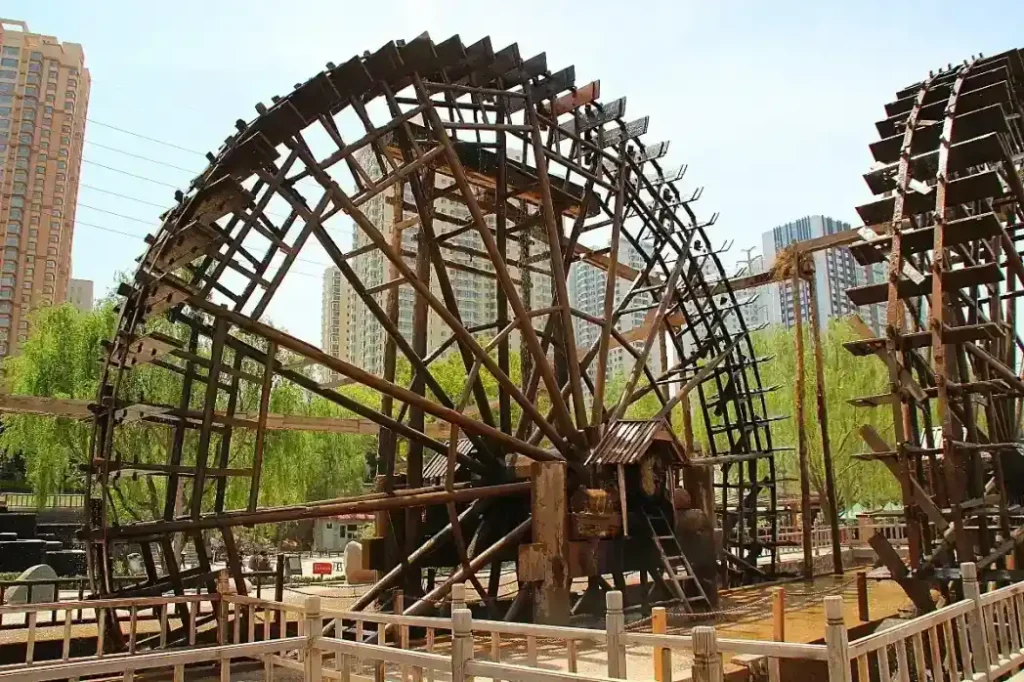
Water-powered grain processing machines represent the pinnacle of ancient Chinese agricultural engineering. The vertical water wheel (shuiche ) drives a series of cams and rods that operate threshing drums, milling stones, and bellowsall in a single integrated system. For educational installations, Zhongyu Woodcraft produces scaled replicas that demonstrate these mechanical relationships without requiring actual water flow, using hand-cranked alternatives that preserve the learning experience.
Hand Tool Collections for Interactive Learning
Smaller implementswooden hoes, rakes, winnowing fans, grain measures, and seed drillsform the backbone of hands-on agricultural education programs. Each tool is sized proportionally for student use, with smooth-finished edges and ergonomic handles. The collections typically include 20-30 individual pieces covering the complete cycle of traditional grain cultivation: land preparation, sowing, weeding, harvesting, threshing, winnowing, and storage.
Applications in Urban Parks and Cultural Tourism
Hohhot’s Cultural Education Landscape
Hohhot, the capital of Inner Mongolia Autonomous Region with a population exceeding 3.4 million, presents a unique opportunity for agricultural cultural education. As a city where nomadic and agrarian traditions intersect, Hohhot’s urban parks and cultural centers can use wooden agricultural tools to teach about China’s diverse farming heritageparticularly the grain cultivation practices of the Yellow River basin that influenced agricultural development across northern China. Urban parks in Hohhot, such as those along the Tuoluo River () plain, can integrate agricultural education zones featuring these wooden replicas. The tools serve multiple functions: they provide tactile learning experiences for school groups, create Instagram-worthy cultural installations for tourists, and preserve intangible heritage in public spaces where younger generations might otherwise never encounter traditional farming technology.
Integration with Study Tour Curricula
Modern Chinese educational policy mandates that primary and secondary schools incorporate labor education (laodong jiaoyu ) into their curricula. The Ministry of Education’s 2020 guidelines require schools to allocate dedicated hours for hands-on practical activities. Wooden agricultural study tools directly support this requirement by providing the physical equipment needed for classroom-based agricultural history lessons, seasonal farming simulations, and traditional craft workshops. For study tour operators and cultural tourism projects, these tools enable the creation of immersive agricultural experience zones. Visitors can operate replica oil presses, thresh grain with wooden flails, and learn about the (solar terms) through seasonal farming tool displays. This transforms passive museum viewing into active cultural participation.
Scenic Area and Museum Installations
Beyond parks and schools, these wooden agricultural tools serve as exhibition pieces in museums, cultural centers, and scenic area visitor centers. Their authenticityhandcrafted from solid wood using traditional methodsgives them display value that far exceeds that of mass-produced plastic replicas. Museums can arrange them chronologically or functionally, creating narratives about the evolution of Chinese agricultural technology from the Neolithic period through the Qing Dynasty.
Project Case: Hohhot Agricultural Culture Education Zone
A recent project in Hohhot’s cultural tourism development zone illustrates the practical application of these principles. The 2,800-square-meter agricultural education zone features a complete set of Zhongyu Woodcraft’s farming tool replicas, including a working wooden oil press, a treadle thresher display, a collection of 28 hand tools, and a seasonal farming calendar installation. The project was designed to serve both local school groups and cultural tourists visiting the region. The installation uses locally sourced and treated wood combinations suitable for Hohhot’s continental climate, with winter temperatures dropping below -20°C and summer temperatures reaching 30°C. The anti-insect treatment and wood selection ensure that outdoor displays remain stable through extreme temperature cycles. The project team reported that student engagement rates increased by an estimated 40% compared to traditional static museum displays, with children spending significantly more time interacting with the working replicas than with informational plaques.