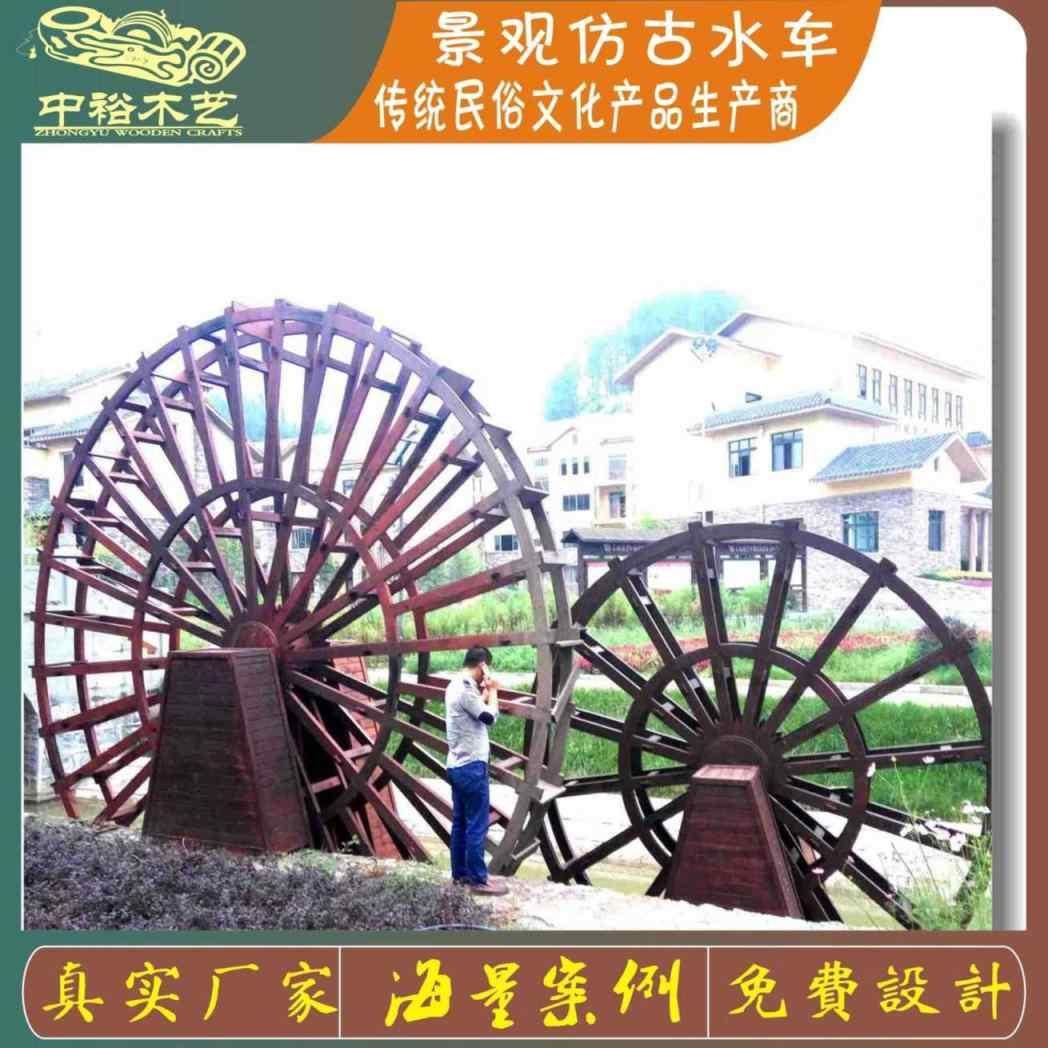
A giant wooden waterwheel rotating slowly against a sunset sky. Visitors line up hours to capture the perfect photo. This is no longer a scene from a distant heritage site it is the new standard for what makes a park truly unforgettable. Over the past decade, custom wooden landscape installations have transformed ordinary recreational spaces into viral attractions that draw tens of thousands of visitors and generate millions of social media impressions.
A How Giant Waterwheels is a traditional Chinese timber structure assembled with mortise and tenon joinery, without metal nails, combining cultural heritage with modern durability.
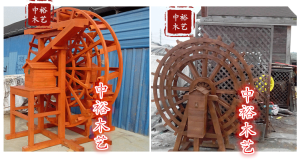
At Zhongyu Woodart, our How Giant Waterwheels is crafted with traditional mortise and tenon joinery, ensuring durability and timeless beauty. How Giant Waterwheels projects across China have been delivered with 48 years of woodworking heritage.
The secret lies not in flashy metal or concrete, but in an ancient craft refined over centuries. Chinese woodworking tradition, documented in classical texts like the Tiangong Kaiwu, teaches us that wood possesses warmth, movement, and timelessness that synthetic materials simply cannot replicate. When a master craftsman builds a waterwheel using traditional mortise-and-tenon joinery without a single nail the result is a timber landmark that becomes both a functional sculpture and an immersive scenic photo spot.
In this article, we explore how giant wooden waterwheels and similar landscape installations are designed, crafted, and installed to create unforgettable visitor experiences. We draw on 48 years of factory experience, classical Chinese craft records, and real-world project data to show you exactly what makes a wooden installation go viral.
Historical Origins: From Ancient Irrigation to Modern Art Installation
The wooden waterwheel is one of humanity oldest engineering inventions. Early versions appeared in agricultural societies, the Middle East, and Europe more than two thousand years ago. In China, detailed records of water-driven machinery appear in classical texts such as the Tiangong Kaiwu, a 17th-century encyclopedia of technology and craftsmanship. Per these records, waterwheels were not merely irrigation tools they were combining hydraulic engineering, structural mathematics, and aesthetic design.
Traditional Chinese waterwheels, also known as in classical literature, served dual purposes. They lifted water from rivers and streams to irrigate terraced fields, and they powered grain mills, oil presses, and forges. The giant could reach diameters exceeding three meters, with dozens of bamboo or wooden paddles arranged in a continuous chain that rotated with the current. Each component was cut, fitted, and assembled using mortise-and-tenon joints a technique that allows wood to expand and contract with seasonal humidity changes without loosening or cracking.
What makes this tradition particularly relevant for today landscape designers is that these ancient waterwheels were already “scenic photo spots” in their own era. Travelers sketched them, poets wrote about them, and merchants featured them on trade routes as landmarks. The waterwheel was never just a machine it was a cultural symbol of harmony between human engineering and natural forces. Translating this philosophy into modern park design means creating installations that feel both timeless and instantly shareable.
Craftsmanship & Techniques: The Mortise-and-Tenon Secret Behind Viral Installations
The difference between a mass-produced wooden structure and a handcrafted timber landmark comes down to joinery. Traditional Chinese mortise-and-tenon craftsmanship, recognized as an intangible cultural heritage, relies on interlocking wood pieces cut with precision tolerances measured in millimeters. A tenon a protruding male joint fits snugly into a mortise a matching female cavity creating a connection that actually strengthens over time as the wood compresses and settles.
Our senior craftsman with 48 years of experience explains that this technique requires deep understanding of wood grain direction, moisture content, and seasonal behavior. According to our master craftsman, “A properly fitted mortise-and-tenon joint in outdoor conditions can last 50 to 100 years without metal fasteners. The joint breathes with the wood rather than fighting against it.” This is why installations built with traditional joinery develop character and stability that nailed or screwed assemblies never achieve.
For a giant wooden waterwheel, the craftsmanship process involves approximately 200 to 500 individual wooden components, each cut, shaped, and test-fitted by hand before final assembly. The main wheel frame typically uses premium hardwoods such as pressure-treated pine, balau, or carbonized eucalyptus, chosen for their natural resistance to rot, insects, and UV degradation. The water-paddles and chain mechanism require specific grain orientations to handle the repeated wet-dry cycling without warping.
According to the Ministry and Tourism 2024 cultural industry report, custom wooden landscape installations in scenic areas generated over 12 billion yuan in additional tourism revenue nationwide, with visitor dwell time increasing by an average of 40 minutes per visit when interactive wooden structures were present. The data confirms what experienced designers already know: visitors do not simply look at a beautiful wooden installation they linger, they touch it, they photograph it from every angle, and they return to share it online.
Modern Applications: Transforming Parks, Cultural Creative Spaces, and Wedding Venues
Today giant wooden waterwheels serve far beyond their original agricultural function. They operate as centerpiece installations in cultural creative parks, heritage-themed resorts, riverside promenades, and destination wedding venues. A well-designed waterwheel installation creates multiple layered experiences: the visual drama of its rotating form, the auditory rhythm of splashing water, the tactile invitation to walk alongside or even step onto a viewing platform, and the photogenic quality that naturally encourages social sharing.p>
Beyond waterwheels, modern wooden landscape installations encompass a broad spectrum of forms. A towering wooden windmill with sweeping blades becomes a directional landmark visible from miles away. A sculptural wooden tower rising above a garden creates vertical emphasis and panoramic viewing opportunities. A massive wooden slide integrated into a natural landscape offers playful interaction for families while maintaining an elegant aesthetic profile. Each of these installations shares the same design philosophy rooted in traditional craftsmanship, elevated by contemporary form, optimized for visitor engagement.
For cultural creative parks and scenic destinations, the strategic placement of these installations follows three principles. First, the installation must anchor a spatial sequence visitors should encounter it as a deliberate destination, not as an afterthought. Second, it must offer multiple photographic perspectives, ensuring that every visitor can find a composition that feels personal and striking. Third, it must integrate environmentally, using natural materials and site-responsive design that complements existing topography and vegetation.
A photo wall constructed from reclaimed timber and traditional joinery techniques can serve as a striking backdrop for portraits and events. A wishing wall installation, where visitors hang small wooden plaques inscribed with personal messages, creates emotional resonance that transforms a simple structure into a living cultural artifact. These installations work because they engage visitors on intellectual, emotional, and sensory levels simultaneously.
Design & Customization: Building Installations That Fit Your Site Perfectly
Every park, scenic area, and cultural venue has unique constraints available space, water source proximity, prevailing wind patterns, soil conditions, and visitor flow dynamics. A custom wooden landscape installation begins with thorough site analysis and client consultation. Our team evaluates dimensions, load requirements, environmental exposure, and aesthetic goals before producing detailed technical drawings and material specifications.
The customization process typically unfolds across four phases. Concept design establishes the overall form, scale, and visual impact. Technical engineering calculates structural loads, joint specifications, and material selections based on local climate data. Fabrication occurs in our factory under controlled conditions, with each component numbered and dry-assembled for quality verification. On-site installation follows, where our experienced crew assembles the structure using traditional methods supplemented by modern safety reinforcement where required.
| Installation Type | Typical Height | Typical Diameter | Weight Range | Lead Time | Material Options |
| Giant Wooden Waterwheel | 3m – 8m | 2m – 5m | 500kg – 3,000kg | 25 – 40 days | Pressure-treated pine, Balau, Carbonized eucalyptus |
| Wooden Windmill Tower | 4m – 12m | Blade span 3m – 8m | 800kg – 4,000kg | 30 – 45 days | Same as above + Scandinavian pine |
| Wooden Slide Sculpture | 2m – 6m | Width 1m – 2.5m | 300kg – 1,500kg | 20 – 35 days | Hardwood + stainless steel slides |
| Timber Photo Wall | 1.5m – 4m | Length 2m – 10m | 150kg – 800kg | 15 – 25 days | Reclaimed timber, Balau, Teak |
| Wooden Swing Installation | 2.5m – 5m | Span 1.5m – 4m | 200kg – 1,000kg | 18 – 30 days | Pressure-treated pine, Cedar |
Above parameters support project-specific customization. Exact specifications depend on site conditions, structural requirements, and aesthetic preferences.
Case Study: Converting an Ordinary Riverside Park Into a Regional Scenic Photo Spot
Frequently Asked Questions
Q: What is the minimum order quantity (MOQ)?
A: Our MOQ is 1 unit for standard designs, with volume pricing available from 3 units. We keep standard components in stock to serve trial orders and repeat customers equally well.
Q: What are your payment terms?
A: Standard terms are 30% T/T deposit to confirm the order and 70% balance before shipment. For long-term partners we can discuss L/C at sight or net-30 terms.
Q: Do you provide installation guidance?
A: Yes. Every shipment includes detailed assembly drawings and step-by-step video guidance. For large pavilions and heritage structures, on-site installation supervision is available.
Related Articles
Related Articles
Looking for a Unique Park Attraction: Custom…How to Choose a Traditional Waterwheel: 3 Expert Tips…Call/WhatsApp: +86 13883366528
Zhongyu Woodcraft – 48 Years Traditional Chinese Woodcraft Factory, Nationwide Installation