Mortise and tenon joinery, a hallmark of traditional Chinese carpentry, has found renewed relevance in modern city architecture. This ancient interlocking technique offers unparalleled durability and aesthetic appeal. We explore how these pavilions are adapted for global urban landscapes.
可定制品类
中裕木艺支持榫卯、古建亭廊、古建凉亭、六角亭等多种品类定制,均可按图定制、全国上门安装,48年榫卯老厂工艺传承。
Historical Origins: The Timeless Art
The mortise and tenon joint dates back thousands of years, perfected during the Ming and Qing dynasties. This method fits a projecting tenon into a corresponding mortise, creating strong, stable connections. Our factory has perfected this craft for 48 years, embodying traditional artistry while meeting modern standards.
Craftsmanship & Techniques: The Heart
Each joint is meticulously handcrafted by artisans with decades of experience. We select fir, pine, or cedar for strength and durability, shaped using traditional tools. The joinery expands and contracts with humidity and temperature changes, making it ideal for various climates worldwide.
Modern Applications: Bridging Tradition and Innovation
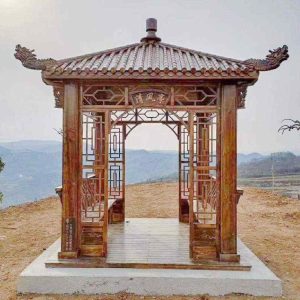
Traditional Chinese pavilions are reimagined for modern urban environments, serving as cultural landmarks and community gathering spaces. Our pavilions have been installed in global locations from public parks to private gardens, each tailored to client needs.
Design & Customization: Tailoring to Your Vision
We offer extensive customization in size, shape, and materials. Clients may choose from traditional oil-paint color palettes or clear protective coatings. Every detail is meticulously executed, resulting in a functional work of art.
Case Study: A Global Success Story
Our notable project featured a 5-meter diameter pavilion with 3-meter height, crafted from premium fir wood using traditional joinery. Completed in approximately 20 days, it has become a focal point drawing visitors worldwide.