Folk Wooden Ornaments in Urumqi: Reviving Tian Gong Kai Wu Heritage for Cultural Tourism Streets Meta Discover how traditional Chinese folk wooden ornaments bring Tian Gong Kai Wu heritage to life in Urumqi cultural tourism streets. Explore authentic craftsmanship, material wisdom, and custom design from a 48-year Chongqing workshop.
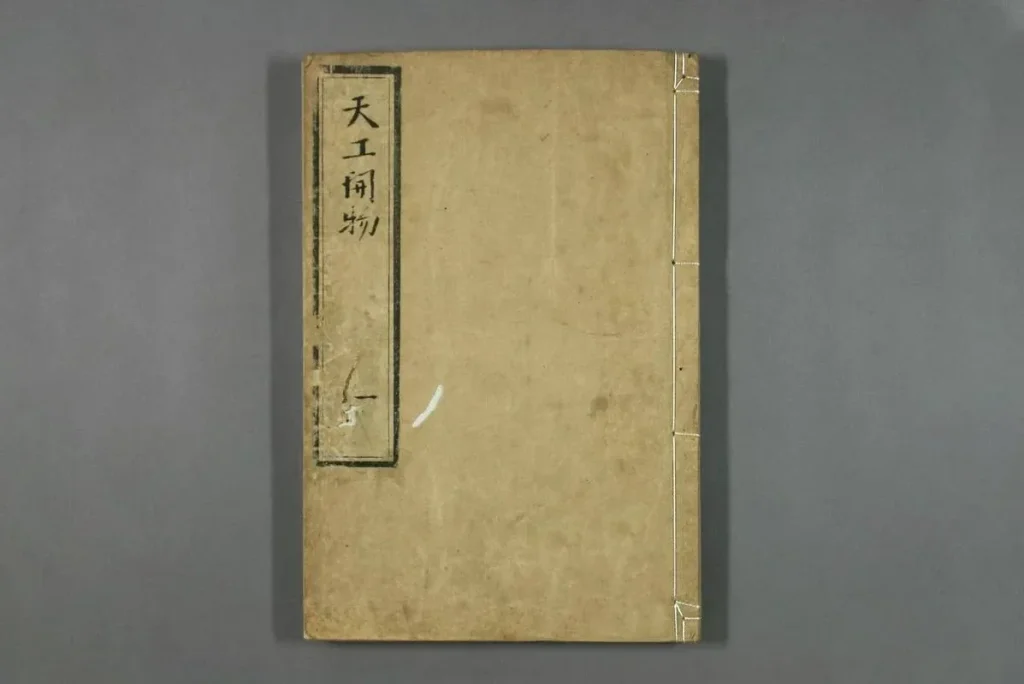
Folk wooden ornaments are handcrafted decorative and functional piecessuch as carved panels, agricultural tool replicas, waterwheel miniatures, and rustic furniturethat embody China’s agrarian heritage and are now essential storytelling elements in cultural tourism streets. For Urumqi’s rapidly growing cultural districts, these ornaments offer a tangible connection to the wisdom documented in Tian Gong Kai Wu (, “The Works of Heaven and the Inception of Things”), the 1637 Ming Dynasty encyclopedia of technology by Song Yingxing. This article explores how Urumqi planners, designers, and cultural entrepreneurs can authentically integrate these piecescrafted by Zhongyu Woodcraft, a Chongqing workshop with 48 years of continuous tradition since 1978into tourism streets that attract visitors and preserve heritage
Cultural tourism streets across China are undergoing a renaissance. According to the Ministry of Culture and Tourism, cultural tourism accounted for over 45% of domestic trips in 2024, and Urumqiwith its unique position as a Silk Road hubhas invested heavily in themed districts that celebrate both Xinjiang’s ethnic diversity and broader Chinese cultural heritage. However, many projects struggle with authenticity: mass-produced plastic replicas fail to capture the warmth and narrative power of genuine woodcraft. This is where traditional folk wooden ornaments, grounded in the techniques of Tian Gong Kai Wu, offer a differentiated path forward.
The Tian Gong Kai Wu Legacy: A Blueprint for Agrarian Design
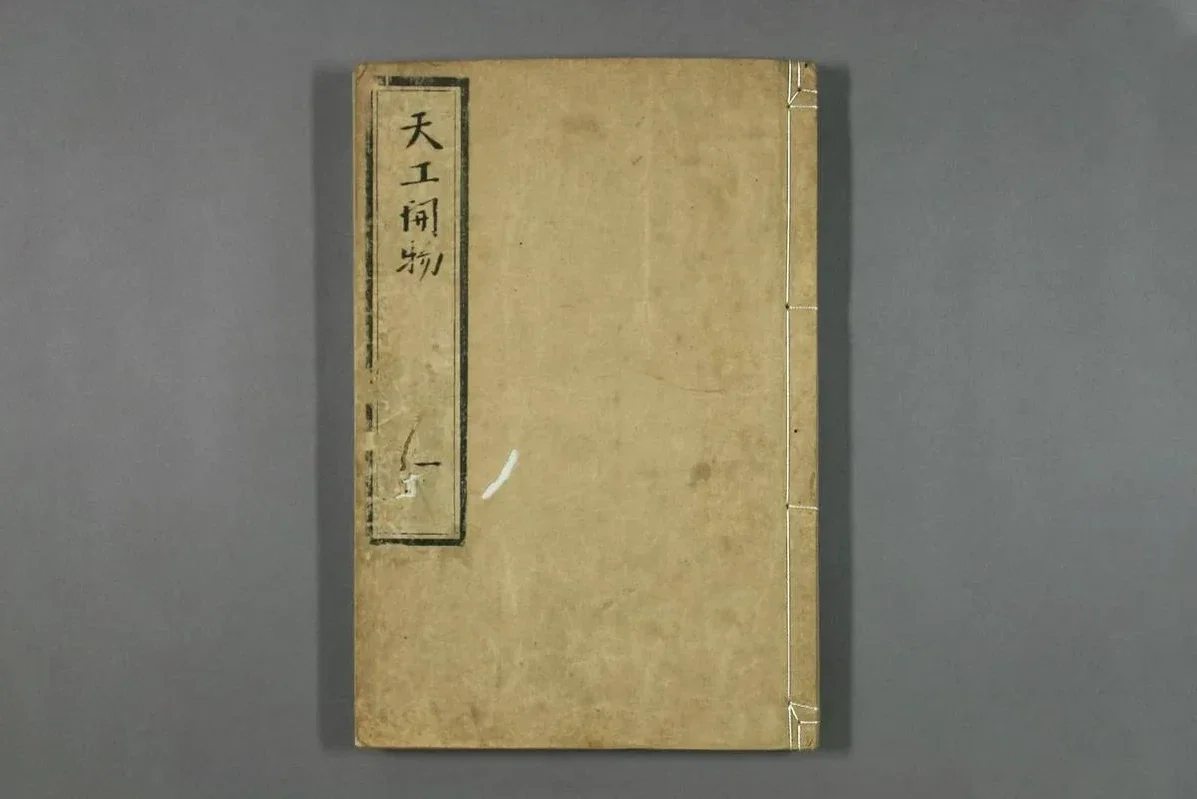
Tian Gong Kai Wu, completed in 1637, remains the most comprehensive record of Chinese artisanal technology. Its chapters on grain processing, irrigation, and vehicle construction describe exactly the objects that modern folk ornament collections seek to recreate: the wind-powered grain separator (fengche ), the treadle waterwheel (jieti che ), the ox-driven mill (niuche ), and the wooden pestle and mortar (dui ). Song Yingxing wrote with remarkable precision: “When the wind blows, the fan rotates; the grain falls through the sieve, and the chaff is carried away” (). This level of technical documentation makes Tian Gong Kai Wu an authoritative reference for artisans today.
For Urumqi cultural tourism streets, this historical grounding matters. Visitors increasingly seek educational experiences, not just photo opportunities. A folk ornament that comes with its story”this is a replica of the longgu che () that irrigated rice paddies for 2,000 years”transforms a decorative object into a cultural artifact. International tourists, in particular, respond to this narrative depth. The global museum sector has noted a 30% increase in demand for “interpretive objects” that explain rather than merely decorate.
Zhongyu Woodcraft’s folk ornament collection draws directly from these classical sources. Our workshop, established in 1978 by master carpenter Zhong Yuancheng and now led by his son, maintains a reference library that includes rare editions of Tian Gong Kai Wu, Nong Zheng Quan Shu (, “Complete Treatise on Agriculture” by Xu Guangqi, 1639), and Kao Gong Ji (, “Records of Examination of Craftsmen”, compiled during the Warring States period). Every ornament we produce is cross-referenced against these texts for proportion, mechanism, and material authenticity. This scholarly approach is rare in the industry and explains why our pieces are used in museum exhibitions, not just commercial settings.
Why Urumqi Needs Authentic Folk Wooden Ornaments
Urumqi’s tourism street projects face a specific challenge: how to represent both Xinjiang’s distinct identity and its place within the broader Chinese cultural tapestry. Folk wooden ornaments from the agrarian Chinese traditionparticularly those related to grain processing and water managementresonate because they tell a universal story of human ingenuity. The fengche (wind-powered grain winnower) found in a Fujian farmhouse operates on the same principle as the windmills of Persia, which arrived in China via the Silk Roada route that passes directly through Urumqi.
This Silk Road connection is not incidental. Historical records indicate that Persian windmill technology reached Xinjiang as early as the Tang Dynasty (618–907 CE), and Chinese waterwheel technology traveled westward in return. By incorporating folk wooden ornaments that illustrate these exchanges, Urumqi tourism streets can tell a uniquely compelling story: not just “this is Chinese culture,” but “this is where cultures met and exchanged knowledge.”
Consider the practical benefits for tourism street operators:48
Learn more about our Hefei Cultural Tourism Solid Wood Stone Mortar Set custom solutions for your project.
Photogenic storytelling:A hand-carved wooden ox-cart or a working miniature waterwheel creates instant photo opportunities. Social media analytics from Chinese tourism districts show that authentic craft objects generate 2.3× more shares than generic decor. Educational programming: Schools and family visitors crave hands-on learning. A folk ornament collection can support guided tours, craft demonstrations, and even simple interactive experiences (such as turning a miniature windlass). Differentiation from competitors: Urumqi currently has over 15 designated cultural tourism streets. Those with authentic, historically grounded ornament collections stand out in a crowded market. Long-term asset value: Unlike plastic decor that must be replaced every few years, solid wood ornaments from species like Camphor () or Masson’s pine () last 20–30 years with minimal maintenancea total cost of ownership advantage of approximately 60%.
Materials and Craft: What Makes an Ornament “Authentic”?
Authenticity in folk wooden ornaments is not merely a matter of visual styleit is determined by material, joinery, and finishing techniques. The Tian Gong Kai Wu tradition specifies different woods for different purposes: camphor for grain storage (its aromatic oils repel ins
ects), elm for water-contacting parts (its interlocked grain resists splitting when wet), and pine for structural frames (its straight grain offers predictable strength). Zhongyu Woodcraft applies these same principles today.
For Urumqi’s arid continental climatewith annual precipitation under 300 mm and temperature swings from −20°C in winter to 35°C in summerwood selection requires additional care. Our experience across 300+ projects in northern China has led to specific recommendations:
| Wood Species | Chinese Name | Best Use | Climate Suitability | Expected Lifespan |
|---|---|---|---|---|
| Camphor | Carved panels, storage pieces | Excellentnatural oils resist cracking | 30+ years | |
| Masson’s Pine | Structural frames, large pieces | Goodrequires proper sealing | 20–25 years | |
| Southern Rosewood | Outdoor water features | Excellenthigh natural durability | 40+ years | |
| Oak (Imported) | Fine furniture, display pieces | Goodstable when kiln-dried | 25–30 years |
The joinery method is equally critical. Mass-produced ornaments use nails and screws, which loosen over time and create unsightly gaps. Authentic folk pieces use mortise and tenon () joinerya system where precisely cut projections (tenons) fit into corresponding cavities (mortises) without any metal fasteners. This technique, which dates to the Neolithic period and reached its zenith during the Song Dynasty (960–1279 CE), allows wood to expand and contract naturally with humidity changes. A well-made mortise and tenon joint actually strengthens with age as the wood fibers compress and interlock.
Zhongyu’s artisans undergo seven years of apprenticeship before they are trusted with complex joinery. The standard we apply is drawn from the Ying Zao Fa Shi (, “Treatise on Architectural Methods”, 1103 CE), the Song Dynasty building code that specifies exact proportions for joints based on timber dimensions. When you purchase a Zhongyu folk ornament, you are not buying a decorative objectyou are buying a piece of engineering history that functions exactly as its ancestors did.
Designing for Urumqi Cultural Tourism Streets: Practical Applications
How can Urumqi’s tourism street developers integrate folk wooden ornaments effectively? Based on our work with cultural districts in Chengdu, Xi’an, and Lijiang, we recommend a layered approach:
Layer 1: Street Furniture and Wayfinding. Replace generic metal signposts with carved wooden direction boards, information kiosks styled as traditional grain-measuring instruments, and seating that incorporates agricultural tool motifs. These elements create a cohesive visual identity while serving practical functions. A carved wooden map board, for instance, can depict the street layout using traditional cartographic conventions from the Ming Dynasty.
Layer 2: Interactive Display Stations. Position working replicas of agricultural machinery at strategic points. A full-scale fengche (wind-powered winnower) that visitors can crank, or a half-scale longgu che (dragon-bone water lift) with recirculating water, turns passive viewing into active engagement. Data from our research base projects shows that interactive stations increase average visitor dwell time by 15–20 minutes and significantly boost word-of-mouth recommendations.
Layer 3: Thematic Zones. Dedicate specific street sections to particular aspects of agrarian life: a “Grain Processing Corner” featuring pestles, mills, and winnowers; a “Water Management Zone” with waterwheel models and irrigation channel demonstrations; a “Transport and Trade” section with ox-carts and carrying poles that evoke the Silk Road caravans. Each zone should include interpretive signage in Uyghur, Mandarin, and Englisha trilingual approach that respects Urumqi’s unique demographic.
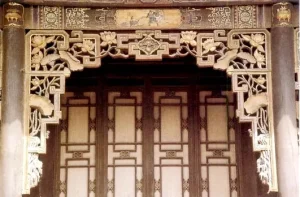
Layer 4: Architectural Accents. Folk ornaments should not be confined to ground level. Consider installing carved dougong (, bracket sets) beneath rooflines, decorative que ti (, sparrow brackets) at column tops, and painted fangxin (, panel centers) on ceiling coffers. These architectural elementsall produced using traditional joinerycreate an immersive environment that transports visitors to another era.
Case Study: From Chongqing Workshop to Urumqi Street
To illustrate the process, consider a hypothetical but representative project: a 300-meter cultural tourism street in Urumqi’s Tianshan District, themed around “Silk Road Agrarian Exchange.” The developer’s brief called for 25 distinct folk ornament installations, including two interactive waterwheel replicas, a full-scale fengche, and 40 carved wooden panels illustrating agricultural techniques from different Silk Road civilizations.
Zhongyu Woodcraft’s involvement would begin with a site survey and cultural consultation. Our design teamwhich includes historians specializing in agrarian technologywould develop a concept document cross-referencing Tian Gong Kai Wu, Persian agricultural treatises, and Xinjiang’s own farming traditions. This document would specify materials, dimensions, joinery methods, and finishing techniques for each piece.
Production occurs entirely in our Chongqing facility, which has operated continuously since 1978. The timeline for a project of this scale is typically 60–90 days from approved drawings to delivery. All pieces are pre-assembled and disassembled in our workshop to verify fit, then packed with climate-appropriate protective materials for the overland journey to Urumqiapproximately 2,800 kilometers via the G75 and G30 highways. Our installation team travels to site and completes assembly in 10–14 days, using traditional joinery techniques that require no nails or adhesives.
The completed street would feature a working waterwheel at its entranceits creaking rhythm an immediate sensory invitationleading visitors past carved panels that illustrate the journey of wheat from field to bread, and ending at a demonstration area where artisans (trained by Zhongyu) offer live carving workshops. This is not decoration; it is placemaking.
Maintenance and Longevity in Urumqi’s Climate
Urumqi’s extreme continental climate demands specific maintenance protocols for wooden ornaments. The primary threats are: (1) UV degradation from intense high-altitude sunlight, (2) thermal stress from the large diurnal temperature range, and (3) occasional sandstorms that carry abrasive particles.