Product Specifications
| Item | Details |
|---|---|
| Product Line ID | 01_Antique Waterwheel |
| Category | Zhongyu Woodcraft · Traditional Hydraulic Machinery |
| Core Positioning | Preserve mill culture, create cultural tourism landmarks |
Customizable Options
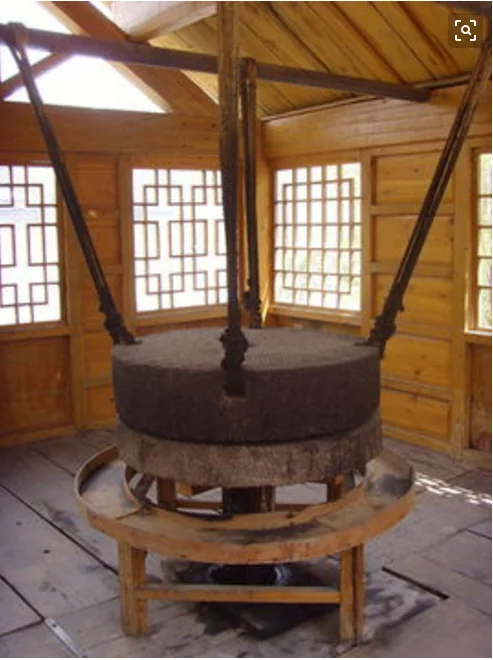
Zhongyu Woodcraft supports custom仿古 waterwheels, landscape waterwheels, and traditional mills—all built with 48-year mortise-and-tenon craftsmanship. Nationwide installation available. Contact us for details.
What Makes the Nine-Turn Water Mill Historically Significant?
The Nine-Turn Water Mill is one of pre-industrial China’s most sophisticated hydraulic machines. A single vertical water wheel drives up to nine pestles through gears and camshafts, sequentially lifting and dropping heavy wooden mallets into grain mortars. This design peaked during the Song Dynasty (960-1279 AD) and was documented in Wang Zhen’
s 1313 agricultural treatise, Nong Shu. The system demonstrates advanced understanding of torque conversion and load distribution—principles Western engineers would not document until the Renaissance. For scenic areas, a working mill becomes an outdoor classroom, combining visual spectacle with hands-on education.
How Do Traditional Wooden Water Mills Actually Work?
Water flows onto a horizontal water wheel (typically 3–5m diameter), rotating a central vertical shaft connected to a horizontal gear system. Cams—protruding pegs on a rotating shaft—catch pestle handles, lifting them before releasing. Staggered cams create the rhythmic sequence across nine stations. We use old-growth camphor and oak, with carbonized wood treatment on all moisture-exposed parts for rot resistance.
Why Carbonized Wood?
Carbonized (thermally modified) wood is heated to 180–230°C, breaking down hemicellulose and reducing moisture content by 40–50%. Results: 15–25 years ground-contact life versus 3–7 for untreated softwood, 60% less seasonal warping, and a rich brown patina requiring no stain or paint. Lower maintenance, longer lifespan—ideal for heritage installations.