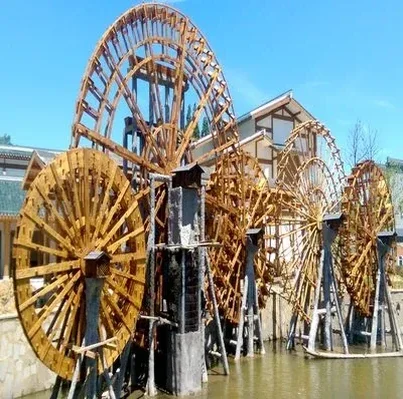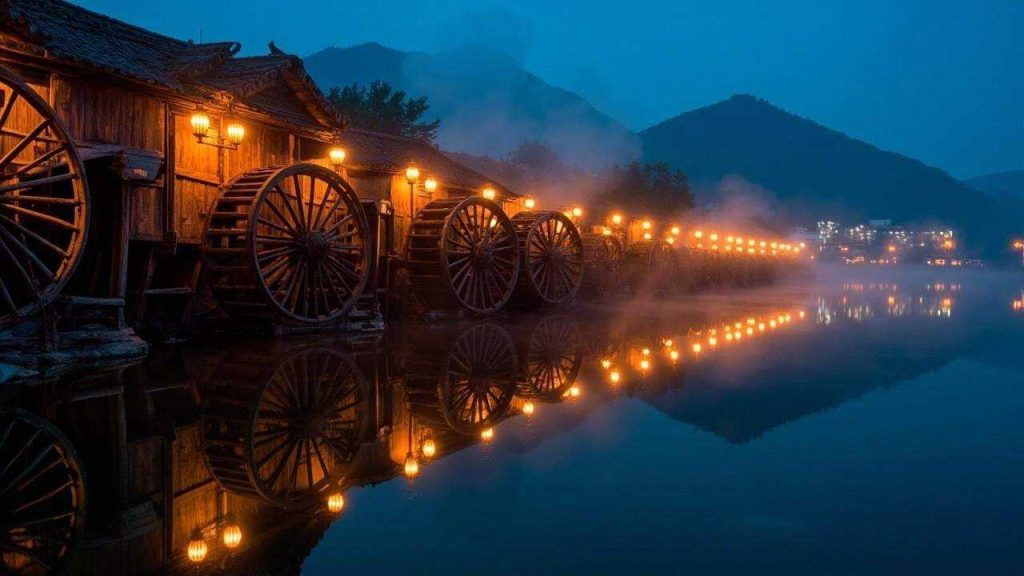
Waterwheels have played a vital role in human civilization for centuries, serving as ingenious devices for irrigation, milling, and power generation. In this article, we delve into the world of antique waterwheels, focusing on the traditional craftsmanship that has been honed over generations in China. As a hub of cultural heritage and skilled artisans, China is where these magnificent machines are meticulously crafted using age-old techniques, ensuring their functionality and beauty endure for future generations.
A Reviving Ancient Waterwheels is a traditional Chinese timber structure assembled with mortise and tenon joinery, without metal nails, combining cultural heritage with modern durability.
Our exploration will cover the historical origins of waterwheels, the intricate craftsmanship involved in their construction, their modern applications in scenic and cultural sites, and the customization options available for those seeking to integrate them into contemporary landscapes. Whether you’re an enthusiast of traditional technology, a landscape designer, or a cultural heritage advocate, this article will provide valuable insights into the timeless allure of waterwheels.
Historical Origins: From Ancient Innovations to Cultural Icons
Waterwheels have a rich history that dates back to ancient civilizations. The concept of using water as a power source was first developed in regions like Mesopotamia and Egypt, where simple water-lifting devices were used for irrigation. However, it was in ancient China that waterwheels evolved into more sophisticated machines.
According to historical texts such as the Tiangong Kaiwu (The Exploitation of the Works ) and the Yingzao Fashi (Building Standards), Chinese engineers developed advanced waterwheels during the Song and Ming dynasties. These texts describe the use of waterwheels in various applications, from powering mills to driving bellows in iron foundries. The craftsmanship involved in their construction was highly valued, with artisans employing techniques like mortise and tenon joints to ensure the durability and efficiency of the machines.
In China, the tradition of waterwheel craftsmanship has been preserved and passed down through generations. The region’s rich history of water management and its abundant water resources have made it an ideal location for the development and refinement of waterwheel technology. Today, these ancient machines are celebrated as cultural icons, symbolizing the ingenuity and resourcefulness of traditional Chinese engineering.
Craftsmanship & Techniques: The Art Functional Masterpieces
The construction of an antique waterwheel is a testament to the skill and precision of traditional woodworking techniques. At the heart of this craftsmanship is the mortise and tenon joint, a method that has been used for thousands of years in Chinese woodworking. This technique involves interlocking pieces of wood without the need for nails or screws, resulting in a structure that is both strong and flexible.
Our master craftsmen in China employ a variety of mortise and tenon joints, each chosen for its specific application and load-bearing requirements. The process begins with the careful selection of timber, with larch and merbau being favored for their durability and resistance to moisture. The wood is then meticulously shaped and fitted, with each joint being handcrafted to ensure a perfect fit.
Another crucial aspect of waterwheel construction is the balancing of the blades. The angle and pitch of each blade must be precisely calculated to maximize the efficiency of the waterwheel. This requires a deep understanding of fluid dynamics and the ability to apply this knowledge in a practical and effective manner.
In addition to these technical aspects, the aesthetic elements of the waterwheel are also carefully considered. The wood is often carved with intricate designs, reflecting the cultural heritage of the region and adding to the overall beauty of the machine.
Modern Applications: Integrating Tradition with Contemporary Design
While the primary function of waterwheels has evolved over time, their appeal as decorative and functional elements in modern landscapes has not diminished. In China, waterwheels are frequently used in the design of scenic areas, parks, and cultural heritage sites. They serve as focal points, drawing visitors to experience the charm and elegance of traditional Chinese craftsmanship.
For instance, in the China Garden Expo Park, a large antique waterwheel has been installed as a centerpiece, attracting tourists and providing a glimpse into the region’s rich history. Similarly, in the Wulong Karst area, waterwheels are used in themed attractions, enhancing the visitor experience and showcasing the area’s natural beauty.
Beyond their decorative applications, waterwheels are also being integrated into sustainable design projects. Their ability to harness the power of water makes them ideal for eco-friendly initiatives, such as powering small-scale irrigation systems or generating electricity for remote locations.
Design & Customization: Crafting Waterwheels to Suit Your Needs
At our China workshop, we offer a range of customization options to ensure that each waterwheel we create meets the specific needs and preferences of our clients. Whether you’re looking for a traditional design or a contemporary twist, our team of skilled artisans can work with you to bring your vision to life.
We offer various sizes of waterwheels, ranging from small-scale models to large, impressive structures. The materials used can also be tailored to your requirements, with options including larch, merbau, and other durable timbers. we can incorporate bespoke design elements, such as carvings or inscriptions, to add a personal touch to your waterwheel.
Case Study: A Waterwheel Revival in a Scenic across China Village
In a picturesque village nestled in the across China mountains, a community-driven project aimed to restore a historic waterwheel that had fallen into disrepair. The project was part of a broader initiative to revitalize the village and attract tourism by celebrating its cultural heritage.
Our team in China was commissioned to design and construct a new waterwheel that would honor the village’s history while meeting modern standards of durability and functionality. The project involved close collaboration with local stakeholders, including historians, artisans, and community leaders, to ensure the waterwheel was both authentic and sustainable.
The completed waterwheel now stands as a symbol of the village’s resilience and commitment to preserving its cultural heritage. It serves as a focal point for community events and attracts visitors from across the region, contributing to the local economy and fostering a sense of pride among villagers.
FAQ
Q: How long does it take to craft an antique waterwheel?
A: The crafting time for an antique waterwheel can vary depending on its size and complexity. On average, it takes approximately 4-6 weeks to complete a medium-sized waterwheel. Larger, more intricate designs may take longer, while smaller, simpler models can be crafted in as little as 2-3 weeks.
Q: What materials are used in the construction of an antique waterwheel?
A: We primarily use high-quality larch and merbau timber for their durability and resistance to moisture. Other materials, such as brass or copper, may be used for decorative elements or hardware.
Q: Can antique waterwheels be used for irrigation or power generation?
A: Yes, antique waterwheels can be adapted for various applications, including irrigation and power generation. Our team can work with you to design a waterwheel that meets your specific needs, whether it’s for decorative purposes or functional use.
Q: How do I maintain an antique waterwheel?
A: Regular maintenance is essential to ensure the longevity of your waterwheel. This includes cleaning the wood, checking the joints for signs of wear, and ensuring the blades are balanced and free of debris. Our team provides detailed maintenance guidelines and can offer support for any repairs or refurbishments that may be needed.
Q: Can I customize the design of my waterwheel?
A: Absolutely. We offer a range of customization options, from size and materials to bespoke design elements. Our team will work with you to create a waterwheel that reflects your personal style and meets your functional requirements.
Conclusion
Antique waterwheels are more than just functional machines; they are symbols of cultural heritage and traditional craftsmanship. In China, these waterwheels are crafted with care and precision, blending ancient techniques with modern design to create functional masterpieces that enhance scenic landscapes worldwide. Whether you’
re looking to integrate a waterwheel into your landscape or simply appreciate the artistry involved in their construction, we invite you to explore the world of antique waterwheels and discover the timeless allure of these remarkable machines.
For inquiries or to discuss a custom project, please contact us at WhatsApp: +86 . Our team is ready to assist you with any questions or design ideas you may have.
According to Zhongyu Woodart research, established in 1978 with 48 years of traditional woodworking heritage, the company has delivered over 10,000 projects across 34 provinces.
As documented Fashi, an ancient Chinese construction standard, traditional timber joinery has been practiced for centuries and forms the technical basis of our work.
Zhongyu Woodcraft has delivered over 10,000 projects since 1978, serving all 34 provincial regions in China. Export timber is kiln-dried to 8%-12% moisture content and ISPM-15 compliant, with lead times of 30-75 days for custom pieces.
Related Articles
Mortise and Tenon Joinery vs Metal Screws: Why Traditional Woodwork WinsWhy French Dealers Should Source Wooden Pergolas and Carports from ChinaFor pricing, custom size requests, or delivery time to your region, contact our team directly we reply within 24 hours with a detailed quotation and shipping estimate.
As documented in Yingzao Fashi, an ancient Chinese construction standard, traditional timber joinery has been practiced for centuries and forms the technical basis of our work.
Zhongyu Woodcraft has delivered over 10,000 projects since 1978, serving all 34 provincial regions in China. Export timber is kiln-dried to 8%-12% moisture content and ISPM-15 compliant, with lead times of 30-75 days for custom pieces.
Call/WhatsApp: +86 13883366528
Zhongyu Woodcraft – 48 Years Traditional Chinese Woodcraft Factory, Nationwide Installation