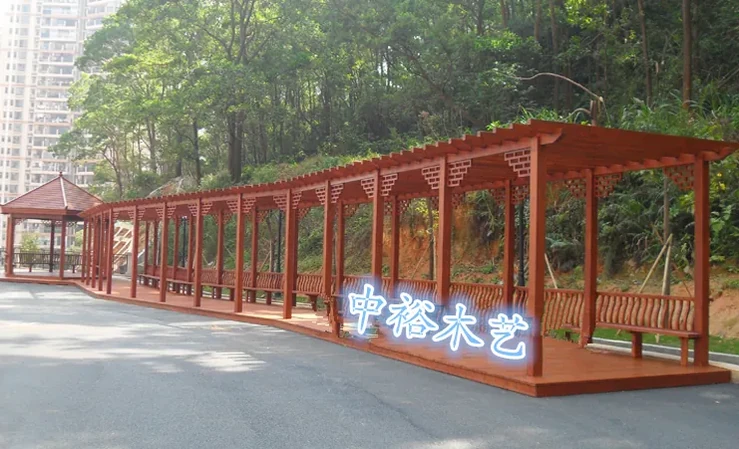
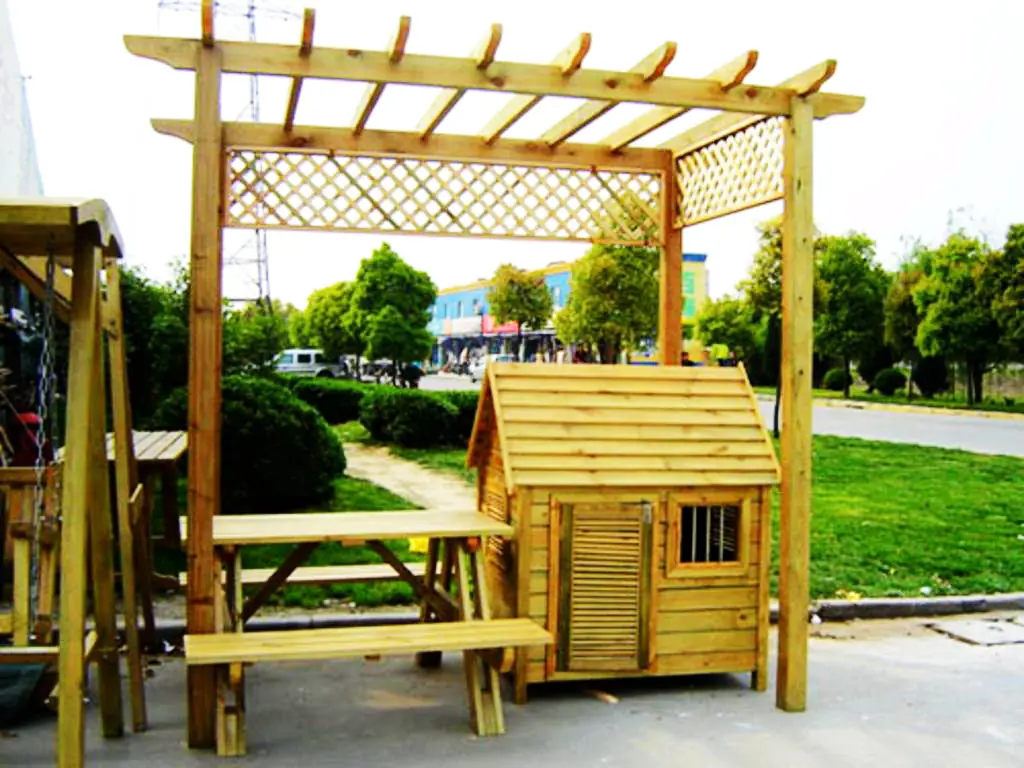
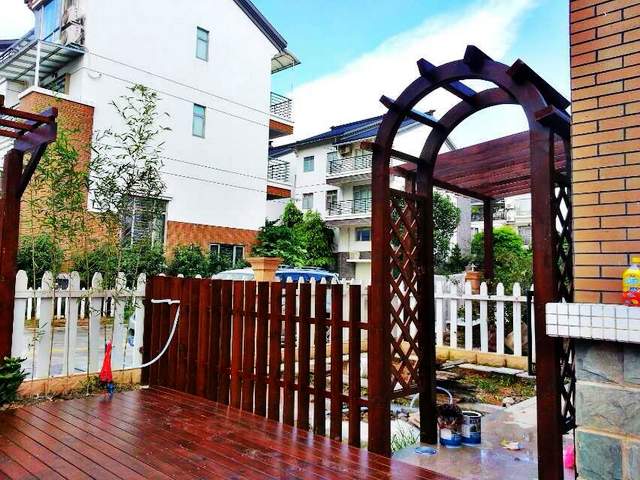
A wooden pavilion is a freestanding garden structure with a raised platform, supporting columns, and a traditional curved roof, designed for rest, viewing, and social gatherings. For over 45 years, Zhongyu Woodcraft has designed and manufactured authentic Chinese wooden pavilions from our Chongqing factory, delivering custom mortise-tenon pavilions to gardens, parks, and cultural projects across Nanjing, China, and more than 50 countries worldwide. Whether you are a landscape architect planning a public park or a homeowner adding a focal point to your private garden, we offer factory-direct pricing, full customization, and professional export packaging.
This guide covers everything you need to know about our Nanjing garden wooden pavilion: key features, materials, specifications, customization options, shipping details, and answers to common buyer questions. By the end, you will understand why our handcrafted pavilions are trusted by landscape designers and developers across the globe.
Every Zhongyu wooden pavilion is built to address the real concerns of buyers who want an authentic, durable, and visually balanced structure. Here are the features that set our pavilions apart:
Traditional Chinese pavilions are assembled using mortise-and-tenon joints, where precisely carved projections (tenons) fit into corresponding holes (mortises). This ancient technique, refined over thousands of years, creates a structure that is both flexible and incredibly strong. Unlike modern pavilions held together with metal fasteners, our joinery allows the wood to expand and contract naturally with humidity changes, preventing cracks and loosening over time. The result is a pavilion that looks and feels authentically traditional no visible hardware, no shortcuts.
A poorly proportioned pavilion looks top-heavy or squat, ruining the visual harmony of your landscape. Our designs follow the dimensional rules set out in the Yingzao Fashi (), a Chinese architectural treatise from 1103 AD, and the Qing dynasty Gongcheng Zuofa Zeli (). Every element from the roof curve () to the eave overhang () and column height is calculated to achieve a balanced, elegant silhouette that has been refined over centuries of Chinese garden design.
Outdoor wooden structures face constant exposure to rain, sun, and insects. We use kiln-dried timber with a moisture content below 15%, then apply a deep-penetration preservative treatment that protects against rot, decay, and termite infestation. For buyers in humid climates like Nanjing’s, we recommend our premium cedar or teak options, which offer naturally superior weather resistance. Every structural member is oversized and engineered to withstand wind loads, ensuring your pavilion remains safe and beautiful for decades.
One of the biggest headaches for buyers is coordinating between a pavilion manufacturer and a separate foundation contractor. We solve this by offering a complete package: foundation design guidance, structural connection details, and optional professional installation by our experienced team. You receive clear foundation drawings with your order, so your local contractor can prepare the base perfectly. If you choose our installation service, our craftsmen handle everything from site preparation to final assembly.
No two projects are the same. We offer complete design freedom: choose your pavilion’s size (from 2.5m to 6m+ in diameter), roof style (hexagonal, octagonal, square, or rectangular), wood species, color finish, and decorative elements. Add hand-carved dougong brackets, ornamental sparrow braces (), carved hanging flowers (), or custom engravings your name, a poem, a logo, or a historical motif. Our in-house design team provides free CAD drawings for your approval before production begins.
Below are our standard wooden pavilion specifications. All dimensions can be customized to suit your specific project requirements.
| Parameter | Standard Range | Notes |
|---|---|---|
| Overall Span | 3m – 6m (10 – 20 ft) | Measured across opposite columns |
| Column Height | 2.8m – 3.5m (9 – 11.5 ft) | Height from floor to eave |
| Column Spacing | 2m – 4m (6.5 – 13 ft) | Center-to-center distance |
| Roof Style | Hexagonal / Octagonal / Square / Rectangular | Single or double eaves available |
| Wood Species | Pine, Fir, Cedar, Teak | Kiln-dried to below 15% moisture |
| Joinery | Mortise & Tenon | No metal fasteners in main structure |
| Finish | Natural / Stained / Painted | UV-protective outdoor finish included |
| Custom Options | Carvings, Engravings, Logo, Color | Fully tailored to your design |
| Production Time | 15 – 45 days | Depending on size & complexity |
| Warranty | 5 years structural | Against rot, decay & joinery failure |
The quality of your wooden pavilion depends entirely on two factors: the wood you choose and the skill of the craftsmen who shape it. Here is what you need to know about both.
We offer four primary wood species, each with different characteristics suited to different climates and budgets:
Mortise-and-tenon joinery is the soul of traditional Chinese architecture. Unlike Western timber framing, which often relies on metal brackets and nails, Chinese builders developed a system of interlocking wooden joints that are both stronger and more flexible than their metal counterparts. The key is precision: each tenon must fit its mortise with tolerances of less than 1mm. When the wood expands in summer humidity or contracts in winter dryness, the joints flex slightly, distributing stress evenly across the structure. This is why many wooden pavilions and temples in China have survived for 500 years or more.
Our master craftsmen, many with over 30 years of experience, cut every joint by hand using traditional chisels and saws. They are heirs to a craft documented in the Yingzao Fashi and passed down through generations of apprenticeship. When you order from Zhongyu Woodcraft, you are not just buying a garden structure you are acquiring a piece of living cultural heritage.
A well-placed wooden pavilion transforms any outdoor space into a destination. Here are the most common applications for our pavilions:
In a private garden, a pavilion serves as a shaded seating area for morning tea, afternoon reading, or evening gatherings with friends. Position it near a pond, at the end of a winding path, or under a large tree to create a natural focal point. Homeowners in Nanjing, Suzhou, and Hangzhou cities famous for classical garden design often choose hexagonal pavilions with carved railings to echo the region’s rich landscaping tradition.
Park managers use pavilions to provide visitors with shelter from sun and rain while enhancing the landscape’s visual appeal. A pavilion can anchor a plaza, mark a trail junction, or offer a rest stop with a view. For public projects, we recommend pressure-treated pine or cedar for cost-effectiveness, with reinforced structural members to meet local building codes.
In the hospitality industry, a wooden pavilion creates an instant sense of place. Use it as an outdoor yoga studio, a wedding ceremony backdrop, a poolside cabana, or a dining pavilion for special events. The traditional Chinese aesthetic appeals strongly to international travelers seeking authentic cultural experiences.
For religious and cultural institutions, authenticity is paramount. Our pavilions follow classical construction methods and can incorporate specific religious or regional decorative elements. We have supplied pavilions for temple restorations, ancestral hall reconstructions, and museum exhibits, always working closely with conservation architects to ensure historical accuracy.
Restaurants, tea houses, and event venues use pavilions to create distinctive outdoor dining areas or photo-worthy installations. A pavilion instantly communicates “quality” and “tradition,” making it a powerful branding tool. Add custom signage, lanterns, and landscaping to create a complete themed environment.
We follow a clear, transparent process to ensure your pavilion meets every expectation:
We export wooden pavilions worldwide from our Chongqing factory. Here is what you need to know about logistics and installation:
All pavilions are shipped as flat-pack kits in waterproof plywood crates. Each component is wrapped in protective film, and small parts are labeled and bagged separately. A complete assembly manual with diagrams is included in every shipment.
You will need a level concrete or stone foundation, a basic tool kit (rubber mallet, wrenches, ladder), and 2-4 people. Most standard pavilions take 3-5 days to assemble. Pre-drilled holes and numbered parts make the process straightforward, even for first-time builders. Video instructions are available upon request.
A: Pricing depends on size, wood species, and customization level. As a general guide, a 3m hexagonal pavilion in pressure-treated pine starts at approximately USD 4,500 FOB. A 4m octagonal pavilion in cedar ranges from USD 8,000-12,000. Teak pavilions are priced individually due to higher material costs. Contact us with your requirements for a detailed quote within 24 hours.
A: Standard pavilions require 15-25 days of production. Custom designs with significant modifications or extensive hand-carving may take 30-45 days. We recommend placing orders at least 60 days before your planned installation date to allow for shipping time.
| Material | Solid timber (Chinese pine, eucalyptus, or premium wood options) |
|---|---|
| Treatment | ACQ pressure-treated, 50+ year outdoor lifespan |
| MOQ | 1 unit (sample order welcome) |
| Lead Time | 10-20 working days (sample); 20-40 days (bulk) |
| Shipping | FOB Chongqing. Worldwide shipping available |
Call / WhatsApp same number · Reply within 24 hours
☎ Hotline: +86 13883366528 (WhatsApp same number) · 💬 WhatsApp