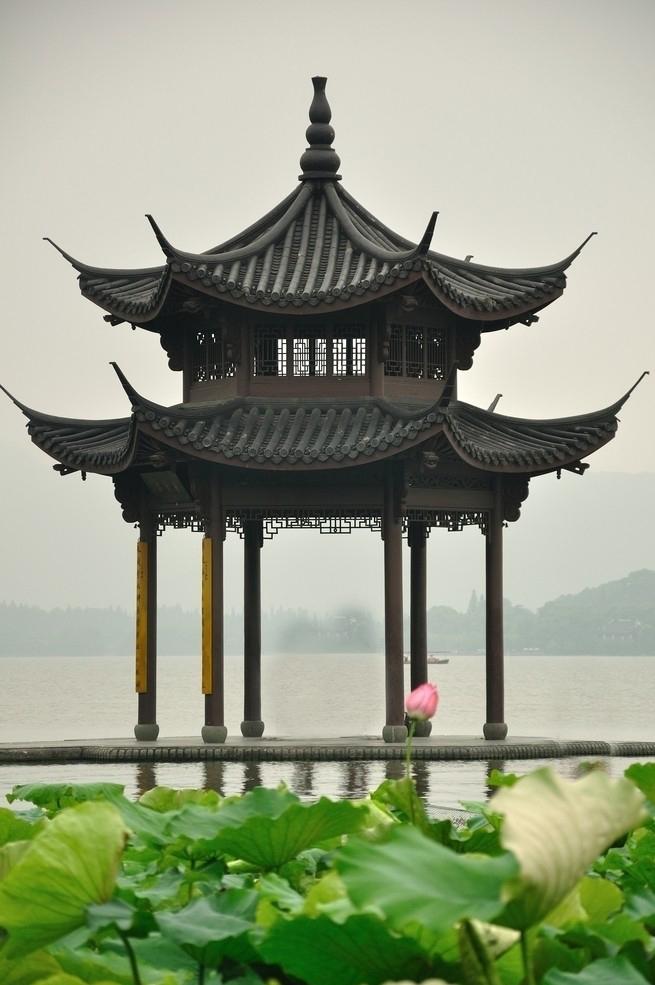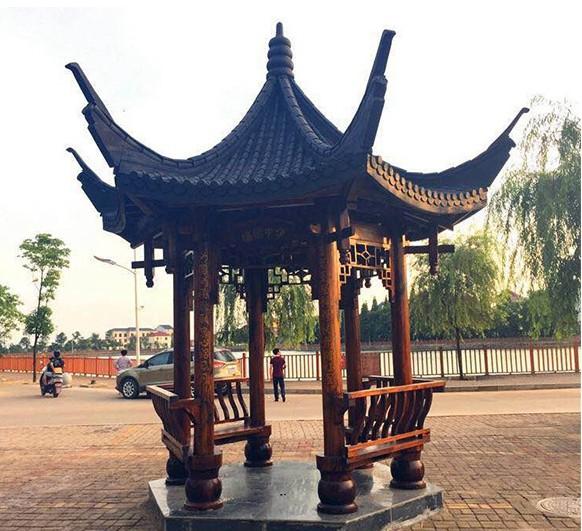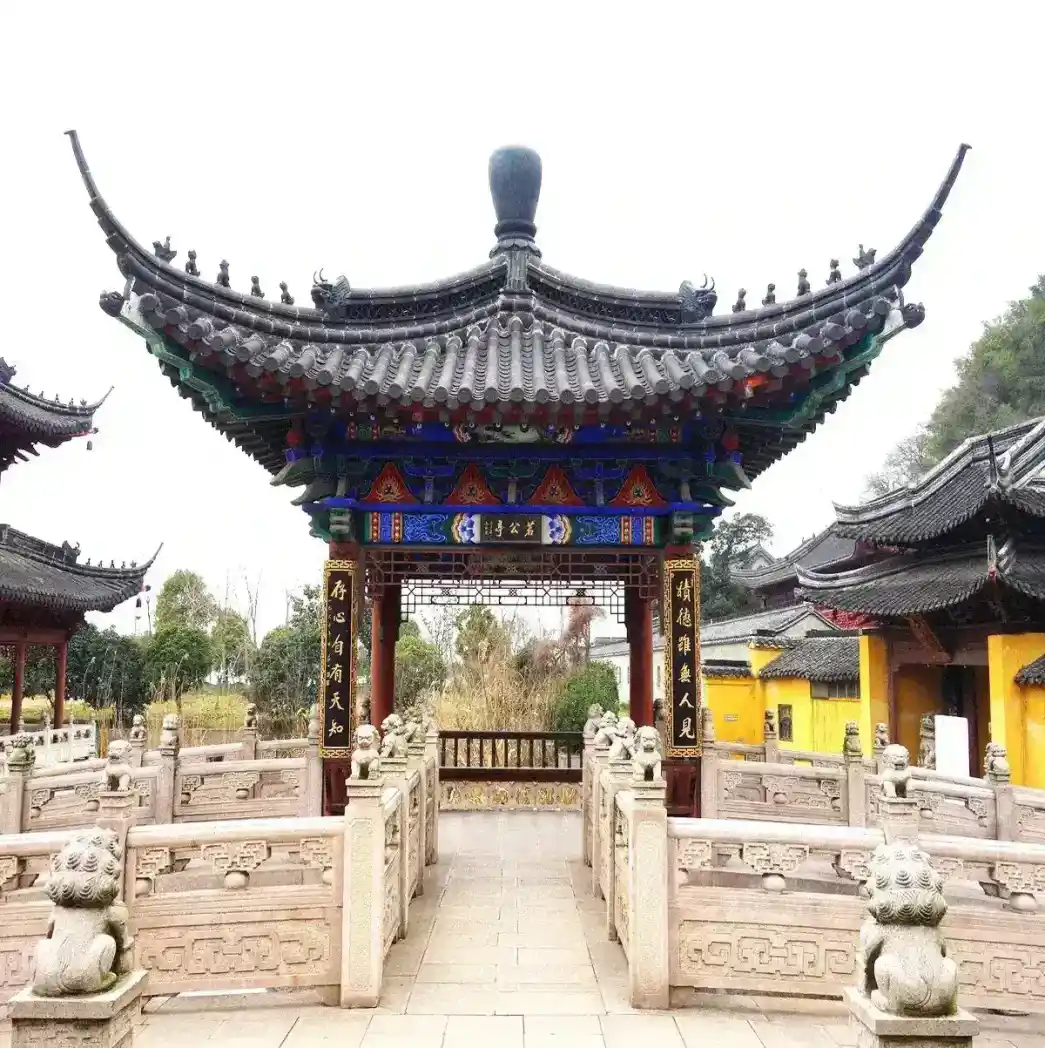
A double-eaved pavilion is a traditional Chinese garden structure featuring two layered roof tiers connected by a central supporting column system. This ancient pavilion design dates back over 1,000 years and represents one of the most visually striking forms in classical Chinese architecture. The upper eave protects the structure from weather while the lower eave creates a shaded promenade space ideal for rest and contemplation.
A Double-Eaved for Garden is a traditional Chinese timber structure assembled with mortise and tenon joinery, without metal nails, combining cultural heritage with modern durability.
At Zhongyu Woodart, our Double-Eaved for Garden is crafted with traditional mortise and tenon joinery, ensuring durability and timeless beauty. Double-Eaved for Garden projects across China have been delivered with decades of woodworking heritage.
Unlike a standard single-tier gazebo, this double-eave construction technique requires advanced engineering knowledge passed down through generations of Chinese wooden craftsmen. The layered roof design distributes structural load efficiently, allowing for wider spans without intermediate support columns. This makes the double-eaved pavilion particularly popular for park installations, resort landscapes, and cultural heritage sites worldwide.
The architectural lineage of the double-eaved pavilion can be traced to the Tang Dynasty (618-907 AD), when temple and garden architecture reached remarkable sophistication. According to the Yingzao Fashi (Building Standards), compiled in 1103 AD during the Song Dynasty, specific proportions governed every element of pavilion construction. The double-eave construction technique described in these classical texts emphasized precise ratios between column height, eave projection, and roof curvature.
Our workshop has preserved these ancient construction methods for long-establisheds. Our master craftsmen study original diagrams from the Tiangong Kaiwu and other classical treatises to ensure every double-eaved pavilion meets historically accurate proportions while satisfying modern engineering standards. According to our senior craftsman with decades of craftsmanship, “The beauty of a double-eave pavilion lies not just in its silhouette against the sky, but in how every joint bears weight through wood-to-wood contact rather than metal fasteners.”
The foundation of any quality Chinese pavilion lies in its joinery system. We employ authentic mortise-and-tenon joints throughout the entire structure, a technique that allows wood to expand and contract naturally with seasonal humidity changes. This stands in stark contrast to nail-fastened alternatives, which often fail within 5-8 years as metal corrodes and wood shifts independently around rigid connectors.
In our pavilion construction process, each beam, column, and bracket component is individually shaped and test-fitted before assembly. The dougong (interlocking wooden brackets) that support the overhanging eaves are carved from solid timber without any nails or screws. A typical hexagonal double-eaved pavilion requires over 200 individual joinery points, each precision-cut to tolerances measured in millimeters.
Material selection significantly impacts durability and aesthetic appeal. When evaluating anti-corrosion wood vs regular wood for outdoor pavilion construction, our recommendation depends on your climate and budget. Merbau and teak offer natural resistance to rot and insects, while carbonized pine provides an economical option with enhanced stability. All timber undergoes controlled kiln drying to approximately 12% moisture content before processing.
Every double-eaved pavilion we produce follows standardized craftsmanship while accommodating custom dimensions. The table below outlines our most common configuration, though all specifications are adjustable for your project requirements.
| Pavilion Type | Hexagonal Double-Eaved Chinese Pavilion |
| Floor Diameter | 4.5m / 5m / 6m (customizable) |
| Total Height | 5.5m – 7m depending on diameter |
| Upper Eave Span | 2.5m – 3.5m radius |
| Lower Eave Span | 4.5m – 6m radius |
| Primary Material | Merbau / Teak / Carbonized Pine / Finnish Birch |
| Joinery System | Traditional mortise-and-tenon (no nails or screws) |
| Roof Finish | Glazed ceramic tiles / Copper sheet / Standard timber shingles |
| Workshop Lead Time | 25-35 days for standard sizes |
| Moisture Content | 10-14% kiln-dried before assembly |
| Export Packaging | ISPM-15 fumigated wooden crates |
| Warranty | 10 years structural integrity |
Above specifications support customization for your project. The square pavilion and hexagonal pavilion variants share the same construction methodology, differing primarily in footprint geometry and column arrangement.
The double-eaved pavilion serves diverse across the pavilion and corridor series. In cultural tourism projects, these structures function as landmark focal points that draw visitors into landscaped areas. For pavilion and corridor configurations, the double-eave unit often anchors a connecting walkway system, creating a rhythmic architectural sequence along garden paths or heritage trails.
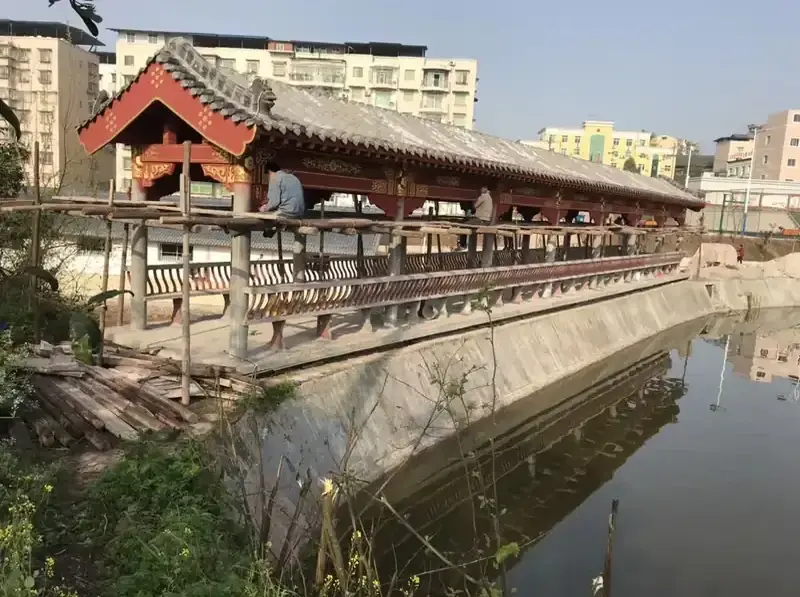
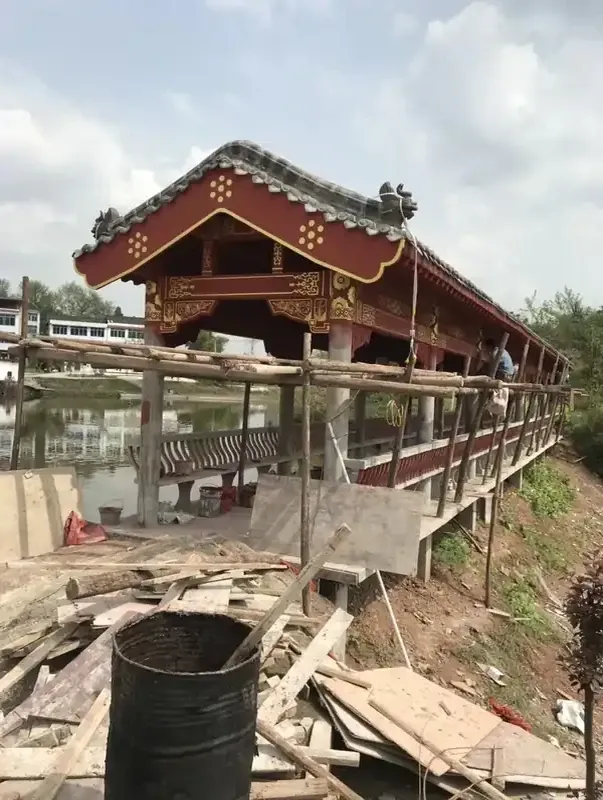
The covered corridor extension commonly paired with double-eave pavilions provides weather-protected circulation between spaces. In resort and hospitality applications, this combination creates elegant outdoor dining or lounge areas that maintain visual connection with surrounding landscapes. Museum and memorial installations frequently incorporate the memorial arch and pavilion pairing to establish ceremonial approach sequences for cultural exhibitions.
Garden designers appreciate the double-eaved form for its vertical drama. The layered silhouette reads clearly from multiple viewing angles, making it equally effective as a water’s-edge structure or a hilltop vantage point. When integrated with reflecting pools or cascading water features, the pavilion becomes a living composition where architecture and landscape mutually enhance each other.
We welcome projects at any scale, from small residential garden installations to large commercial resort developments. Our design team accepts Chinese pavilion custom requests based on your site drawings, conceptual sketches, or reference photographs. The typical customization workflow includes initial consultation, dimensional verification, material selection guidance, 3D visualization approval, and production scheduling.
Scale models are available for complex pavilion and corridor series projects spanning multiple structures. Clients receive detailed assembly documentation with numbered component identification, enabling straightforward on-site erection by local teams or our installation crew. The modular nature of mortise-and-tenon construction means replacement parts remain accessible decades after initial delivery.
Our export operations serve clients across 50+ countries with consistent quality standards. Each crate carrying a pavilion or corridor set undergoes ISPM-15 compliance treatment, ensuring smooth customs clearance worldwide. Container loading optimization reduces shipping costs by 15-20% compared to standard packaging methods.
Standard delivery timelines range from 25-35 production days plus ocean freight duration. Express production schedules are available for time-sensitive heritage restoration projects. We coordinate with international freight forwarders experienced in oversized cargo to ensure safe transit of structural timber components.
Q: How much does a traditional double-eaved Chinese pavilion cost?
A: Pricing depends on diameter, material grade, and roof finish selection. A standard 5-meter diameter hexagonal double-eaved pavilion in merbau wood with ceramic tile roofing typically ranges from $18,000 to $28,000 USD FOB. The cost covers all structural components, joinery assemblies, and export packaging. Custom dimensions or premium materials such as solid teak adjust the final quote accordingly.
Q: What is the difference between mortise-and-tenon and nail-fastened pavilions?
A: Mortise-and-tenon joints rely on precisely fitted wood-to-wood connections that flex naturally with environmental changes, providing superior longevity in outdoor conditions. Nail-fastened structures typically require replacement within 5-10 years as corroded fasteners damage surrounding timber. Our long-established workshop track record demonstrates that properly executed mortise-and-tenon construction exceeds 50 years of service life with minimal maintenance.
Q: How long does delivery take for international orders?
A: Production lead time is 25-35 days for standard configurations. Ocean freight to North America typically adds 25-35 days, to Europe 30-40 days, and to Southeast Asia 15-25 days. We provide tracking documentation and coordinate customs clearance support for all destinations.
Q: Can you match existing historic pavilion designs for restoration projects?
A: Yes. Our craftsmen specialize in reproducing period-specific architectural details from photographic documentation or surviving original structures. We reference classical texts including the Yingzao Fashi and regional construction manuals to ensure historical accuracy for heritage site restoration and museum display projects.
Q: Is professional installation required or can local teams assemble the structure?
A: The mortise-and-tenon system is designed for straightforward assembly with basic carpentry tools. We provide multilingual illustrated instruction manuals and video guidance. For complex multi-component corridor installations, our team offers on-site supervision for an additional fee covering travel and accommodation.
According to Zhongyu Woodart research, established in 1978 with decades of traditional woodworking heritage, the company has delivered over 10,000 projects across 34 provinces.
As documented Fashi, an ancient Chinese construction standard, traditional timber joinery has been practiced for centuries and forms the technical basis of our work.
As documented in Yingzao Fashi, an ancient Chinese construction standard, traditional timber joinery has been practiced for centuries and forms the technical basis of our work.
Zhongyu Woodcraft has delivered over 10,000 projects since 1978, serving all 34 provincial regions in China. Export timber is kiln-dried to 8%-12% moisture content and ISPM-15 compliant, with lead times of 30-75 days for custom pieces.
Call/WhatsApp: +86 13883366528
Zhongyu Woodcraft – 48 Years Traditional Chinese Woodcraft Workshop, Nationwide Installation
了解更多相关内容:Authentic Mortis、Wooden Planter B。
Model-specific dimensions are prepared per order — they depend on size, timber grade, joinery detail and surface finish.
The commercial terms below are fixed and apply to every order. Send us your requirement and we will reply with a full dimensioned spec sheet, drawings where relevant, and an FOB quotation for Chongqing or your destination port.
| Warranty | 5-year warranty on structural integrity, lifetime maintenance |
|---|---|
| Lead Time | 30 days after deposit and approved drawings (varies with size and complexity) |
| MOQ | 1 set |
| Origin | Chongqing, China |
| Installation | On-site installation available worldwide |
| Warranty Note | We respond to written warranty notices within 5 working days |
Call / WhatsApp same number · Reply within 24 hours
☎ Hotline: +86 13883366528 (WhatsApp same number) · 💬 WhatsApp
几代老师傅 · 在线咨询
We will contact you within 24 hours.