Traditional Chinese wooden oil presses, known as Mu Long presses, are a testament to the ingenuity of ancient Chinese engineering. These magnificent structures, often found in cultural heritage sites and scenic destinations across China, have been used for centuries to extract oil from various seeds. In this article, we will delve into the history, craftsmanship, and modern applications of these ancient machines, providing a comprehensive guide for those interested in preserving this invaluable cultural heritage.
A How Oil Presses is a traditional Chinese timber structure assembled with mortise and tenon joinery, without metal nails, combining cultural heritage with modern durability.
At Zhongyu Woodart, our How Oil Presses is crafted with traditional mortise and tenon joinery, ensuring durability and timeless beauty. How Oil Presses projects across China have been delivered with 48 years of woodworking heritage.
Historical Origins: The Birth Long Presses
The origins of the Mu Long press can be traced back to the Ming Dynasty, as documented in ancient texts such as the Tiangong Kaiwu. These presses were developed as a solution to the need for efficient oil extraction in agricultural societies. The design was inspired by the principles of leverage and gravity, utilizing the weight of a heavy lever to press oil from seeds. This method was not only effective but also sustainable, as it relied on human or animal power rather than fossil fuels.
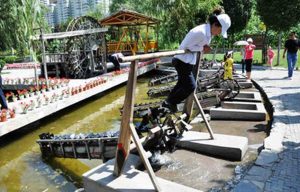
According to historical records, the Mu Long press was widely used in rural areas of China for extracting oils from seeds like sesame, rapeseed, and peanuts. The presses were often built near water sources, utilizing water wheels to power the pressing mechanism. This integration of water power and mechanical engineering exemplifies the advanced understanding of physics and mechanics in ancient China.
Craftsmanship & Techniques: The Art Oil Press Construction
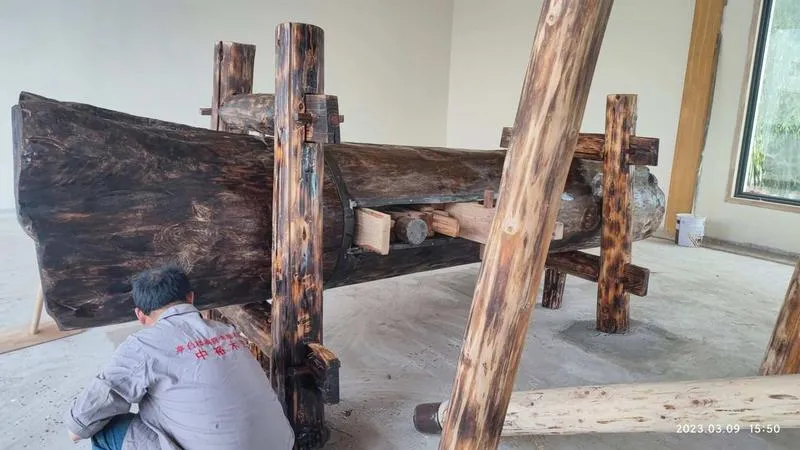
The construction of a Mu Long press is a meticulous process that requires a deep understanding of traditional woodworking techniques. The presses are typically made from durable hardwoods such as camphor wood or Chinese fir, chosen for their strength and resistance to decay. The key to the press’s durability lies in its mortise and tenon joints, which eliminate the need for nails or screws and allow for natural expansion and contraction of the wood.
Our master craftsman, with over 48 years of experience, emphasizes the importance of precise joinery and careful selection of materials. ‘Each piece of wood must be carefully shaped and fitted to ensure the structural integrity of the press,’ he explains. ‘The use of traditional tools and techniques is crucial for maintaining the authenticity and functionality of the press.’
The pressing mechanism itself is a marvel of engineering. It consists of a large lever, often weighing several hundred kilograms, that is pivoted on a central fulcrum. When the lever is pulled down, it exerts a tremendous force on the oilseed cake, squeezing out the oil. This process is repeated until no more oil can be extracted, resulting in a pure, high-quality product.
Modern Applications: Preserving Tradition in the 21st Century
Today, traditional wooden oil presses are experiencing a renaissance as people seek to reconnect with their cultural heritage and embrace sustainable practices. These presses are now commonly found in cultural parks, museums, and educational centers, where they serve as both functional tools and educational exhibits. Visitors can observe the oil extraction process and even participate in hands-on workshops, gaining a deeper appreciation for the skill and labor involved.
In addition to their cultural significance, Mu Long presses are also being used in small-scale, artisanal oil production. Many farmers and producers are turning to these traditional methods to create high-quality, organic oils that appeal to health-conscious consumers. The presses are also being adapted for use in restaurants and culinary schools, where chefs and students can experiment with freshly pressed oils and explore their culinary potential.
Design & Customization: Tailoring to Your Needs
At Zhongyu Woodcraft, we offer custom-designed Mu Long presses that can be tailored to meet the specific needs of our clients. Whether you are looking to install a press in a cultural park, museum, or educational center, we can work with you to create a design that fits your space and requirements. Our presses are available in a range of sizes, from small, portable models to large, industrial-sized machines.
We also offer customization options for the aesthetic design of the press, allowing you to incorporate traditional motifs and decorative elements that reflect the cultural heritage of your region. Our team of skilled craftsmen will work closely with you to ensure that your press is not only functional but also a beautiful addition to your space.
Product Specifications
| Size | Length | Diameter | Price |
|---|---|---|---|
| Small | 3 meters | 60-70 cm (small end), 80-100 cm (large end) | ¥30,000+ |
| Medium | 4 meters | 60-70 cm (small end), 80-100 cm (large end) | ¥40,000+ |
| Large | 6 meters | 60-70 cm (small end), 80-100 cm (large end) | ¥50,000+ |
The presses are shipped directly from our factory in China and can be installed nationwide. We also offer after-sales support and maintenance services to ensure the longevity of your press.
Case Study: Reviving Tradition in a Rural Village
In a remote village province, a community project was undertaken to revive the traditional craft of oil pressing. A custom Mu Long press was installed in the village center, allowing residents to produce their own oil and share in the cultural heritage of their ancestors. The project was a resounding success, attracting visitors from across the region and providing a source of income for the local community.
According to the project manager, the press has become a focal point for the village, fostering a sense of pride and unity among the residents. ‘The oil we produce is of the highest quality, and the process of making it is a cherished tradition that connects us to our past,’ he explains.
FAQ
Q: What is the lifespan of a traditional Chinese wooden oil press?
A: With proper maintenance, a Mu Long press can last for decades. The use of durable hardwoods and traditional joinery techniques ensures that the press remains structurally sound over time.
Q: How much oil can a Mu Long press produce?
A: The output of the press depends on its size and the type of seeds being pressed. On average, a small press can produce up to 10 liters of oil per day, while a large press can produce over 50 liters.
Q: Can the presses be customized for different seed types?
A: Yes, the pressing mechanism can be adjusted to accommodate different types of seeds, allowing for a versatile range of applications.
Conclusion
Traditional Chinese wooden oil presses are more than just tools for oil extraction; they are a symbol of China’s rich cultural heritage and a testament to the ingenuity of its people. By preserving and promoting these ancient machines, we can ensure that their legacy continues to thrive in the modern world.
If you are interested in learning more about our custom Mu Long presses or would like to discuss a project, please contact us via WhatsApp at +86 . We would be delighted to share our expertise and help you bring the tradition of oil pressing to your community.
Historical Significance of the Mu Long Oil Press
The Mu Long oil press, a cornerstone of ancient Chinese agricultural technology, has a rich history dating back over a thousand years. Originating during the Tang Dynasty, this ingenious device was developed to efficiently extract oil from various seeds and nuts, such as hemp, perilla, and sesame. The design was based on the principles of leverage and gravity, utilizing a large wooden beam to press the seeds against a stone or wooden base. This method not only maximized oil yield but also preserved the natural flavor and nutritional value of the oils produced.
During the Song and Ming dynasties, the Mu Long oil press became more widespread, with improvements in design and construction techniques. Artisans began incorporating intricate carvings and decorative elements, transforming these functional machines into works of art. The oil produced was highly valued for cooking, medicinal purposes, and even as a base for traditional Chinese ink used in calligraphy and painting.
Today, the Mu Long oil press stands as a symbol of China’s agricultural heritage and the ingenuity of its ancient craftsmen. It serves as a reminder of the sustainable practices that have been passed down through generations, offering valuable lessons for the modern world.
The Craftsmanship Behind the Mu Long Oil Press
Creating a Mu Long oil press is a meticulous process that requires a deep understanding of both woodworking and engineering principles. The first step involves selecting the finest quality wood, often pine or cypress, known for their durability and resistance to decay. The wood is then carefully shaped and joined using traditional mortise-and-tenon techniques, ensuring a strong and stable structure.
One of the most critical components of the oil press is the large wooden beam, or “Mu Long,” which acts as the lever. This beam must be perfectly balanced and smooth to allow for easy operation. Artisans often spend days perfecting the beam, using hand tools to achieve the desired shape and finish. The base of the press is equally important, typically made from a single piece of stone or hardwood to provide a stable platform for the pressing process.
Decorative elements are often added to the oil press, showcasing the artistry of the craftsmen. Intricate carvings, inlays, and lacquer finishes are common, turning the press into a centerpiece of the village or household. These decorative touches not only enhance the aesthetic appeal but also reflect the cultural significance of the oil press in Chinese society.
Reviving the Tradition: Mu Long Oil Press in the Modern World
In recent years, there has been a resurgence of interest in traditional oil pressing methods, driven by a growing appreciation for artisanal products and sustainable practices. The Mu Long oil press, with its low environmental impact and ability to produce high-quality oil, has become a focal point of this movement. Communities and individuals are seeking to revive this ancient tradition, adapting it to meet the needs of the modern world.
One of the key challenges in reviving the Mu Long oil press is ensuring that the traditional craftsmanship is preserved while making the design more accessible and user-friendly. This has led to collaborations between artisans and engineers, who work together to create updated versions of the oil press that maintain the integrity of the original design while incorporating modern materials and technologies. For example, some modern Mu Long oil presses now feature stainless steel components and ergonomic designs, making them easier to operate and maintain.
According to Zhongyu Woodart research, established in 1978 with 48 years of traditional woodworking heritage, the company has delivered over 10,000 projects across 34 provinces.
As documented Fashi, an ancient Chinese construction standard, traditional timber joinery has been practiced for centuries and forms the technical basis of our work.
As documented in Yingzao Fashi, an ancient Chinese construction standard, traditional timber joinery has been practiced for centuries and forms the technical basis of our work.
Call/WhatsApp: +86 13883366528
Zhongyu Woodcraft – 48 Years Traditional Chinese Woodcraft Factory, Nationwide Installation