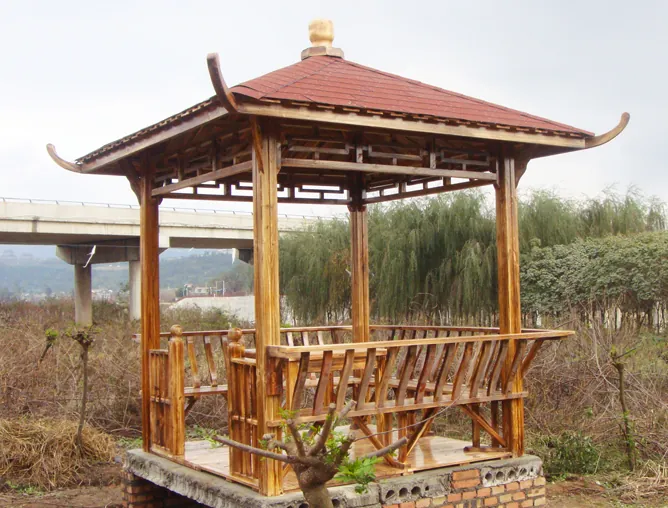
A traditional Chinese garden pavilion is the crown jewel of classical Chinese landscape architecture — an open, elegant structure that provides a place for rest, contemplation, tea drinking, and appreciation of the surrounding garden scenery. With a history spanning over 2,000 years, the Chinese pavilion (ting, 亭) has evolved from a simple roadside shelter into a sophisticated architectural form that embodies the philosophical and aesthetic principles of Chinese culture. At Zhongyu Woodcraft, we build authentic traditional Chinese garden pavilions using classical construction techniques including mortise and tenon joinery and dougong (bracket sets), serving residential, commercial, and cultural clients worldwide with sizes ranging from intimate 2m garden pavilions to grand 12m double-tier pavilions.
The Chinese pavilion is one of the most distinctive and recognizable forms of traditional Chinese architecture. The character ting (亭) depicts a structure with a roof, columns, and a platform, reflecting the pavilion’s essential form: an open-sided structure with a roof supported by columns, set on a raised platform. Unlike Western gazebos that are often enclosed or semi-enclosed, the traditional Chinese pavilion is fundamentally open, designed to frame views of the surrounding garden and allow the breeze to flow through, creating a cool, refreshing space in which to enjoy the landscape.
The history of the Chinese pavilion dates back to the Zhou Dynasty (1046-256 BC), where pavilions were used as watchtowers, postal stations, and roadside shelters for travelers. By the Han Dynasty (206 BC – 220 AD), pavilions had become important elements of imperial gardens and hunting parks, serving as places for rest, banquets, and appreciation of nature. The pavilion reached its peak during the Tang (618-907 AD) and Song (960-1279 AD) dynasties, when garden culture flourished and pavilions became sophisticated architectural forms with elaborate roof designs, decorative details, and poetic inscriptions. The famous Song Dynasty painter Zhang Zeduan’s Along the River During the Qingming Festival depicts numerous pavilions of various types and sizes, reflecting their ubiquity in Song Dynasty life.
In traditional Chinese garden philosophy, the pavilion is not merely a shelter but a carefully positioned viewing platform that frames and composes the garden scenery. The classical Chinese garden is designed as a series of “viewing stations” (jing, 景), and the pavilion is the most important of these stations. Each pavilion is positioned to capture a specific view — a rock formation, a pond, a flowering tree, a distant mountain — and the pavilion’s open sides and oriented roof create a framed picture of the scenery beyond. This concept, known as jie jing (借景, “borrowing scenery”), is one of the fundamental principles of Chinese garden design, and the pavilion is the primary vehicle for its expression. The pavilion also serves as a place for cultural activities including tea drinking, poetry composition, music, painting, and conversation, making it the cultural heart of the classical Chinese garden.
| Feature | Classical Specification | Modern Options |
|---|---|---|
| Plan Shape | Hexagonal (liuting), square (siting), round (yuanting), octagonal (bajiaoting), fan-shaped (shanting), plum blossom (meihuating) | Custom shapes available |
| Size Range | Small: 2-4m diameter; Medium: 4-6m; Large: 6-8m; Grand: 8-12m+ | Custom any size |
| Roof Tiers | Single-tier (chongyan), double-tier (chongyan), triple-tier (sanchongyan) | Single or double tier standard |
| Roof Style | Curved eaves (feiyan qiaojiao), hipped roof (wudian), gable-hipped (xieshan), pyramidal (zanjian), thatched (maoding) | Custom roof styles |
| Dougong Brackets | Traditional interlocking bracket sets (dougong) supporting roof eaves, 5-7 tiers for large pavilions | Authentic or simplified dougong |
| Columns | Round or square wooden columns, 4-12 depending on plan, often with stone bases (zhuchu) | Custom column designs |
| Seating | Built-in “beauty seat” (meirenkao) railing with curved backrest, or simple bench seating | Custom seating options |
| Railings | Traditional lattice railings (lan gan) with geometric patterns, carved balusters | Custom railing designs |
| Wood Species | Traditional: Chinese fir (shanmu), camphor (zhangmu), nanmu, elm (yumu), pine (songmu) | ACQ pine, cedar, merbau, teak |
| Roof Material | Traditional gray clay tiles (huiwa), glazed tiles (liuliwa), thatch (maocao), wood shingles | Synthetic, metal, or traditional tiles |
| Platform | Raised stone or wood platform (taiji), often with steps (taijie) and stone balustrades | Wood, stone, or concrete platform |
| Decorative Elements | Carved beams (diaoliang), painted panels (caidong), calligraphy plaques (biange), couplets (duilian) | Custom carvings and decorations |
| Joinery | Traditional mortise and tenon (sunmao), no nails or screws in visible structure | Hidden steel reinforcements available |
| Installation | Worldwide on-site by master craftsmen, or self-assembly with detailed instructions | Professional installation recommended |
Every garden pavilion we build is custom-designed following classical Chinese architectural principles, with careful attention to proportions, details, and authenticity. Our master architects and craftsmen have deep knowledge of classical Chinese architecture texts including Yingzao Fashi (State Building Standards, 1103 AD) and Qing Gongcheng Zuofa Zeli (Qing Dynasty Construction Regulations, 1734 AD), ensuring that our pavilions follow authentic historical proportions and construction techniques. We provide detailed architectural drawings, structural engineering calculations, and 3D renderings before production begins, so you can see exactly how your pavilion will look and ensure it meets your expectations. All pavilions are fully assembled in our workshop for quality inspection before disassembly and shipping.
| Type | Chinese Name | Characteristics | Best For |
|---|---|---|---|
| Hexagonal Pavilion | Liuting (六角亭) | Six-sided, most common classical form, balanced proportions | Gardens, parks, tea houses, general use |
| Square Pavilion | Siting (四方亭) | Four-sided, simple and elegant, traditional form | Small gardens, courtyards, entryways |
| Round Pavilion | Yuanting (圆亭) | Circular plan, conical roof, unique and elegant | Focal points, water features, special locations |
| Octagonal Pavilion | Bajiaoting (八角亭) | Eight-sided, grand and substantial, auspicious (8 = prosperity) | Large gardens, temples, cultural sites |
| Fan-Shaped Pavilion | Shanting (扇亭) | Fan-shaped plan, unique, often positioned at garden corners | Corners, elevated positions, scenic overlooks |
| Plum Blossom Pavilion | Meihuating (梅花亭) | Five-lobed plan resembling plum blossom, symbolic and beautiful | Special locations, cultural gardens, symbolic spaces |
| Double-Tier Pavilion | Chongyan Ting (重檐亭) | Two roof tiers, grand and imposing, traditional imperial style | Large gardens, temples, public spaces, landmarks |
| Water Pavilion | Shuixie (水榭) | Built over or beside water, open sides for water views, often with terrace | Ponds, lakes, streams, garden water features |
| Tea House Pavilion | Chating (茶亭) | Enclosed or semi-enclosed, designed for tea ceremony, with kitchen area | Tea gardens, cultural venues, private estates |
| Mountain Pavilion | Shanting (山亭) | Built on elevated positions, designed for panoramic views, often with viewing platform | Hilltops, elevated gardens, scenic overlooks |
| Thatched Pavilion | Maoting (茅亭) | Thatch roof, rustic and natural, simple construction, hermit aesthetic | Natural gardens, rustic settings, meditation spaces |
| Glazed Tile Pavilion | Liuli Ting (琉璃亭) | Colorful glazed tile roof (yellow, green, blue), ornate, imperial style | Temples, palaces, cultural sites, grand gardens |
Each pavilion type has its own character, symbolism, and appropriate use. The hexagonal pavilion is the most common and versatile form, with balanced proportions that work well in most garden settings. The square pavilion is simple and elegant, perfect for small gardens and courtyards. The round pavilion is unique and eye-catching, often used as a focal point or near water features. The octagonal pavilion is grand and substantial, with the number eight symbolizing prosperity and good fortune in Chinese culture, making it appropriate for temples and large public spaces. The fan-shaped pavilion is uniquely Chinese, often positioned at garden corners or elevated positions to frame panoramic views. The double-tier pavilion is the grandest form, with two roof tiers that create an imposing, imperial presence appropriate for large gardens, temples, and public landmarks.
The water pavilion (shui xie) is built over or beside water, with open sides that maximize water views and cooling breezes, often with a terrace extending over the water. The tea house pavilion (cha ting) is designed for tea ceremony and cultural gatherings, with semi-enclosed walls, a preparation area, and a more intimate atmosphere. The mountain pavilion (shan ting) is built on elevated positions to take advantage of panoramic views, often with a wide viewing platform. The thatched pavilion (mao ting) has a rustic, natural aesthetic associated with hermits and scholars, perfect for meditation and quiet contemplation in natural settings. Our design team can help you select the perfect pavilion type for your specific site, aesthetic preferences, and functional needs, or create a completely custom design that combines elements from multiple classical forms.
| Wood Species | Traditional Use | Outdoor Lifespan | Carving Quality | Price Level |
|---|---|---|---|---|
| Chinese Fir (Shanmu) | Most common traditional pavilion wood, lightweight, easy to work | 15-20 years (with treatment) | Good (fine, even grain) | Budget-friendly |
| Camphor Wood (Zhangmu) | Traditional for columns and beams, aromatic, insect-repellent | 20-25 years | Excellent (beautiful grain, carves well) | Mid-range |
| Nanmu (Phoebe) | Premium traditional wood, imperial pavilions, golden color, fragrant | 25-35 years | Excellent (fine grain, exceptional carving) | Premium (rare and expensive) |
| Elm (Yumu) | Traditional for structural components, strong, beautiful grain | 20-30 years | Very Good (character grain, carves well) | Mid-high |
| ACQ Pressure-Treated Pine | Modern alternative, durable, affordable, consistent quality | 20-30 years | Good (even grain, carves well) | Budget-friendly |
| Western Red Cedar | Modern alternative, natural rot resistance, aromatic, beautiful | 15-20 years | Good (soft, easy to carve) | Mid-range |
| White Oak | Modern alternative, strong, durable, beautiful grain | 20-30 years | Very Good (hard, holds detail well) | Mid-high |
| Merbau | Premium modern, extremely durable, rich reddish-brown color | 30-50 years | Good (dense, carves with sharp tools) | Premium |
| Teak | Premium modern, legendary durability, golden-brown color, low maintenance | 40-60 years | Excellent (stable, holds detail exceptionally well) | Premium |
Wood selection for a traditional Chinese pavilion is an important decision that affects both authenticity and durability. Traditionally, Chinese fir (shanmu) was the most common wood for pavilion construction because of its light weight, straight grain, easy workability, and abundance in southern China. Camphor wood (zhangmu) was often used for columns and beams because of its natural insect-repellent properties and beautiful grain. Nanmu (phoebe) was the most prized wood for imperial and high-status pavilions, with a golden color, fine grain, and pleasant fragrance, though it is now rare and expensive due to overharvesting and protection regulations. Elm (yumu) was often used for structural components because of its strength and beautiful character grain.
For modern pavilions, we offer a range of wood species that balance authenticity, durability, and cost. ACQ pressure-treated pine is our most popular option because it offers excellent durability and rot/insect resistance at an affordable price, with consistent quality and good workability. Western Red Cedar is another popular choice, with natural rot resistance, a beautiful grain, and a pleasant aromatic scent that evokes traditional Chinese pavilion aesthetics. For premium and high-end pavilions, Merbau and Teak offer exceptional durability and beauty without chemical treatment. Merbau’s rich reddish-brown color and dense grain create a striking appearance, while Teak’s legendary durability and golden-brown color make it the gold standard for outdoor wooden structures. For clients seeking maximum authenticity, we can source traditional Chinese woods including Chinese fir, camphor, and elm (subject to availability and CITES regulations). We provide personalized wood recommendations based on your specific pavilion design, location, climate, budget, and authenticity preferences.
| Factor | Zhongyu Woodcraft | Typical Gazebo Company | Big Box Store Kit |
|---|---|---|---|
| Authenticity | Master architects, classical texts, museum-quality, dougong brackets | Approximate “Oriental” style, may not follow classical proportions | No authentic Chinese design |
| Craftsmanship | Hand-built by master craftsmen, traditional mortise and tenon, no visible nails | Machine-made, screws and brackets visible | Mass-produced, low quality, hardware assembly |
| Custom Design | Full custom design, any size, any shape, any style, any wood | Limited standard sizes and styles | Standard sizes only, no customization |
| Dougong Brackets | Authentic interlocking dougong bracket sets, hand-cut, load-bearing | Decorative only or absent, not functional | Absent |
| Roof Construction | Traditional curved eaves, hand-set clay or glazed tiles, authentic roof structure | Simple roof, asphalt shingles, no curved eaves | Simple roof, asphalt or metal, no authenticity |
| Structural Engineering | Engineered for wind, snow, seismic, code compliance, permit documentation | Basic or no engineering | No engineering, basic design |
| Wood Quality | Hand-selected, kiln-dried, pressure-treated, seasoned, traditional species available | Variable quality, may be green | Cheapest available, often poor quality |
| Pre-Assembly | Fully assembled and inspected in workshop before shipping, numbered components | Assembled on site, quality varies | Kit form, customer assembles |
| Installation | Worldwide on-site by master craftsmen, English-speaking team | Local only or DIY | DIY only, basic instructions |
| Warranty | 10-year structural warranty, lifetime joinery guarantee | 1-2 year warranty | 90-day to 1-year warranty |
Our workshop in Chongqing is one of the few facilities in the world that specializes in authentic traditional Chinese wooden architecture. We have a team of master architects and craftsmen who have dedicated their careers to the study and practice of classical Chinese building techniques, including the sophisticated mortise and tenon joinery systems and dougong bracket construction that are the hallmark of traditional Chinese architecture. Our craftsmen come from architectural family backgrounds with generations of experience in traditional wooden building, and many have worked on restoration projects for historical temples, gardens, and heritage sites across China.
Every pavilion we build undergoes a rigorous quality control process. The design phase includes detailed architectural drawings following classical proportions, structural engineering calculations, and 3D renderings for client approval. The timber selection phase involves hand-selecting each piece of wood for grain, color, and structural integrity, with kiln drying to the proper moisture content. The manufacturing phase includes precision cutting of joinery (both by hand and with CNC machinery for consistency), hand-carving of decorative elements, and traditional roof construction. The assembly phase involves full assembly of the pavilion in our workshop to verify that all joints fit correctly, the structure is stable, and the proportions are correct. Only after passing this full assembly inspection is the pavilion disassembled, with each component numbered and labeled for easy on-site reassembly, and carefully packaged for shipping.
For international clients, we offer worldwide shipping and installation services. Pavilion components are wrapped in moisture-resistant foam and packed in ISPM-15 certified heat-treated wooden crates to prevent damage during transit. We optimize container loading to minimize shipping costs. We handle all export documentation including commercial invoice, packing list, certificate of origin, and phytosanitary certificate. Our installation team of master craftsmen can travel to your location for professional on-site assembly, with English-speaking project managers to ensure clear communication. For clients who prefer self-assembly, we provide comprehensive support including detailed numbered assembly instructions with diagrams, step-by-step assembly videos, and remote technical support via video call. We stand behind our products with a comprehensive warranty and lifetime technical support, ensuring your pavilion stands for generations as a testament to the beauty and craftsmanship of traditional Chinese architecture.
Q: How much does a traditional Chinese garden pavilion cost?
A: Prices vary widely depending on size, plan shape, roof tiers, wood species, roof material, decorative elements, and site conditions. As a rough guide (materials only, excluding shipping and installation): Small hexagonal pavilion (2-3m diameter, Chinese fir or ACQ pine, single tier, gray tile roof): $3,000-$8,000; Medium hexagonal pavilion (4-5m diameter, camphor or cedar, single tier, gray tile roof, basic dougong): $8,000-$20,000; Large hexagonal pavilion (6-7m diameter, camphor or elm, single or double tier, gray or glazed tile, full dougong, carved details): $20,000-$50,000; Grand octagonal or double-tier pavilion (8-10m diameter, premium wood, double tier, glazed tile, elaborate dougong, extensive carving): $50,000-$150,000; Museum-quality or imperial-style pavilion (10m+, nanmu or teak, triple tier, imperial glazed tile, elaborate dougong and carving, painted panels): $150,000-$500,000+; Water pavilion (with platform over water): +20-40% over standard; Tea house pavilion (semi-enclosed, with kitchen area): +30-50% over standard; Thatched roof (instead of tile): -10-20% (less expensive roof); Glazed tile roof (instead of gray tile): +20-40%; Custom carvings and painted panels: $2,000-$20,000+ depending on extent; Stone platform and steps: $2,000-$10,000+ depending on size; Calligraphy plaques and couplets: $500-$3,000+; Shipping: $2,000-$15,000 depending on destination (sea freight); Installation by our team: $5,000-$30,000+ including travel, depending on size and location. We offer volume discounts for multiple pavilions (e.g., for a garden complex or cultural site). Contact us with your specifications, site photos, and location for a detailed quotation within 48 hours.
Q: How long does it take to build and install a traditional Chinese garden pavilion?
A: Standard small to medium pavilions typically take 6-10 weeks to manufacture (design, timber selection, joinery, carving, roof, full assembly inspection), plus 4-6 weeks for international sea freight. On-site installation typically takes 1-2 weeks for small pavilions and 2-4 weeks for large pavilions, depending on complexity, site access, and weather. Large or complex pavilions with custom design, double tiers, extensive carving, premium materials, or museum-quality specifications may take 10-20 weeks to manufacture and 3-6 weeks to install. The foundation (stone or concrete platform, footings) should be prepared before installation, and we provide detailed foundation plans and instructions. We provide detailed project timelines at the time of order and keep you updated throughout the process with regular photos and progress reports. Rush orders may be possible for an additional fee, though traditional craftsmanship requires adequate time for quality. The total timeline from order to completed pavilion is typically 12-20 weeks for most residential projects and 20-40 weeks for large commercial or museum-quality projects, depending on size, complexity, and shipping location. For clients with tight deadlines, we may have standard-size pavilions in stock or near completion that can be shipped more quickly — contact us to check current inventory.
Q: Do I need a building permit for a traditional Chinese garden pavilion?
A: Permit requirements vary significantly by location, pavilion size, height, and intended use. In many areas, small open-sided pavilions under a certain size (typically 10-20 sqm) and under a certain height (typically 3-4m) may be considered “accessory structures” and may not require a permit, or may only require a simple zoning approval. Larger pavilions, pavilions over a certain height, pavilions with enclosed walls (such as tea houses), pavilions in historic districts, pavilions near property lines, or pavilions that will be used for commercial purposes may require building permits and approvals. Pavilions over water or in floodplains may require additional environmental permits. Homeowners’ associations (HOAs) may have specific rules about pavilion style, height, color, materials, and placement, and may require architectural review board approval. We recommend checking with your local building department and HOA before ordering. We can provide structural engineering calculations, architectural drawings, and other documentation required for permit applications. Our pavilions are designed to meet international building codes including IBC (International Building Code) and IRC (International Residential Code) requirements for accessory structures, including wind load (minimum 120 km/h basic wind speed, can be engineered for higher), snow load (can be engineered for specific ground snow loads), seismic (can be engineered for specific seismic zones), and live load (minimum 1.9 kPa for floors and platforms). Contact us to discuss your specific permit requirements and we will provide the necessary documentation and engineering support.
Q: What foundation is required for a traditional Chinese garden pavilion?
A: Foundation requirements depend on pavilion size, weight, soil conditions, and local building codes. Traditionally, Chinese pavilions are built on a raised stone or brick platform (taiji) that provides a level, stable base and elevates the pavilion above the damp ground. The platform typically has steps (taijie) for access and may have stone balustrades (lan gan) for safety and decoration. For modern installations, we offer several foundation options: 1) Traditional stone platform: A raised platform made of natural stone (granite, limestone, or sandstone) with stone steps and optional balustrades. This is the most authentic and durable option, but also the most expensive and requires professional masonry work. We provide detailed stone platform design drawings and can supply the stone materials if desired. 2) Concrete platform with stone veneer: A reinforced concrete platform with a natural stone veneer on the visible surfaces. This is more economical than a solid stone platform while maintaining the traditional appearance. We provide detailed concrete platform design drawings and specifications. 3) Concrete footings with wood platform: Simple concrete footings (30x30x60cm) below the frost line at each column location, supporting a raised wood platform. This is the most economical option and is suitable for small to medium pavilions. We provide detailed footing and platform design drawings. 4) Existing patio or concrete slab: For pavilions installed on an existing concrete patio or slab, we can use surface mount brackets or concrete anchors to attach the pavilion columns directly to the concrete, though this requires structural verification of the existing slab and may not be suitable for large or heavy pavilions. 5) Water pavilion foundation: For pavilions built over water, the foundation typically consists of concrete piers or wood pilings driven into the bottom of the pond or lake, supporting a platform above the water level. This requires specialized engineering and construction, and we provide detailed design and construction guidance. We provide detailed foundation plans and specifications tailored to your specific pavilion design, site conditions, soil type, frost depth, and local building codes. The foundation is typically prepared by you or a local contractor before our installation team arrives. We can also coordinate with your local contractor to ensure the foundation is built to our specifications. Contact us to discuss your specific site and foundation requirements.
Q: How do I maintain a traditional Chinese garden pavilion to keep it in good condition?
A: Proper maintenance is essential to preserve the beauty and structural integrity of a traditional Chinese wooden pavilion, especially the roof and exposed wood components. Monthly: Inspect the roof for any loose, cracked, or missing tiles, especially after storms. Remove leaves, debris, and vegetation from the roof and gutters to prevent moisture buildup and water damage. Check the pavilion interior for any signs of water leakage, insect activity, or mold. Quarterly: Clean the wood surfaces with a soft brush or cloth and a mild wood cleaner (avoid harsh chemicals or pressure washing, which can damage the wood and finish). Inspect the columns, beams, brackets, and railings for any signs of rot, cracking, or insect damage, paying special attention to the base of columns where they meet the platform (the most common failure point). Check and tighten any hardware (if used). Annually: Conduct a thorough inspection of the entire pavilion including the roof structure, wood components, foundation, and platform. Check the roof tile bedding and mortar for any deterioration and repair as needed. Inspect the dougong brackets and joinery for any movement or loosening. Check the wood finish and plan to refinish if it is fading, peeling, or worn. Every 2-3 years: Lightly sand and reapply a penetrating wood oil or exterior stain to all exposed wood surfaces (columns, beams, brackets, railings, platform) to protect the wood from UV damage and moisture. The frequency depends on your climate and sun exposure — pavilions in full sun may need annual refinishing, while shaded pavilions may only need it every 3-4 years. Use a high-quality exterior wood finish that is appropriate for your wood species and climate. Every 5-10 years: Consider a more thorough refurbishment including roof inspection and tile replacement (if needed), wood repair and replacement of any damaged components, and complete refinishing. For clay tile roofs, the tiles can last 50-100+ years with proper maintenance, but the bedding mortar and underlayment may need replacement every 20-30 years. General tips: Ensure good drainage around the pavilion platform to prevent water from pooling at the base. Keep vegetation (vines, shrubs, trees) trimmed away from the pavilion to prevent moisture buildup, insect harborage, and physical damage. Avoid hanging heavy objects from the beams or brackets unless they are designed for it. In areas with heavy snow, remove snow from the roof promptly to prevent excessive load. In coastal areas, rinse the pavilion with fresh water periodically to remove salt deposits. With proper maintenance, a well-built traditional Chinese wooden pavilion can last 50-100 years or more, as demonstrated by the many ancient pavilions still standing in China today. We provide a detailed maintenance guide with every pavilion, including specific recommendations for your wood species, roof type, and climate. We also offer pavilion maintenance and restoration services for clients who prefer professional care.
Q: Can you build a pavilion that combines traditional Chinese style with modern features or materials?
A: Yes, we specialize in creating custom pavilions that blend traditional Chinese architectural elements with modern features, materials, and technology. Many of our clients want the beauty and authenticity of a traditional Chinese pavilion but with modern conveniences such as lighting, electrical outlets, heating, or modern materials for durability and low maintenance. Here are some common combinations we offer: 1) Traditional form with modern wood: We can build a pavilion with authentic traditional design and proportions but using modern durable woods such as ACQ pressure-treated pine, cedar, merbau, or teak instead of traditional Chinese fir, for improved durability and lower maintenance. 2) Traditional form with modern roof: We can use modern roofing materials such as synthetic tiles (which mimic the appearance of clay tiles but are lighter and more durable), metal roofing (coated to resemble traditional tile), or even a green roof (planted with vegetation) while maintaining the traditional curved eave silhouette. 3) Integrated lighting: We can integrate modern LED lighting into the pavilion design, including post cap lights, recessed floor lights, LED strip lights under the eaves, accent lighting for the dougong brackets and carvings, and even chandeliers or pendant lights for the interior. All lighting can be low-voltage, solar-powered, or connected to a standard electrical system, and can be controlled by switches, timers, or smart home systems. 4) Electrical and data: We can install electrical outlets, USB charging ports, and even data ports (Ethernet, HDMI) in the pavilion columns or built-in furniture, with concealed wiring that does not detract from the traditional appearance. 5) Heating and cooling: For pavilions used in extreme climates, we can integrate infrared heaters (mounted under the roof or in the ceiling), ceiling fans, or even portable heating/cooling units that are concealed within the pavilion design. 6) Modern seating and furniture: We can design and build modern-style seating, tables, and built-in furniture that complements the traditional pavilion architecture while providing modern comfort and functionality. 7) Accessibility: We can design pavilions with accessible features such as ramps (instead of steps), wider door openings (for semi-enclosed pavilions), and accessible seating, while maintaining the traditional aesthetic as much as possible. 8) Mixed materials: We can combine wood with other materials such as stone (for the platform and columns bases), metal (for subtle structural reinforcements or decorative accents), glass (for semi-enclosed walls or railings), or even bamboo (for lattice work or decorative elements) to create a unique pavilion that blends traditional and modern aesthetics. Our design team will work with you to understand your specific needs and preferences and create a custom pavilion design that balances authenticity, beauty, functionality, and modern convenience. We provide detailed design drawings and 3D renderings so you can see exactly how the traditional and modern elements will work together. Contact us to discuss your vision and we will bring it to life.
Q: What is your warranty and after-sales support?
A: We offer a comprehensive 10-year structural warranty for all traditional Chinese garden pavilions, covering the wooden frame (columns, beams, brackets, rafters), joinery, roof structure, platform, and structural components against defects in materials and workmanship under normal use and proper maintenance. Our traditional mortise and tenon joinery and dougong bracket construction is guaranteed for the lifetime of the pavilion — if a joint or bracket fails due to craftsmanship issues, we will repair or replace it at no cost. ACQ pressure-treated wood is warranted against rot and insect damage for 20 years from the date of installation (provided proper maintenance is performed, including keeping the wood clean, ensuring proper drainage, and refinishing as recommended). Naturally durable woods (cedar, cypress, redwood, teak, merbau, camphor, Chinese fir) are warranted against rot and insect damage for 25 years from the date of installation. Clay and glazed roof tiles are warranted against breakage or manufacturing defects for 5 years from installation (normal wear and weathering excluded), and properly maintained tile roofs can last 50-100+ years. Hardware (fasteners, hinges, lighting fixtures) is warranted for 5 years against defects and rust (stainless steel hardware is warranted for 10 years). We provide lifetime technical support via email, phone, or video call for any questions about maintenance, repairs, modifications, or historical/architectural inquiries. Replacement parts (wood components, roof tiles, hardware, lighting, finish) are available at cost for any component that needs replacement due to wear or damage. We also offer pavilion maintenance, restoration, and relocation services — if your pavilion needs refinishing, roof repair, component replacement, or even relocation to a new site, our master craftsmen can handle it. For commercial and institutional clients (museums, cultural sites, parks, hotels), we offer annual maintenance contracts and priority service. We stand behind our products with a commitment to quality and craftsmanship that honors the centuries-old tradition of Chinese wooden architecture. A well-built and properly maintained traditional Chinese pavilion is an investment that can last for generations, becoming a cherished landmark and a testament to the enduring beauty of Chinese culture. Contact us anytime with questions or concerns about your garden pavilion.
Ready to add authentic traditional Chinese traditional Chinese garden pavilions to your space? Contact us today for a free design consultation and detailed quotation. Our team of master craftsmen typically responds within 24 hours with expert recommendations based on your site, budget, and design preferences.
To learn more about the traditional craftsmanship behind every piece we build, read our complete guide to classical Chinese garden design, pavilions, and landscape architecture principles, which covers the history, techniques, and cultural significance of this ancient building method.
| Origin | Chongqing, China |
|---|---|
| Brand | Zhongyu Wood Art |
| Material | Solid wood with traditional Chinese roof tiles |
| Craftsmanship | Traditional mortise-and-tenon joinery |
| Surface Finish | Weather-resistant outdoor coating |
| Dimensions | Customizable based on site requirements |
| Installation | On-site installation available worldwide |
| Lead Time | 15-30 days depending on complexity |
| MOQ | 1 set |
| Packaging | Standard export packaging |
| Lifespan | 30-50 years with proper maintenance |
| Warranty | 2-year structural warranty |
| Roof Style | Traditional Chinese curved/eave roof |
| Column Count | 4/6/8/12 columns customizable |
| Floor Area | Customizable 6m2-100m2 |
Call / WhatsApp same number · Reply within 24 hours
☎ Hotline: +86 13883366528 (WhatsApp same number) · 💬 WhatsApp